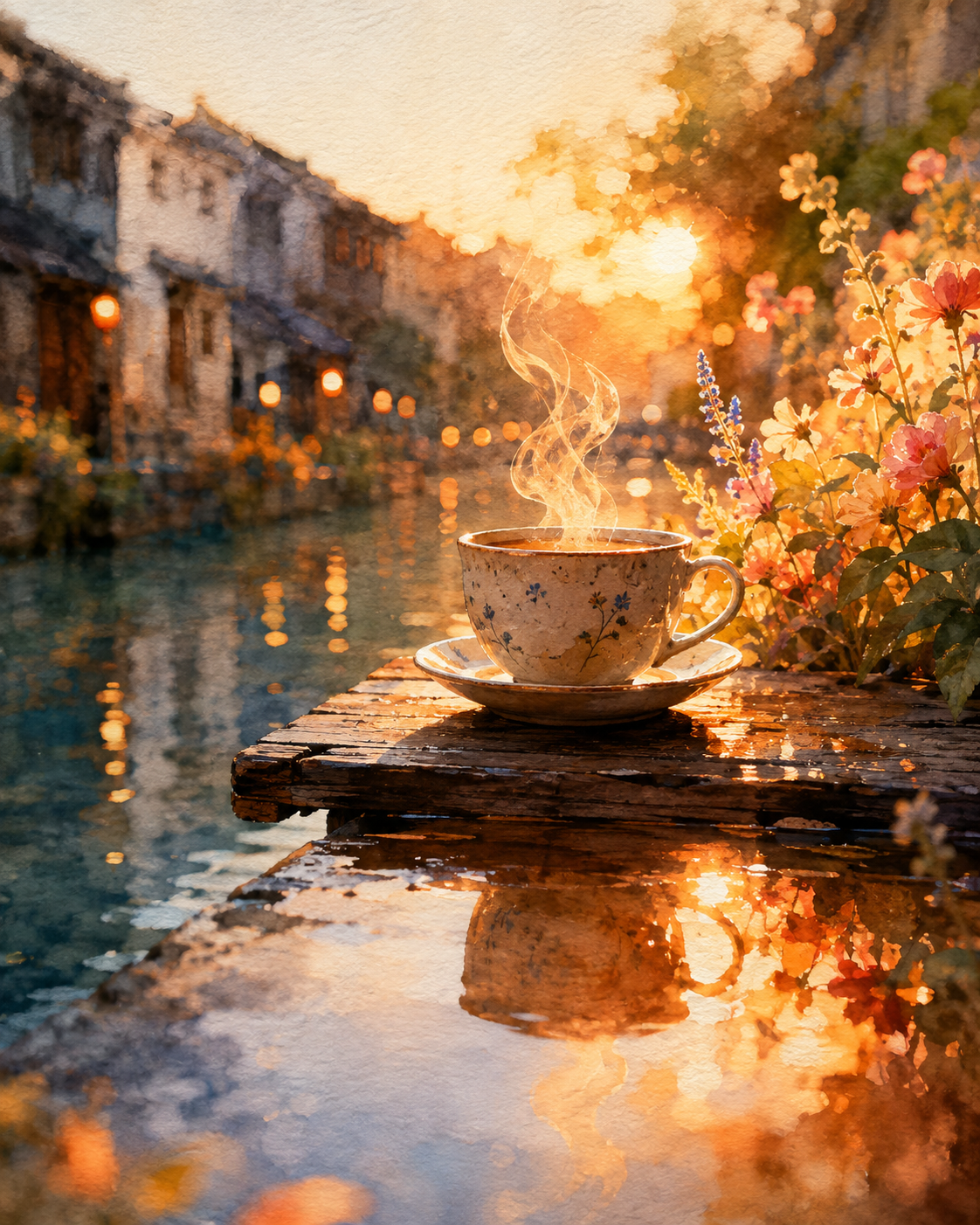
The Cup That Kept the Last Golden Hour
Critique
Introduction This canal still life shows a steaming teacup between a flowered ledge and sunset water. Backlight, mirrored ceramic, and luminous blossoms make refreshment inseparable from the neighborhood's changing atmosphere. Description A speckled cream cup with tiny blue floral motifs rests on a shallow saucer near the center-right of a wet wooden platform. Steam coils upward in translucent ribbons. Pink, coral, white, and violet flowers rise along the right edge, intensely backlit. The canal fills the left and middle distance between soft old houses, dark foliage, and many glowing lamps. A bright low sun hovers above the water. Below the ledge, a puddle reflects cup, handle, flowers, and orange light. Analysis The cup provides a compact horizontal anchor beneath the steam's sinuous vertical. Its circular rim, handle, and saucer repeat as softer shapes in the puddle. Amber backlight outlines ceramic and petals, while the canal retains cool blue-green shadow. Successive lamps form dotted depth, and their reflections extend vertically. The ledge's strong horizontal edge separates direct scene from mirrored scene, yet wet highlights keep both continuous. Interpretation and Evaluation The cup is unattended but unmistakably recent because steam remains visible. This absent user turns the foreground into a place held for return. The setting sun and cooling beverage share a limited duration, encouraging awareness of an interval that cannot be prolonged. Flowers receive the same heat visually, making natural growth, crafted vessel, and urban water participants in one evening exchange. Conclusion The painting celebrates a pause without pretending it can last forever. Steam, sunset, and reflection are temporary, but their convergence gives the moment fullness. Warmth becomes a relation among object, body, and place.
Same Subcategory
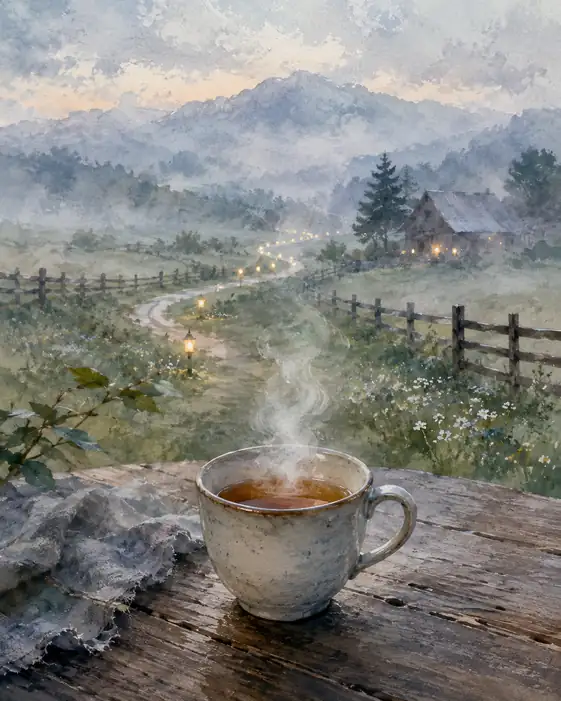 Tea at the Beginning of the Lantern Road
Similar Artworks
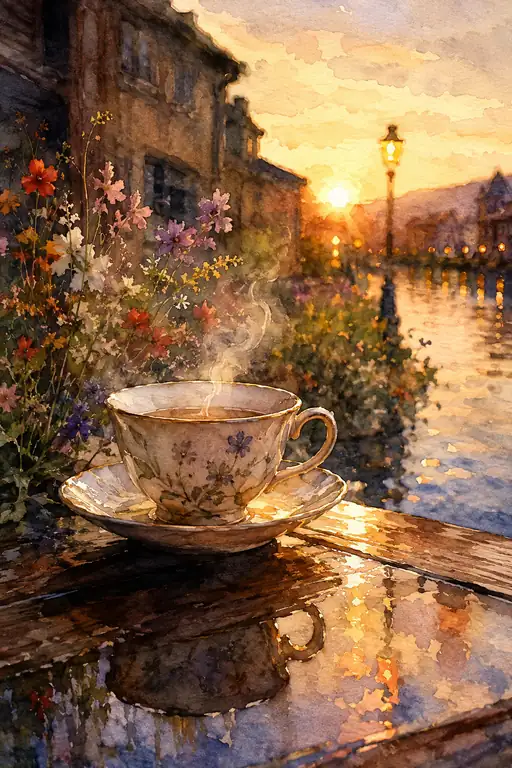 Tea Steaming at the Edge of Sunset
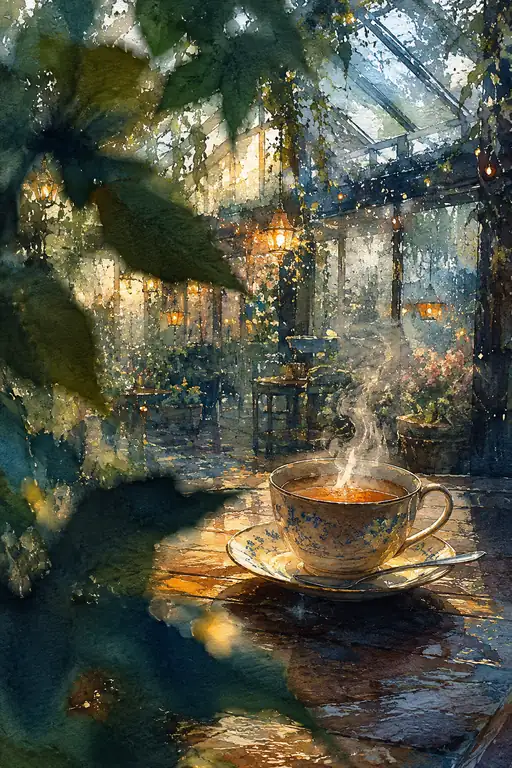 Tea Steams Where the Greenhouse Lights Wander
 Morning Tea Steams beside the Waking City
 A Cup Keeps the Last Blue of Evening Warm
 A Cup of Warmth Beside the Rainy Glasshouse
 Breath of a Rain-Soaked Evening
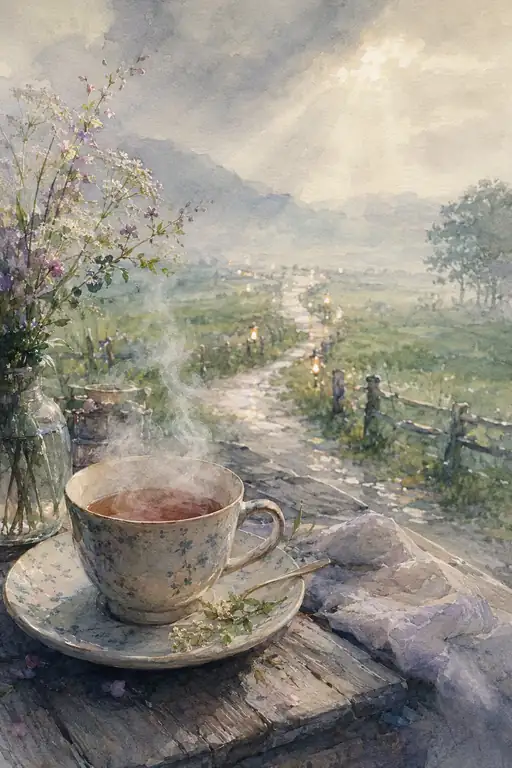 Morning Tea Before the Meadow Wakes
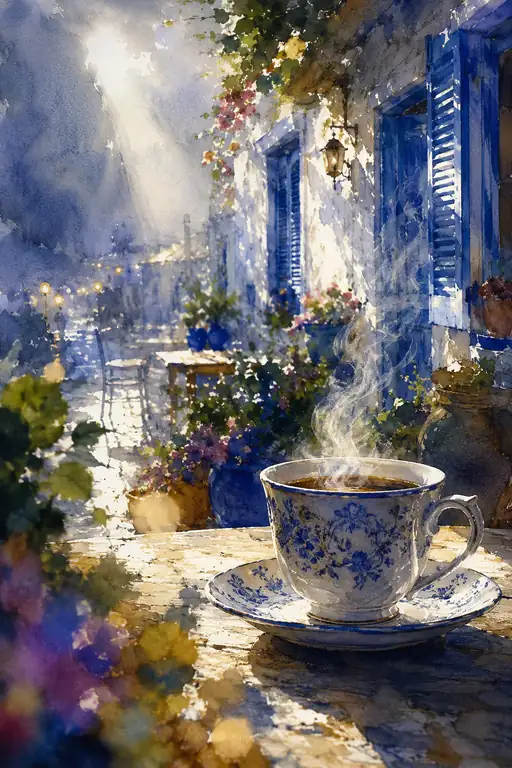 Raindrop Reflections by the Cobalt Door
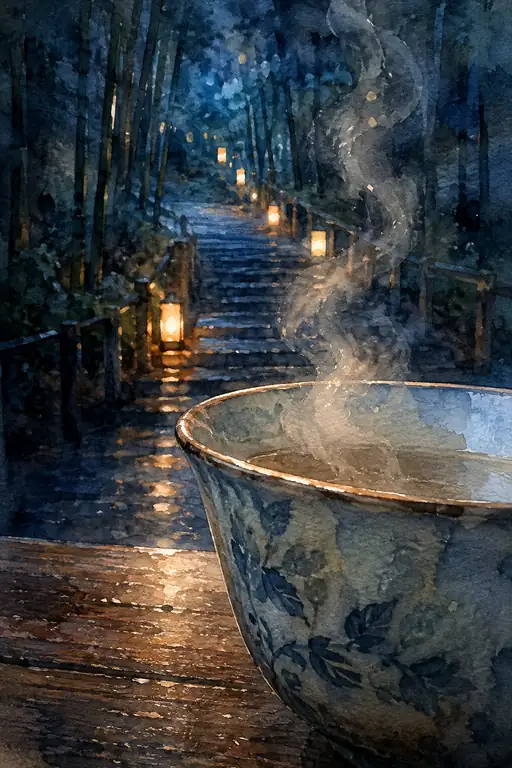 A Warm Bowl Before the Ascent
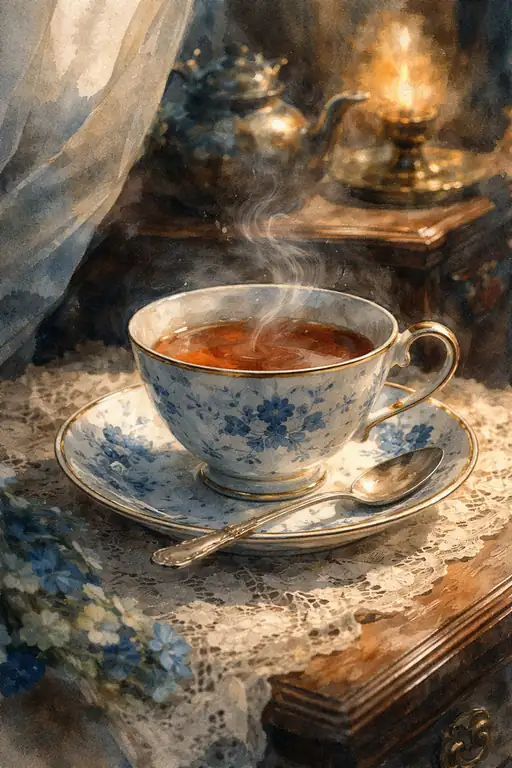 A Warm Embrace in Porcelain