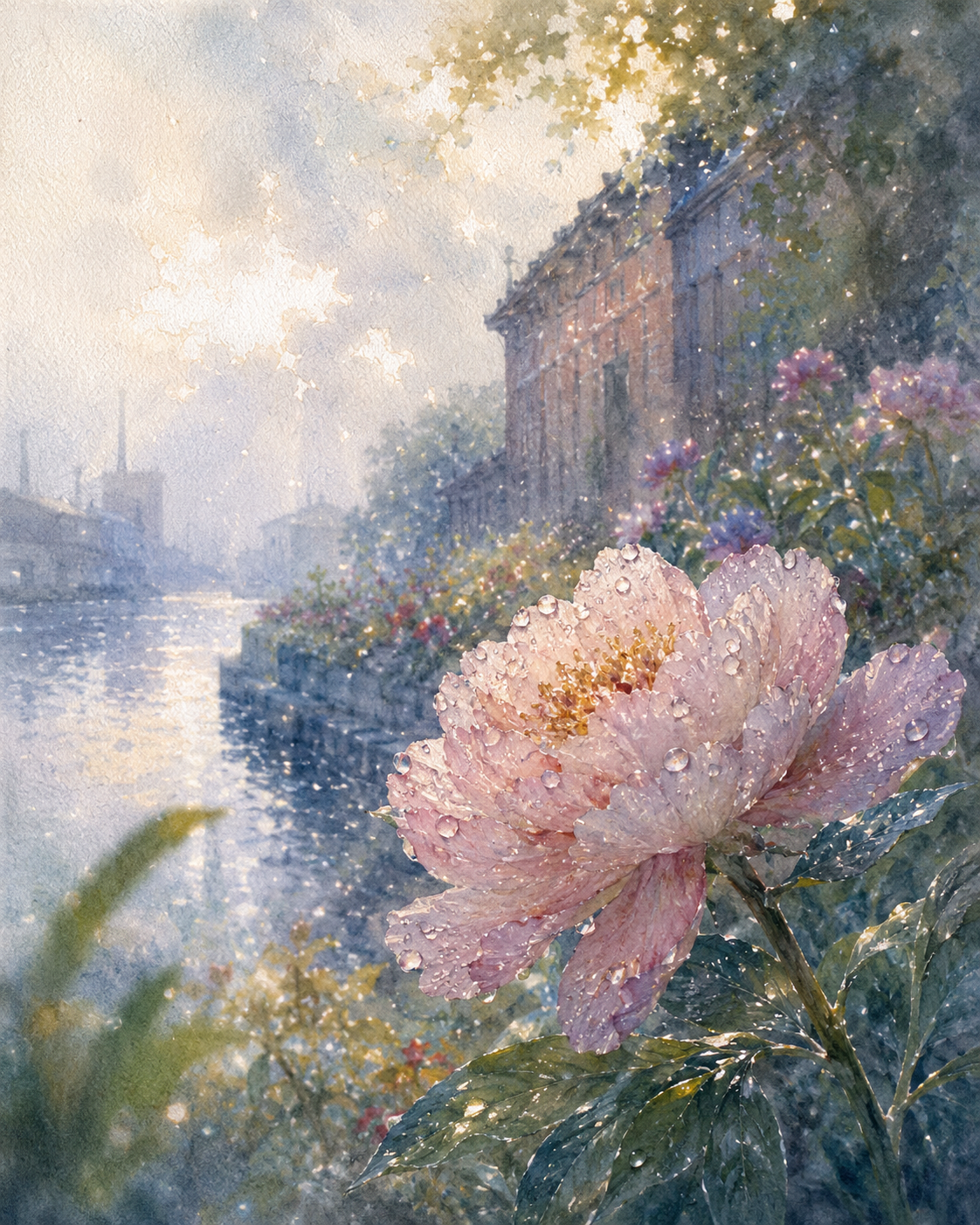
A Peony Wearing the Rain's First Light
Critique
Introduction This rain-filled floral close-up sets a pale pink peony against a softly receding canal town. The flower's immense clarity and the atmospheric background turn a passing shower into a study of vulnerability, resilience, and distributed light. Description The peony dominates the lower right-center, opening toward the viewer in many blush, lavender, and cream petals around a golden center. Large clear droplets cover every surface and collect along folded edges. Dark green leaves and a wet stem support it. Behind, a canal curves left past a red-brown building, flowering banks, distant roofs, and a pale industrial silhouette. Rain or spray fills the air with bright specks beneath a luminous clouded sky. Analysis The flower's rounded mass anchors the foreground against the canal's diagonal recession. Layered petals shift from warm pale pink to cool violet shadow, creating depth within a narrow hue range. Droplets act as tiny lenses, repeating the broad water reflections at microscopic scale. Dark leaves frame the bloom and provide tonal weight. The background loses edge and saturation progressively, making the atmosphere feel thick while preserving the canal's direction. Interpretation and Evaluation Rain visibly burdens the peony, bending and marking its delicate petals, yet the bloom remains open. Resilience here is not hardness but the capacity to receive weather without closing. The canal places this temporary event within a larger cycle of water, while buildings remind viewers that cultivated beauty persists beside ordinary urban labor. The scale invites sustained attention to what might otherwise be passed quickly. Conclusion The work links one flower to an entire wet environment. Droplet, petal, canal, and sky share the same light-bearing water. Fragility becomes a mode of luminous endurance.
Same Subcategory
Similar Artworks
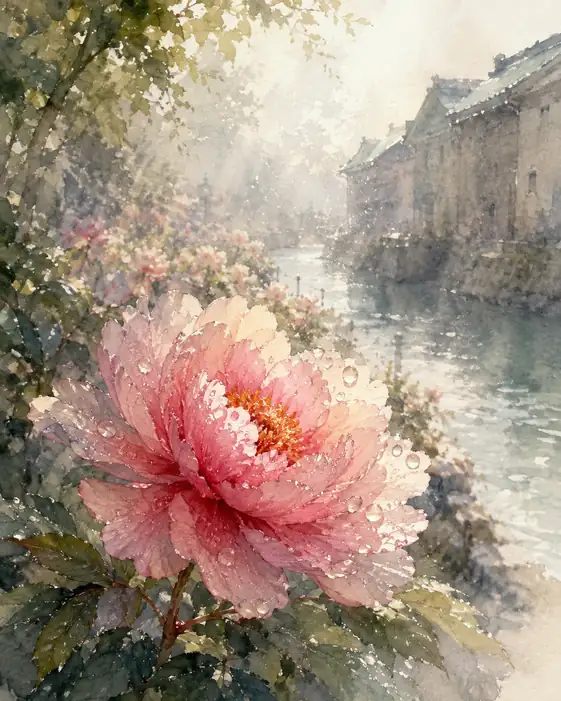 The Canal Morning Held in a Peony
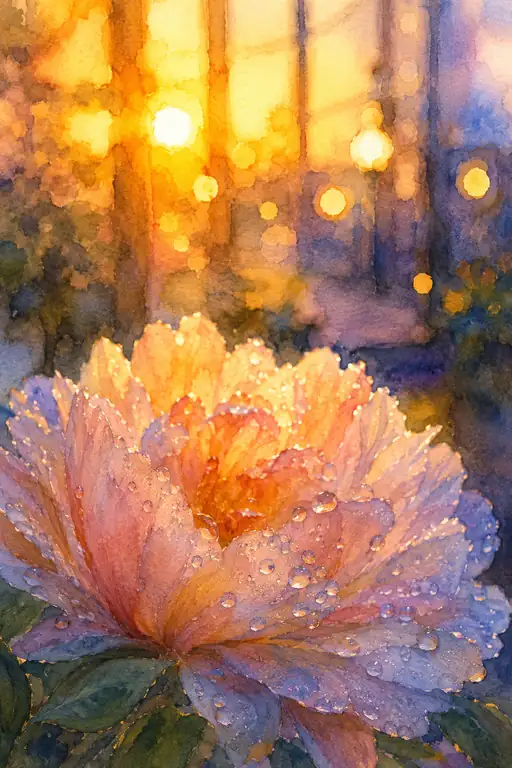 Tears of the Luminous Dawn
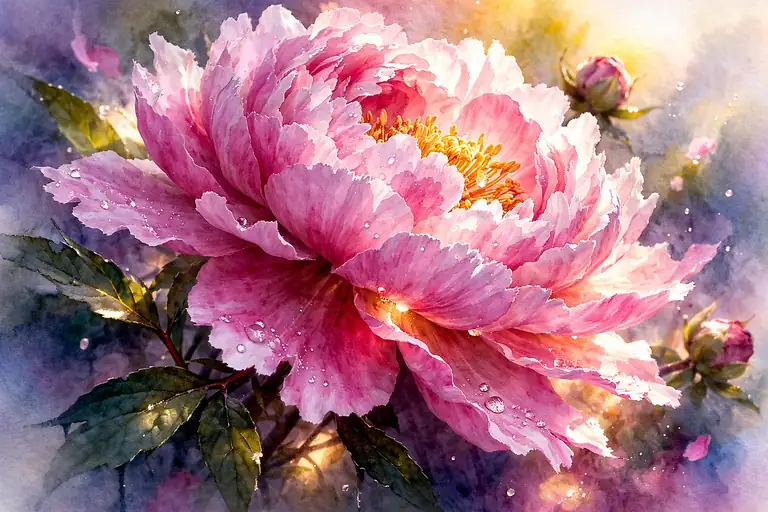 Dreamlike Glimmer on a Delicate Peony
 The Last Glow of Twilight
 Golden Mirror of the Crimson Rose
 The Peony Wears a Necklace of River Rain
 Whispers of the Morning Dew
 Morning Light Through Blooming Tulips
 Drifting Petals upon the Brook
 Ruby Petals by the Morning Lake