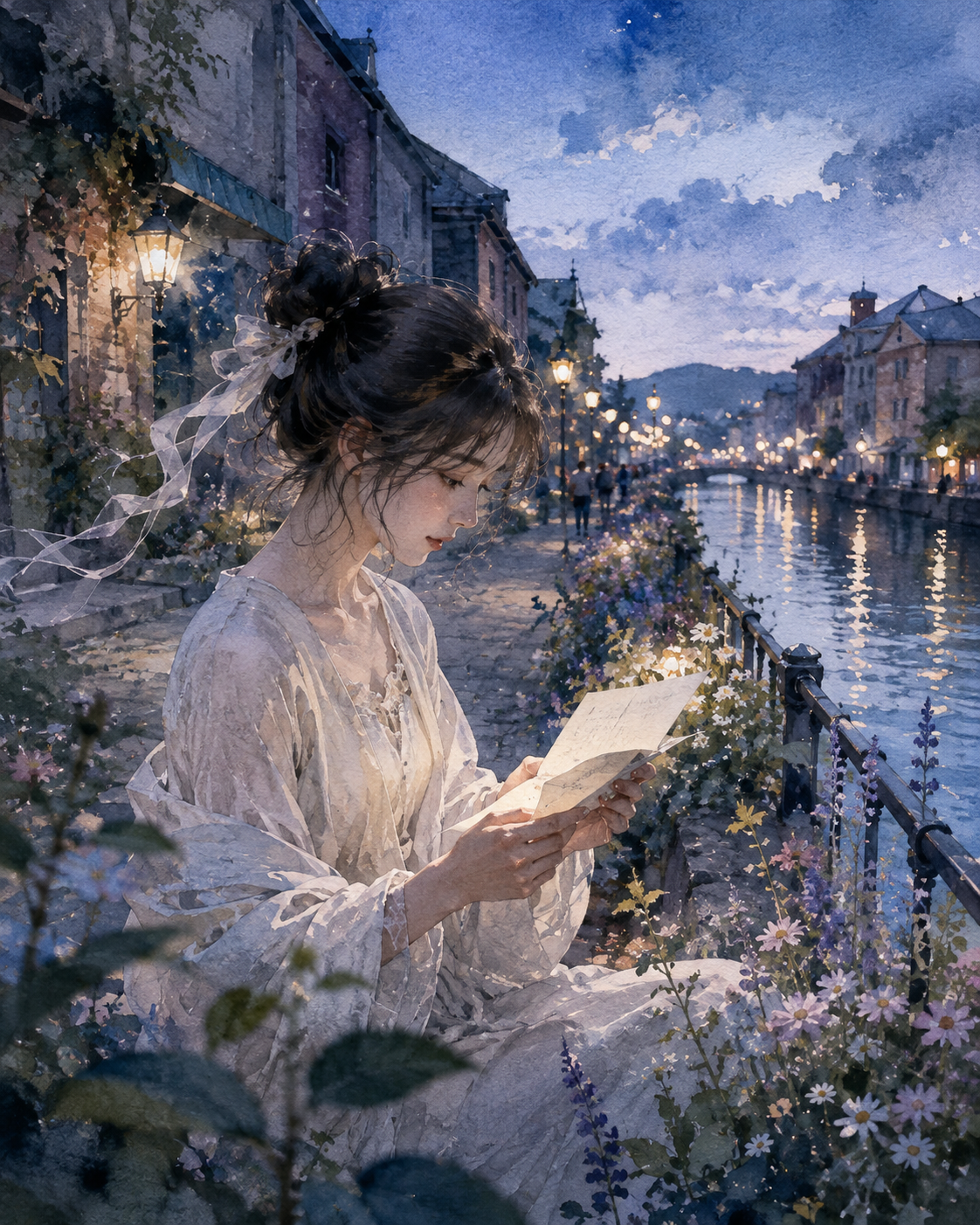
A Letter Read Where the Canal Turns Blue
Critique
Introduction This canal portrait depicts a young woman reading a letter amid flowers and reflected lamps. Her pale dress and profile create stillness, while the waterfront keeps private language within a civic world. Description The woman sits left-center in a white dress with translucent sleeves and lace. Dark hair is gathered with a gauzy ribbon; loose strands frame her lowered face. She holds one handwritten sheet. White, violet, yellow, and pink flowers surround her beside a railing. Behind, a canal extends toward bridges and mountains between old houses, pedestrians, and lamps under clouded blue sky. Analysis Her pale triangular figure anchors the foreground against deep blue architecture and water. The letter forms a smaller bright rectangle connecting face and hands, concentrating attention. Ribbon tails and sleeve folds create soft diagonals that echo the canal's recession. Amber lamps repeat into depth and reflect vertically, while nearby flowers mediate between white clothing and darker environment. Selective detail shifts from fingers and profile to softened figures and buildings. Interpretation and Evaluation Reading suspends the woman between the physically present town and the absent voice contained by paper. Her downward gaze closes one circuit of attention, yet the open waterfront keeps that inwardness from becoming isolation. The ceremonial quality of her dress contrasts with the ordinary public walkway, suggesting that emotional significance can transform a familiar setting. The image preserves ambiguity about sender and message, letting posture carry feeling without theatrical excess. Conclusion The work treats correspondence as a form of presence within absence. Lamplight, flowers, and flowing water surround but do not interrupt the act of reading. Private attention and shared evening coexist with unusual grace.
Same Subcategory
Similar Artworks
 The Words She Kept Until the Lamps Awoke
 Her Letter Shines After the Rain
 The Quiet Echo of Your Words
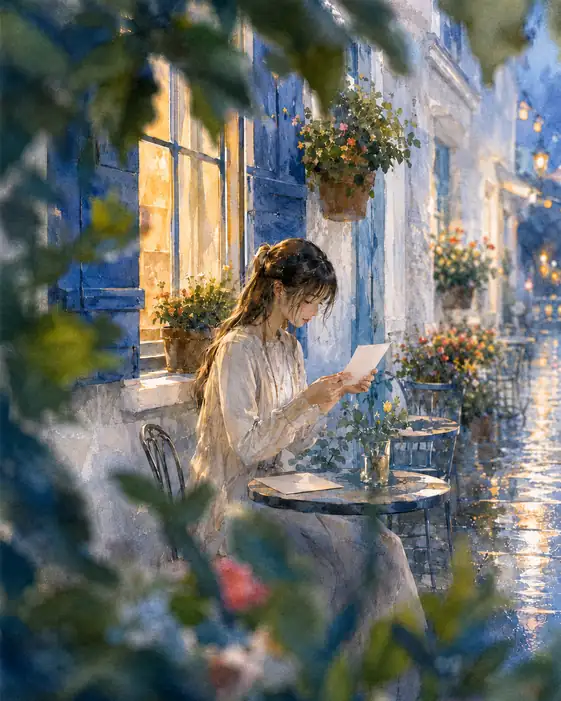 Reading Letters in the Drizzle-Kissed Cafe
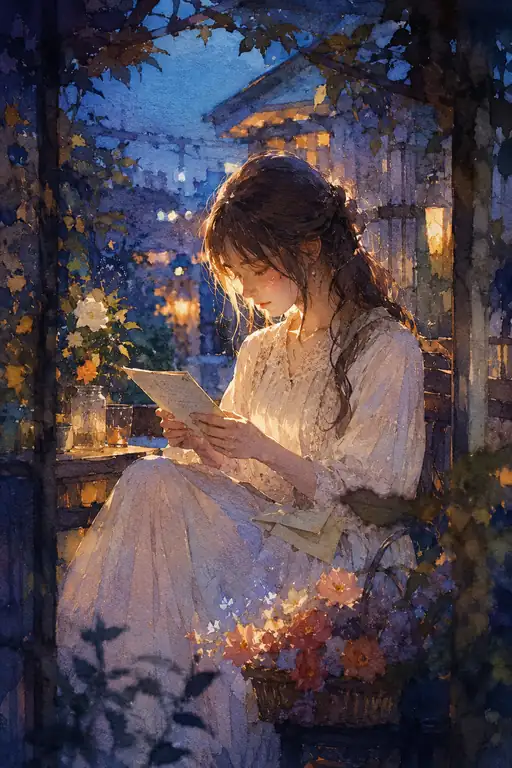 She Opens a Letter beneath the Rainlit Garden
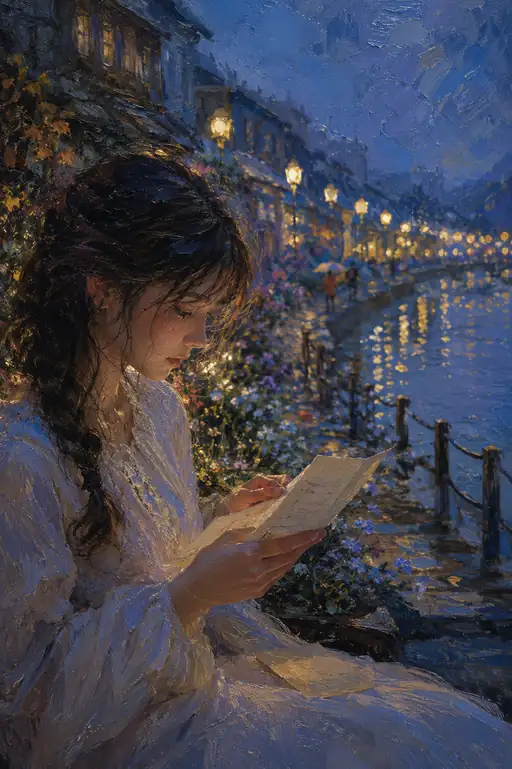 Whispers of a Distant Heart
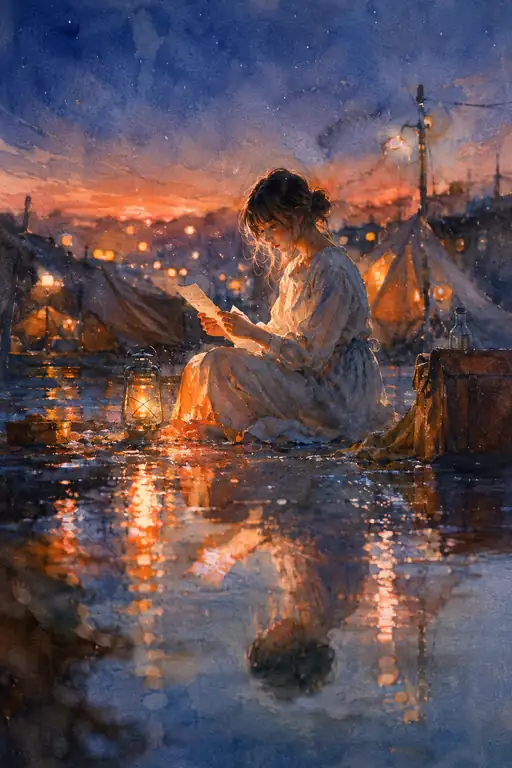 Midnight Letter Under the Canopy of Stars
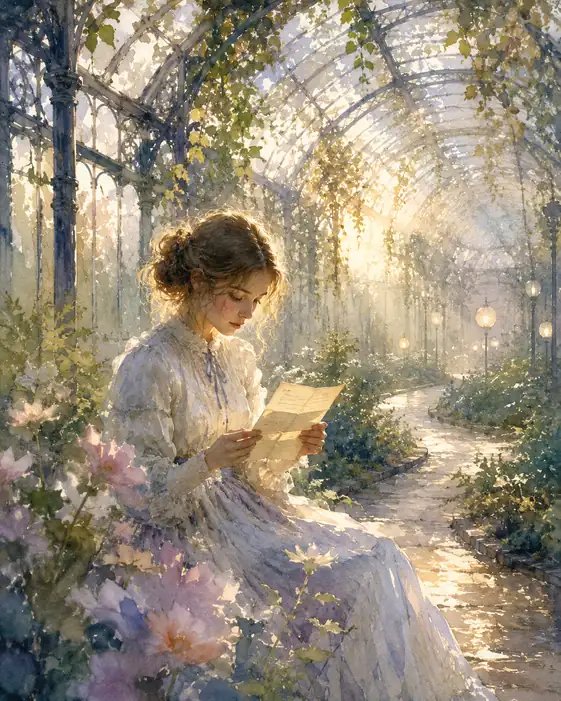 The Letter She Opened in a House of Sunlight
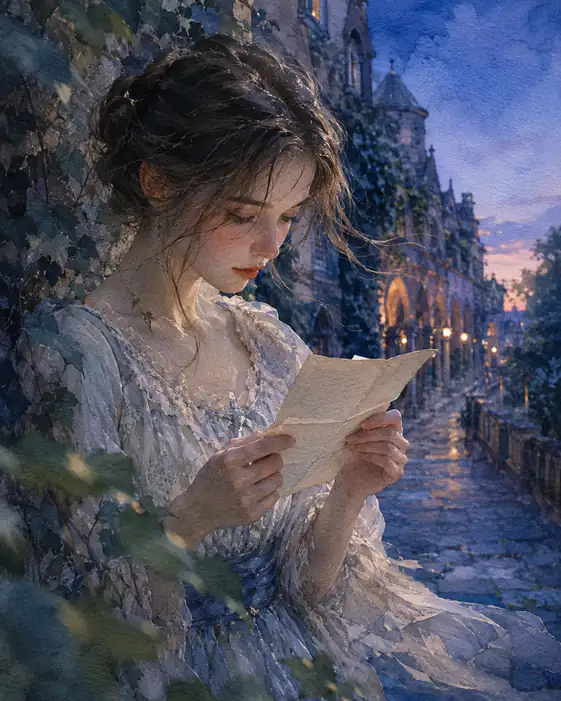 Letters Read in the Evening Breeze
 She Reads the River's Letter at Sunset