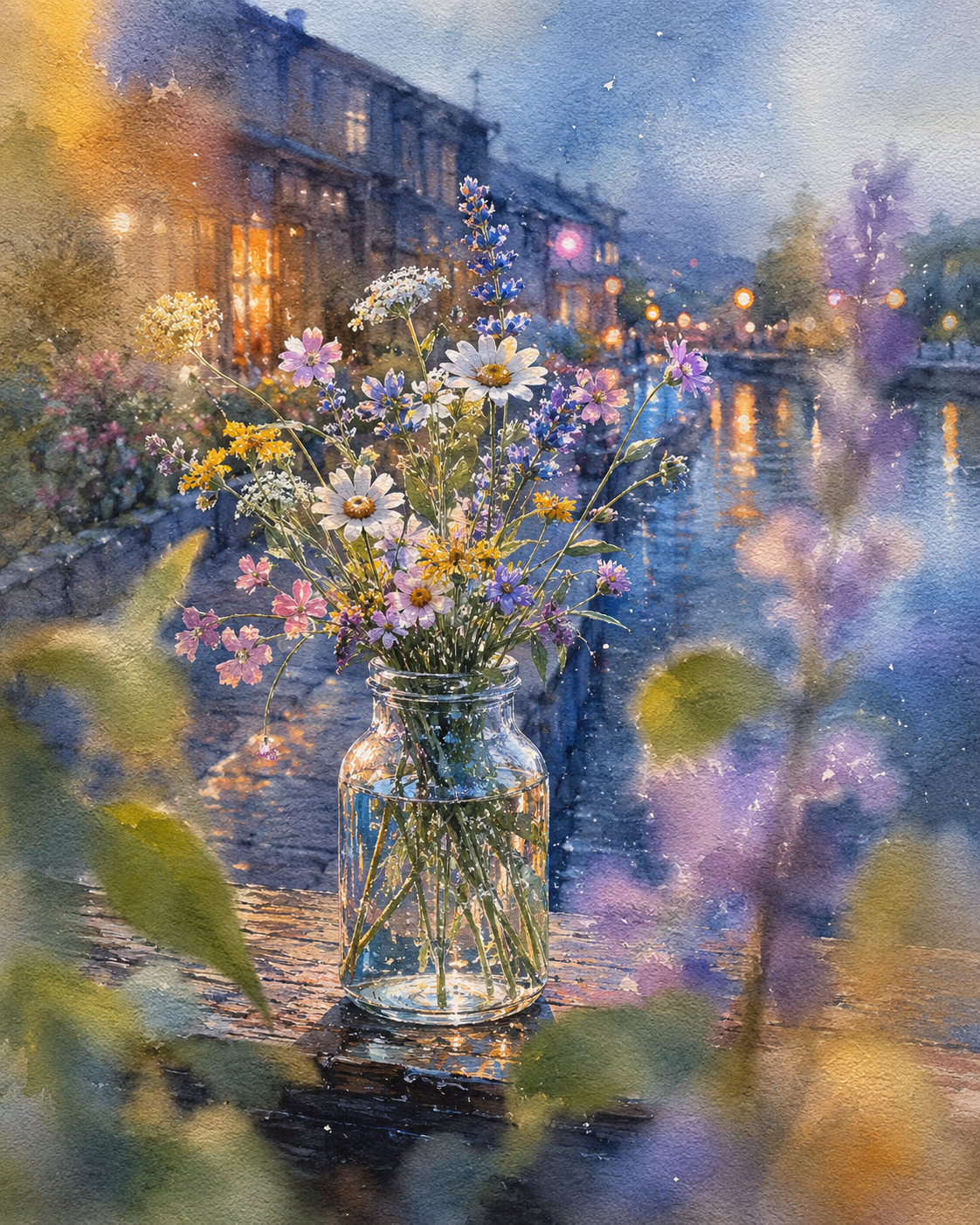
Evening Gathers in a Jar of Wildflowers
Critique
Introduction This twilight flower portrait centers a clear jar of meadow blooms against a softly blurred canal. The bouquet's crisp variety and the town's dissolving lights create a dialogue between what can be closely held and what remains expansive, distant, and atmospheric. Description The jar stands on a wet wooden sill in the lower center, half filled with clear water and a crossing bundle of green stems. White daisies, blue spikes, pink cosmoslike flowers, yellow clusters, and delicate white umbels spread above it. Large green and purple forms blur around the edges. Behind, a canal leads between dark houses under a blue-gray sky. Orange and magenta lamps repeat into depth and reflect vertically on water. Analysis The vessel forms a stable transparent cylinder beneath an open, asymmetrical bouquet. Tall blue spikes establish a central vertical, while curved side stems widen the silhouette. White flower disks echo circular background lights, linking sharp foreground and soft distance. Gold reflections enter the jar and articulate its waterline, rim, and base. Blurred foliage creates a shallow frame, and the canal's central recession supplies depth without competing with the flowers. Interpretation and Evaluation Selective focus turns attention into the image's main action. The flowers are available for intimate inspection, whereas the town remains sensed through color and light. Yet the two realms communicate through repeated circles and reflections. The jar preserves cut growth temporarily, while the canal suggests continuous flow; together they balance keeping with letting pass. Conclusion The work is persuasive in its restraint. It does not monumentalize the bouquet through scale alone, but through clarity amid atmospheric uncertainty. Close care and distant life coexist without hierarchy.
Same Subcategory
Similar Artworks
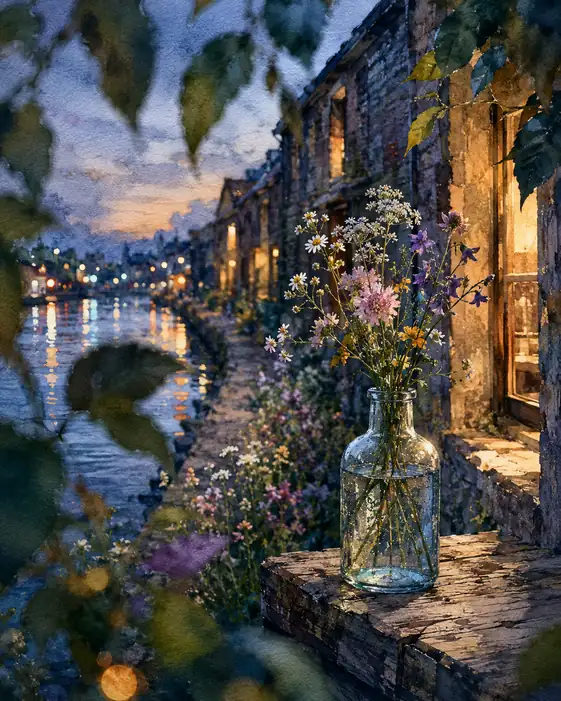 Wildflowers Waiting Beside the Blue Canal
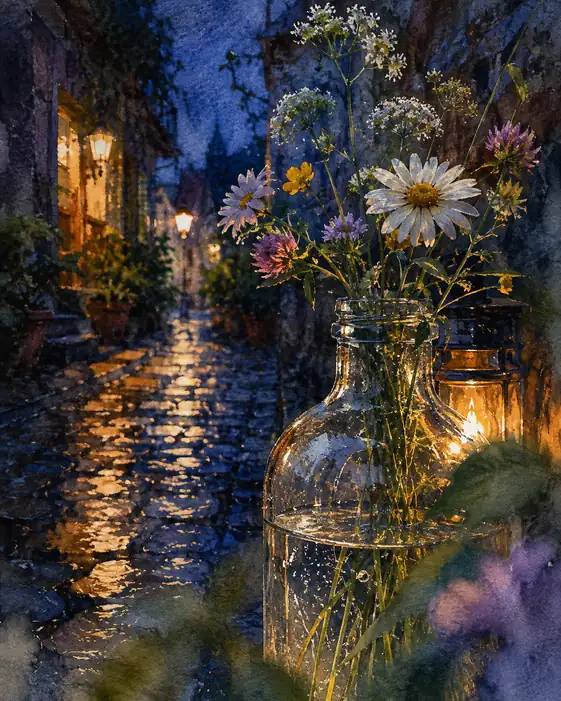 Wildflowers Borrow the Lantern's Gold
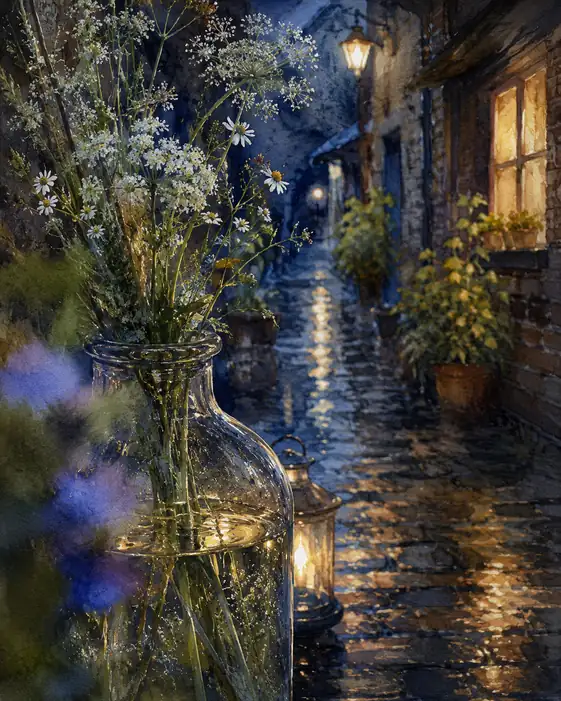 A Bottle Full of the Road's Last Light
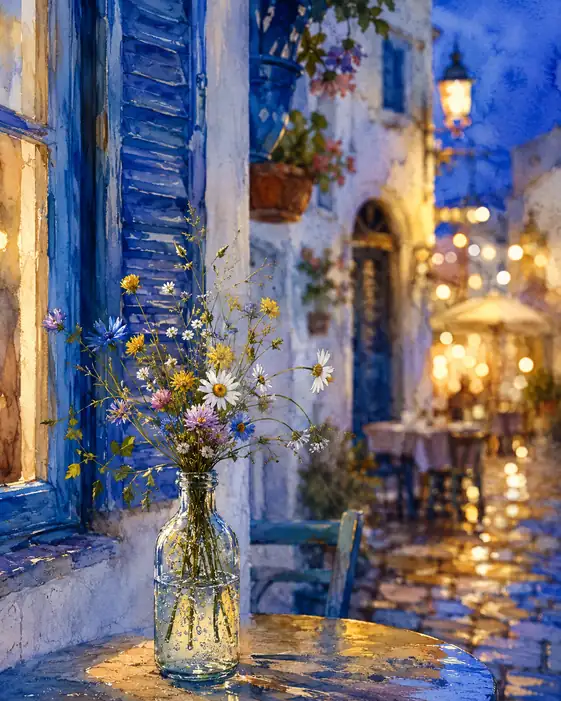 Wild Petals in the Blue Hour
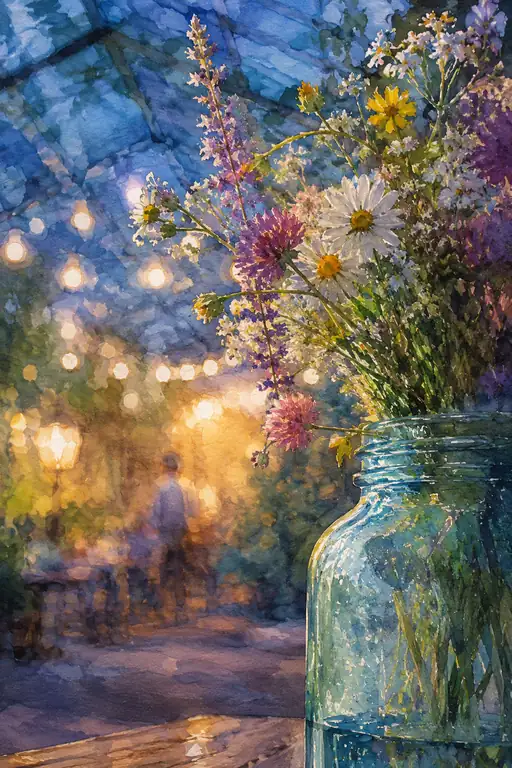 Evening Waits Beyond the Wildflower Jar
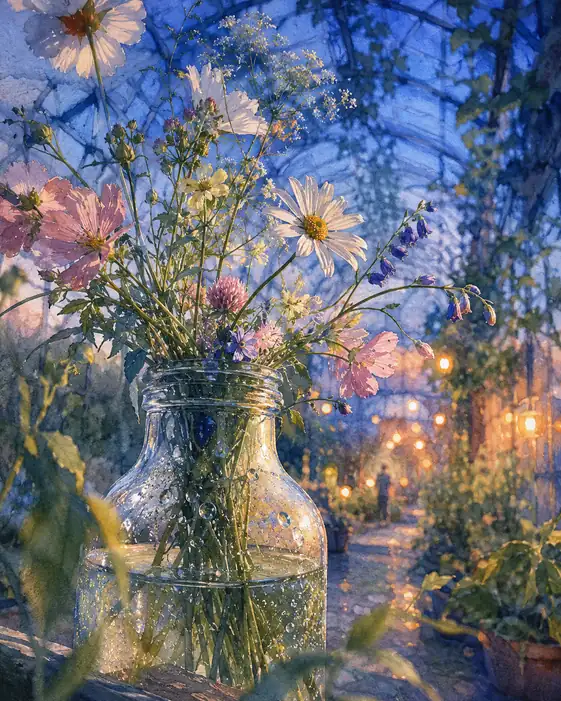 Wildflowers Drink the Blue-Hour Lanterns
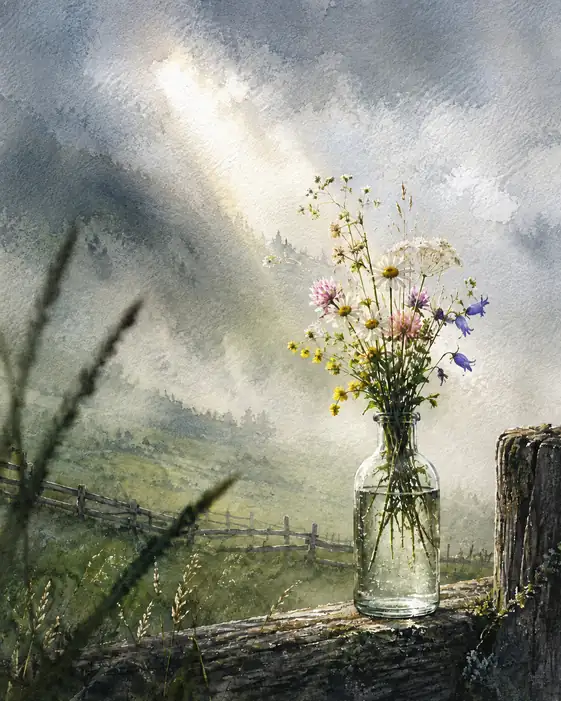 The Sky Opens for a Bottle of Meadow Flowers
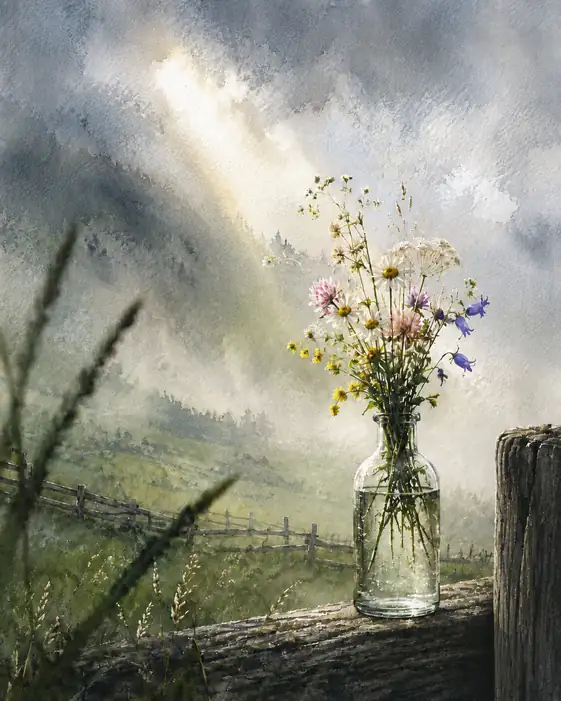 Wildflowers Holding Open the Storm
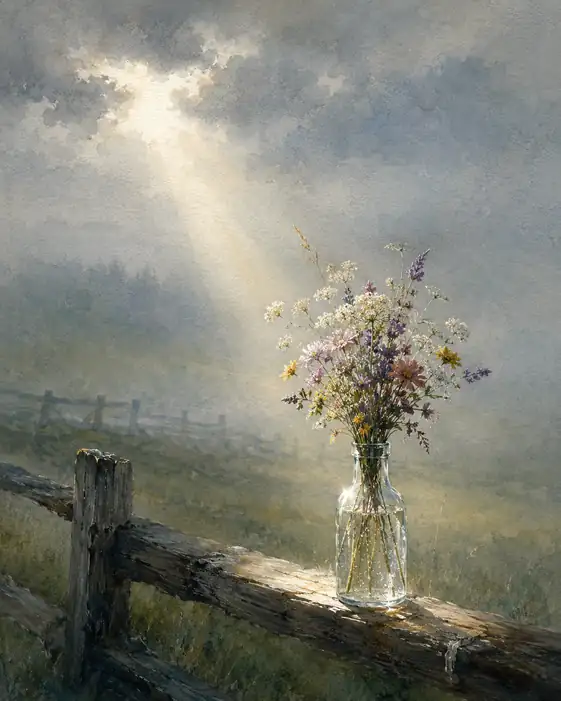 A Sunbeam Chose the Wildflower Vase
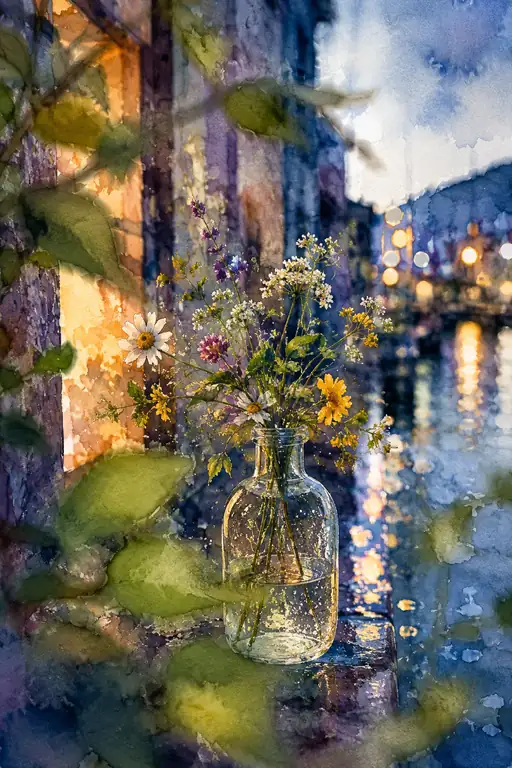 A Quiet Memory of the Night on the Windowsill