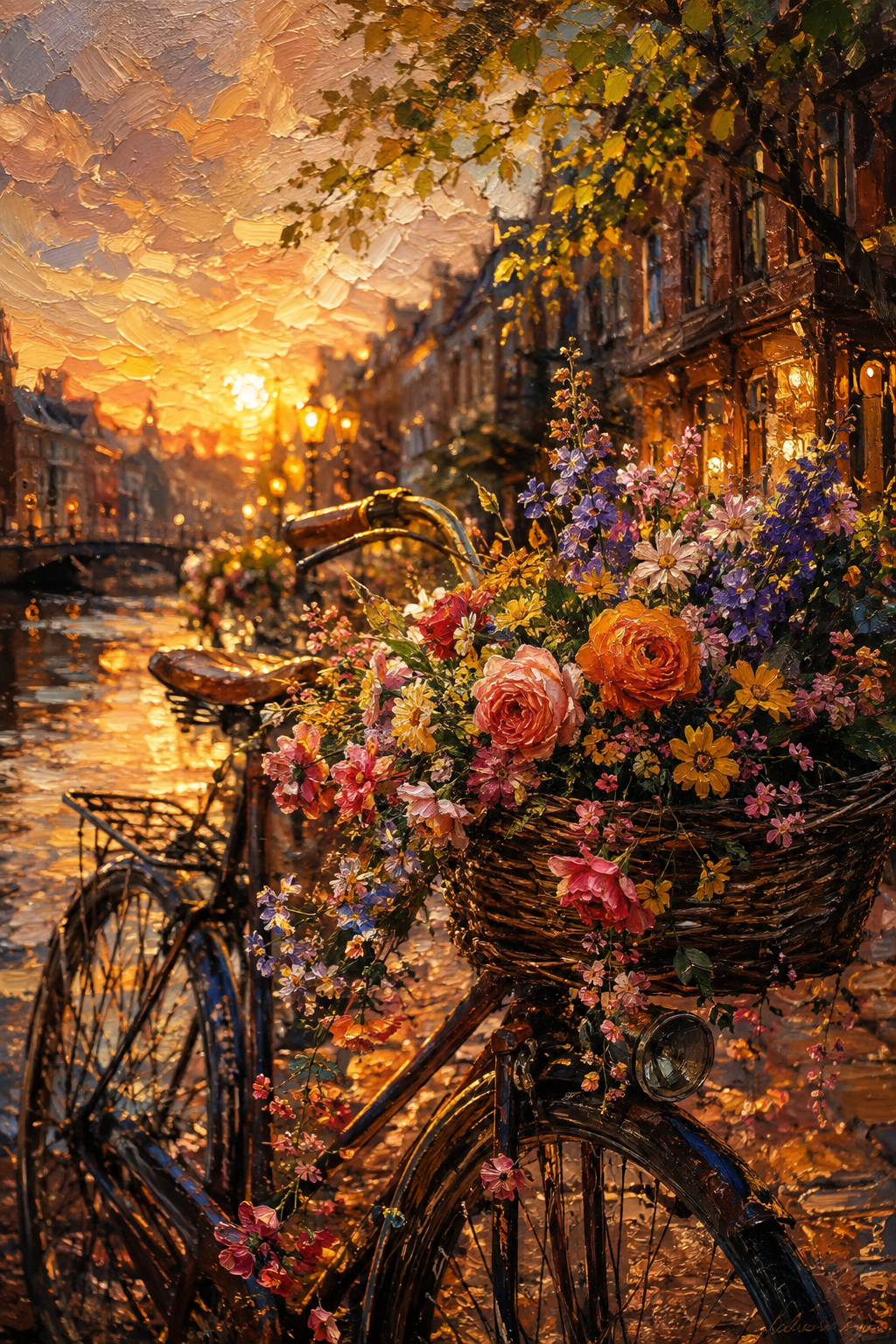
A Bicycle Carrying the Last Garden Home
Critique
Introduction This lavish sunset streetscape makes a flower-laden bicycle the foreground emblem of a canal town. Roses and small blossoms overflow the front basket, while water, lamps, and sky amplify their warmth into an atmosphere of generous movement. Description A dark blue-black bicycle stands diagonally across the lower half, its front wheel and lamp prominent at right. The large wicker basket contains orange and pink roses, violet sprays, yellow daisylike blooms, and trailing pink flowers. Curved handlebars rise behind it. At left, canal water leads toward an arched bridge and low sun. Old buildings, trees, and glowing lamps line the right bank. Gold reflections cover the wet pavement and water. Analysis The front wheel's circle and diagonal frame create strong mechanical structure beneath the irregular bouquet. Curved handlebars echo rose heads and the distant bridge. Dense flowers supply red, violet, yellow, and pink accents against dark metal, while sunset orange unifies them. The bicycle's perspective thrust points toward the canal's recession. Thick impasto across sky and reflections produces energetic surface movement, countered by crisp spokes and basket weave. Interpretation and Evaluation A bicycle implies mobility, but its extravagant floral load temporarily converts transport into display and gift. The blooms may be destined for delivery, making beauty something carried through the town rather than fixed in one garden. Sunset and wet ground enlarge this modest act through reflection. Despite romantic abundance, visible chain, wheel, lamp, and worn frame retain practical credibility. Conclusion The painting joins utility and celebration without sacrificing either. Mechanical lines support organic excess, and the canal opens a route for its imagined journey. Generosity appears mobile, luminous, and woven into everyday urban life.
Same Subcategory
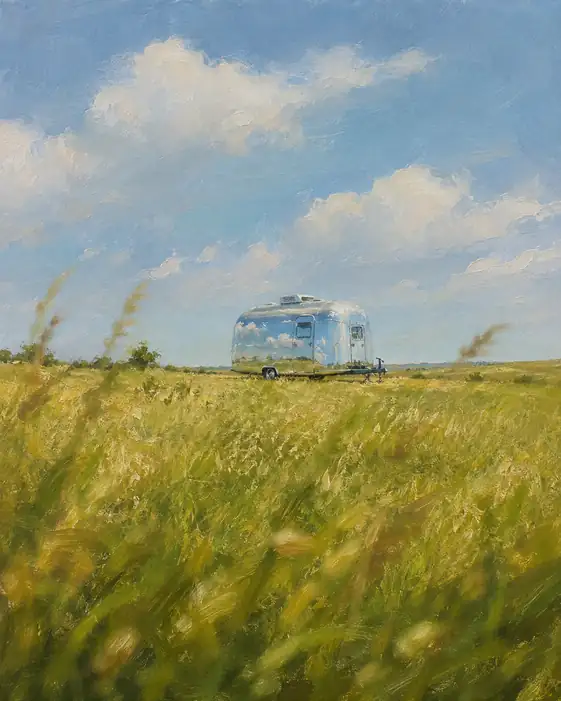 The Meadow Keeps a Room for the Sky
Similar Artworks
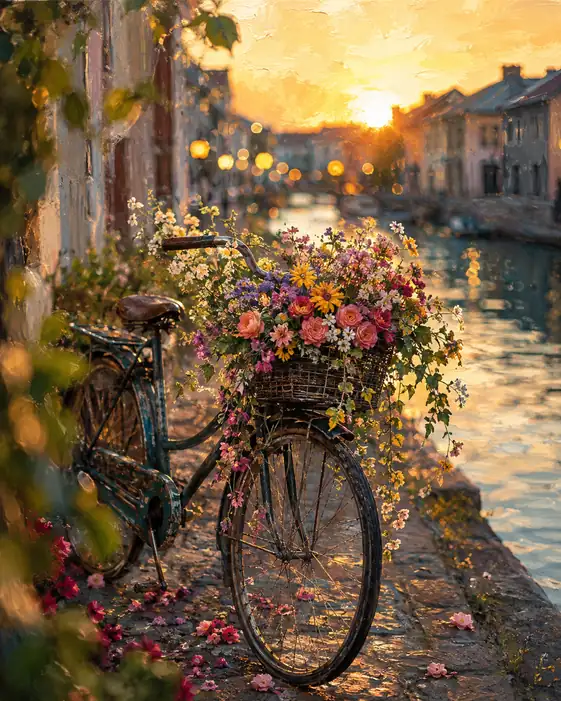 Sunset Rests in the Bicycle's Basket
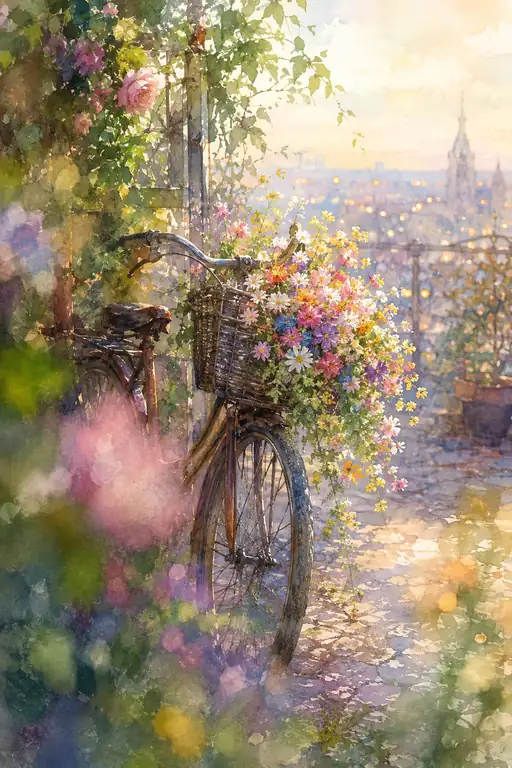 A Bicycle Brings Spring to the Rooftops
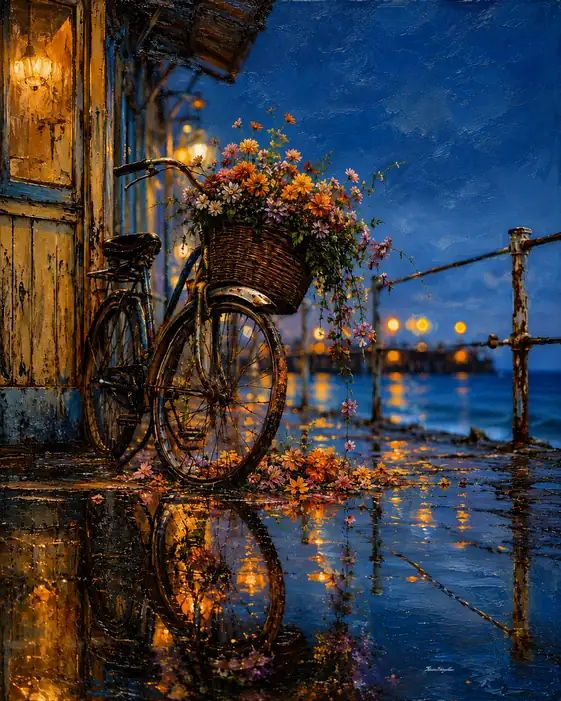 The Flower Bicycle Waits beside the Evening Sea
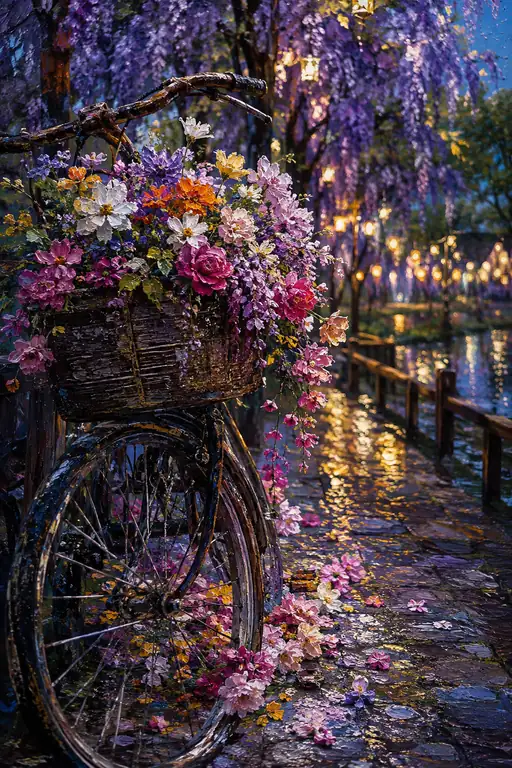 A Bicycle Overflows into the Lantern Rain
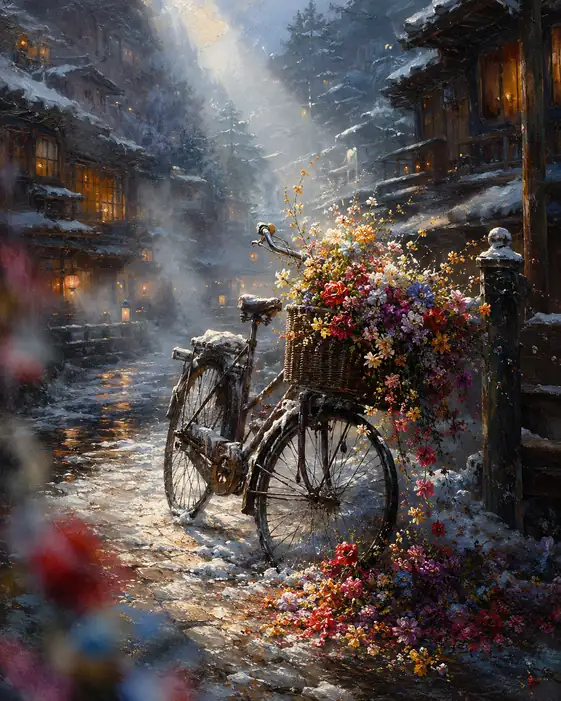 A Bicycle Brings Summer Flowers into Winter
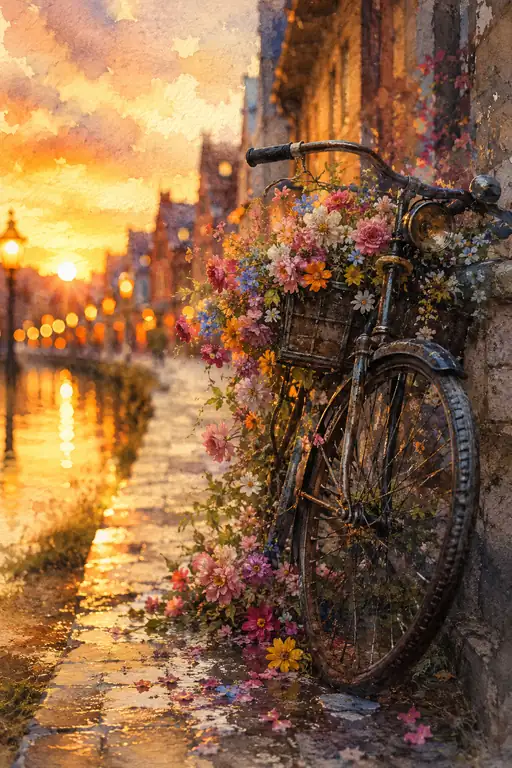 A Journey Laden with Flowers
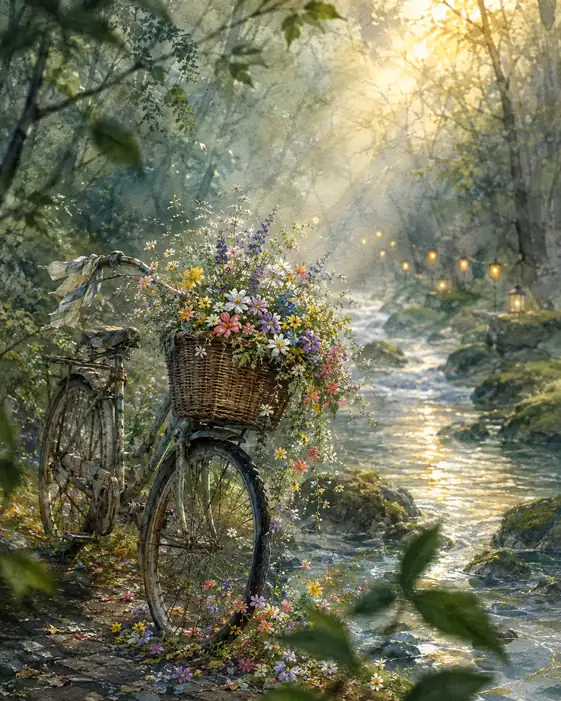 The Flower Bicycle Finds a Road of Water
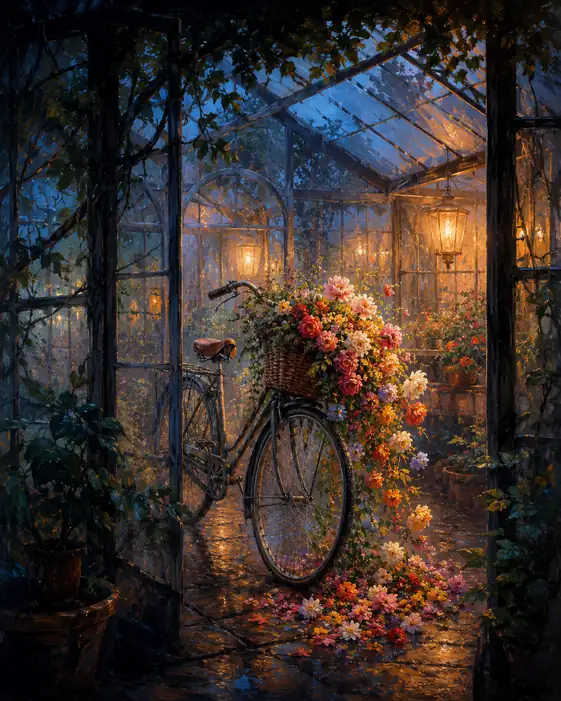 The Bicycle That Spilled a Garden of Light
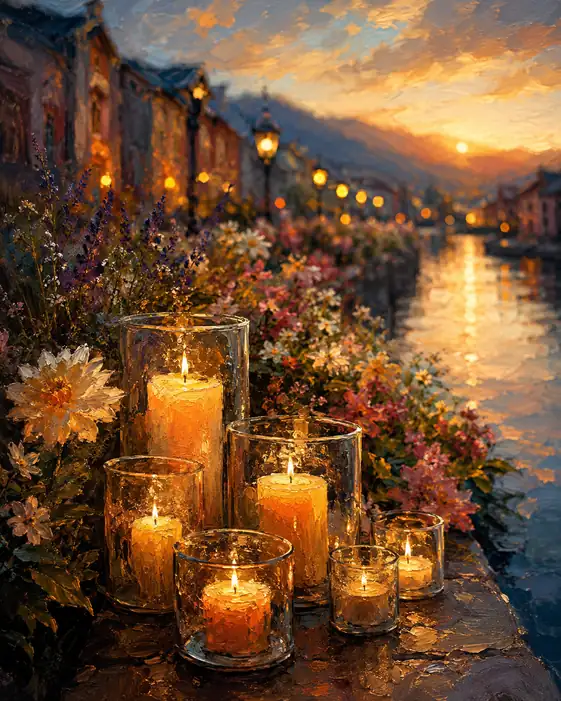 Candles Bloom Where the Sun Says Farewell
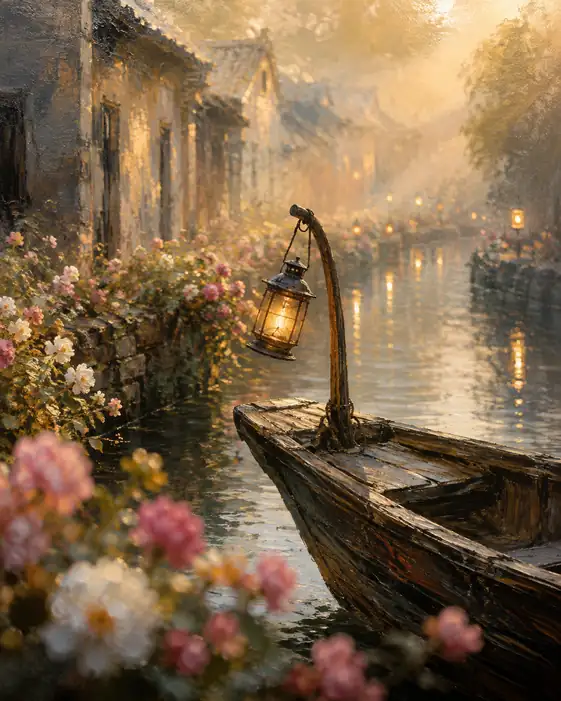 The Boat That Borrowed Dawn's Lantern