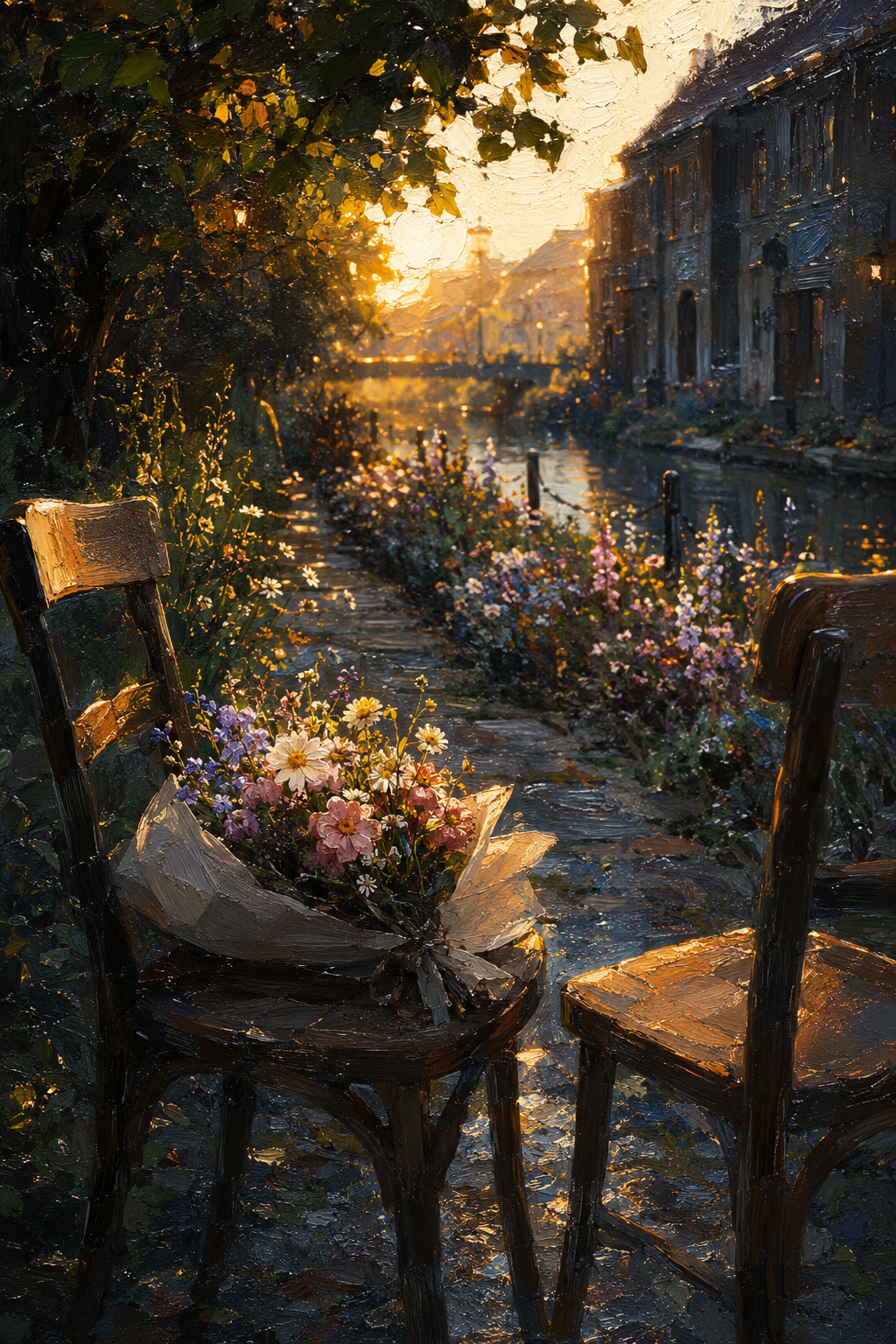
The Flowers Came Before You
Critique
Introduction This canal scene stages two chairs beneath a dark canopy, with a wrapped meadow bouquet on the left seat. An empty pause becomes a prepared encounter between intimate shade and radiant distance. Description The chairs occupy the lower foreground, their dark worn frames angled toward each other and the canal. Brown paper enfolds white, pink, lavender, yellow, and red flowers on the left chair; the right seat remains empty and catches a broad gold highlight. A narrow path bordered by abundant flowers runs between trees and water. Across the canal, old buildings darken against a bright sunlit opening, while reflections and distant lamps glimmer. Analysis The two chair backs create a near gateway aligned with the receding path. Their unequal placement and the bouquet's asymmetrical mass avoid static formality. Heavy foliage establishes a deep dark canopy, intensifying the central gold atmosphere. Thick light strokes catch chair edges, paper folds, petals, and wet stone, tying separate materials together. The canal's cool strip balances warm illumination, while flower borders repeat the bouquet at environmental scale. Interpretation and Evaluation The wrapped flowers imply intention more strongly than a casual garden cutting; someone has prepared them for giving or receiving. The unoccupied companion chair leaves the exchange pending. Yet the scene is not anxious, because the stable furniture, cultivated path, and enduring waterway hold the interval securely. The bouquet on one seat may indicate a specific absent person, while ambiguity permits anticipation, remembrance, or reconciliation. Conclusion The work makes waiting visibly hospitable. Shade protects the near arrangement, sunlight opens its future, and the canal supplies a shared direction of view. Absence is treated as room deliberately kept for another presence.
Same Subcategory
Similar Artworks
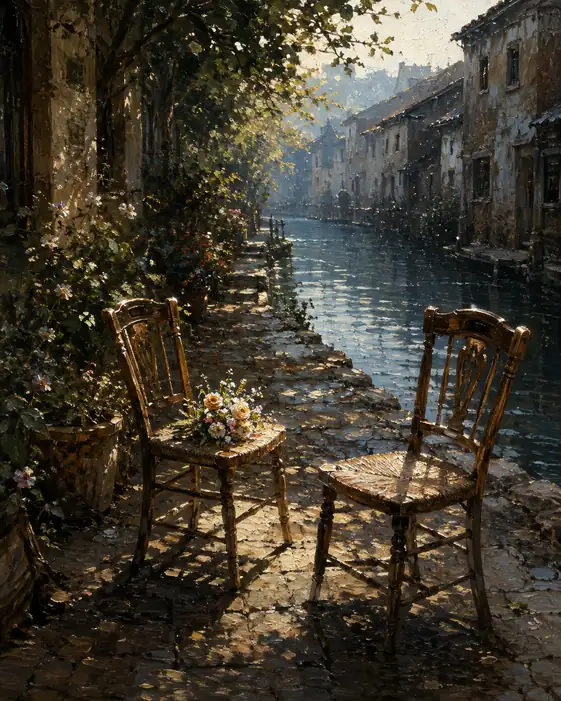 One Bouquet Between Two Empty Chairs
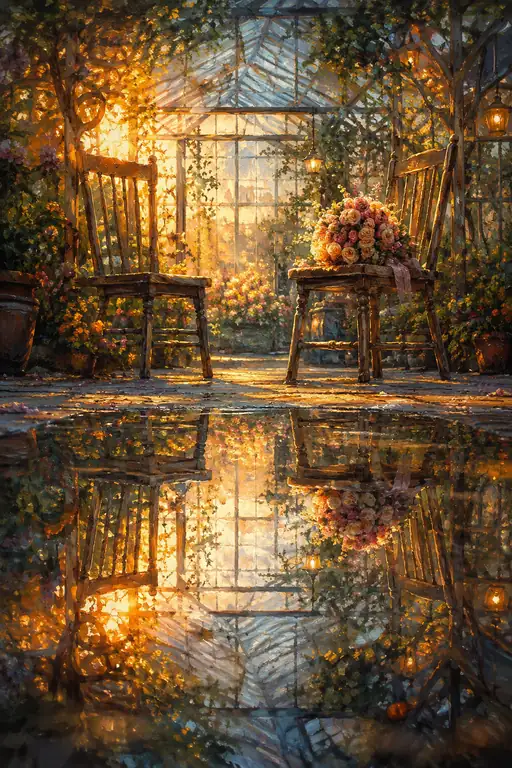 The Bouquet Kept a Chair for the Sun
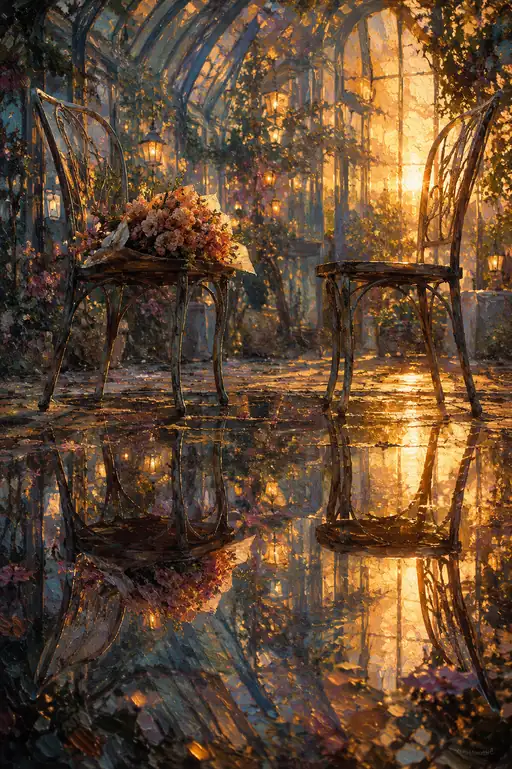 Two Chairs Hold the Sunset Between Them
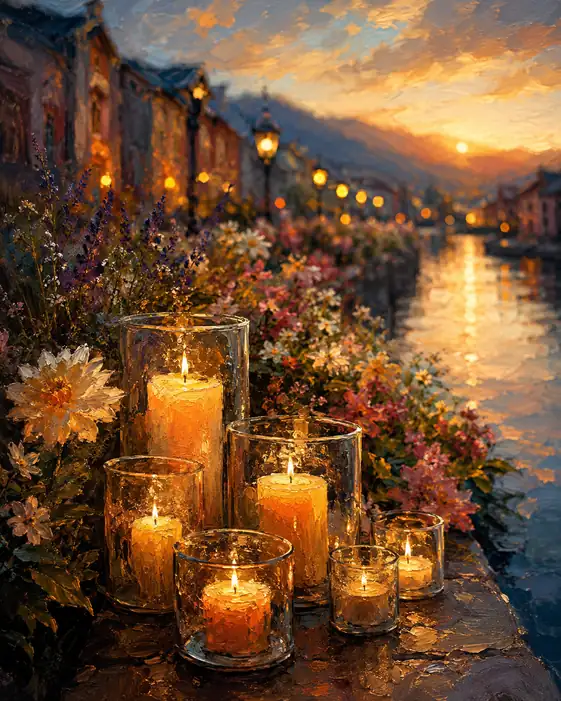 Candles Bloom Where the Sun Says Farewell
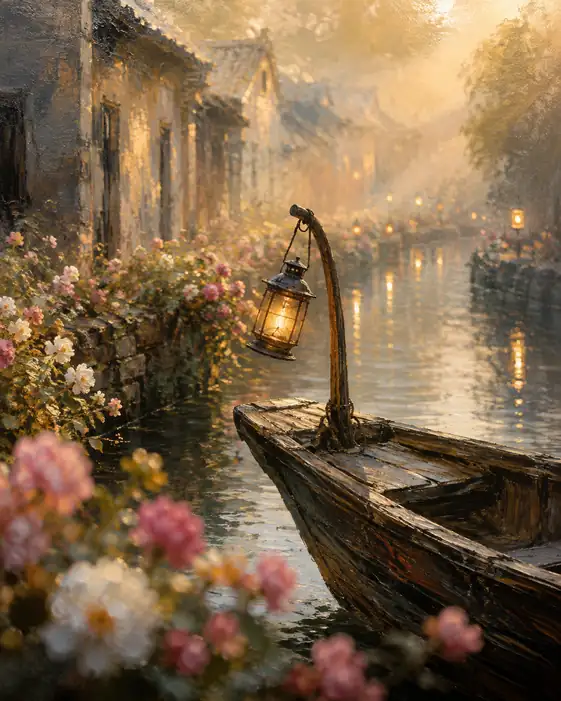 The Boat That Borrowed Dawn's Lantern
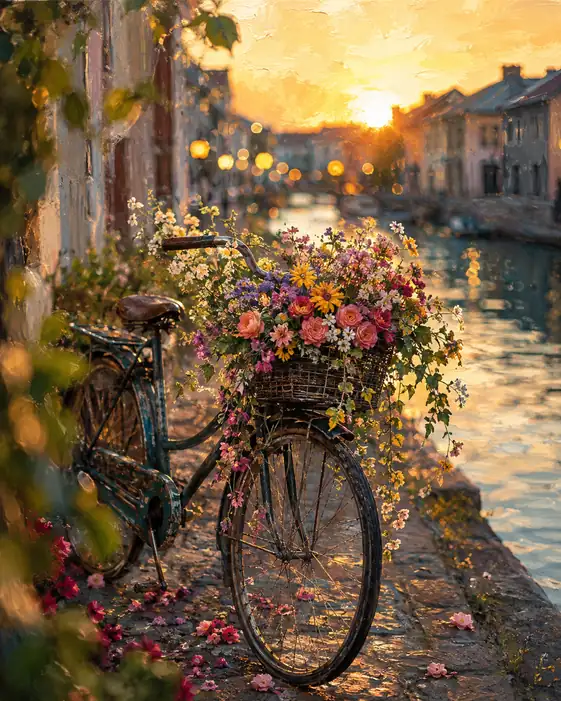 Sunset Rests in the Bicycle's Basket
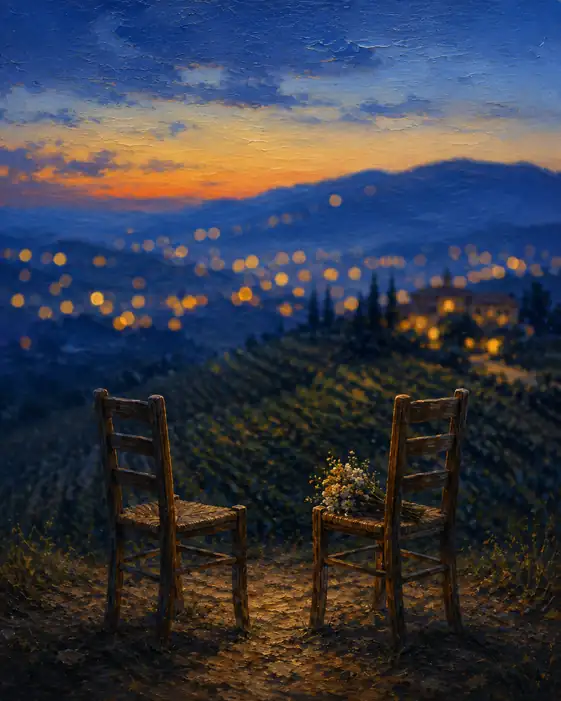 Two Chairs Await the Valley's First Stars
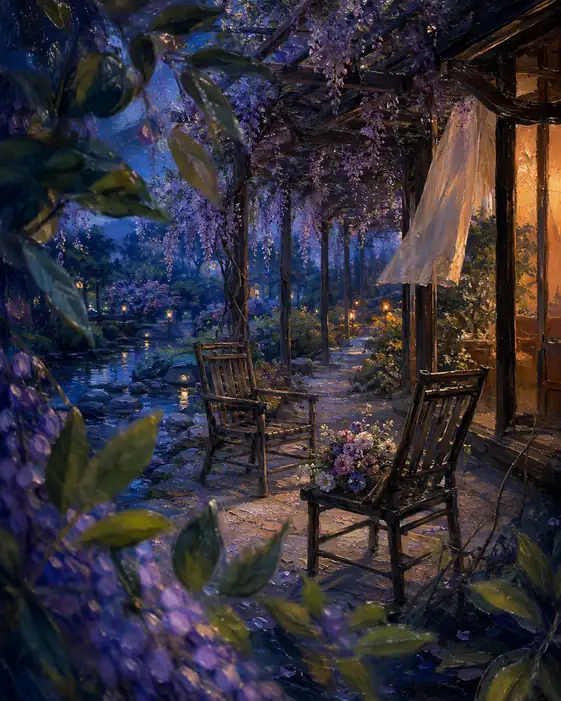 Two Chairs Keep the Garden's Evening Secret
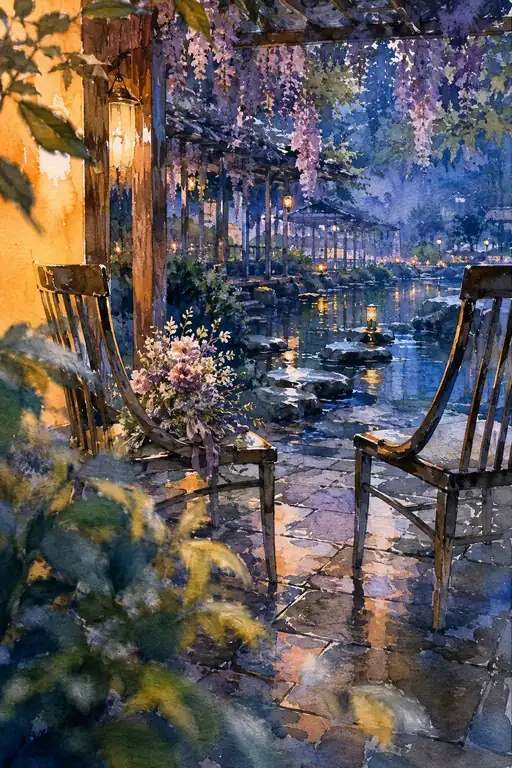 Two Empty Chairs Await the Wisteria Night
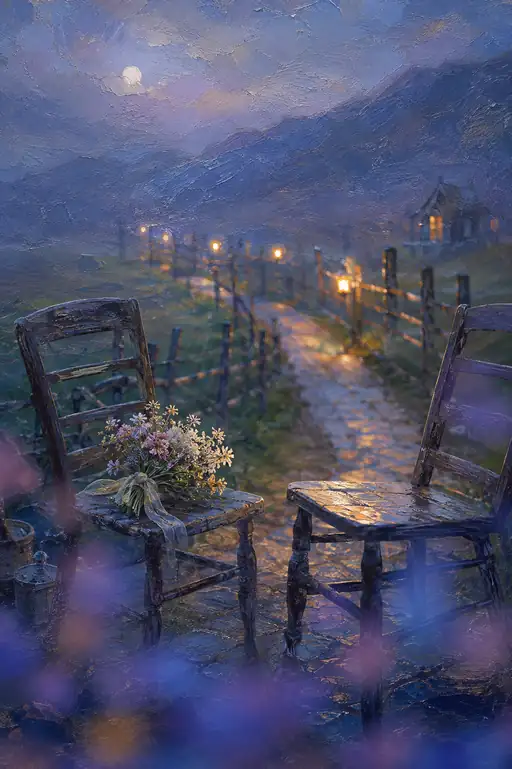 Two Chairs Waiting at the Moonlit Turning