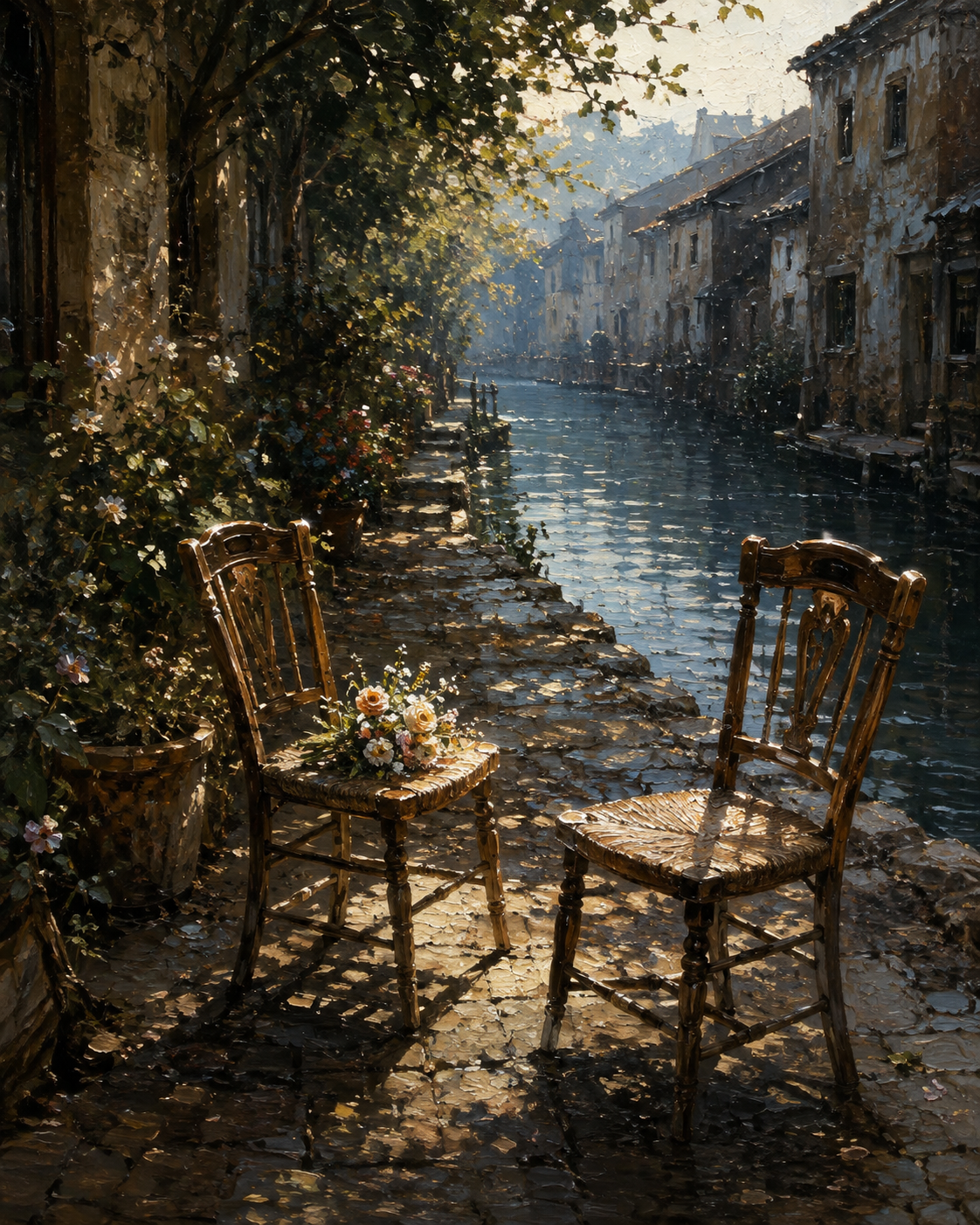
One Bouquet Between Two Empty Chairs
Critique
Introduction This canal-side scene places two empty wooden chairs in a pool of late sunlight, one holding a small bouquet. The absence of sitters creates neither abandonment nor desolation; instead, the arrangement prepares a quiet space for meeting, memory, or return. Description Two worn chairs stand on uneven stone in the lower foreground, angled slightly toward each other and the canal. Their carved backs and woven seats catch warm highlights. A modest bouquet of pale roses and small white flowers rests on the left chair. Dense garden growth and pots line the shaded left bank beneath trees. Blue water recedes between old houses at right, while a luminous opening and hazy roofs close the distance. Analysis The chairs establish two strong vertical forms and an implied conversational interval between them. Their unequal angles keep the pairing natural rather than ceremonial. Long shadows extend toward the viewer, anchoring the furniture to the textured ground. Warm wood and flowers stand against cool water and distant architecture. The canal's central recession opens the composition beyond the intimate foreground, while the leafy canopy creates protective shade. Interpretation and Evaluation Empty chairs inherently anticipate bodies, and the bouquet makes that anticipation personal without specifying a recipient. The arrangement may follow a departure or precede an encounter; ambiguity sustains its tenderness. Weathered surfaces suggest repeated use, so the scene feels inhabited even in human absence. Facing water rather than one another, the seats also propose companionship based on sharing a view. Conclusion The work gives absence a hospitable form. Light prepares the chairs, flowers mark one place, and the canal offers a common horizon. Waiting becomes calm, material, and open to fulfillment.
Same Subcategory
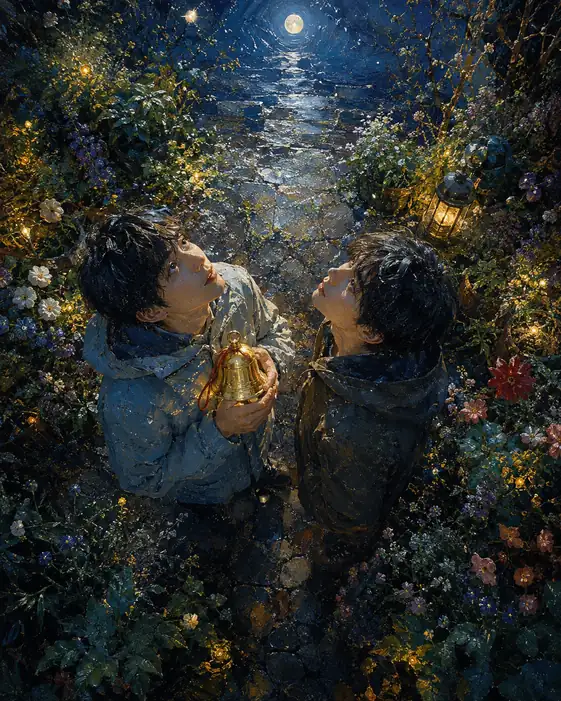 When the Bell Calls Down the Moon
Similar Artworks
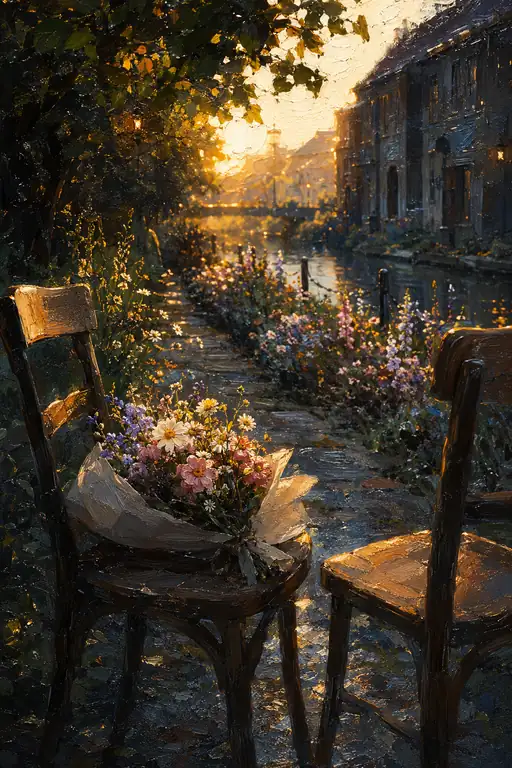 The Flowers Came Before You
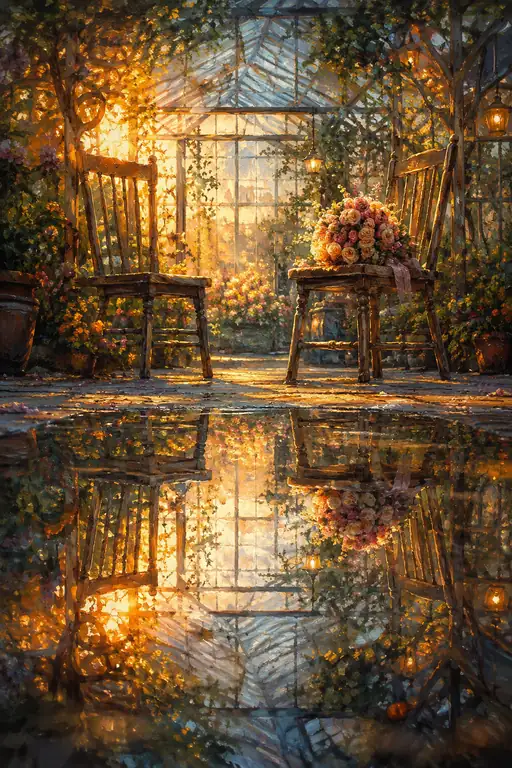 The Bouquet Kept a Chair for the Sun
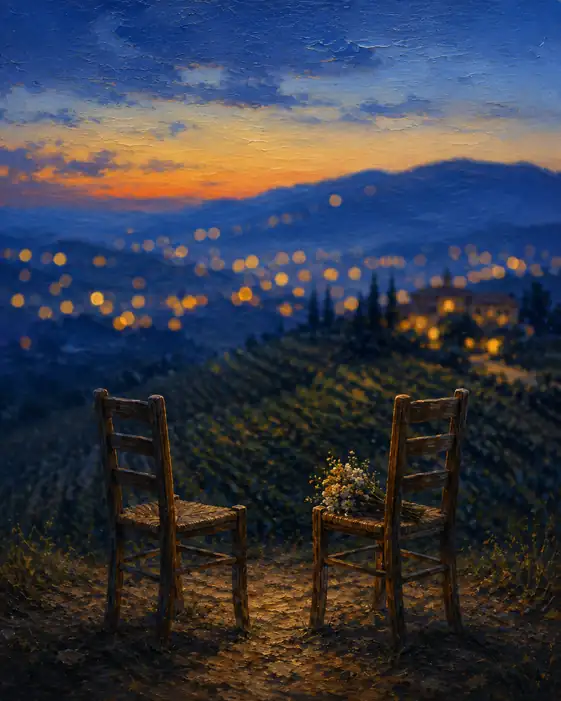 Two Chairs Await the Valley's First Stars
 An Unspoken Promise on Cobalt Wood
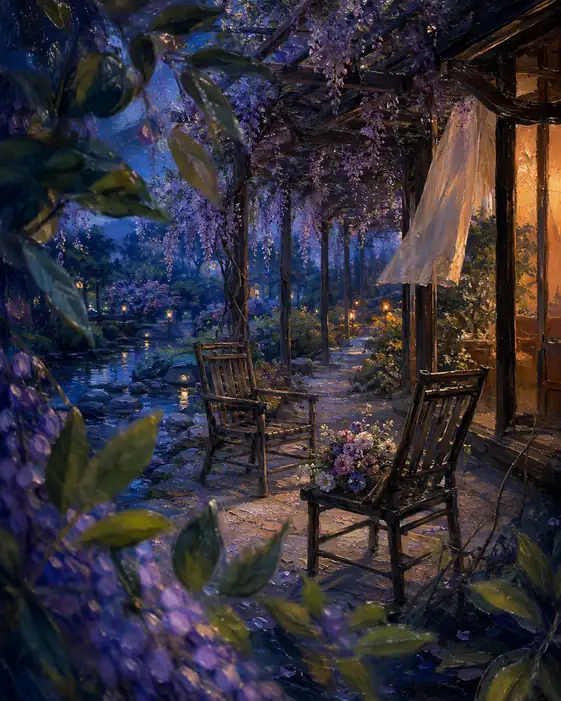 Two Chairs Keep the Garden's Evening Secret
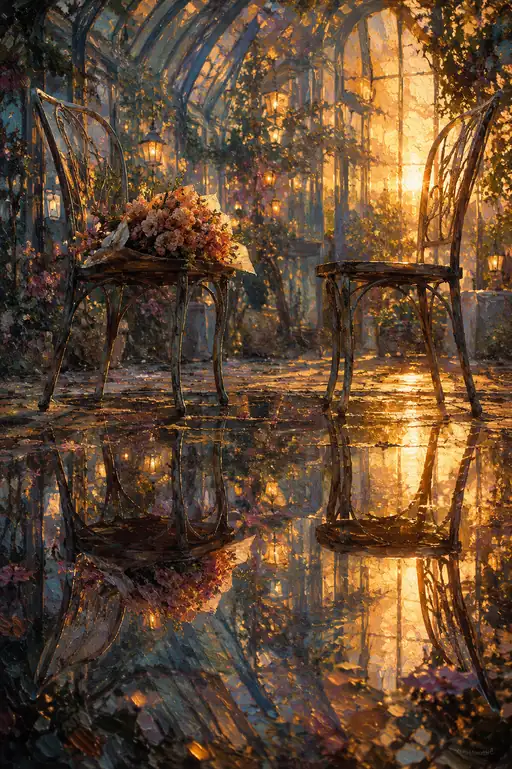 Two Chairs Hold the Sunset Between Them
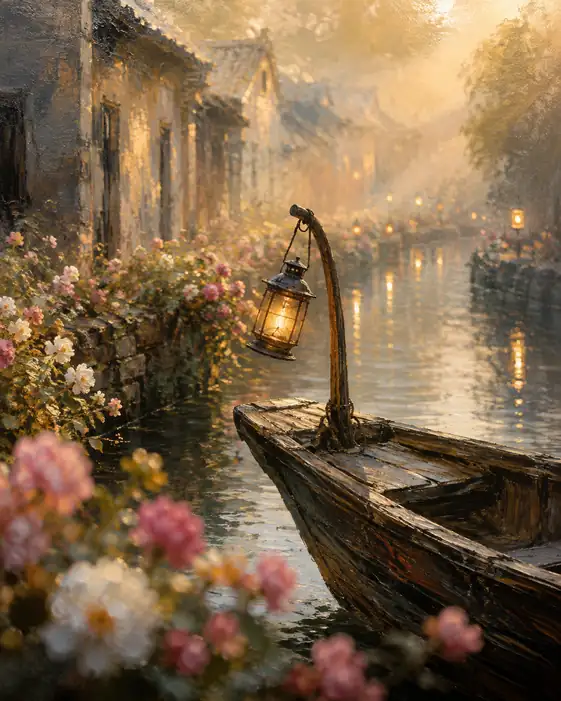 The Boat That Borrowed Dawn's Lantern
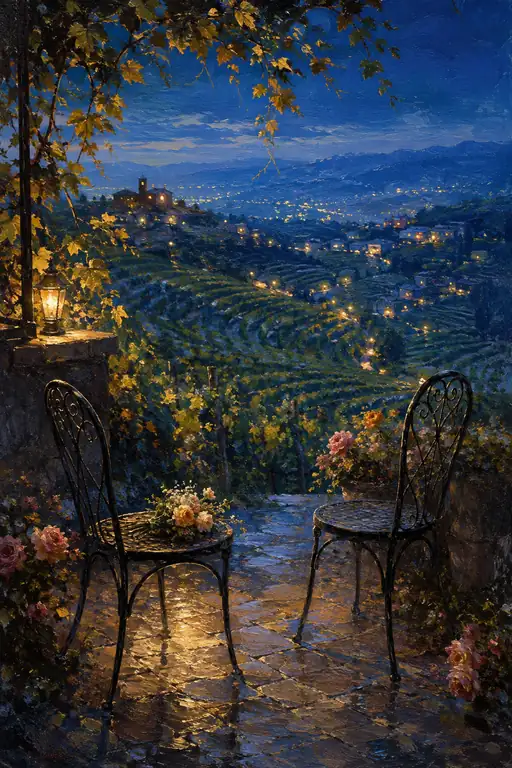 Two Garden Chairs Share the Valley's Blue Hour
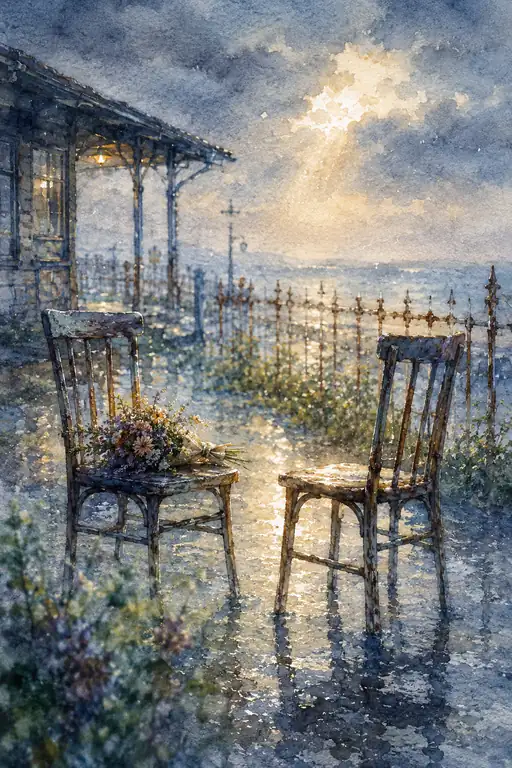 Two Chairs Face the Sea after the Rain
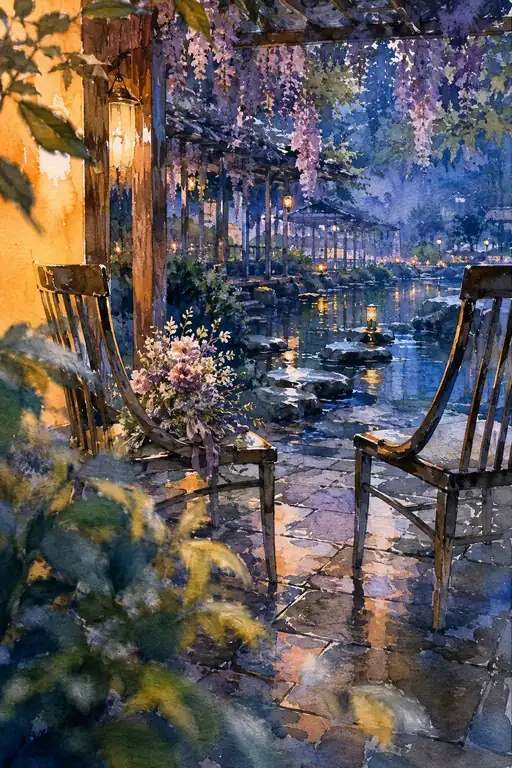 Two Empty Chairs Await the Wisteria Night