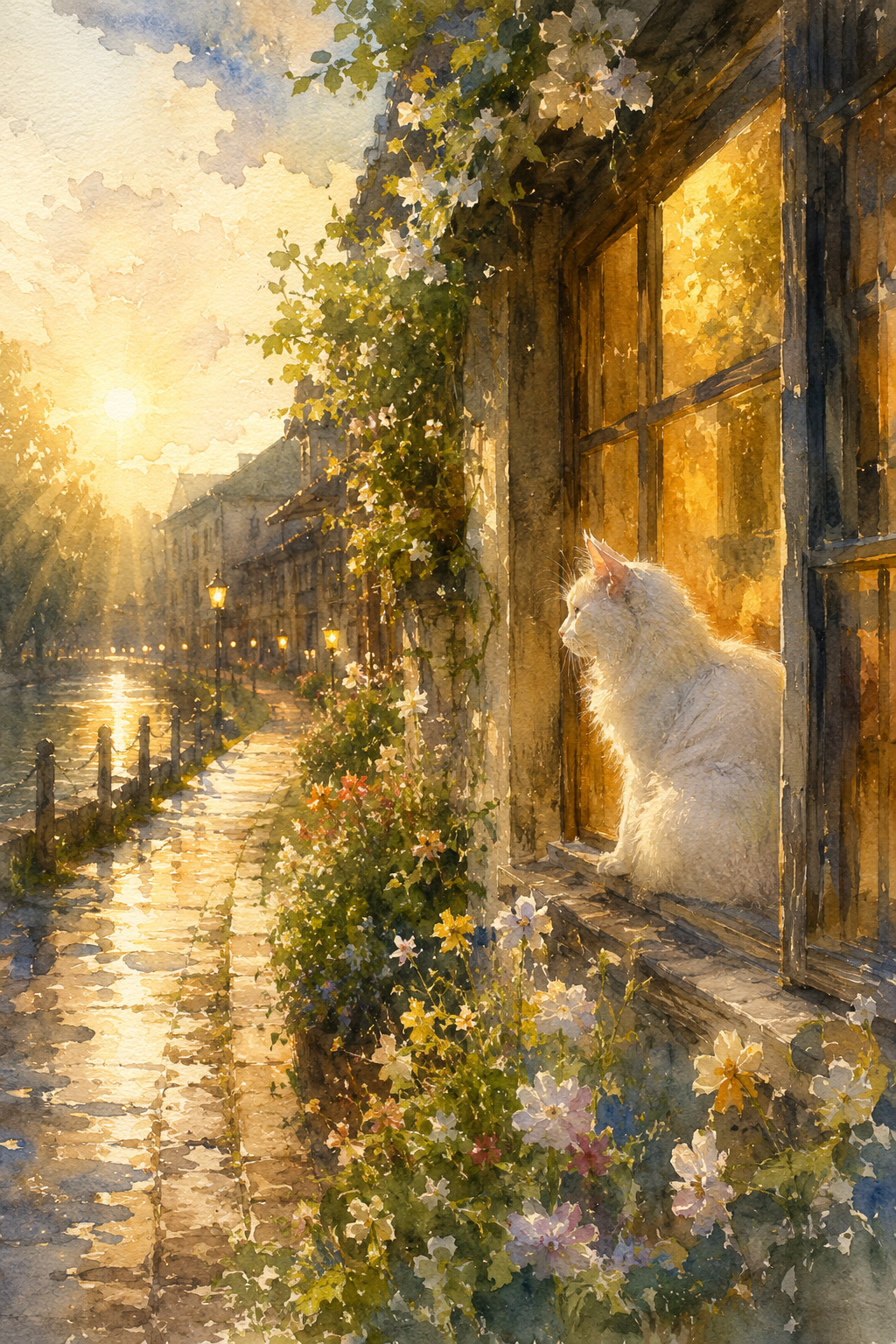
The White Cat Who Watches Morning Arrive
Critique
Introduction This canal scene frames a white cat seated in an open window amid flowers. Golden light unites animal, home, walkway, and water, turning watchful stillness into secure participation in the world. Description The long-haired cat sits on the right windowsill, facing left toward the canal with upright ears and half-closed eyes. Warm interior light surrounds its white body, whose fur catches a bright rim. Weathered blue-gray frames border the opening. White, pink, yellow, and blue flowers climb around the wall and fill boxes below. At left, a wet stone path follows reflective water toward lamps, trees, and distant houses beneath a pale sun. Analysis The cat's vertical silhouette anchors the architectural foreground, while canal and path recede diagonally into light. Its white fur repeats nearby blossoms and the brightest paving highlights, integrating animal and setting. Dark window bars give structure to the expansive gold atmosphere. Backlighting separates ears, whiskers, and chest fur through fine luminous edges. Repeated lamps punctuate the path, and dense flowers soften the transition between masonry and water. Interpretation and Evaluation The open window marks a threshold, but the cat appears neither confined nor intent on escape. Its composed gaze suggests ownership through attention: the canal is part of its habitual territory. Interior warmth and exterior sunlight overlap around the body, dissolving a strict domestic-public division. The profuse flowers imply care extending from household to street, making the cat's security socially and materially supported. Conclusion The image turns a familiar animal pose into a meditation on belonging. Stillness remains active because gaze, light, and perspective travel outward. Home is presented not as enclosure, but as a stable point from which the wider world can be watched.
Same Subcategory
Similar Artworks
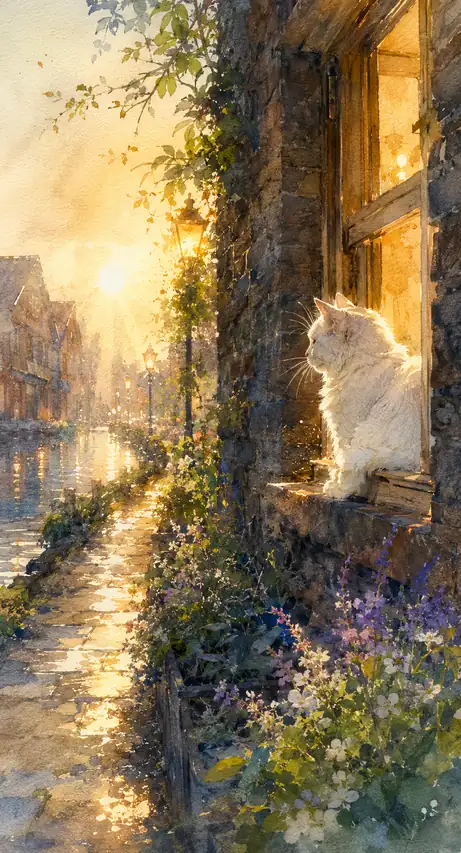 Sunset Finds the Cat at the Canal Window
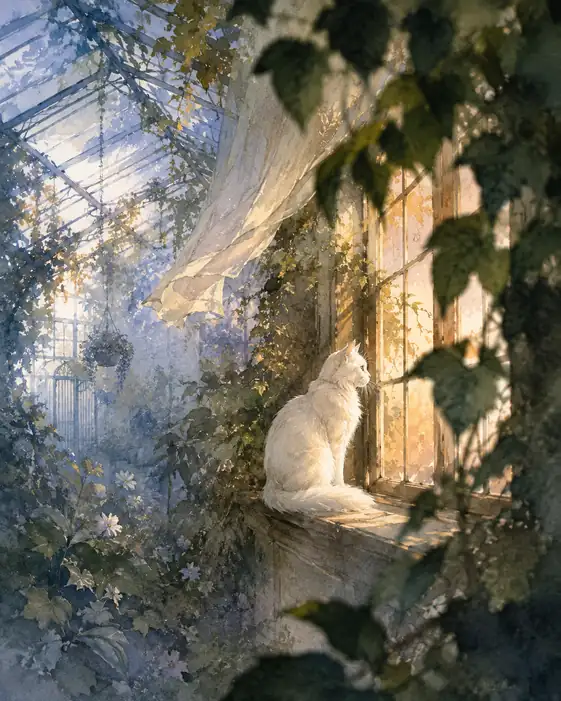 The White Cat Watches Morning Enter the Glasshouse
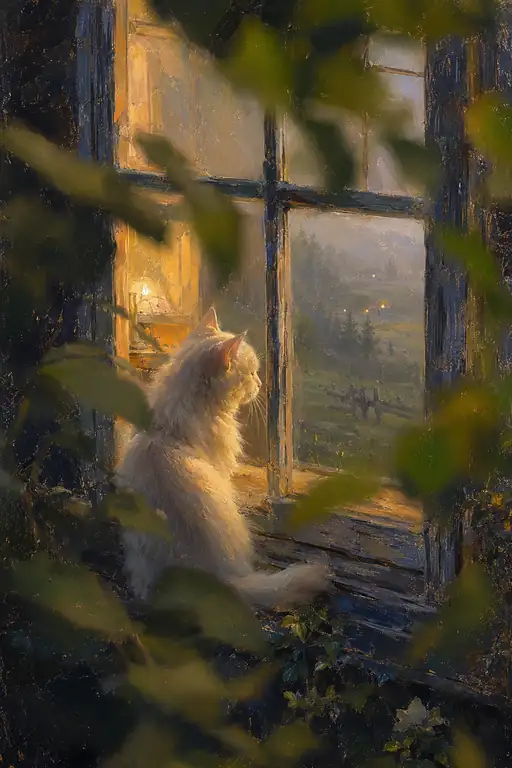 The Cat Who Watched Evening Cross the Fields
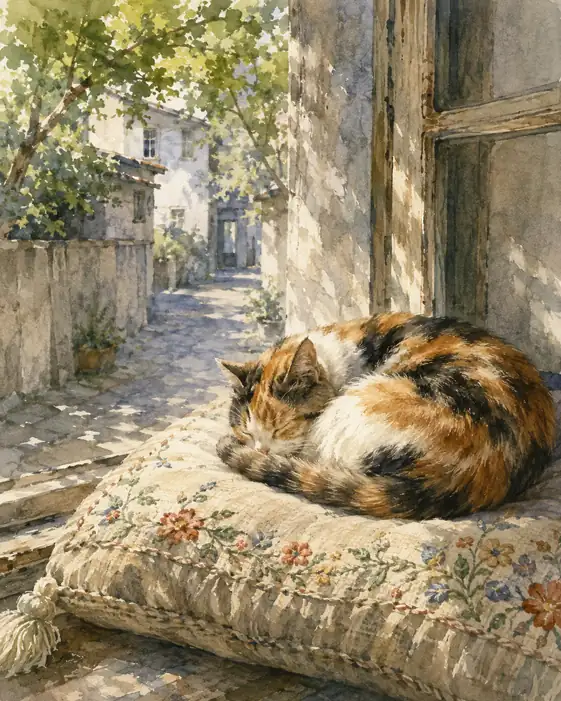 The Alley Dreams on a Flowered Pillow
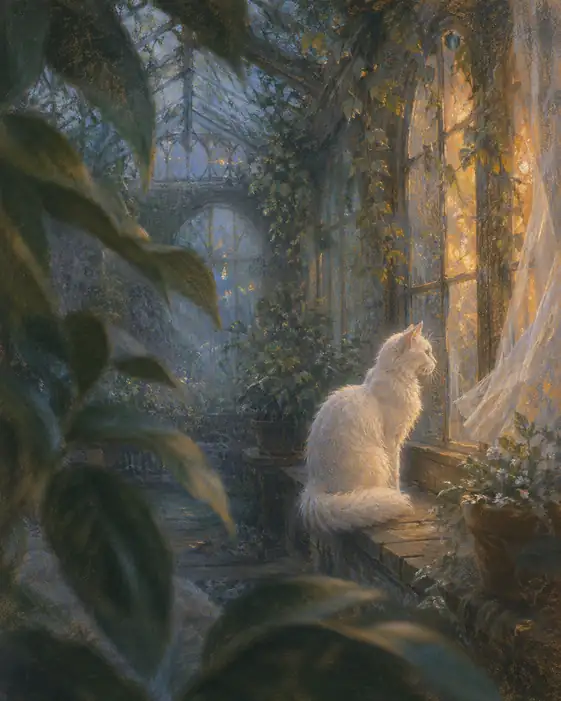 The Greenhouse Cat Waits for the Curtain of Light
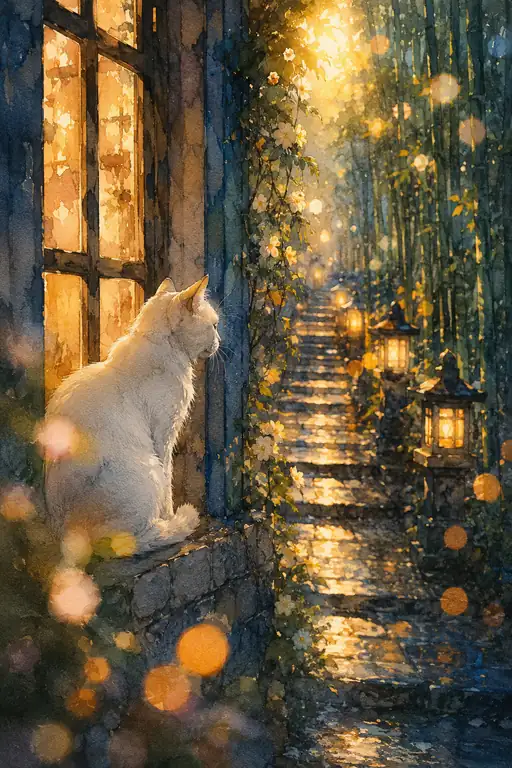 Silent Gaze Beyond the Bamboo Lanterns
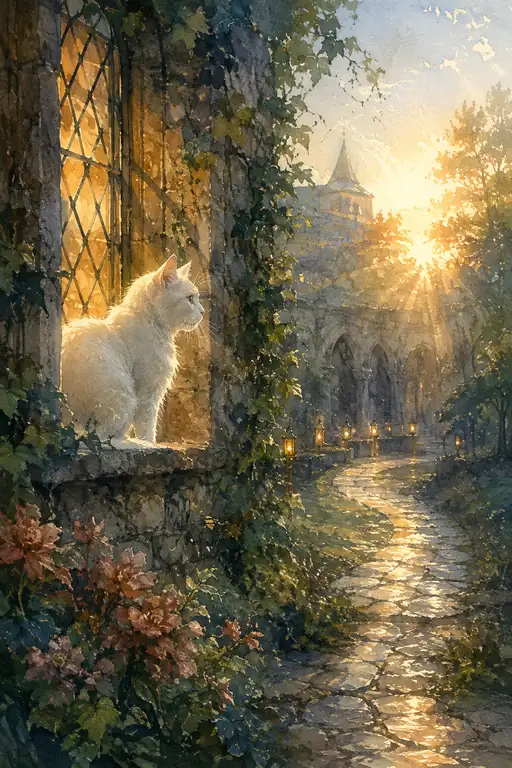 Morning Solitude on an Ancient Window
 The Little Dog Crowned by Canal Flowers
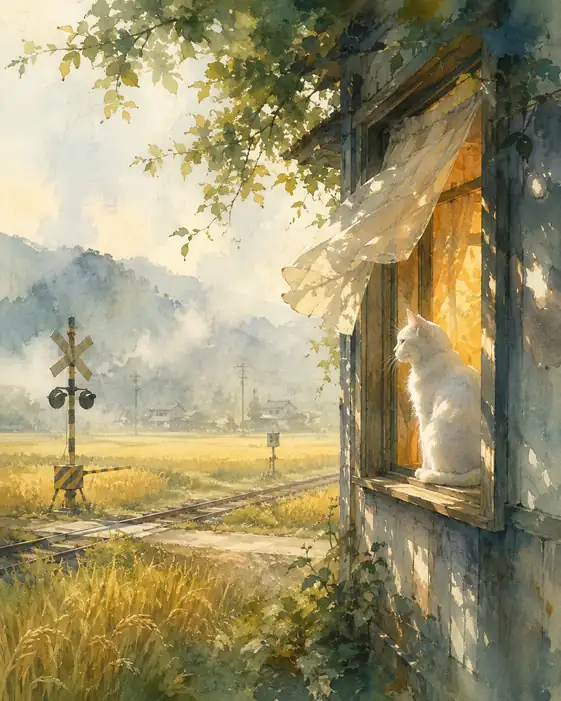 White Cat Watching the Morning Train Pass
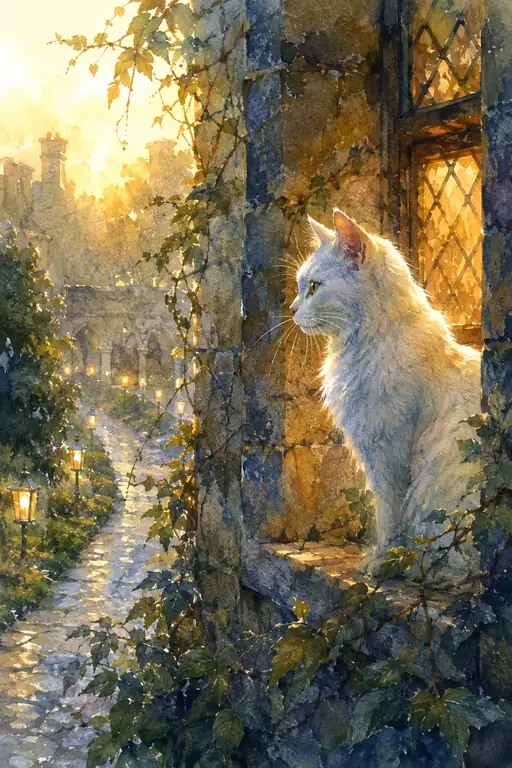 Morning Sunlight on the Castle Ledge