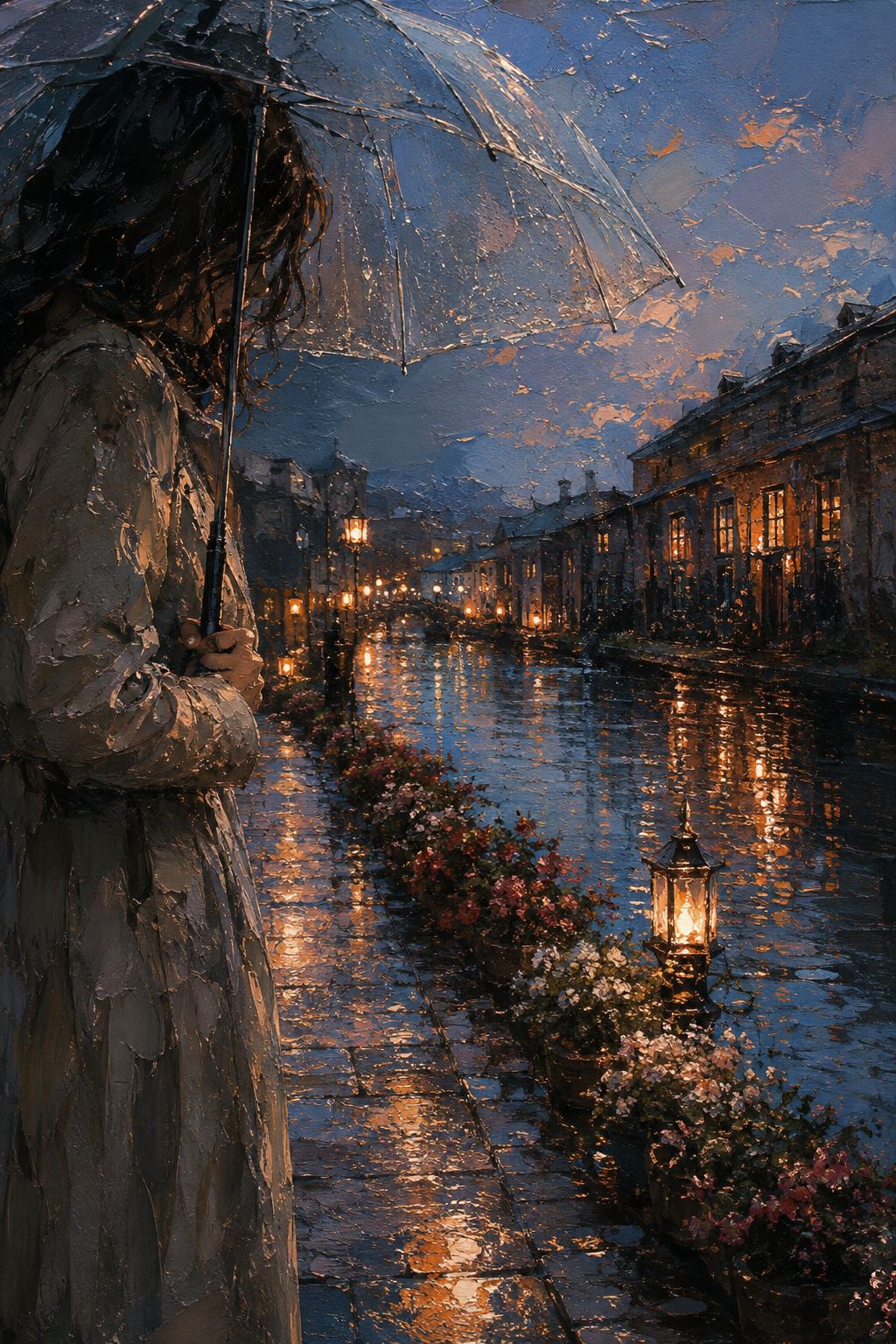
The Canal Remembers Her in Lanternlight
Critique
Introduction This canal portrait positions an umbrella-bearing woman at the left of a rain-polished promenade. Side framing prioritizes the illuminated town she observes, balancing human presence with water and lamps. Description Only the woman's left-side figure is visible, wrapped in a pale gray coat and holding a transparent umbrella with both hands. Dark wet hair falls around her obscured face. The canal occupies the center and right, bordered by rows of old houses with glowing windows. A flower-lined walkway runs into the distance beneath black lanterns. Puddles and canal water scatter orange reflections under a slate-blue sky streaked with peach. Analysis The cropped figure forms a tall near border rather than a central focal mass. Her umbrella arc spans the upper left and directs attention toward the open sky. The canal and pavement create parallel recession lines, while flower boxes form a low rhythmic divider. Orange windows and lamps punctuate blue-gray architecture, then lengthen into broken vertical reflections. Thick highlights on coat, umbrella, and paving unify body and weather. Interpretation and Evaluation By withholding most of the face, the painting transfers emotional expression to posture and viewpoint. The woman seems less an object being watched than a consciousness through which the canal is encountered. Her shelter is transparent and provisional, echoing the permeable boundary between town and water. Repeated household lights counter anonymity, suggesting that her solitary pause occurs within a dependable social landscape. Conclusion The side-weighted composition makes space itself eloquent. The viewer stands near the woman but looks beyond her, sharing rather than inspecting her attention. Rain turns the canal promenade into a field of connected, inhabitable light.
Same Subcategory
 Where Sunlight Breathes in Cool Currents
Similar Artworks
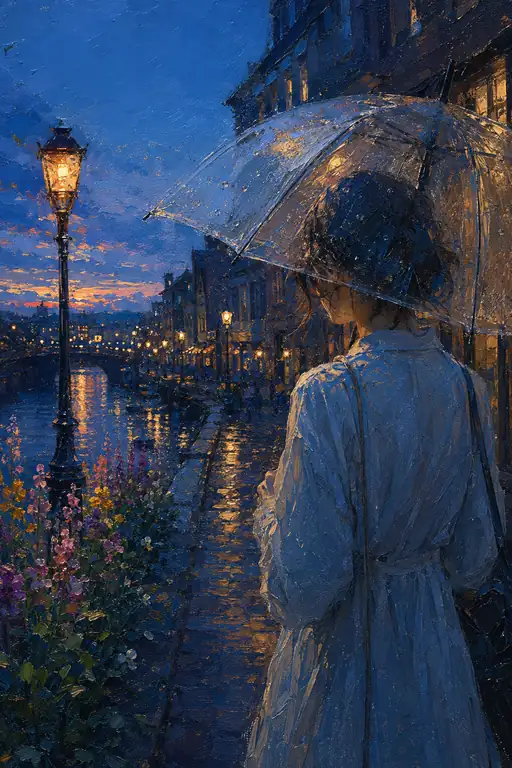 She Waits Where Rain Meets the Evening River
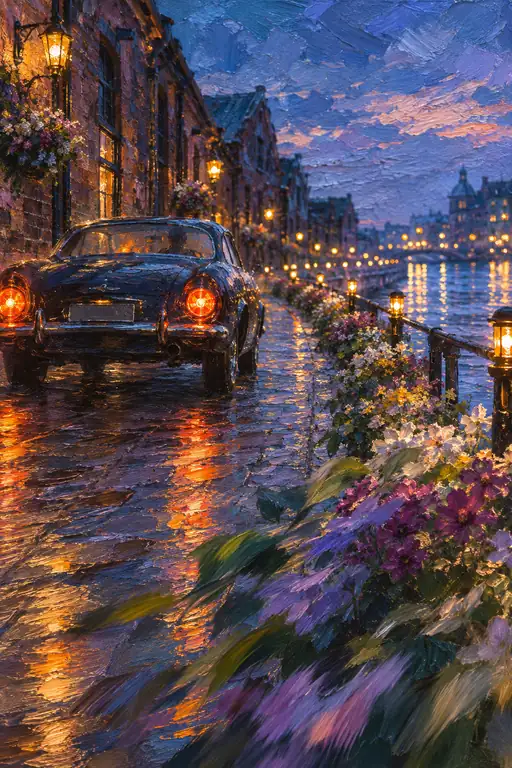 The Road Shines Before the Midnight Drive
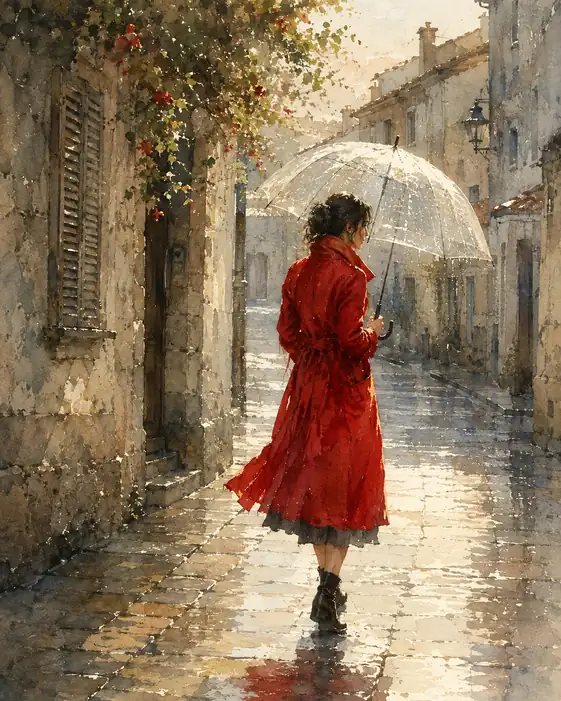 She Walked Until the Rain Turned Gold
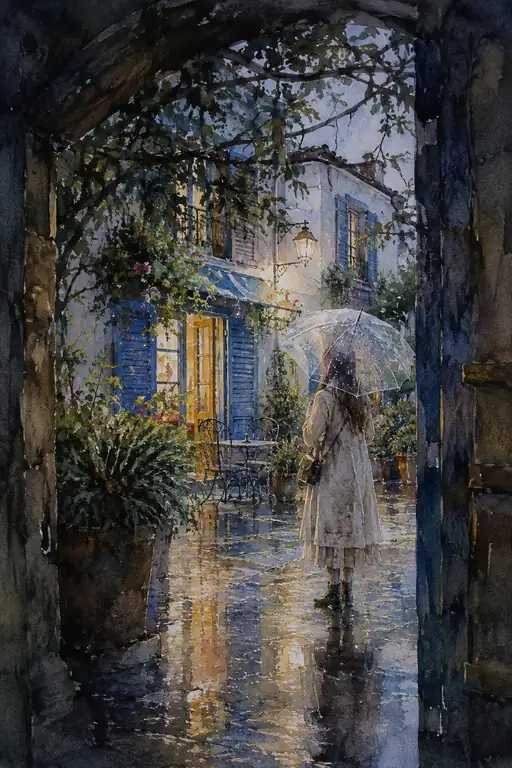 Clear Umbrella Stroll in the Evening Rain
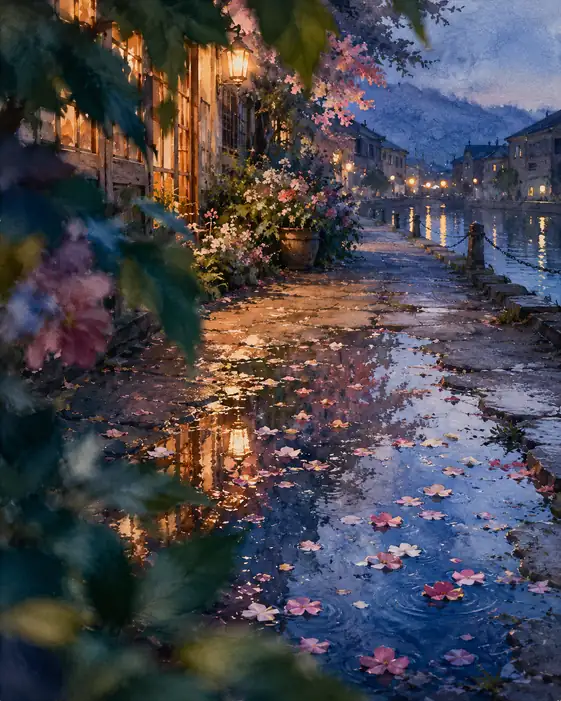 After Rain, the Petals Carry Lamplight
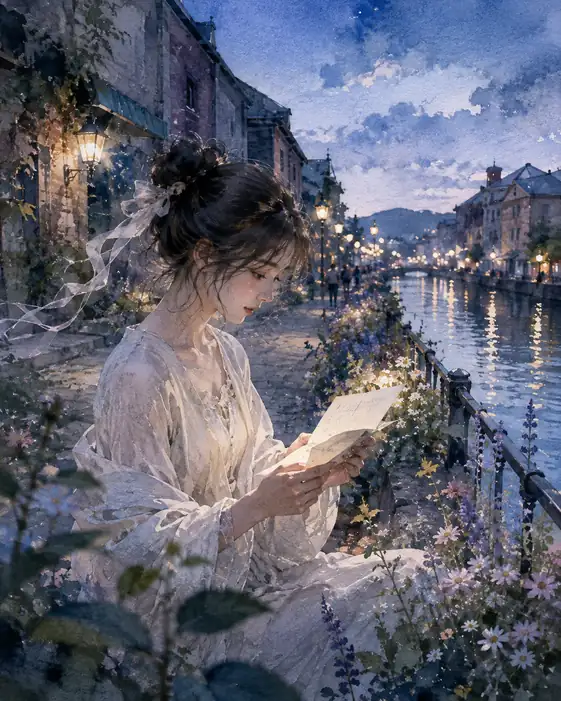 A Letter Read Where the Canal Turns Blue
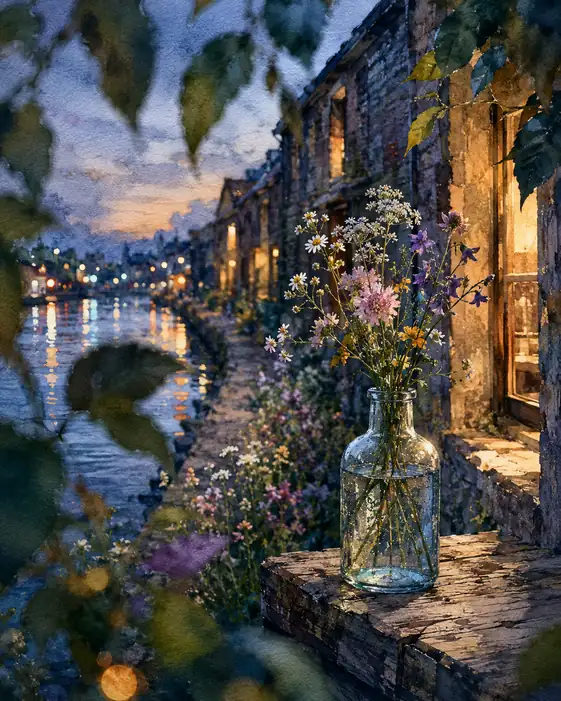 Wildflowers Waiting Beside the Blue Canal
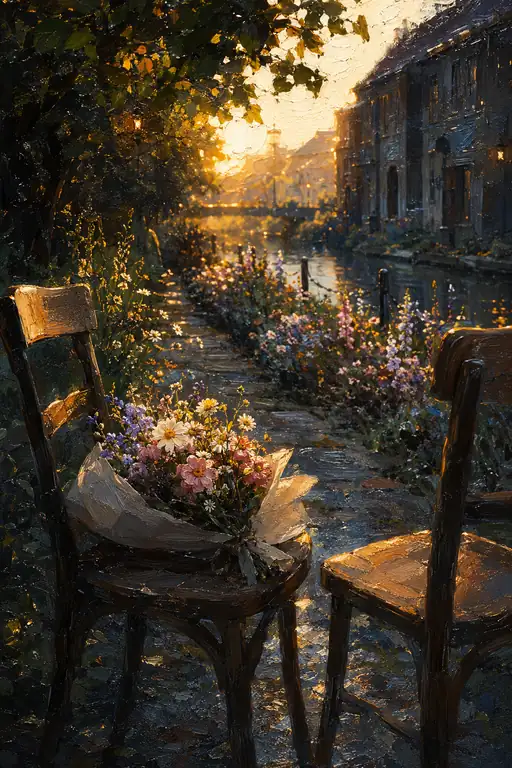 The Flowers Came Before You
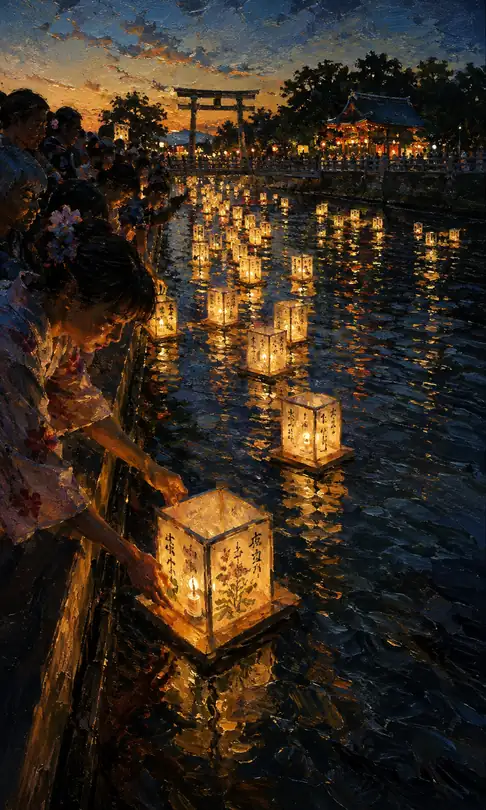 Silent Prayers Floating Past the Sacred Gate
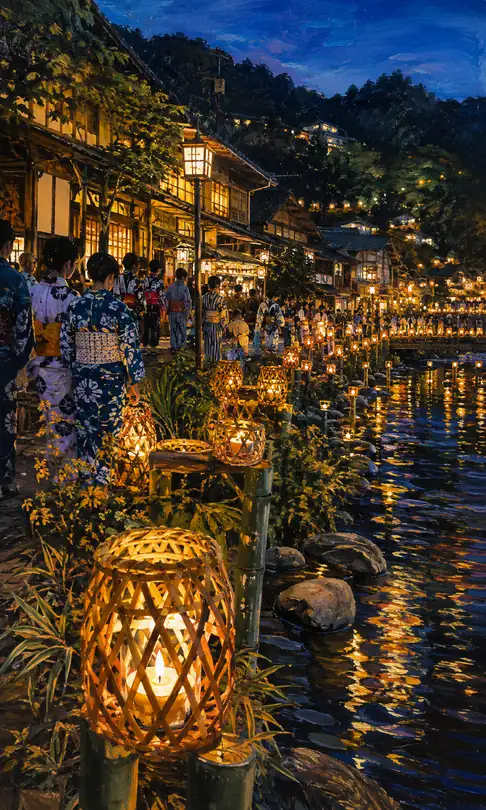 Bamboo Candle Lights and Strolling Yukata Ladies by the Hot Spring Stream