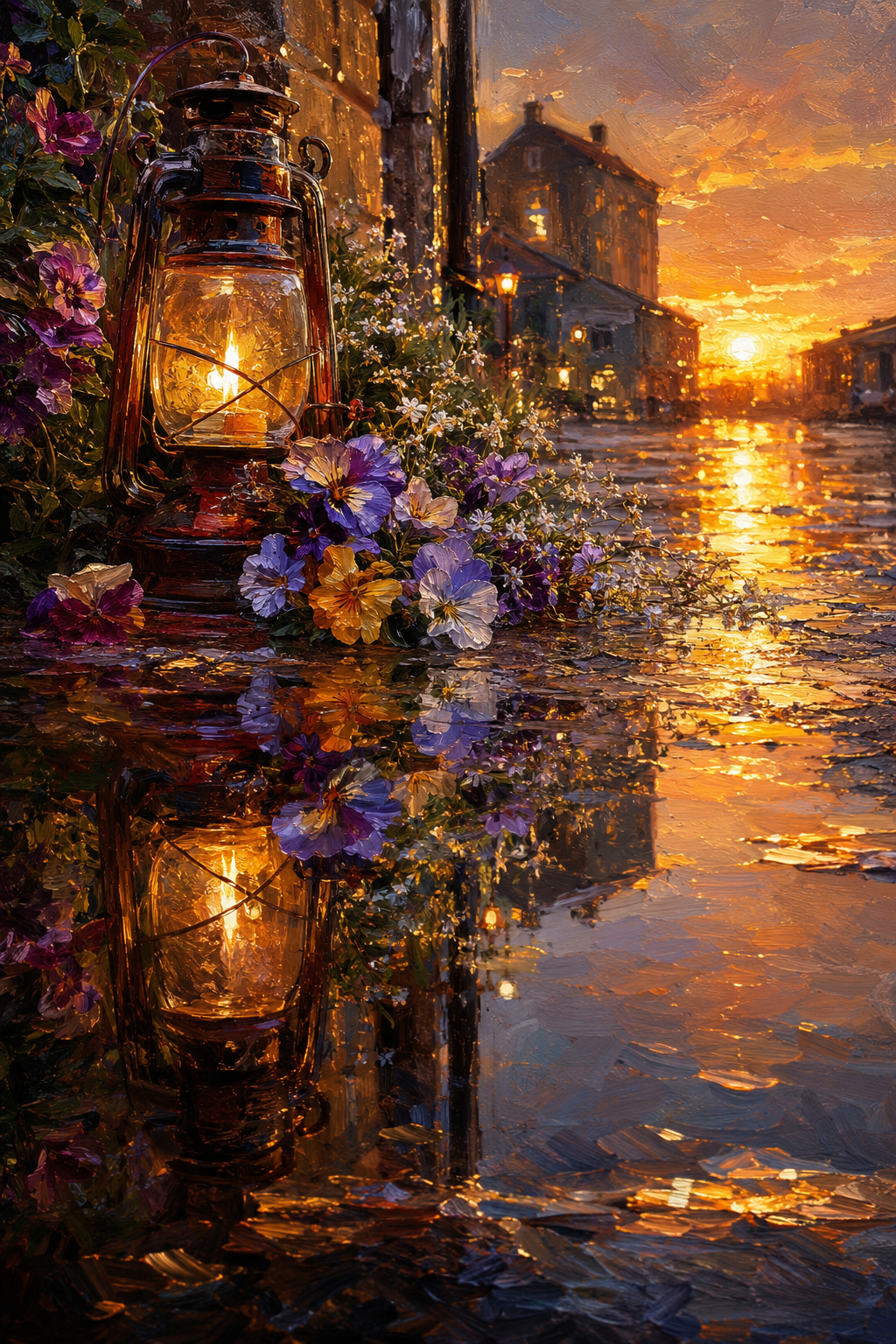
The Lantern That Stayed After Sunset
Critique
Introduction This saturated sunset scene brings a burning oil lantern, roadside flowers, and a rain-flooded street into a single field of reflected gold. The image treats evening not as fading light but as an intense transfer between sky, flame, water, and blossom. Description A dark red-black lantern stands at the left edge among purple, white, and orange flowers and fine sprays. Its flame glows through scratched glass and crossed wire. The wet roadway stretches toward a low sun at right, flanked by dark old buildings with scattered lamps and windows. A broad puddle mirrors the lantern, bouquet, houses, and fiery sky, filling the lower half with inverted forms. Analysis The upright lantern anchors a composition otherwise driven by horizontal recession and reflection. Its dark metal frame gives structure to the abundant orange field. Purple flowers provide the principal complementary contrast, while white petals catch transitional highlights. The horizon's sun and nearby flame create two scales of radiance, joined by a continuous path across water. Thick, directional strokes in sky and puddle intensify movement, whereas crisp lantern contours stabilize it. Interpretation and Evaluation The reflected lantern doubles a modest human light just as sunset reaches maximum brilliance. This pairing avoids rivalry: the lamp prepares to continue what daylight will soon withdraw. Flowers at its base embody the same transition, holding cool evening color within warm illumination. Rain becomes a collaborative surface that enlarges every light and makes an ordinary road ceremonially radiant. Conclusion The work's emotional power comes from continuity rather than spectacle alone. Sun, lamp, blossom, and puddle exchange color across different scales. Ending and beginning coexist in one dazzling, rain-polished interval.
Same Subcategory
 Where the Sky Touches the Soul
Similar Artworks
 Where Evening Pours Gold into the Rain
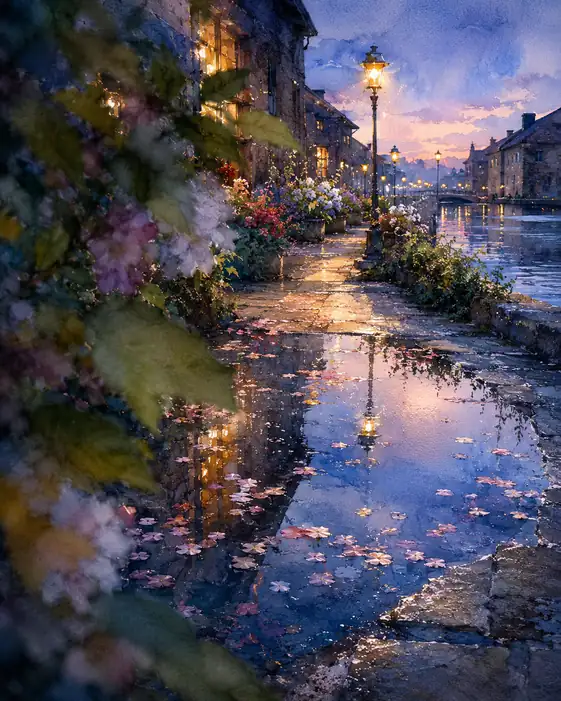 Twilight Poured into a Flower-Strewn Puddle
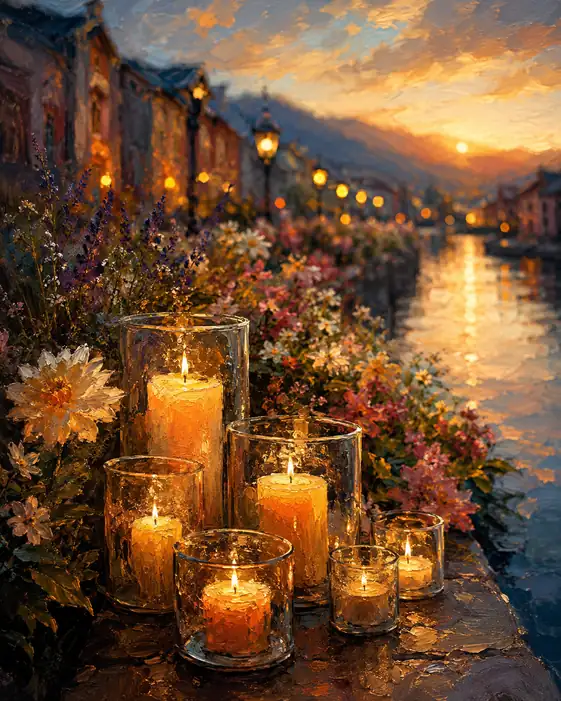 Candles Bloom Where the Sun Says Farewell
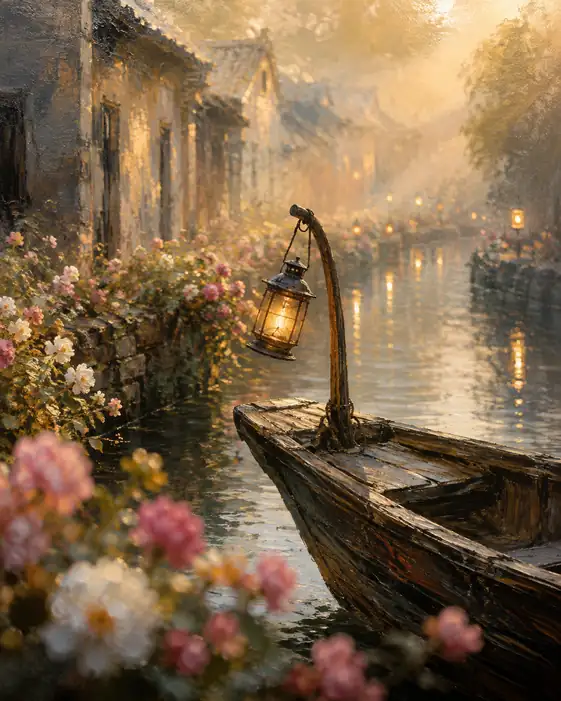 The Boat That Borrowed Dawn's Lantern
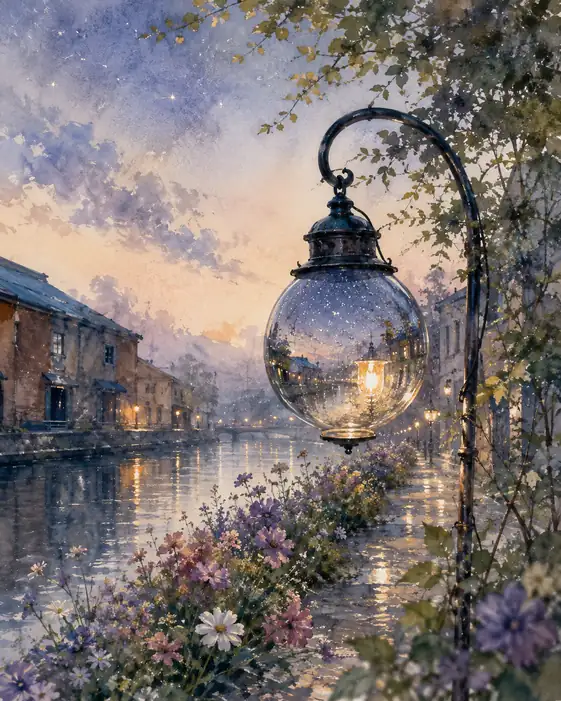 An Evening Town Held Inside the Lantern
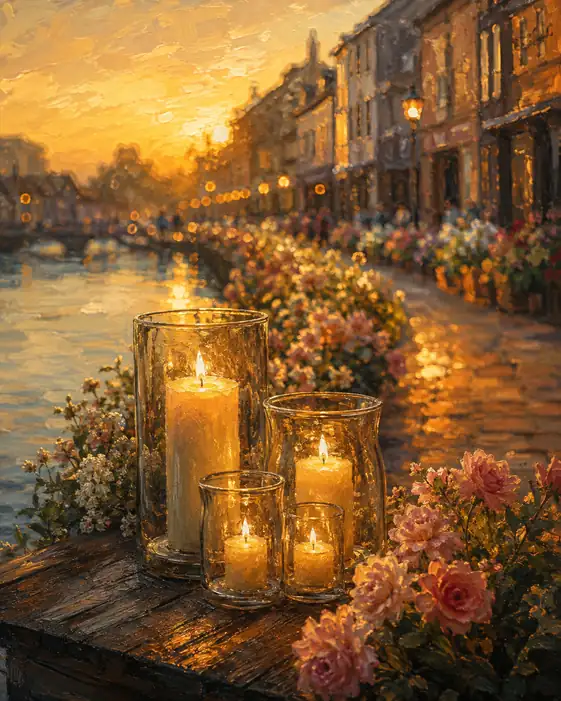 Four Flames Keeping the Golden Canal
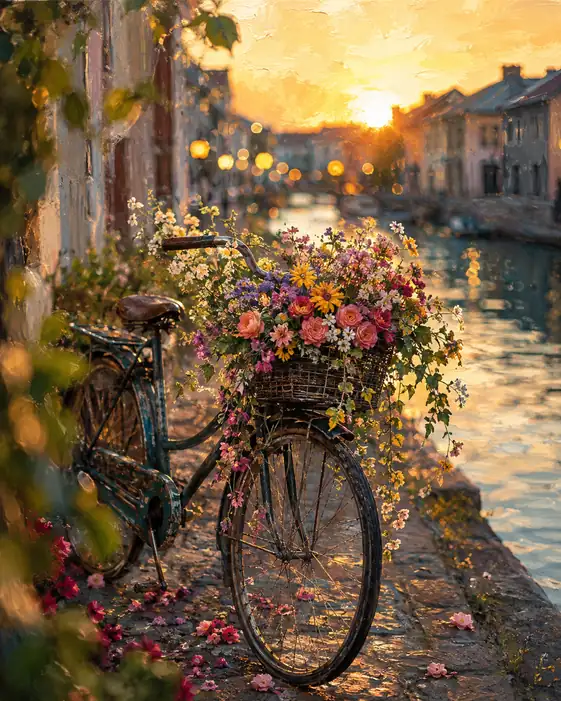 Sunset Rests in the Bicycle's Basket
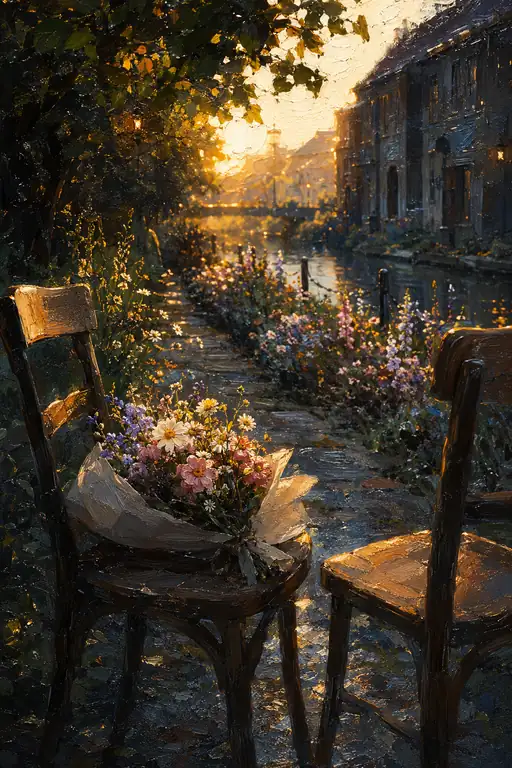 The Flowers Came Before You
 One Lantern Keeps the Vineyard Stars Awake
 One Lamp Keeps Vigil over the Sleeping Vineyard