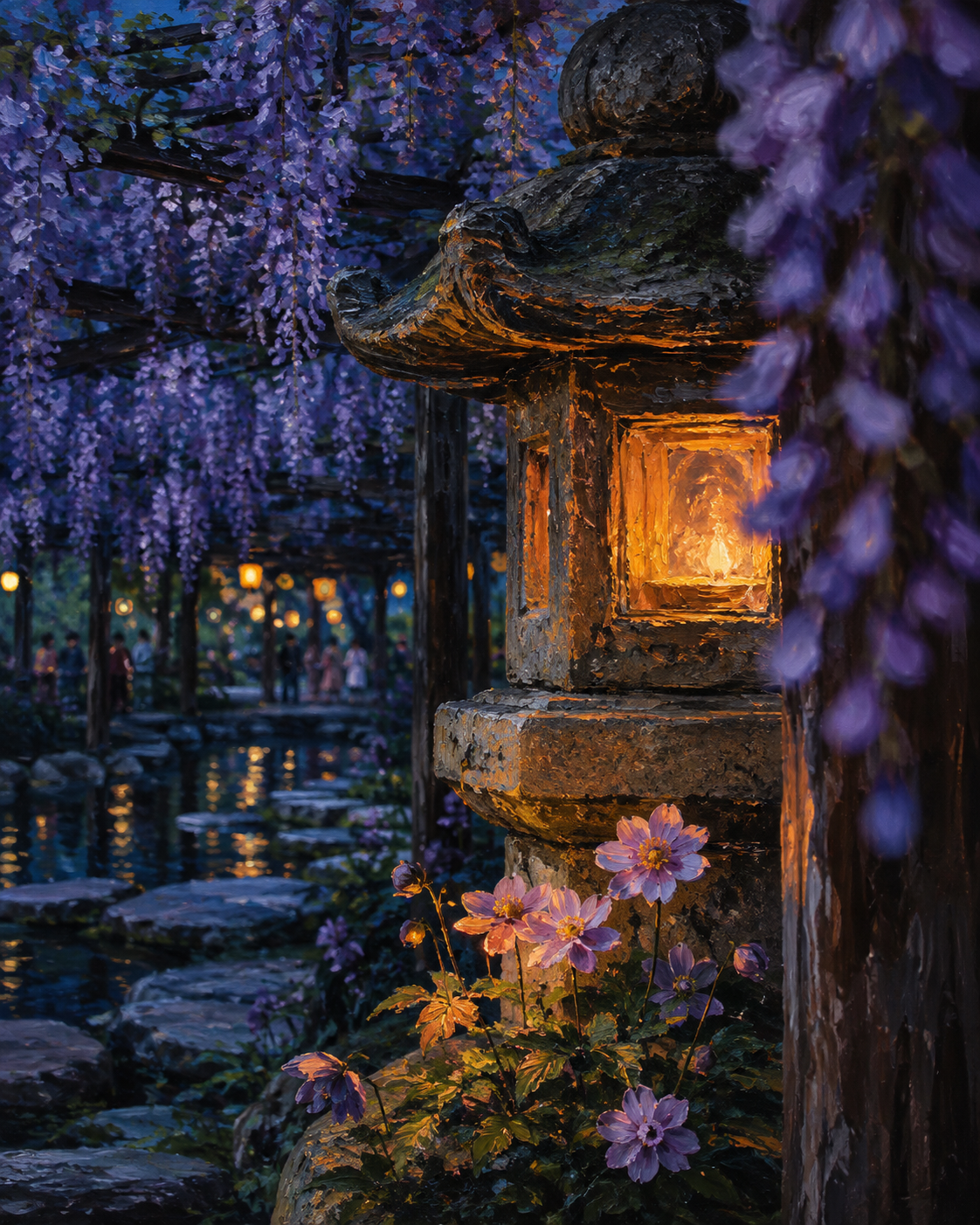
Little Blossoms at the Wisteria Gate
Critique
Introduction This intimate garden scene places a weathered stone lantern beneath dense purple wisteria beside a stepping-stone pond. Warm flame, cool blossoms, and distant visitors turn the image into a meditation on welcome shaped by both architecture and season. Description The lantern dominates the right foreground, its broad curved roof, spherical finial, and rough moss-dark stone surrounding a bright square chamber. Pink-lavender flowers bloom at its base. Wisteria hangs heavily across the upper half and blurs along the extreme right. At left, irregular stones cross dark reflective water toward pergolas, repeated lamps, and small groups of people softened by blue dusk. Analysis The lantern's strong vertical mass counters the stepping stones' diagonal recession. Orange light grazes the underside of its roof and nearby petals, revealing relief without flattening the dark stone. Violet clusters form a suspended canopy, with repeated strands echoing the sequence of distant lamps. Reflections fragment those lights into narrow vertical marks. Crisp foreground masonry and flowers gradually dissolve into figures and foliage, establishing deep yet intimate space. Interpretation and Evaluation The stone fixture represents durability, while wisteria and small flowers mark a particular flowering interval. Their proximity suggests permanence made meaningful through recurring seasonal change. The stepping stones require measured movement, so approach to the distant gathering feels ceremonial rather than casual. Human figures remain anonymous, allowing sociability to enrich the garden without displacing its contemplative focus. Conclusion The work balances shelter and invitation with unusual grace. Lantern and blossoms protect a near pocket of warmth, while stones and reflected lights lead outward. Enduring form and temporary bloom become partners in sustaining communal memory.
Same Subcategory
Similar Artworks
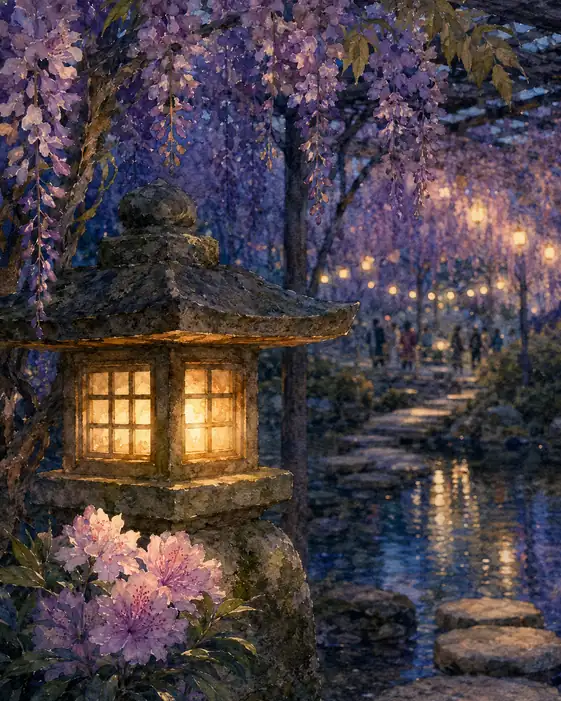 Wisteria Leads the Lamps Across the Water
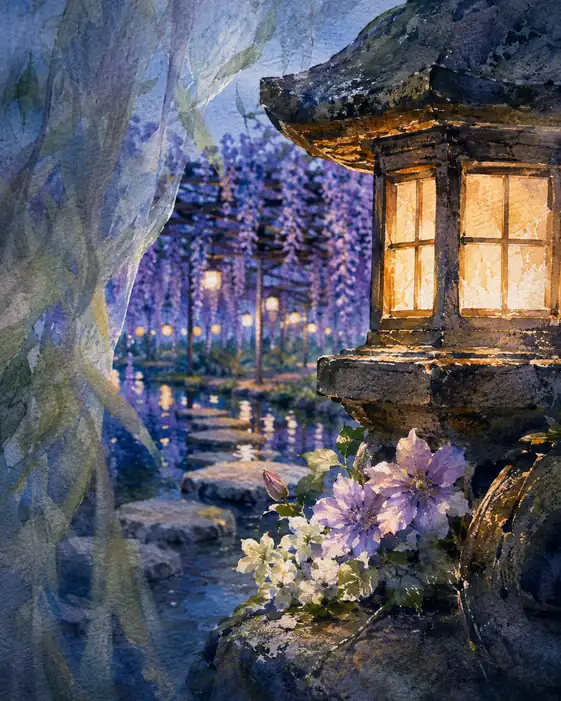 Beyond the Veil, Wisteria Lights the Way
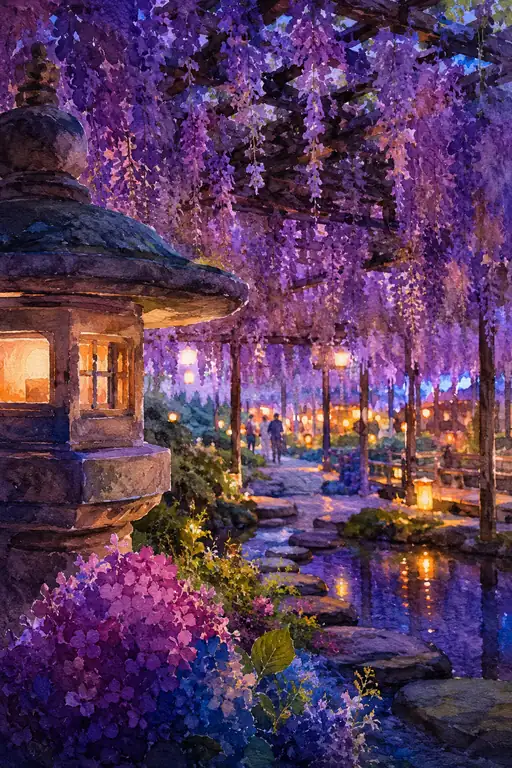 A Light Warming the Violet Rain
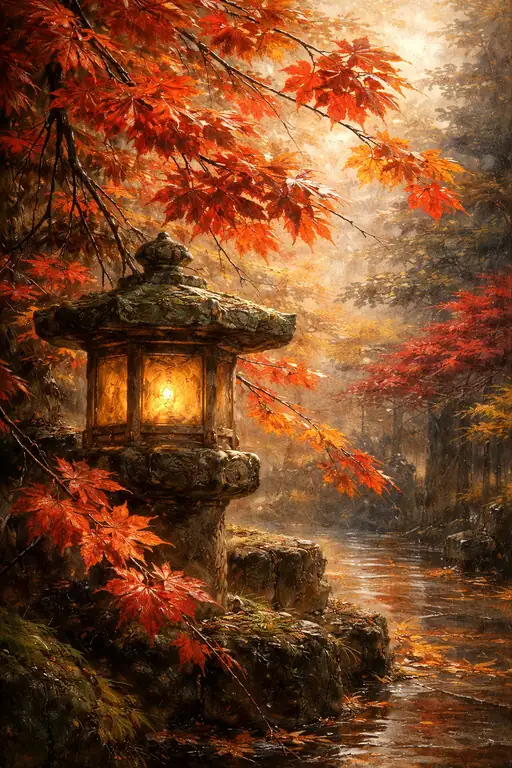 Radiance of the Autumn Sentinel
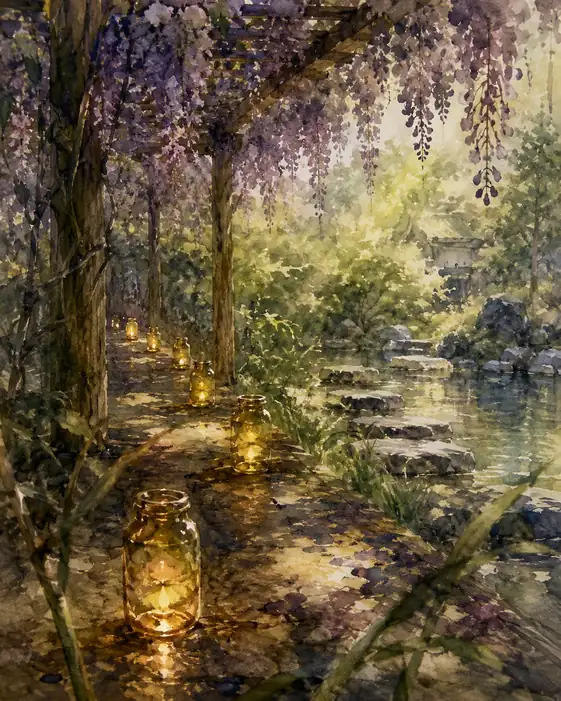 Little Jars Guide the Way through Wisteria Shade
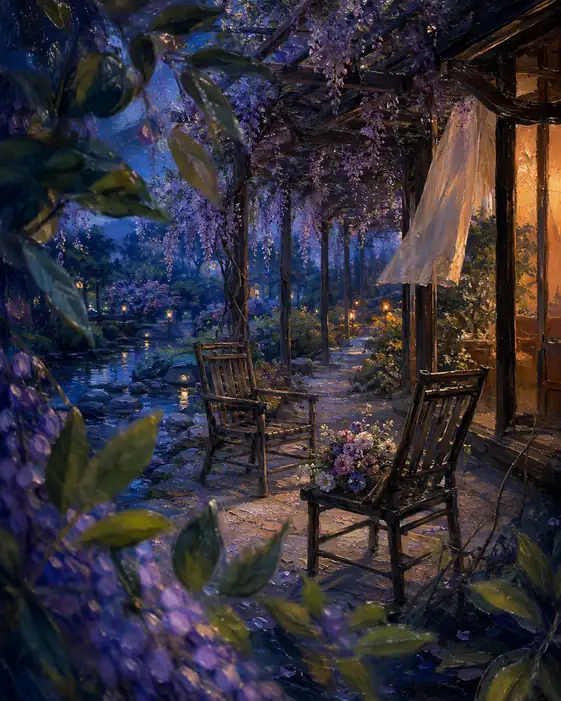 Two Chairs Keep the Garden's Evening Secret
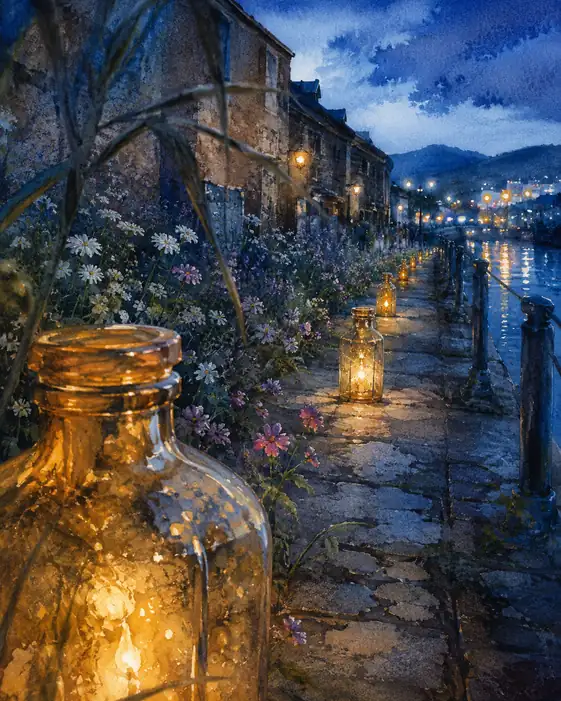 A Path Lit by Bottled Stars
 Winter Leaves One Lamp Unlit
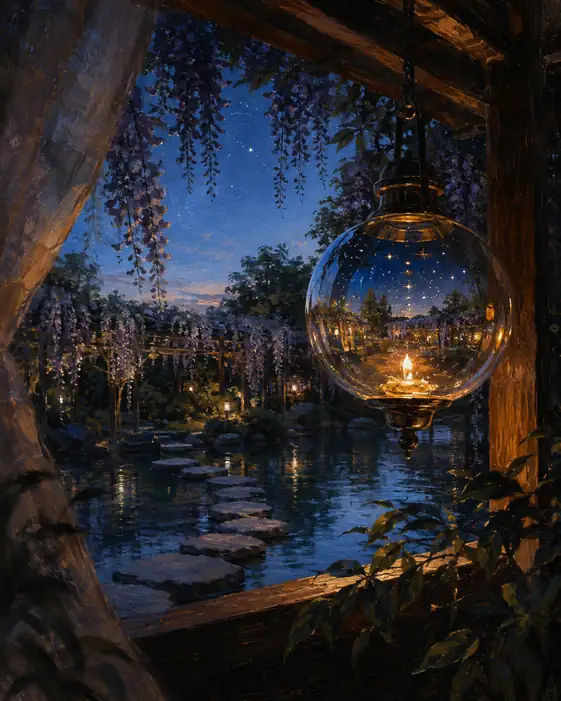 The Garden's Stars Gather inside One Lamp
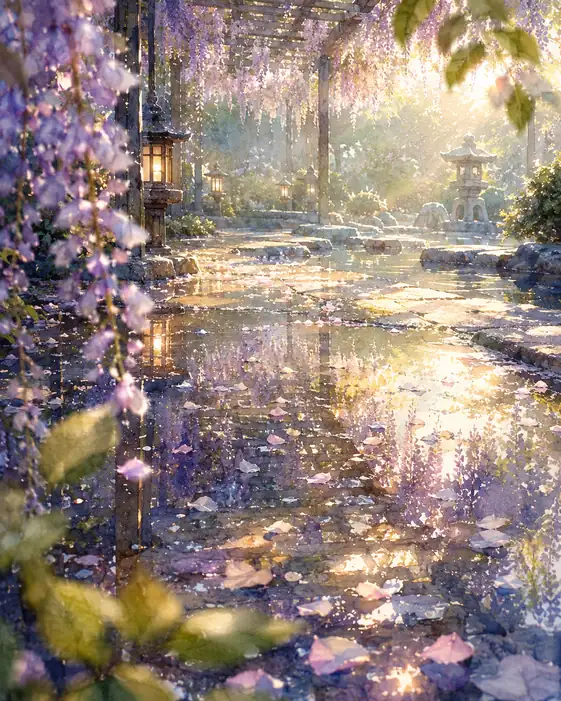 Petals Turn the Morning Pool into Sky