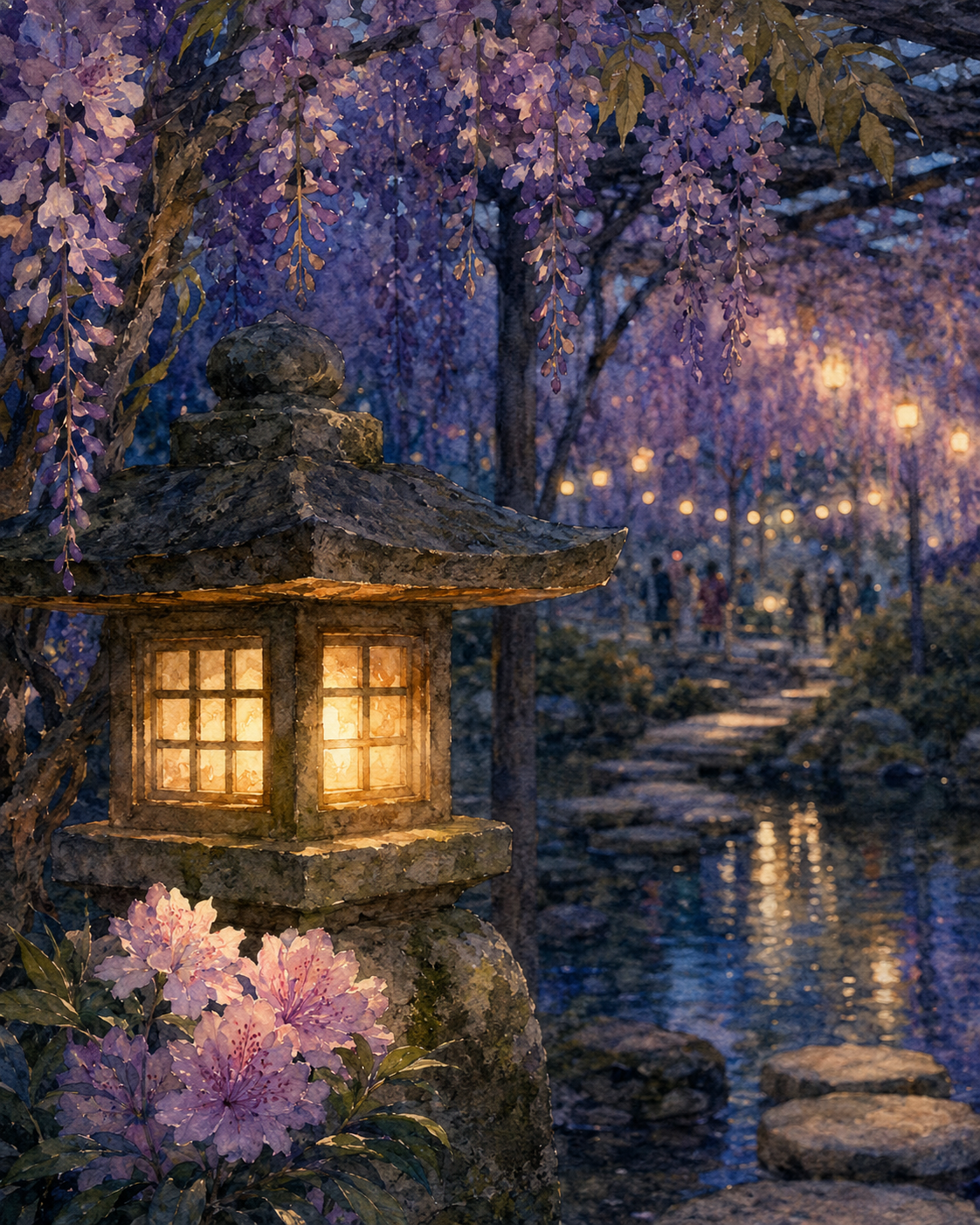
Wisteria Leads the Lamps Across the Water
Critique
Introduction This twilight garden scene joins a weathered stone lantern, cascading purple wisteria, and a path of stepping stones. Near and distant lights establish a ceremonial rhythm, while water and blossoms soften the architecture into an atmosphere of quiet gathering. Description A large roofed stone lantern stands at left, its gridded windows glowing amber beneath dark mossy surfaces. Pale pink-lavender flowers bloom at its base. Above, heavy wisteria clusters hang from a twisting trunk and extend across the top. At right, stepping stones cross shallow reflective water toward a softly focused garden crowded with purple bloom, trees, suspended lamps, and small human figures. Blue twilight fills the background. Analysis The lantern's firm vertical and broad roof anchor the foreground, balanced by the path's diagonal movement into depth. Wisteria strands descend rhythmically, echoing the repeated lamps beyond. Warm rectangles within the lantern contrast with cool violet masses, while reflected gold breaks the dark water. Crisp stone, petals, and bark gradually yield to diffused figures and lights. The overhanging flowers create an upper canopy that unifies foreground and distance. Interpretation and Evaluation Stone implies duration, whereas cascading blossoms evoke a brief seasonal peak. Their coexistence makes the lantern seem not merely architectural but responsive to recurring natural time. The distant figures introduce communal use without disturbing contemplation; viewers remain outside the gathering yet are invited along the stepping stones. Water complicates this invitation by turning passage into measured, attentive movement. Conclusion The work transforms garden design into a sequence of thresholds: lantern, blossoms, stones, reflections, and distant lights. Its restrained human presence preserves intimacy while confirming that beauty here is shared. Permanence and seasonality illuminate one another.
Same Subcategory
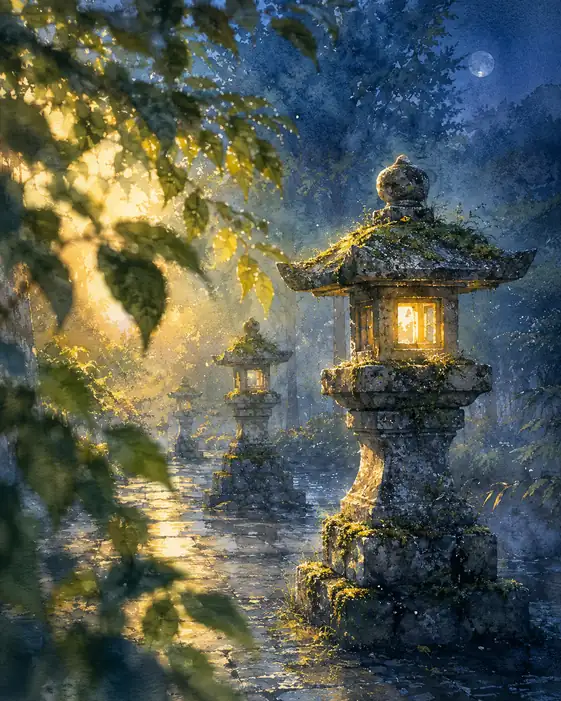 Lanterns Teach the Moon a Path
Similar Artworks
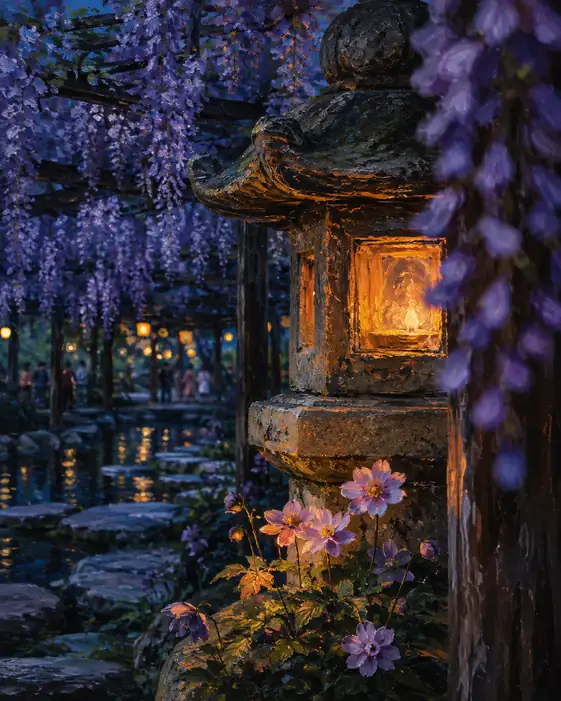 Little Blossoms at the Wisteria Gate
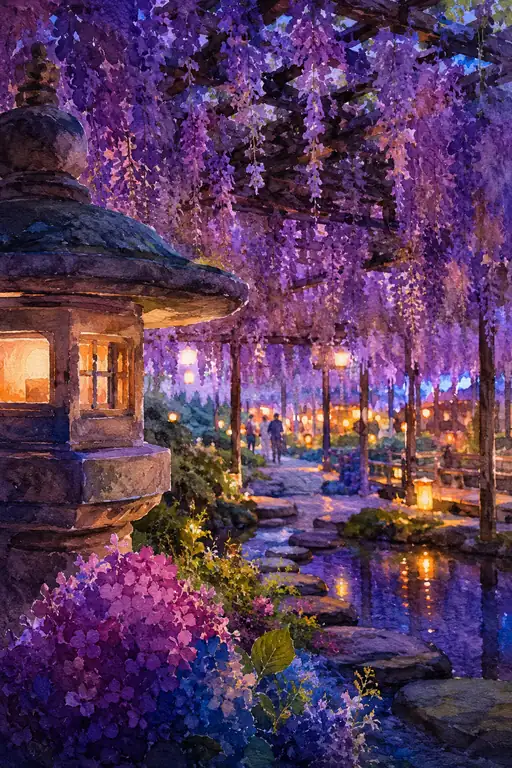 A Light Warming the Violet Rain
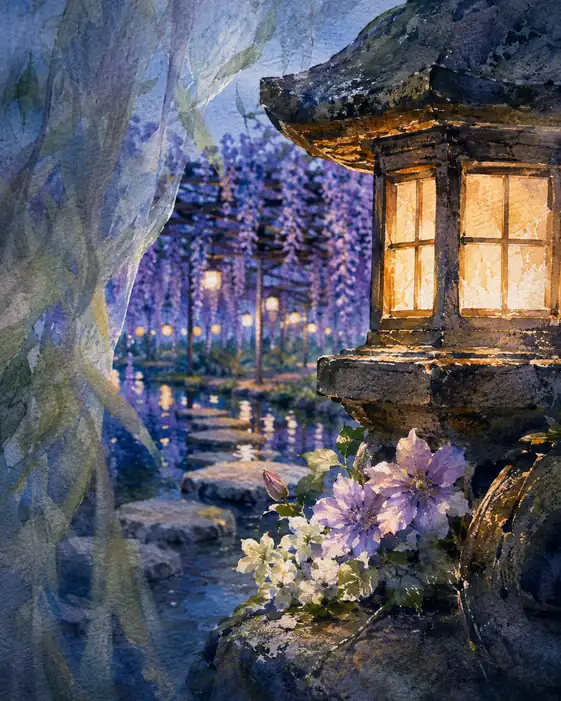 Beyond the Veil, Wisteria Lights the Way
 Little Jars Guide the Way through Wisteria Shade
 A Path Lit by Bottled Stars
 Winter Leaves One Lamp Unlit
 Whispers of Light Amidst the Wisteria's Slumber
 Petals Turn the Morning Pool into Sky
 Wisteria Mirrored in Golden Morning Light
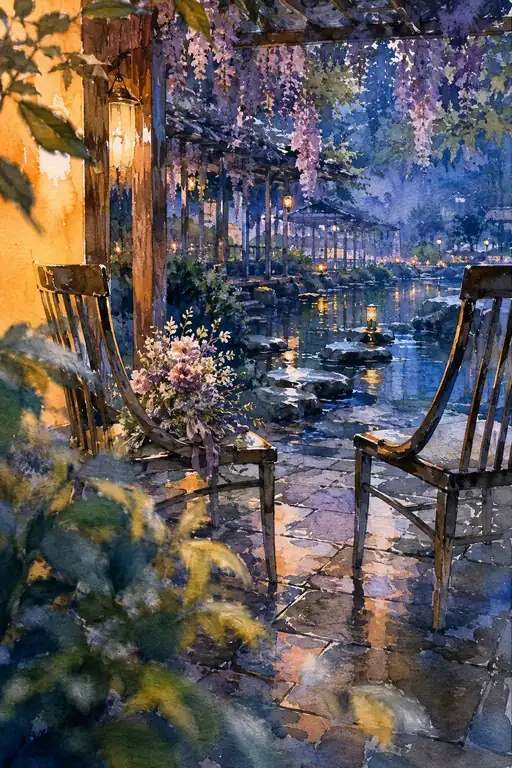 Two Empty Chairs Await the Wisteria Night