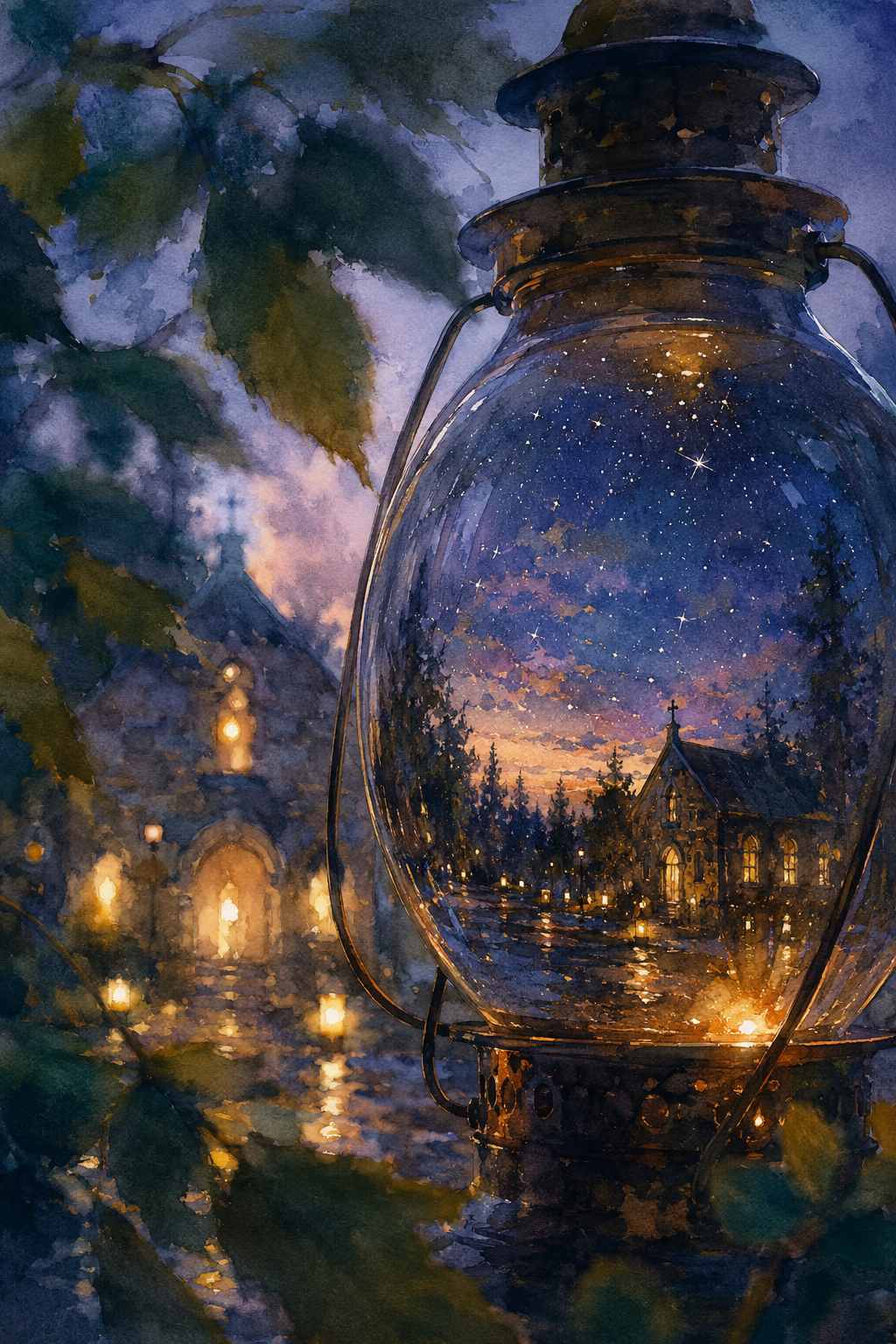
A Village Sky Kept Under Glass
Critique
Introduction This visionary lantern study fills a glass globe with a starry sky, sunset horizon, forest, and illuminated chapel. The object stands between instrument and cosmos, turning a small flame into the apparent source of an entire remembered landscape. Description An oversized antique lantern occupies most of the right side, its dark metal cap and wire supports surrounding a bulbous glass chamber. Inside appear countless stars, violet clouds, an orange horizon, fir silhouettes, a wet path, and a chapel with glowing windows. The actual background at left is softer: leafy branches, shadowed stone architecture, arched openings, and multiple ground lamps. A warm flame burns near the lantern's lower rim. Analysis The glass oval acts as the dominant frame, enclosing a vertically layered world from flame to stars. Curved supports reinforce its boundary, while the chapel's pointed roof supplies internal contrast. Dense sharp detail inside the globe opposes the blurred exterior, reversing normal expectations of reflection. Blue-violet occupies most of the image, with amber lights forming a rising network. Cropped leaves and metal edges intensify scale and proximity. Interpretation and Evaluation The internal landscape exceeds plausible reflection and therefore reads as memory, imagination, or spiritual vision. A finite vessel appears to contain boundless sky, dramatizing the mind's ability to hold places larger than itself. The chapel connects intimate flame with communal sanctuary, while stars extend that relation toward the cosmic. Worn metal prevents transcendence from losing material credibility. Conclusion The painting embraces wonder through a clear visual proposition: light can disclose a world and also carry one. Its nested chapel, road, forest, and heavens make the lantern a persuasive emblem of inward vastness rather than a merely decorative fantasy.
Same Subcategory
Similar Artworks
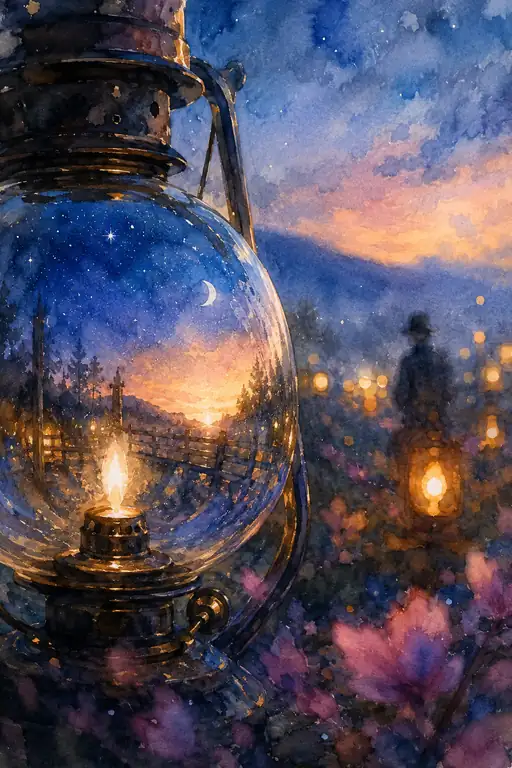 The Lantern Holds Both Crescent and Sunset
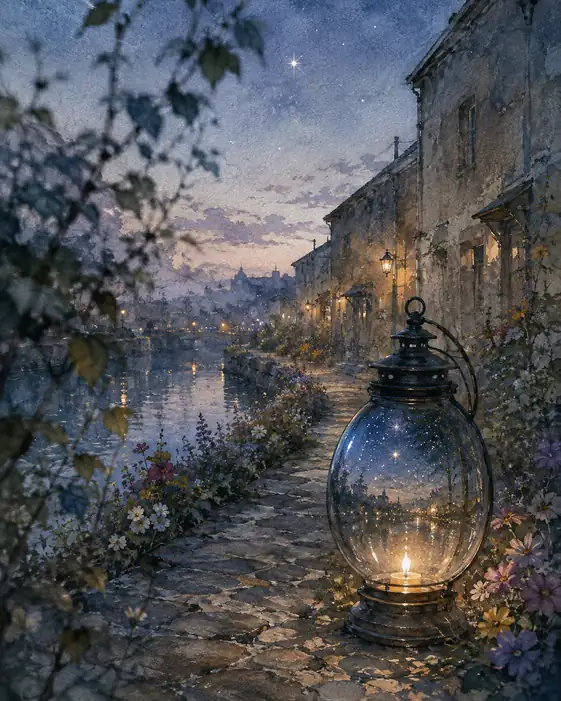 The Lantern That Gathered a Fallen Star
 The Chapel Sleeping Inside the Lantern
 A Starlit Town Dreaming Inside the Garden Lamp
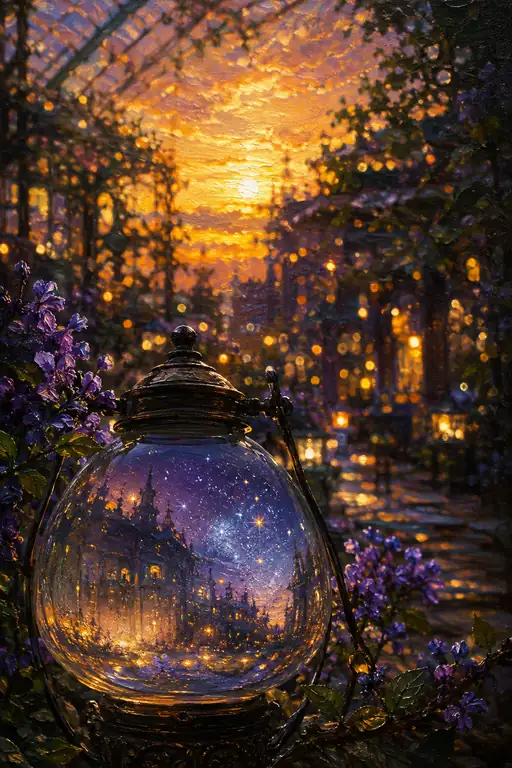 The Lantern Shelters a City Beneath the Milky Way
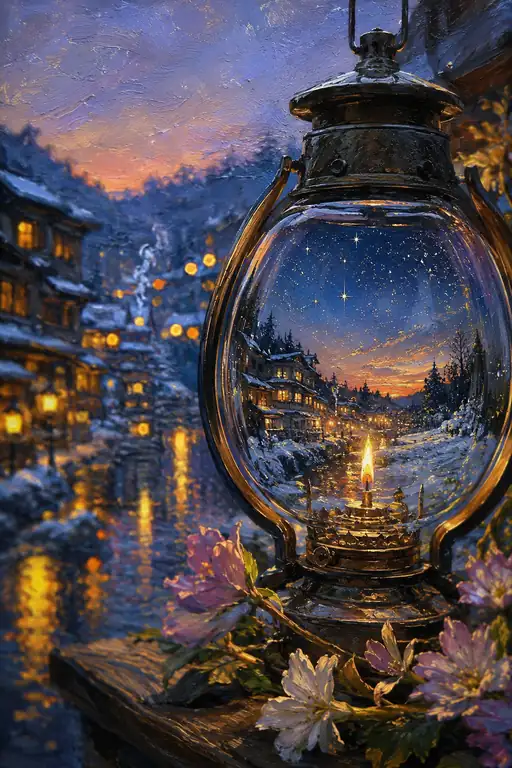 A Lantern Holds the Village's Starry Dusk
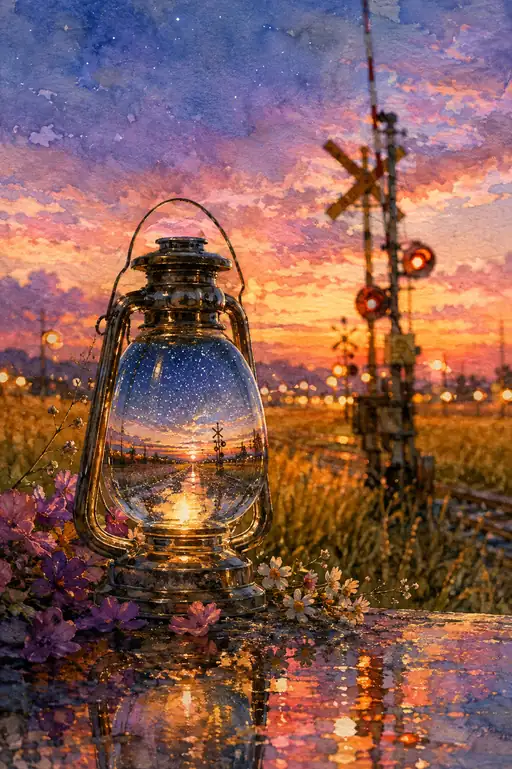 Sunset Train Path Captured in Glass
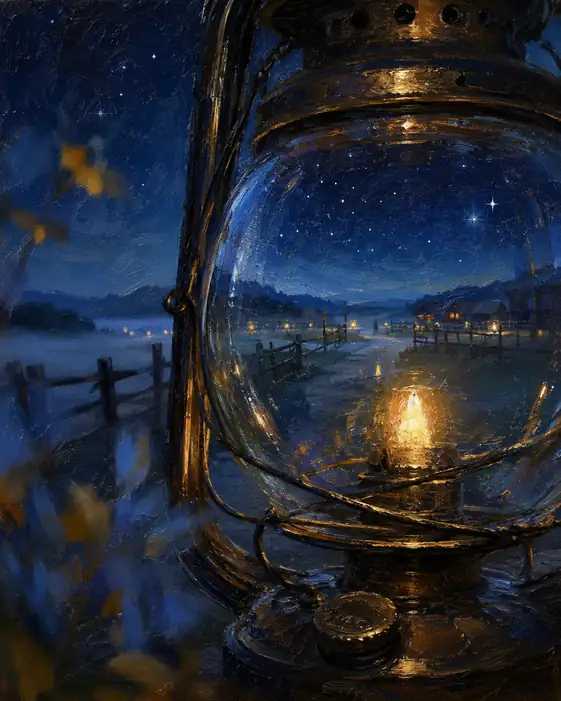 A Village of Stars Inside the Lantern Glass
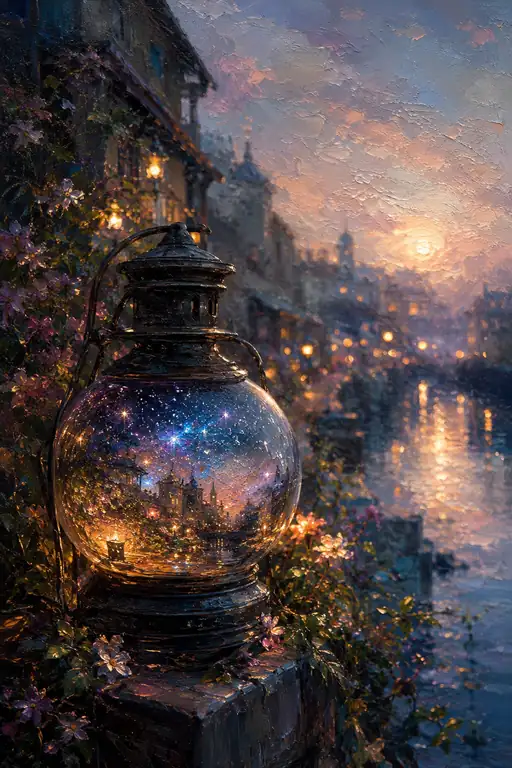 Lantern of Infinite Dreams
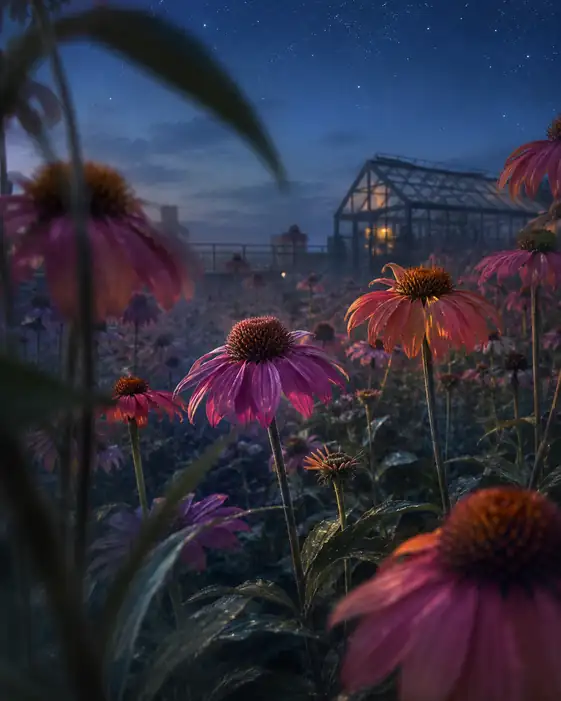 Starlit Greenhouse in the Meadow