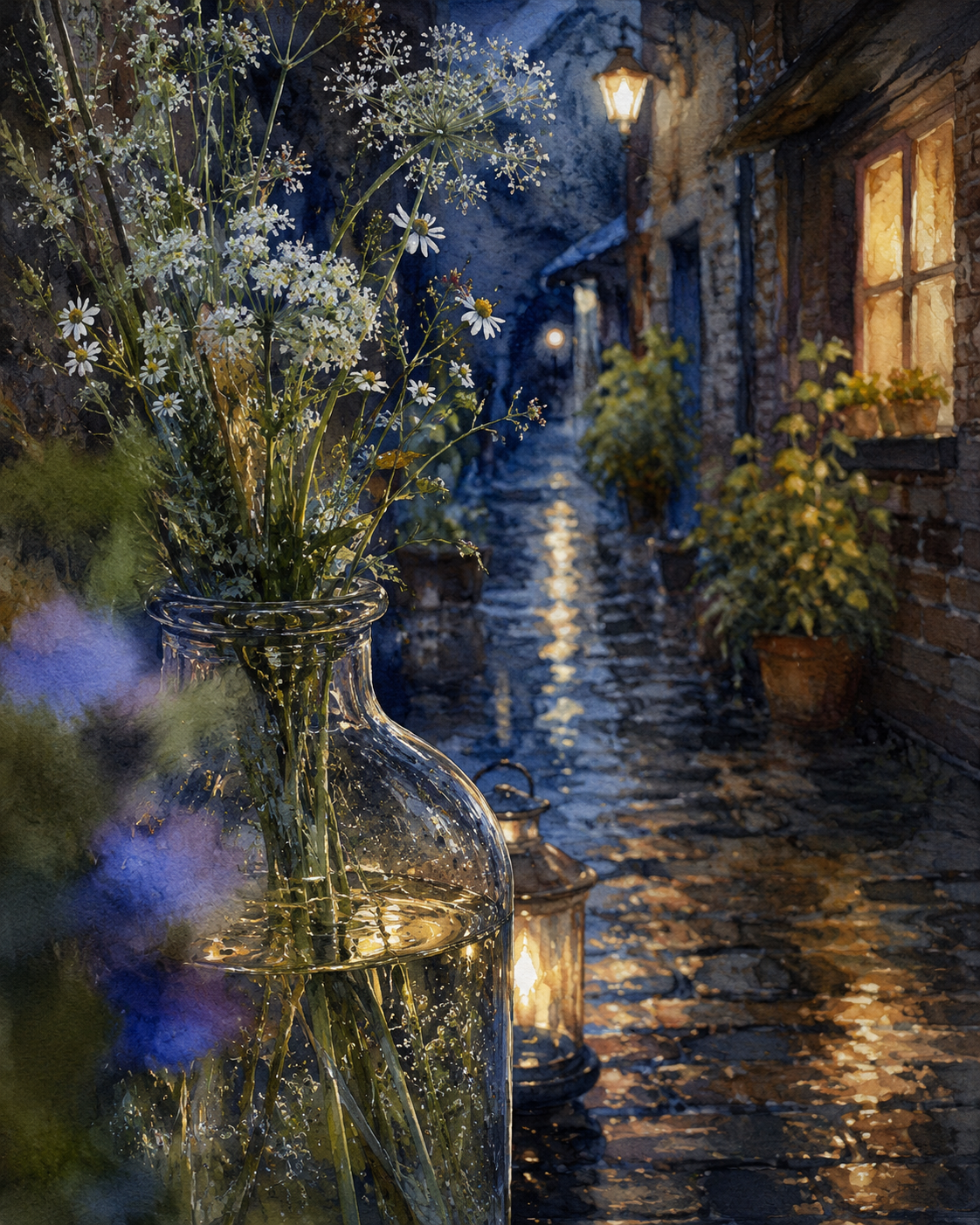
A Bottle Full of the Road's Last Light
Critique
Introduction This rain-evening composition combines a tall glass vessel of white roadside flowers with a narrow ascending alley. Compared with a conventional bouquet portrait, the open fieldlike stems and deep route emphasize growth, direction, and continuation. Description A broad transparent bottle fills the lower left, holding water and long green stems bearing small daisies, airy white umbels, and sparse seedlike sprays. Soft violet flowers blur across the extreme foreground. A lantern rests behind the bottle at ground level. The lane rises through the center between brick houses, potted greenery, amber windows, and suspended lamps. Wet stones carry a thin bright reflection toward the blue distance. Analysis The bottle supplies a heavy rounded base, while stems rise beyond the top edge and dissolve its containment. Their vertical energy parallels the uphill street but differs from its central recession. Tiny white blossoms scatter like points of light, echoing distant lamps. Amber illumination refracts through water and glass, opposing the cool blue architecture. The cropped foreground bloom and softened buildings create layers around the sharply observed vessel. Interpretation and Evaluation The flowers appear recently gathered from an uncultivated margin, bringing informal growth beside orderly houses. Their tall reach makes the vessel less a display case than a temporary source of direction. The street's upward movement and the plants' upward growth become related forms of aspiration. Yet droplets, bent stems, and worn masonry temper symbolism with physical specificity. Conclusion The image derives strength from parallel trajectories: stems climb within the foreground, and light climbs through the lane. Transparent glass gathers these movements without arresting them. The result is a quiet meditation on shelter that remains open to onward travel.
Same Subcategory
Similar Artworks
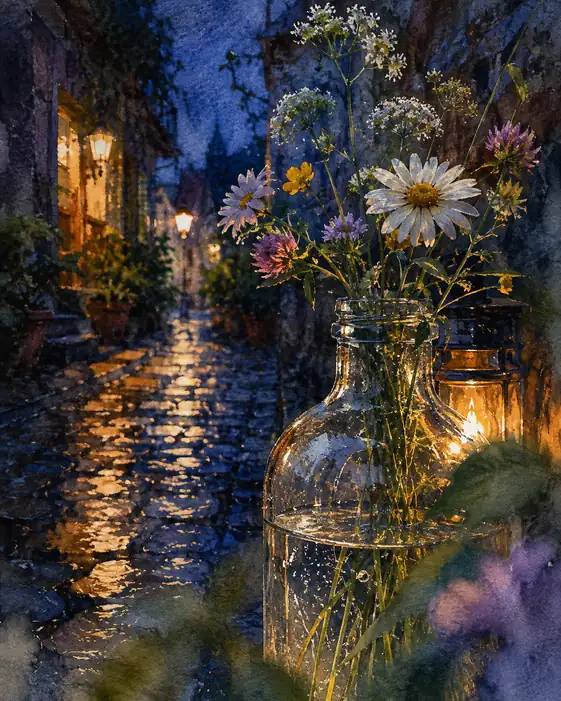 Wildflowers Borrow the Lantern's Gold
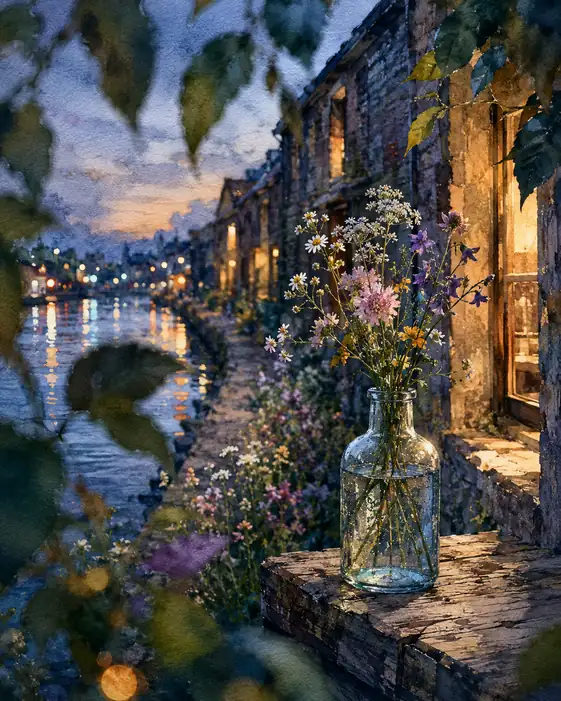 Wildflowers Waiting Beside the Blue Canal
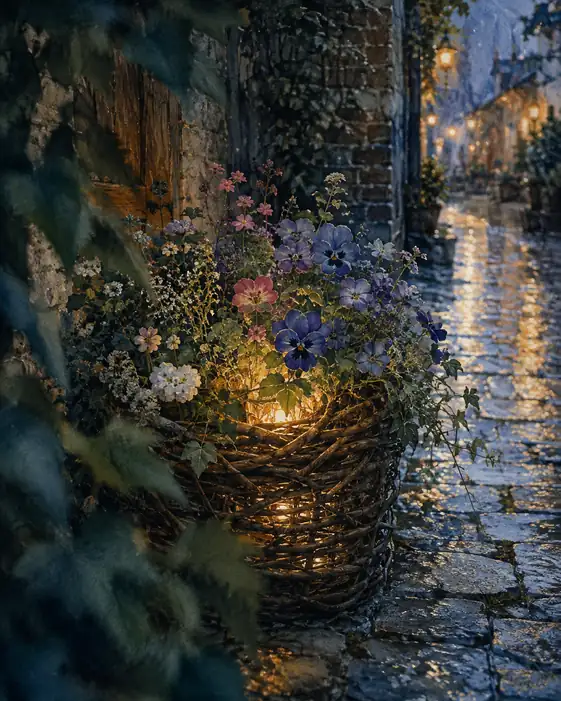 The Night Lamp Blooming in a Wicker Nest
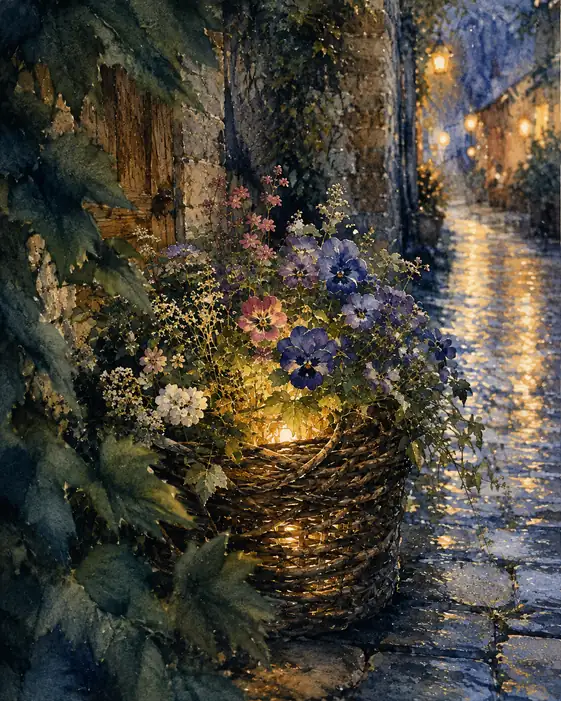 Where the Pansies Keep a Little Fire
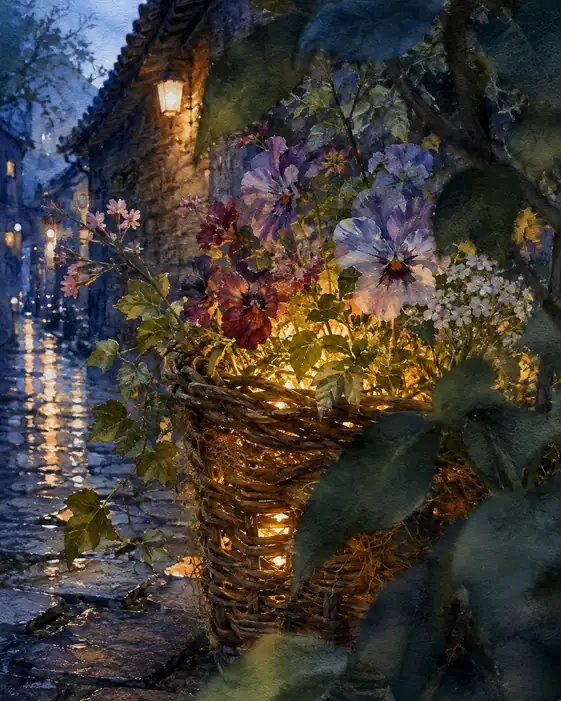 A Basket Glowing After the Rain
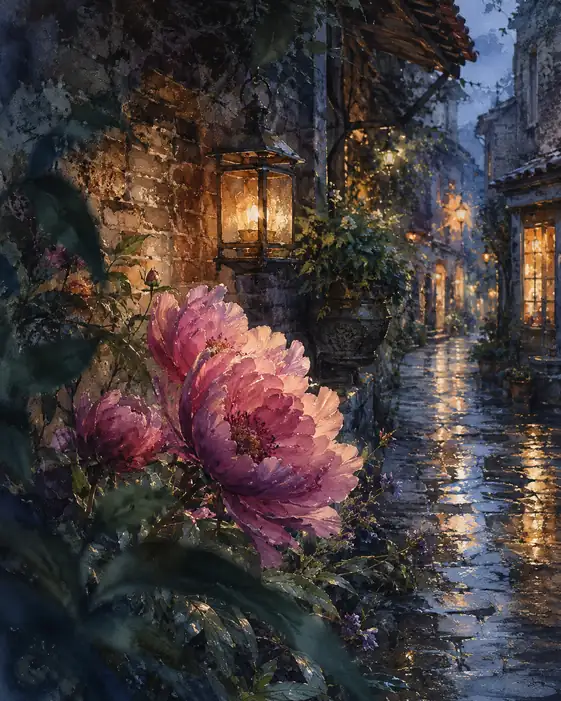 Peonies Keeping the Lantern's Secret
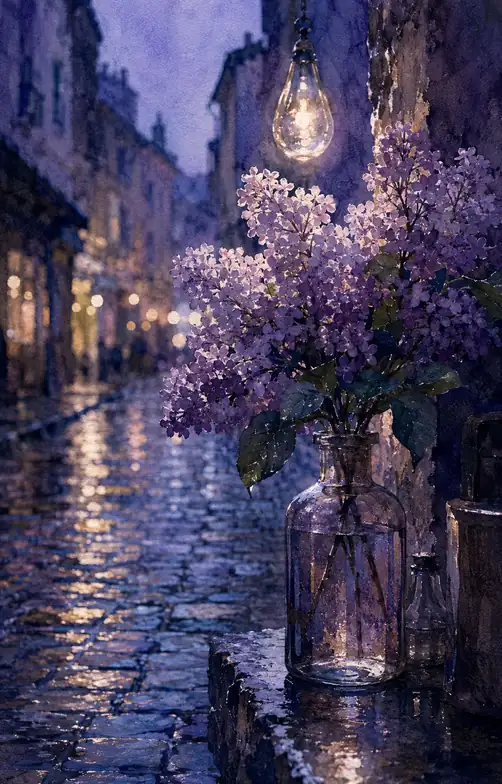 Lilacs Borrow the Last Streetlight
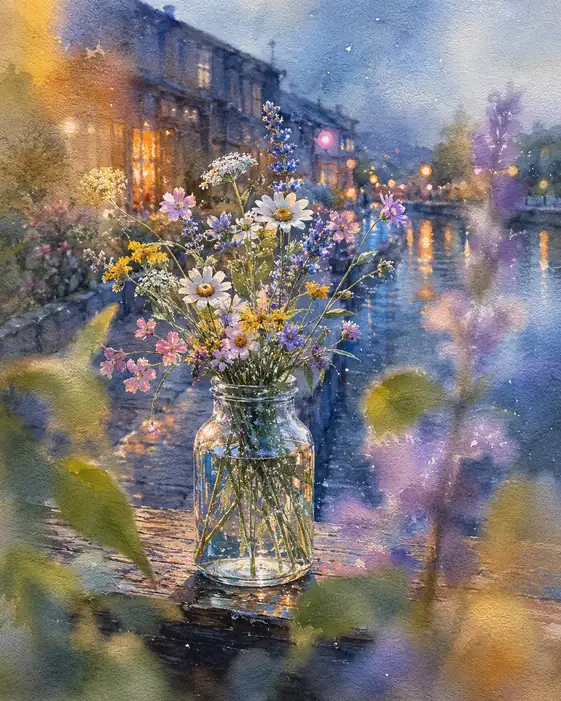 Evening Gathers in a Jar of Wildflowers
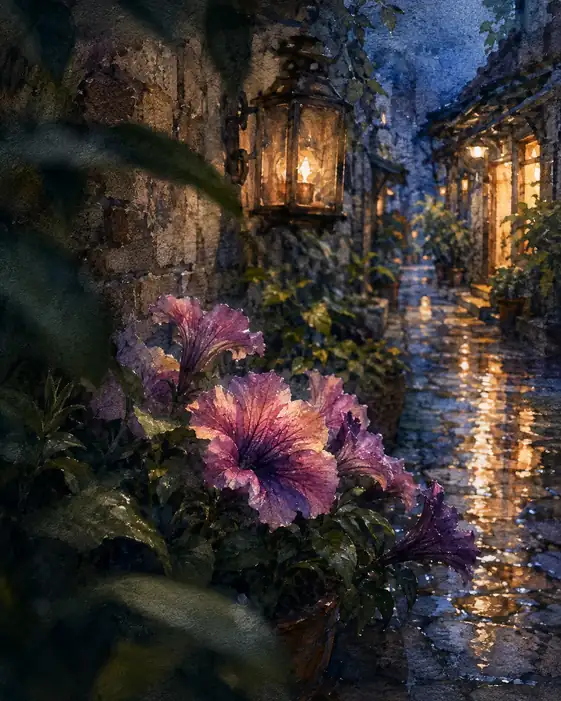 Petunias Listening to the Rainlit Lane
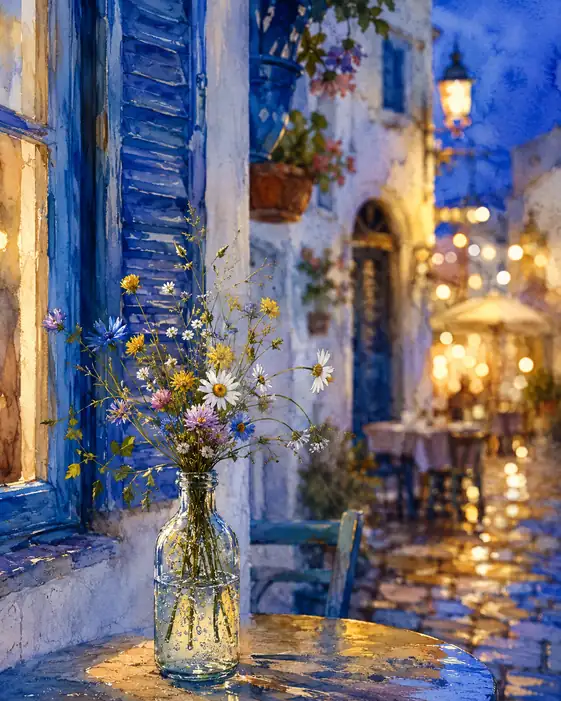 Wild Petals in the Blue Hour