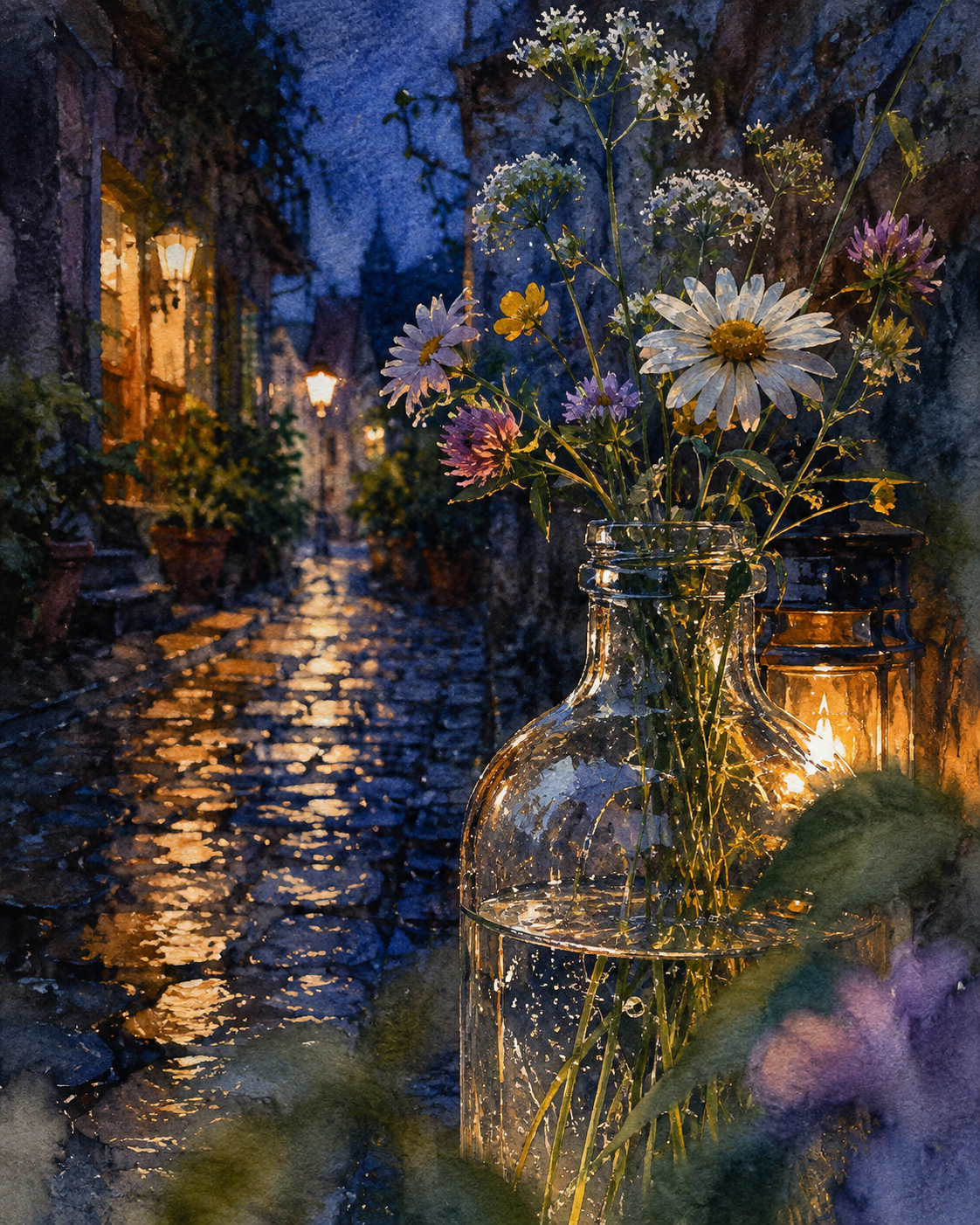
Wildflowers Borrow the Lantern's Gold
Critique
Introduction This nocturnal still life places a clear glass jar of meadow flowers beside a candle lantern at the edge of a wet village lane. Transparency, reflected fire, and slender stems make domestic gathering feel continuous with the illuminated street beyond. Description The large jar occupies the lower right, half filled with water and holding white daisies, lavender and pink composite flowers, yellow accents, and tall sprays of tiny white blossoms. Droplets and reflections cover its curved surface. A small black lantern burns immediately behind it. At left, rain-dark cobbles recede between old walls, glowing windows, potted plants, and diminishing lamps. Blurred leaves cross the lower foreground. Analysis The jar's rounded shoulder and vertical neck anchor the foreground, while thin stems expand upward into an airy asymmetrical bouquet. A prominent white daisy forms the principal floral focus. The lantern shines through glass and water, multiplying amber highlights along rims, bubbles, and stems. This concentrated brilliance is echoed by the broken golden track on the street. Cool indigo surrounds the arrangement, and soft foreground leaves create a layered aperture. Interpretation and Evaluation Cut flowers represent a brief preservation of growth, yet the transparent vessel refuses visual enclosure: street light, stems, water, and reflections occupy the same surface. The bouquet appears gathered rather than ceremonially arranged, giving it the intimacy of an everyday gesture. Its position beside the route suggests an offering to passersby, while the visible water emphasizes practical care sustaining beauty through the night. Conclusion The work unites still life and landscape through shared illumination. Glass does not separate the bouquet from the lane; it gathers the lane's lights and returns them in miniature. Transience becomes luminous rather than mournful.
Same Subcategory
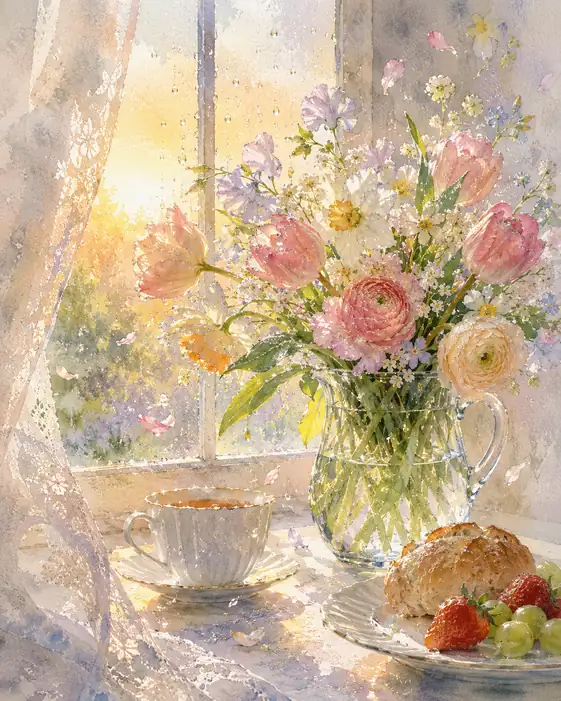 Morning Sets a Place for Spring
Similar Artworks
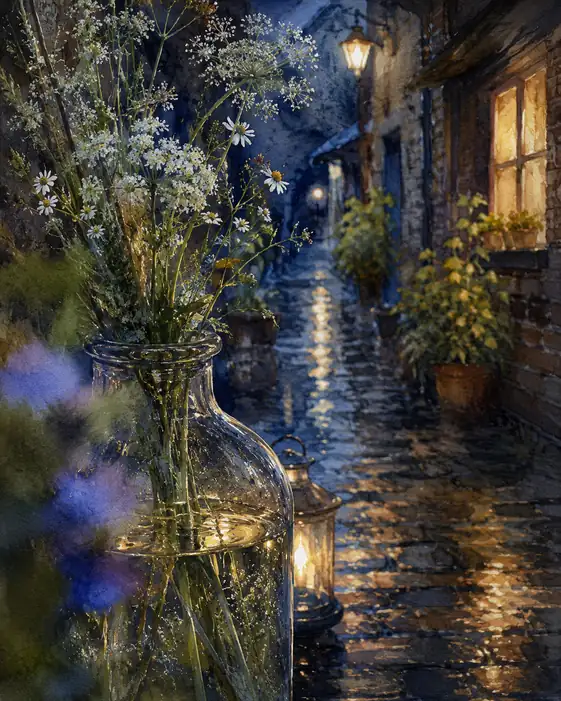 A Bottle Full of the Road's Last Light
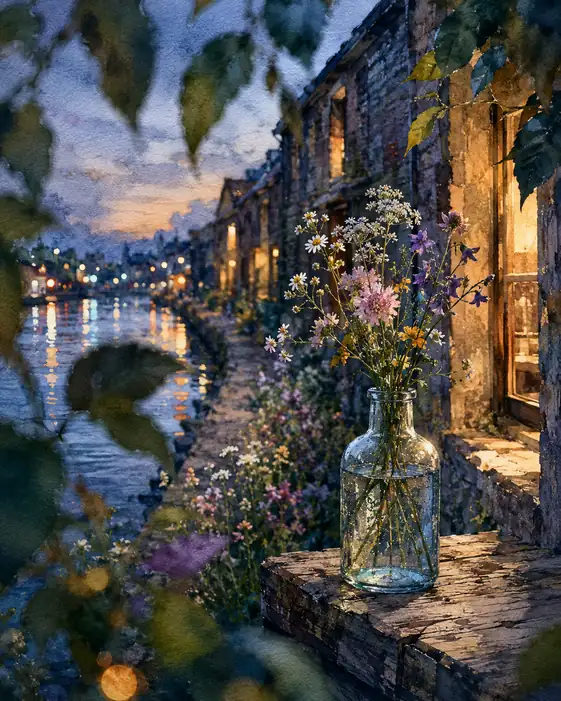 Wildflowers Waiting Beside the Blue Canal
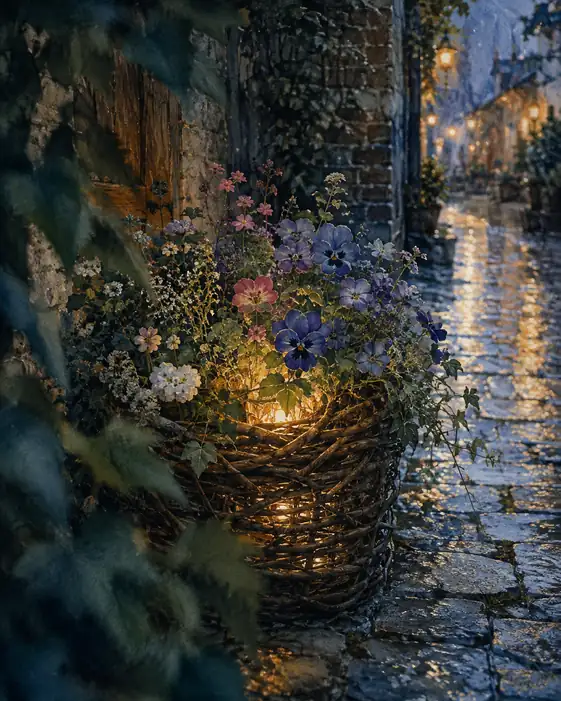 The Night Lamp Blooming in a Wicker Nest
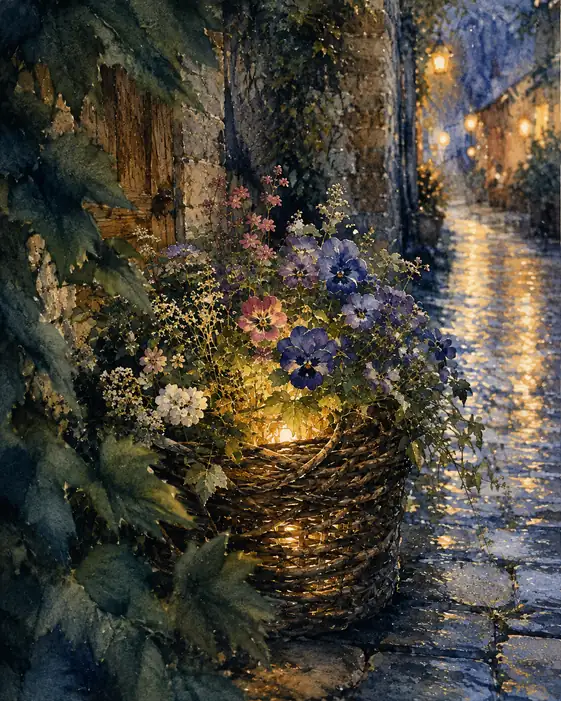 Where the Pansies Keep a Little Fire
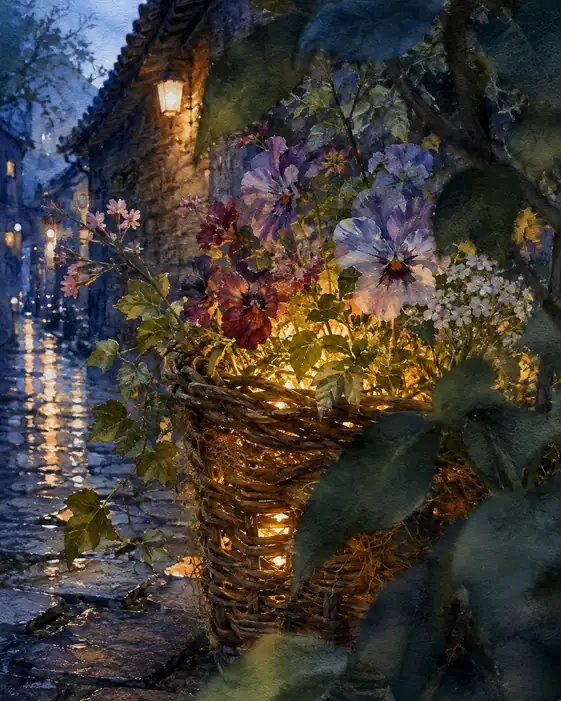 A Basket Glowing After the Rain
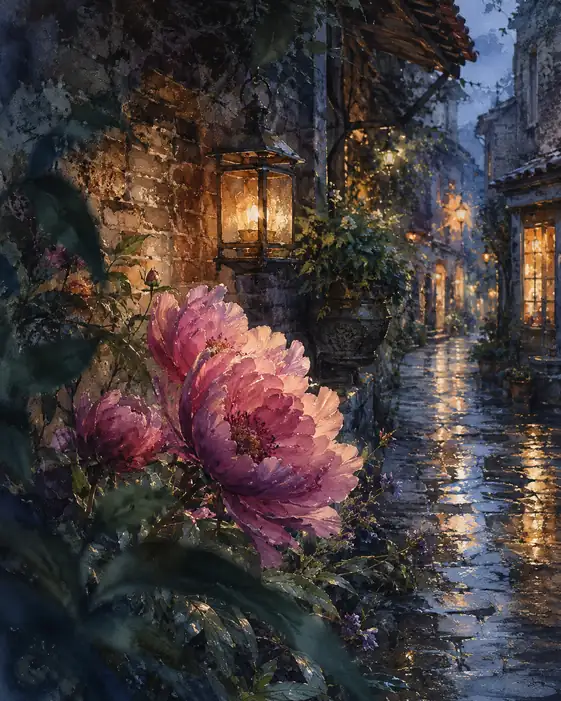 Peonies Keeping the Lantern's Secret
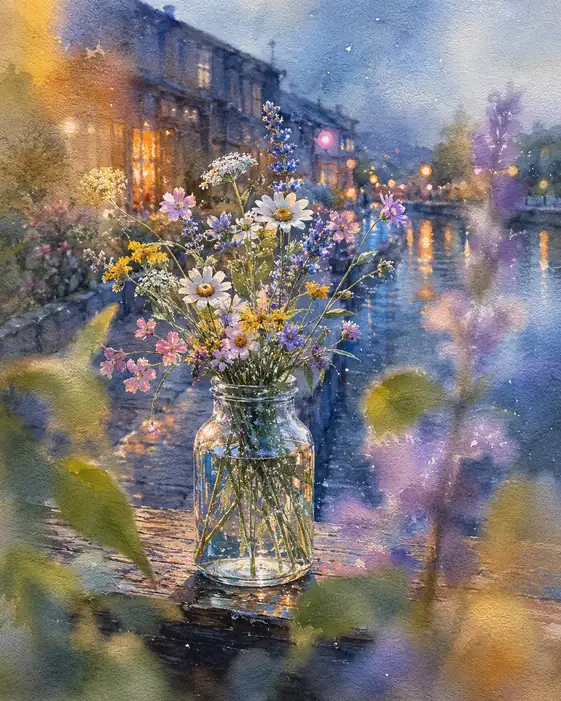 Evening Gathers in a Jar of Wildflowers
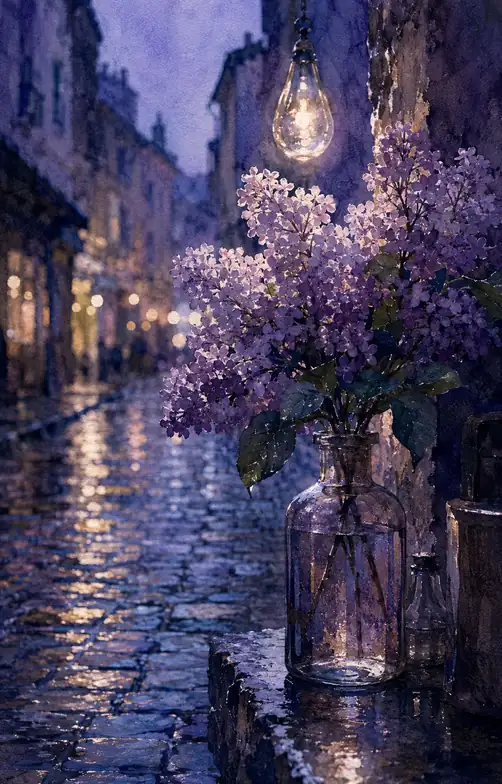 Lilacs Borrow the Last Streetlight
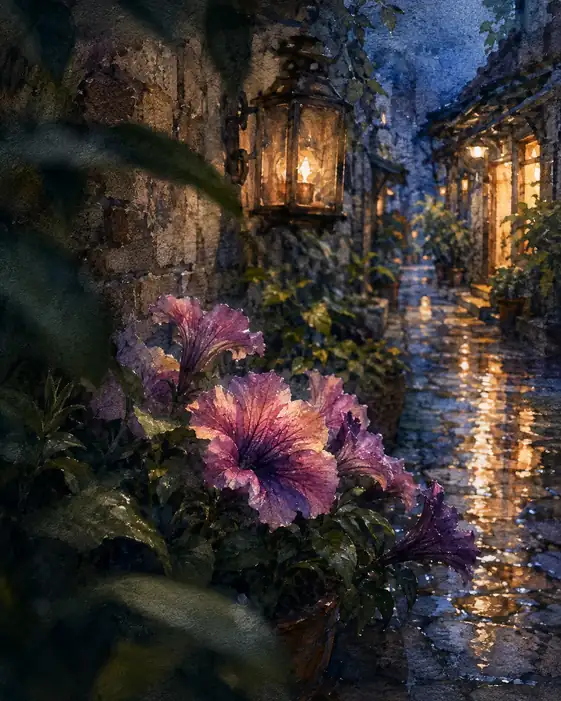 Petunias Listening to the Rainlit Lane
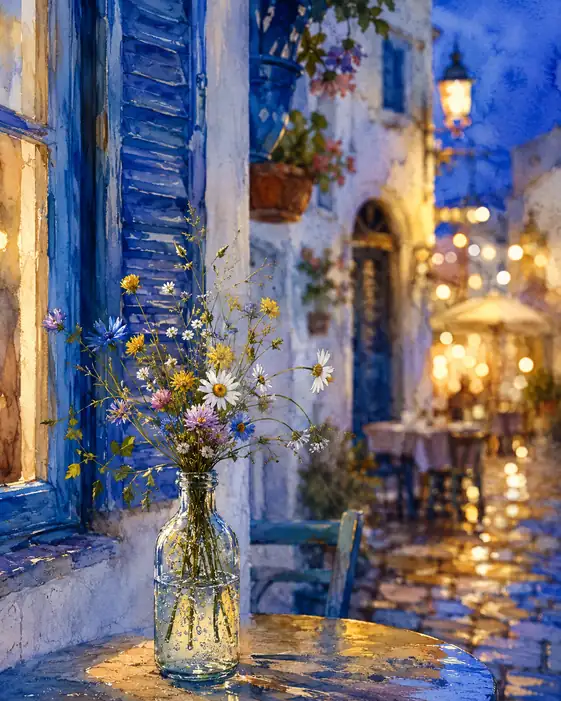 Wild Petals in the Blue Hour