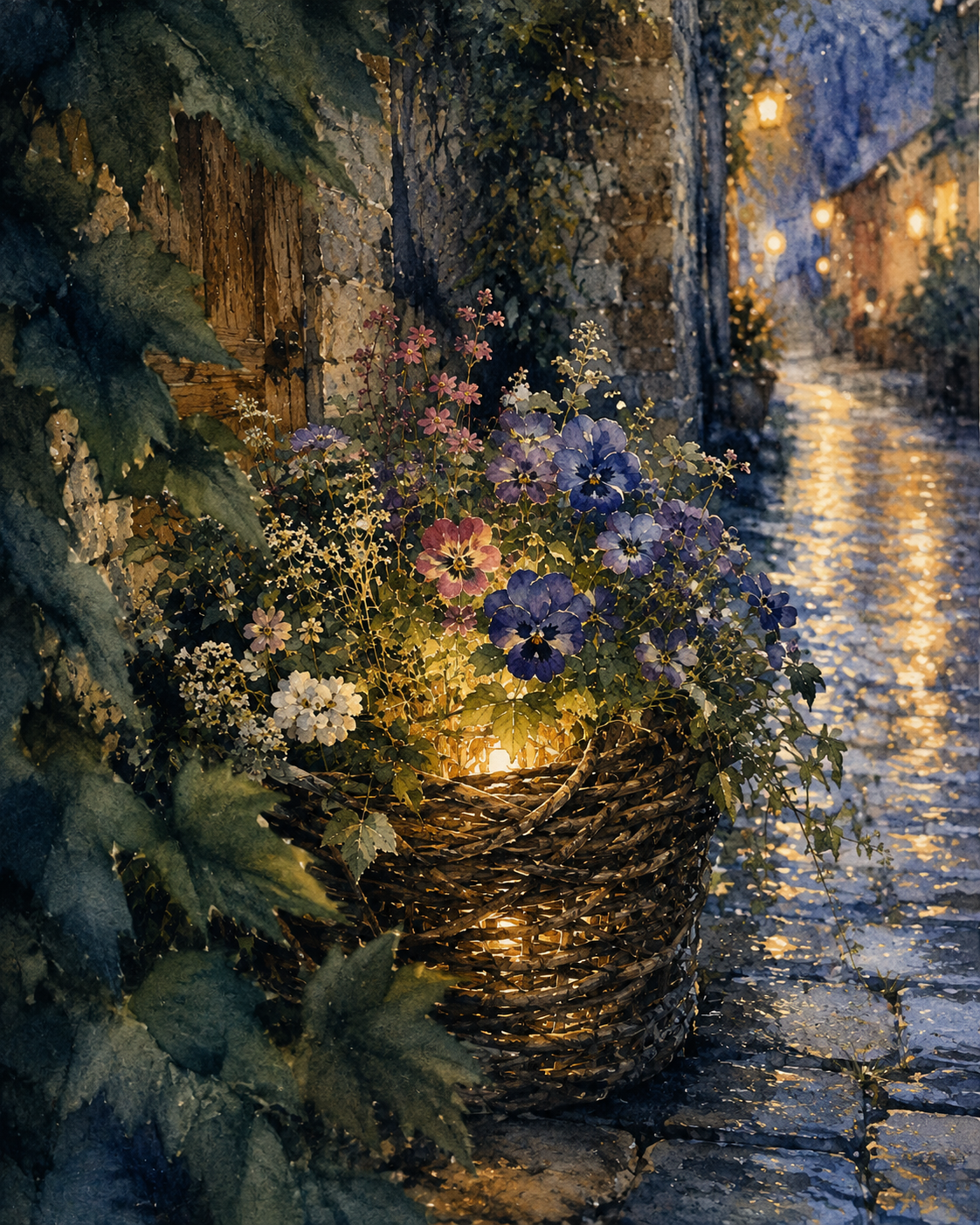
Where the Pansies Keep a Little Fire
Critique
Introduction This rain-soaked street portrait centers on a round wicker basket crowded with pansies and delicate fieldlike blossoms. Concealed light transforms the arrangement into a modest beacon, set against a lane whose lamps continue the same warmth into distance. Description The basket occupies the lower center beside a rough wall and closed wooden door. Blue-violet pansies dominate, joined by one rose-colored bloom, pink starry flowers, white clusters, fine branching sprays, and trailing ivy. Amber light glows through the dark weave. Blurred evergreen leaves screen the left edge. At right, wet stones rise toward warmly lit houses beneath a blue evening sky. Analysis The bouquet builds a broad triangle above the rounded vessel, with tall thin stems loosening its silhouette. Large pansy disks alternate with minute white marks, producing varied scale and rhythm. Golden illumination rises through green foliage and catches petal edges, while cool blue-violet remains dominant above. The street's bright reflection forms a diagonal counterpart to the basket, and shrinking lamps extend its internal glow into architectural depth. Interpretation and Evaluation The arrangement combines garden cultivation with the apparent spontaneity of wild growth. Its rough basket and irregular mixture value abundance without polish. Positioned beside a closed door, it substitutes for a human greeting; light passing through the weave makes hospitality visible even when residents are absent. Rain intensifies this function, because the dry-seeming core offers a psychological shelter within the wet street. Conclusion Scale, color, and repeated illumination integrate the basket with its neighborhood. The work makes care legible through placement rather than narrative action. A single tended cluster becomes the near expression of the many distant household lights.
Same Subcategory
Similar Artworks
 The Night Lamp Blooming in a Wicker Nest
 A Basket Glowing After the Rain
 A Basket of Stars Beside the Sleeping Canal
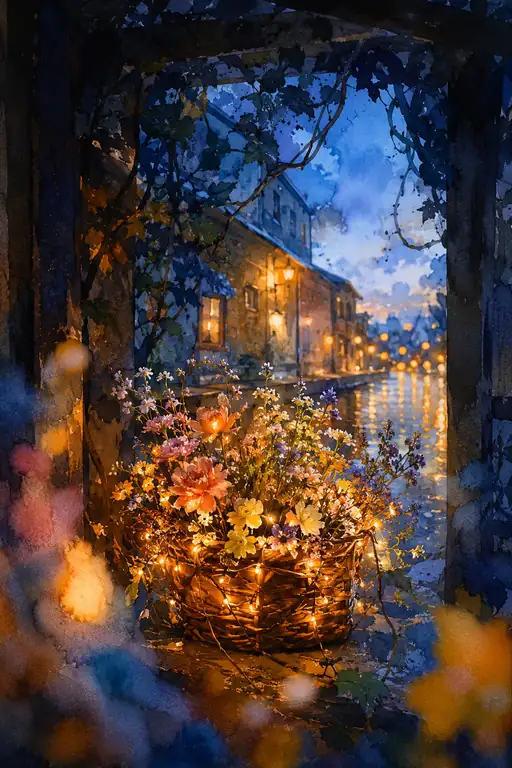 The Doorway Where Flowers Light the Blue Hour
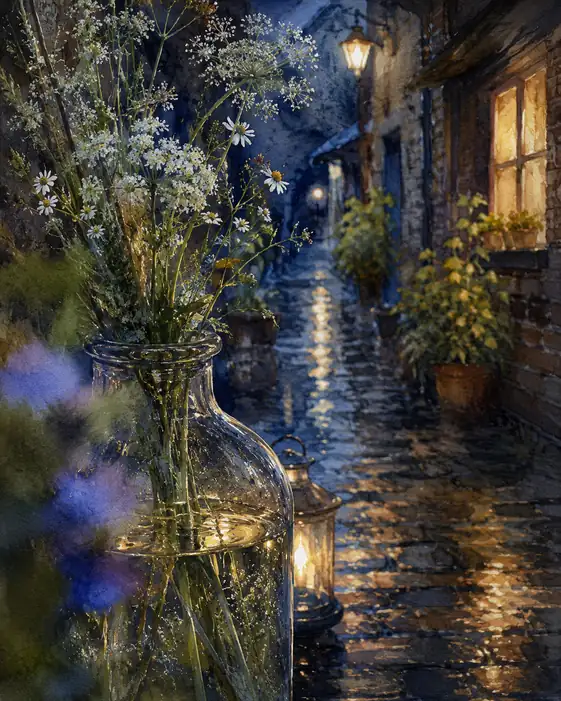 A Bottle Full of the Road's Last Light
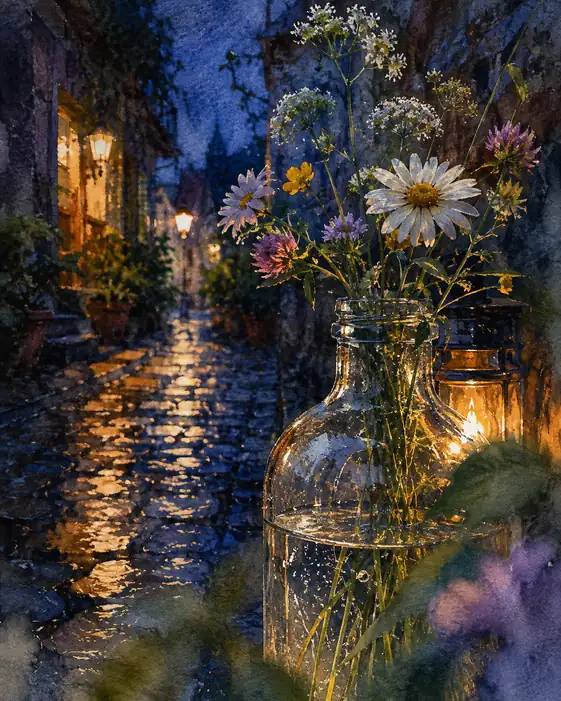 Wildflowers Borrow the Lantern's Gold
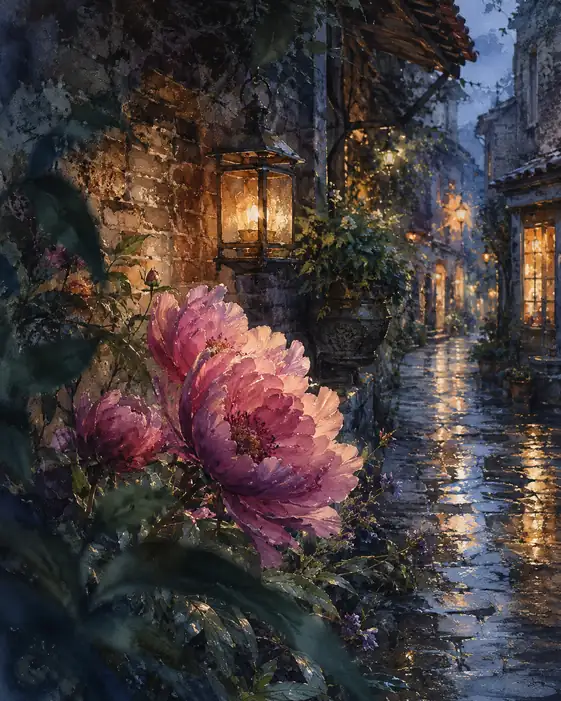 Peonies Keeping the Lantern's Secret
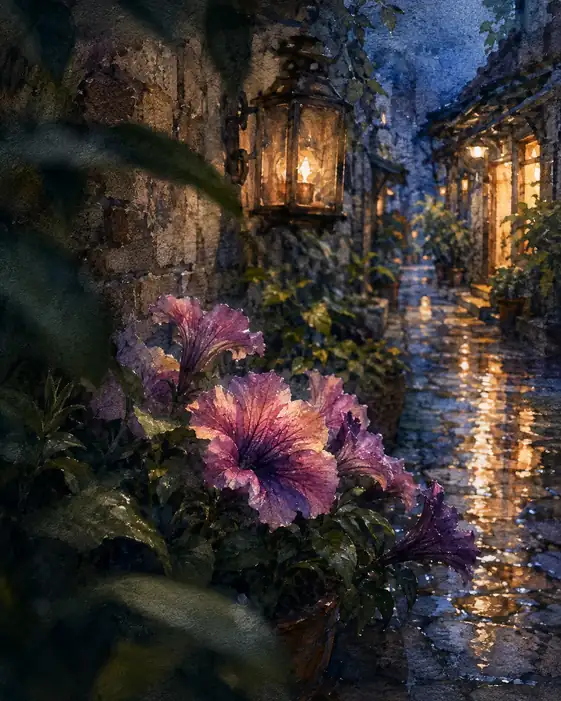 Petunias Listening to the Rainlit Lane
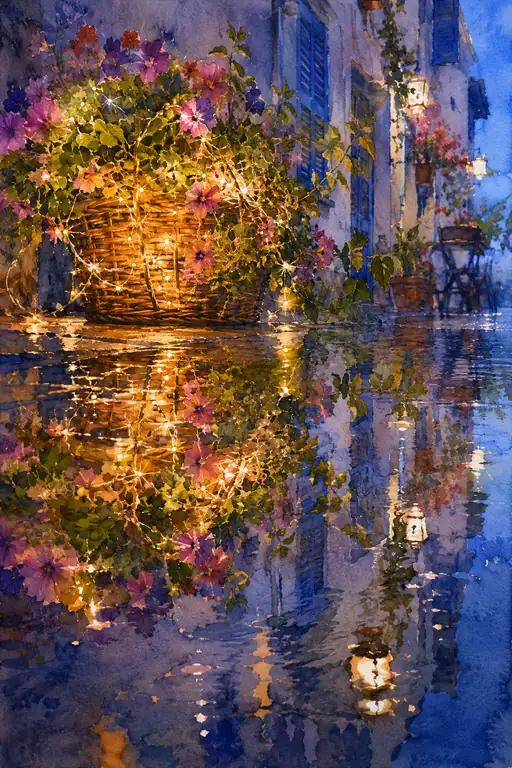 Fairy Lights Mirrored on Wet Cobblestones
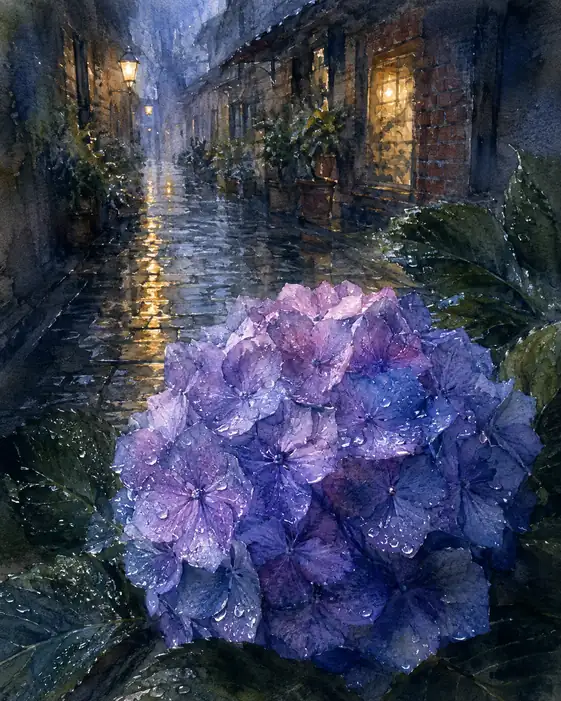 The Violet Hour Beaded with Rain