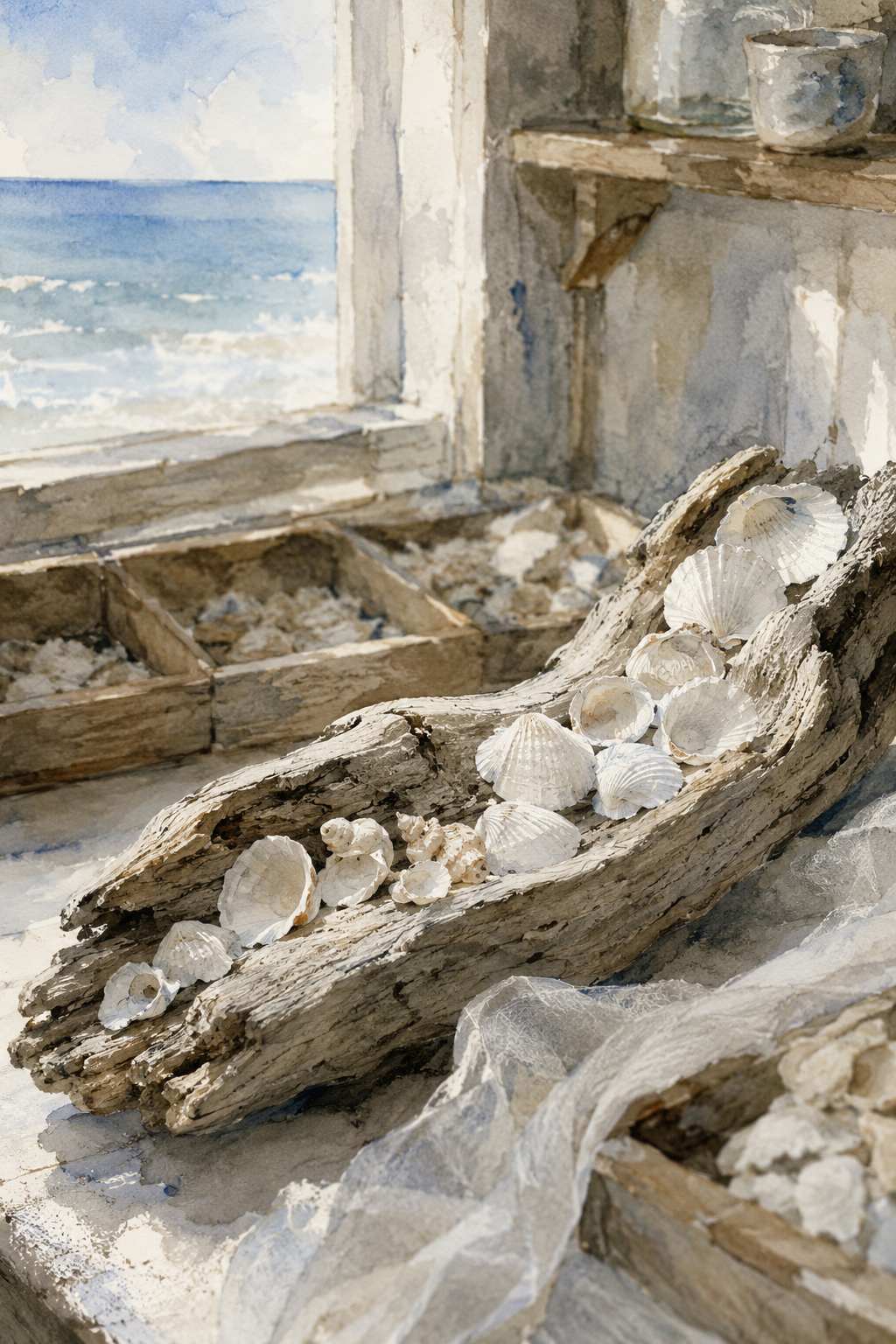
The Sea Left Its Whispers by the Window
Critique
Introduction This seaside still life arranges white shells inside hollow driftwood beside an open window. Collecting meets the ocean's visible expanse, making the room a temporary archive of the shore. Description A long, eroded branch lies diagonally across the foreground, its channel filled with scallop shells, small spiral shells, and broken fragments. Additional shells occupy shallow wooden trays and a gauzy fishing net at lower right. Above, a crude shelf holds chipped pale cups. Through the square window at left, blue sea, breaking waves, clouds, and a straight horizon appear in bright daylight. Analysis The driftwood's rising diagonal directs the eye from scattered foreground shells toward the window. Its dark cavities intensify the chalky whites, while radial shell ridges answer the wood's longitudinal grain. Repeated boxes—the trays, sill, shelf, and window—organize otherwise irregular natural forms. Warm beige and cool blue divide interior and exterior without severing them. Strong sunlight models each object through crisp edges and pale blue shadows. Interpretation and Evaluation The shells are remnants of marine life, but their careful placement suggests attention rather than melancholy. The hollow wood becomes a found display case, joining two materials shaped by water. Visible surf restores these collected fragments to their source while emphasizing the distance created by possession. The work is strongest where humble, weathered objects retain evidence of use and erosion instead of becoming sanitized curiosities. Conclusion Texture, geometry, and the open view create a persuasive dialogue between collection and horizon. The room holds portions of the beach, yet the sea remains larger and active beyond it. Memory is presented as an arrangement that preserves contact without claiming ownership.
Same Subcategory
 Lanterns Lead the Dawn Down a Country Lane
Similar Artworks
 Traces of the Summer Wave
 Wildflower Bouquet on the Sunlit Alley Chairs
 The Museum of Forgotten Tides
 Crape Myrtle along the Sunlit Coastline
 Crescent Dreams on the Shore
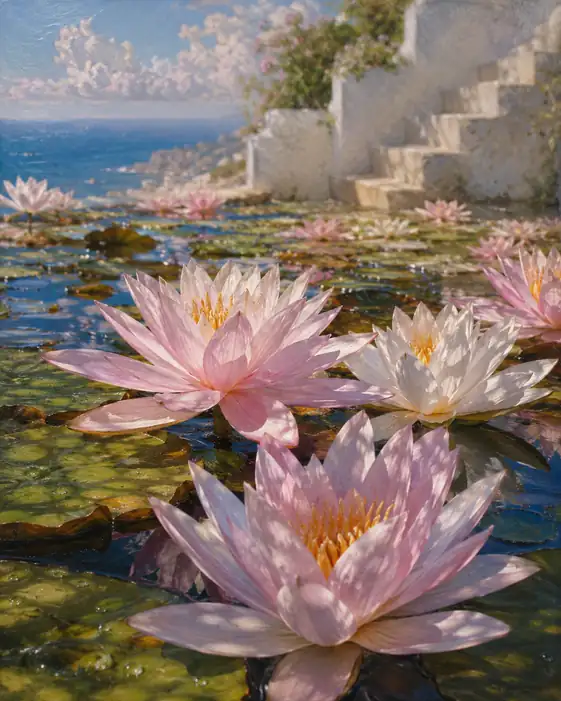 Water Lilies on the Coastal Terrace
 Prisms in the Morning Sun
 Sunflowers Cascading to the Coastal Horizon
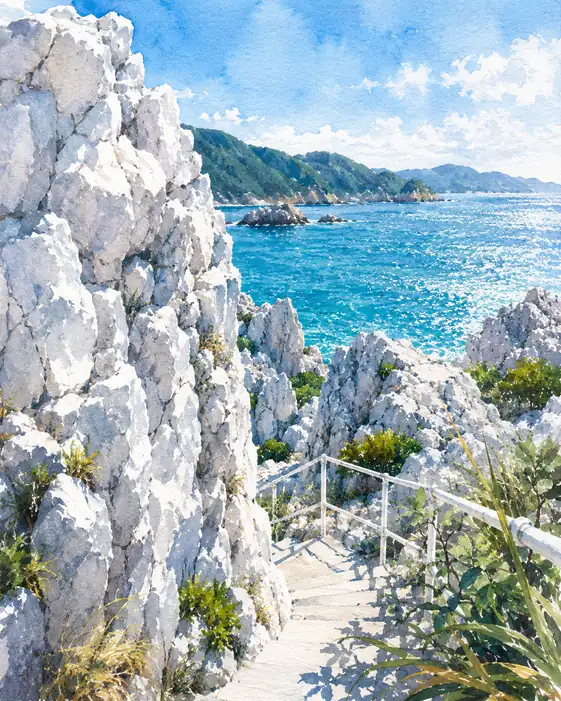 Sunlight on the Limestone Shores
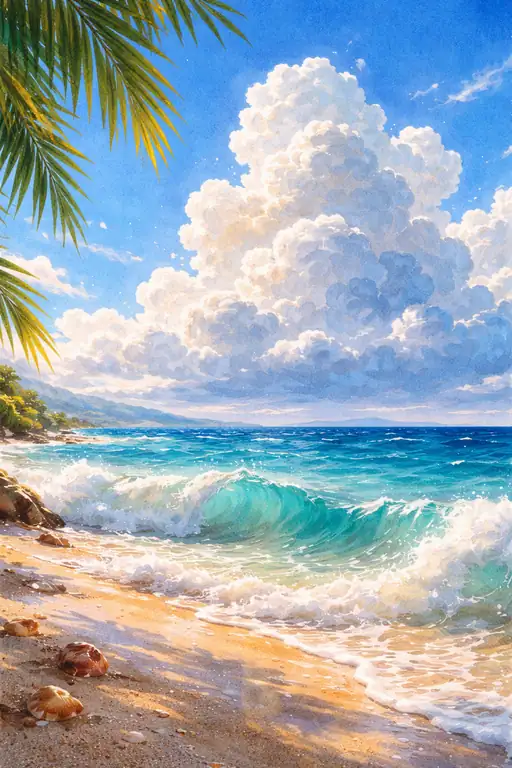 Symphony of the Turquoise Crest