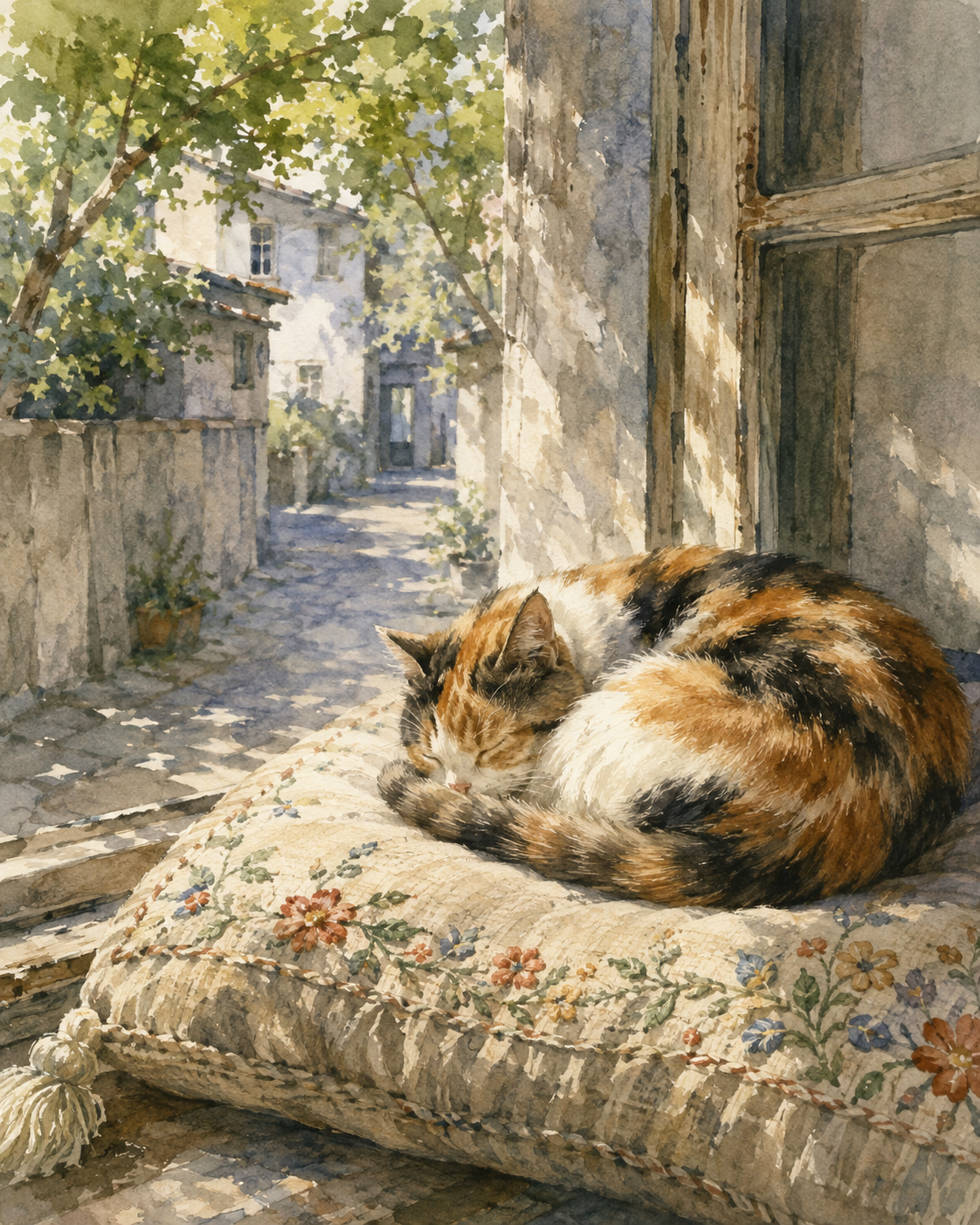
The Alley Dreams on a Flowered Pillow
Critique
Introduction This scene places a sleeping calico cat between a quiet interior and an old village lane. Patterned fabric, weathered architecture, and shifting daylight make security tangible. Description The curled cat occupies a large floral cushion in the lower right, its orange, black, and white coat forming a compact circle around its tucked face. A striped tail closes the curve. Behind it stands a tall worn wooden door beside pale, mottled plaster. The lane recedes toward white houses under leafy trees, with scattered pots, stone paving, and patches of blue-gray shadow. Analysis The cat and cushion create a broad foreground oval that counters the alley's narrowing perspective. Warm fur patches echo the small rust-colored flowers in the upholstery, integrating animal and resting place. Dappled light repeats across leaves, walls, paving, and coat, joining near and distant spaces. Crisp whiskers and fabric stitches yield gradually to loose architectural washes, producing convincing depth. The dark doorway strengthens the luminous edge along the cat's back. Interpretation and Evaluation Sleep makes the animal vulnerable, yet its relaxed curl and exposed position imply complete trust in the surroundings. The old lane becomes an extension of home rather than a public route. Floral embroidery suggests human care, while the cat's self-contained posture expresses instinctive comfort. The work avoids mere cuteness through attentive texture and spatial construction; serenity depends equally on the cushion's softness and the enduring masonry beyond. Conclusion The strongest achievement is the continuity between intimate rest and communal place. Pattern, sunlight, and perspective make the sleeping cat seem held by the entire lane. The painting offers a persuasive image of belonging as the freedom to become still.
Same Subcategory
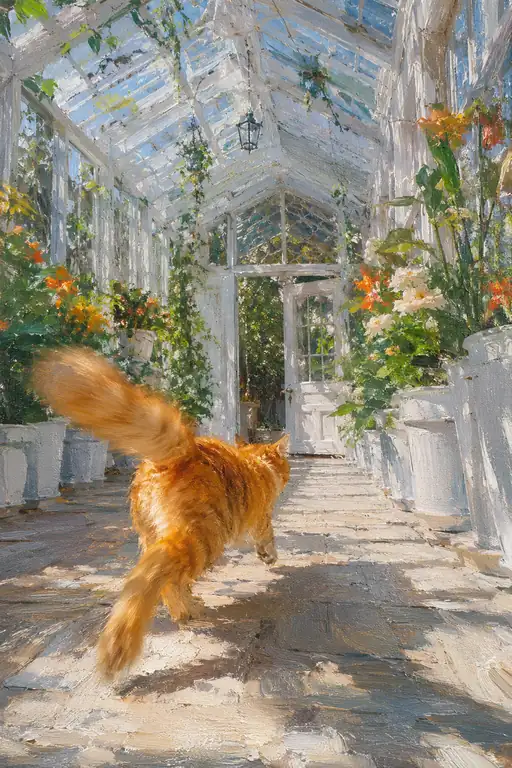 Amber Wind in the Greenhouse
Similar Artworks
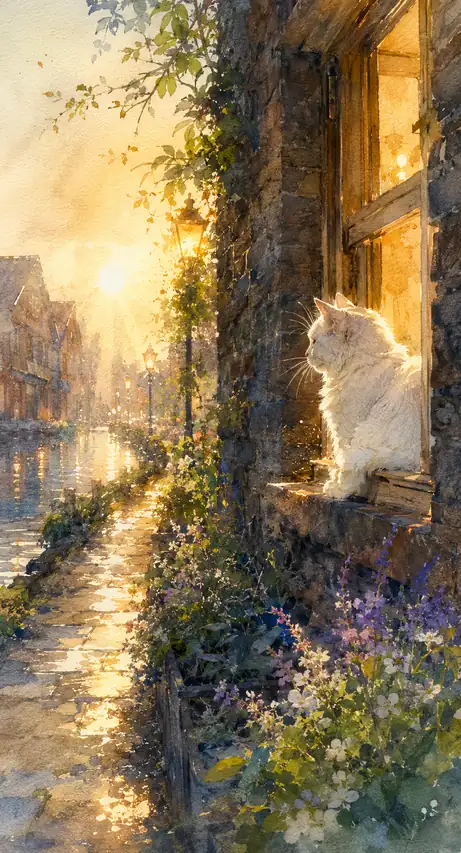 Sunset Finds the Cat at the Canal Window
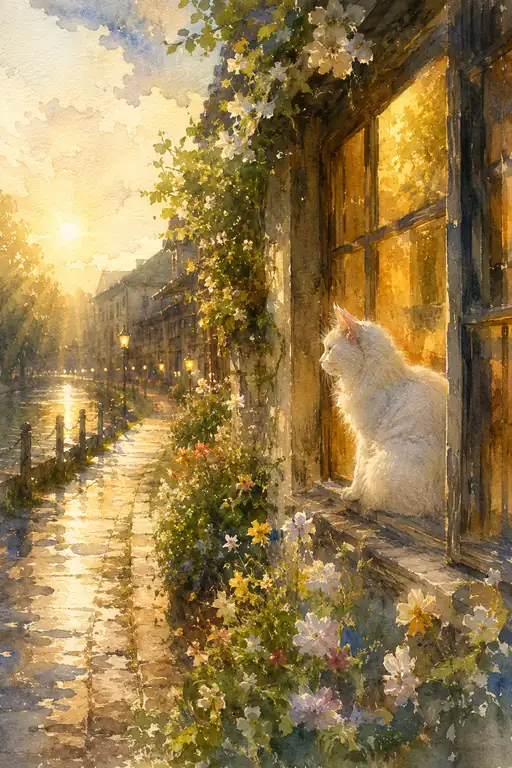 The White Cat Who Watches Morning Arrive
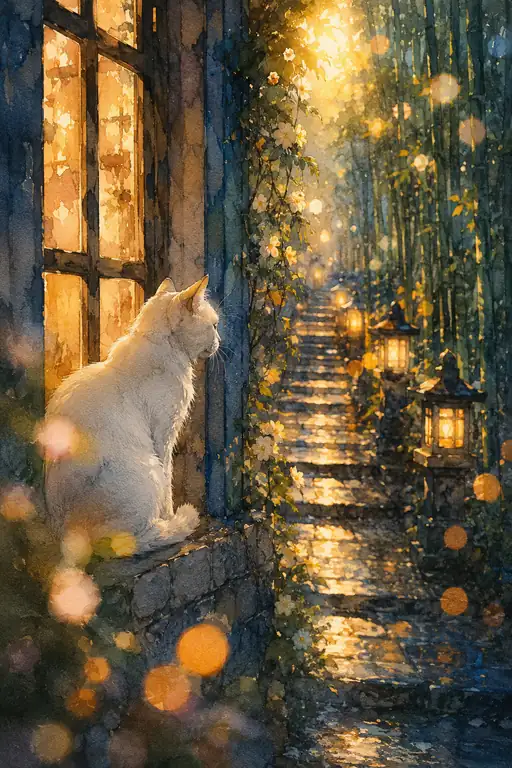 Silent Gaze Beyond the Bamboo Lanterns
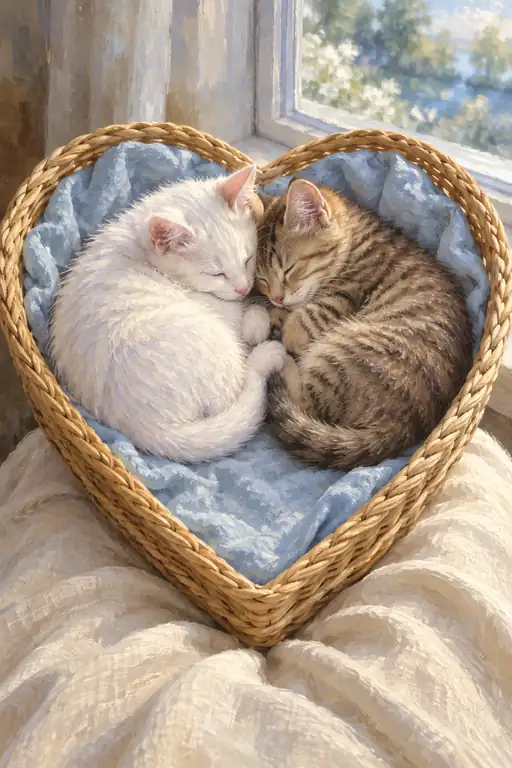 Gentle Harmony in the Heart Basket
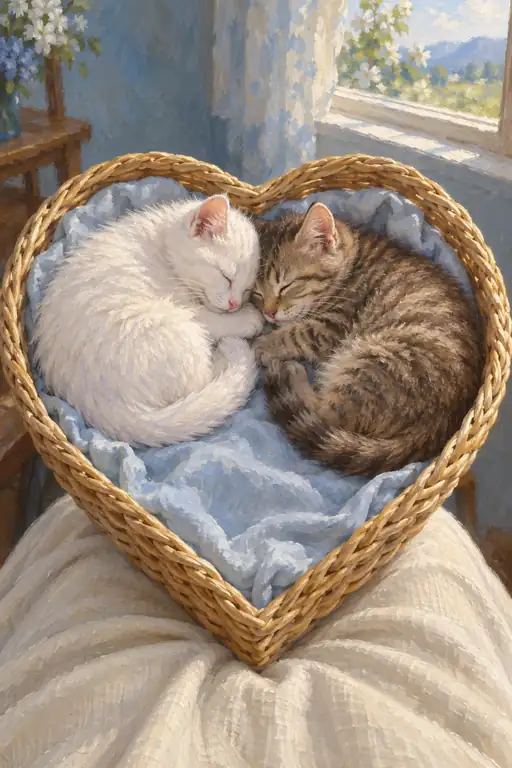 Slumber in the Woven Heart
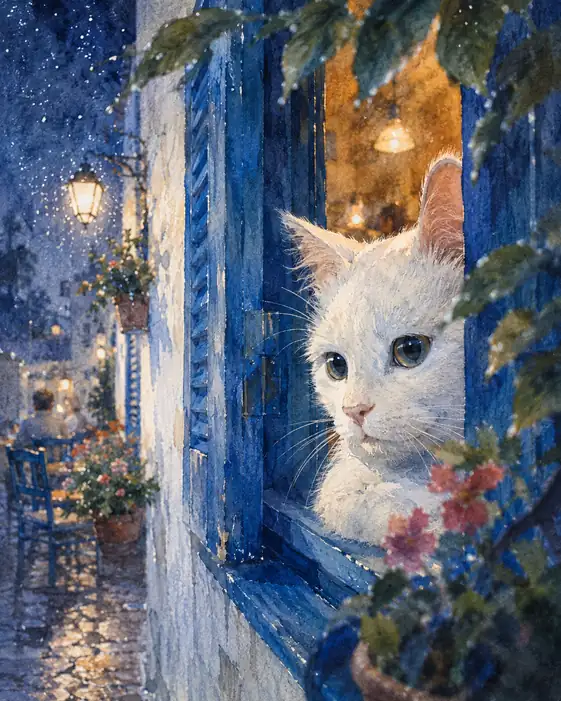 Blue Shutter Curiosity on a Starlit Night
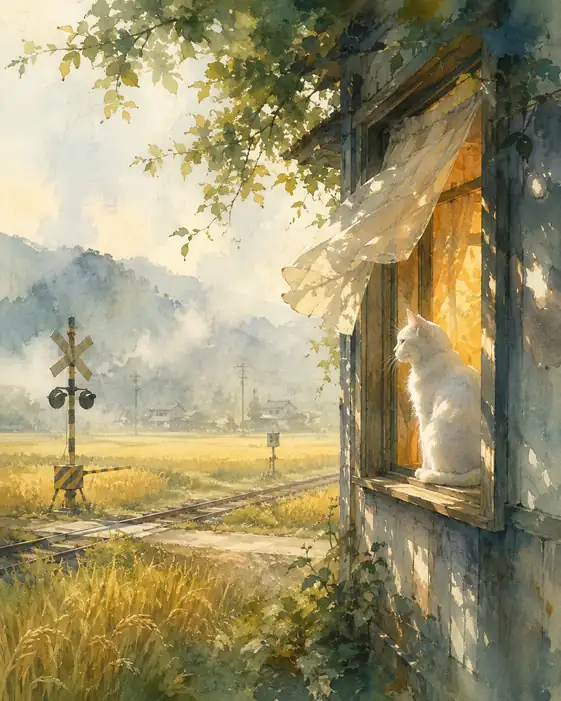 White Cat Watching the Morning Train Pass
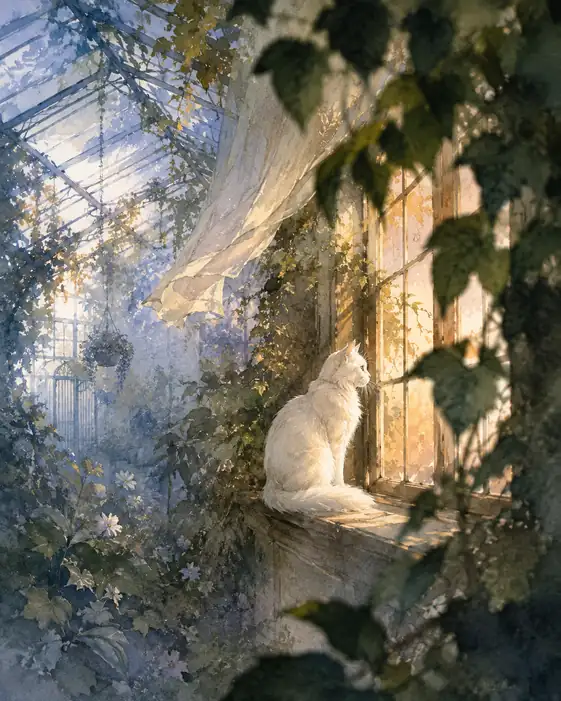 The White Cat Watches Morning Enter the Glasshouse
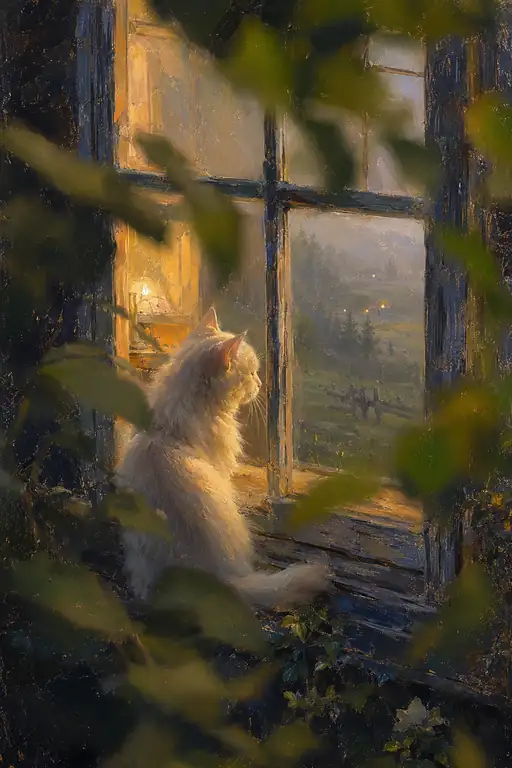 The Cat Who Watched Evening Cross the Fields
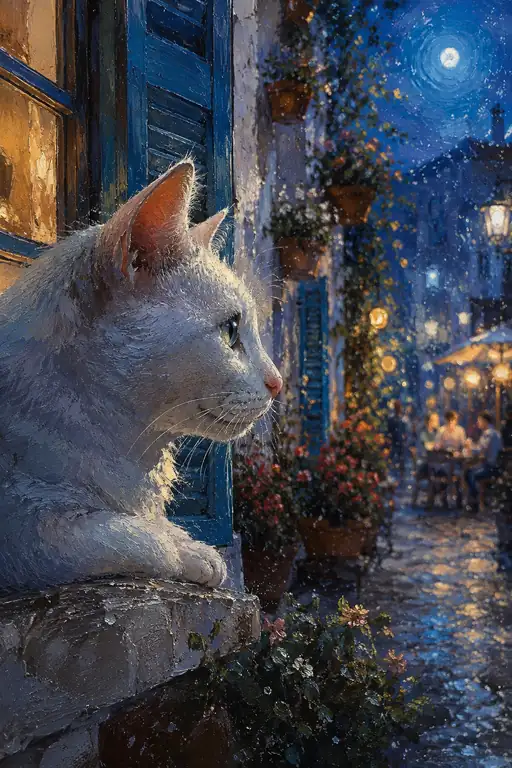 Steam Lingering in the Twilight Breeze