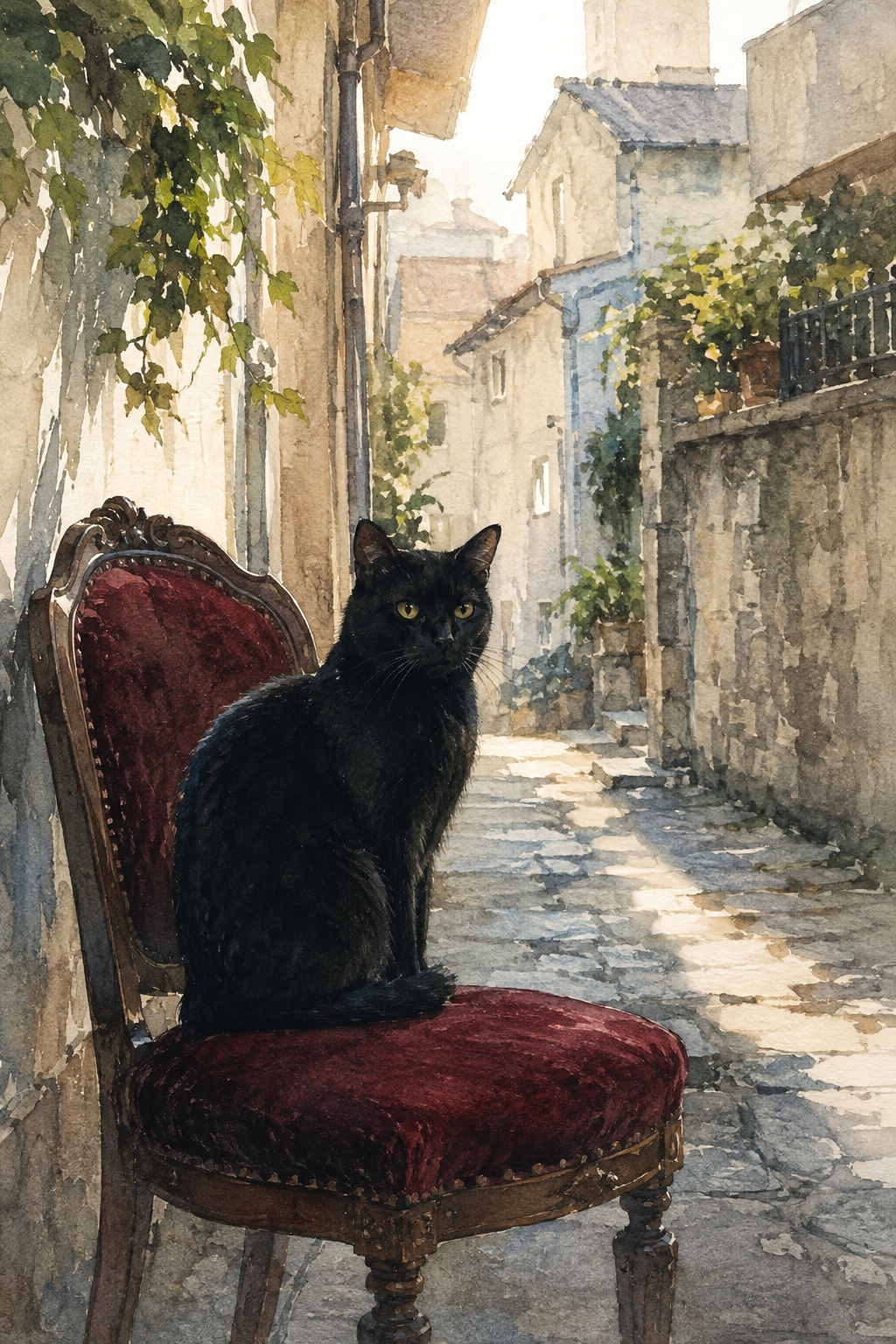
The Black Cat's Red Throne
Critique
Introduction This scene depicts a black cat on an ornate red chair in a sunlit stone alley. The furniture occupies the left foreground, while pale buildings recede behind. Luxury, animal composure, and public space meet with humor. Description The cat sits in profile but turns yellow eyes toward the viewer. Its tail curls along the burgundy seat, and its body merges with the carved back. Red upholstery, nail trim, crest, and turned leg remain visible. Ivy descends upper left, while plants and a balcony line the right wall. Stone paving leads toward cream and blue houses. Analysis Chair and cat form a dense dark-red mass against the open pale alley. Their vertical placement anchors the foreground, while converging walls and paving create strong depth. Black fur is modeled through blue and brown highlights rather than flat tone. Red upholstery supplies the principal warm accent among cream, gray, green, and muted blue. Hard carved edges contrast with fur and foliage; diluted architecture keeps distance atmospheric. Interpretation and Evaluation The cat's posture and gaze make the chair a temporary seat of authority. Its relaxed tail and narrow alley keep the scene intimate. Moving furniture outdoors exposes the chair and makes the animal a public observer. Clear perspective, controlled color, and precise expression create individuality without excessive anthropomorphism. Conclusion At first the unusual chair attracts attention, but closer viewing reveals the cat's gaze as the element that stabilizes the encounter. It occupies the furniture without appearing possessed by its status. The work turns a quiet alley pause into a measured reflection on territory, dignity, and adaptation.
Same Subcategory
 Sea Breeze and the Twilight of Cats
 Tenderness Looks Over the Fence
Similar Artworks
 Blue Shutter Curiosity on a Starlit Night
 Keeper of the Quiet Alley
 Golden Afternoon in the Mediterranean Alley
 Wreath of Wild Blooms for a Midnight Friend
 The Blue Night I Fell for You in a Flower Crown
 Wildflower Bouquet on the Sunlit Alley Chairs
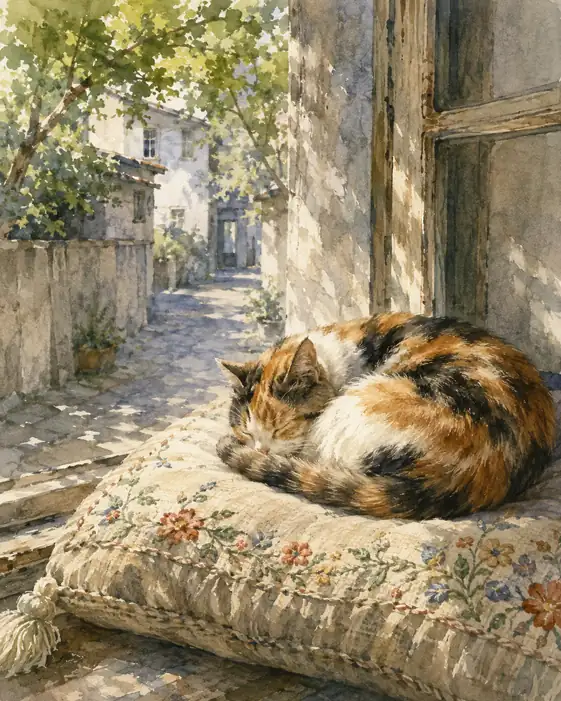 The Alley Dreams on a Flowered Pillow
 The Bookseller's Bell Waits at Noon
 Endless Summer Beyond the Blue Door
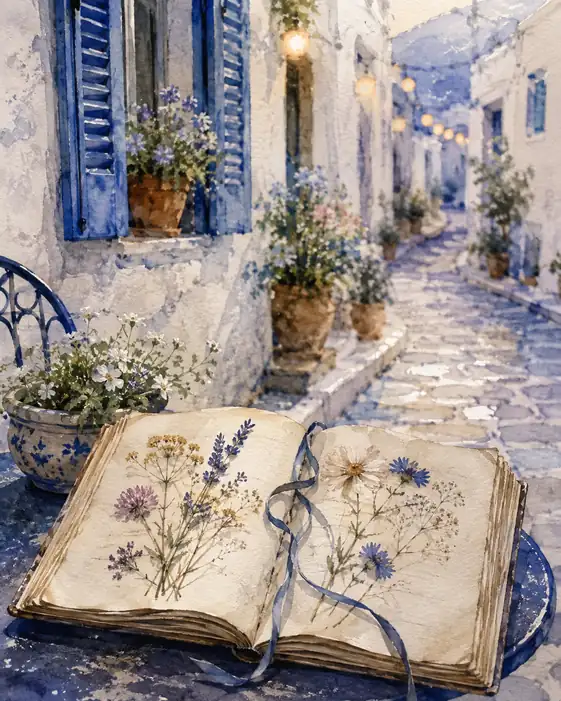 Memory Pressed in Petals and Sky