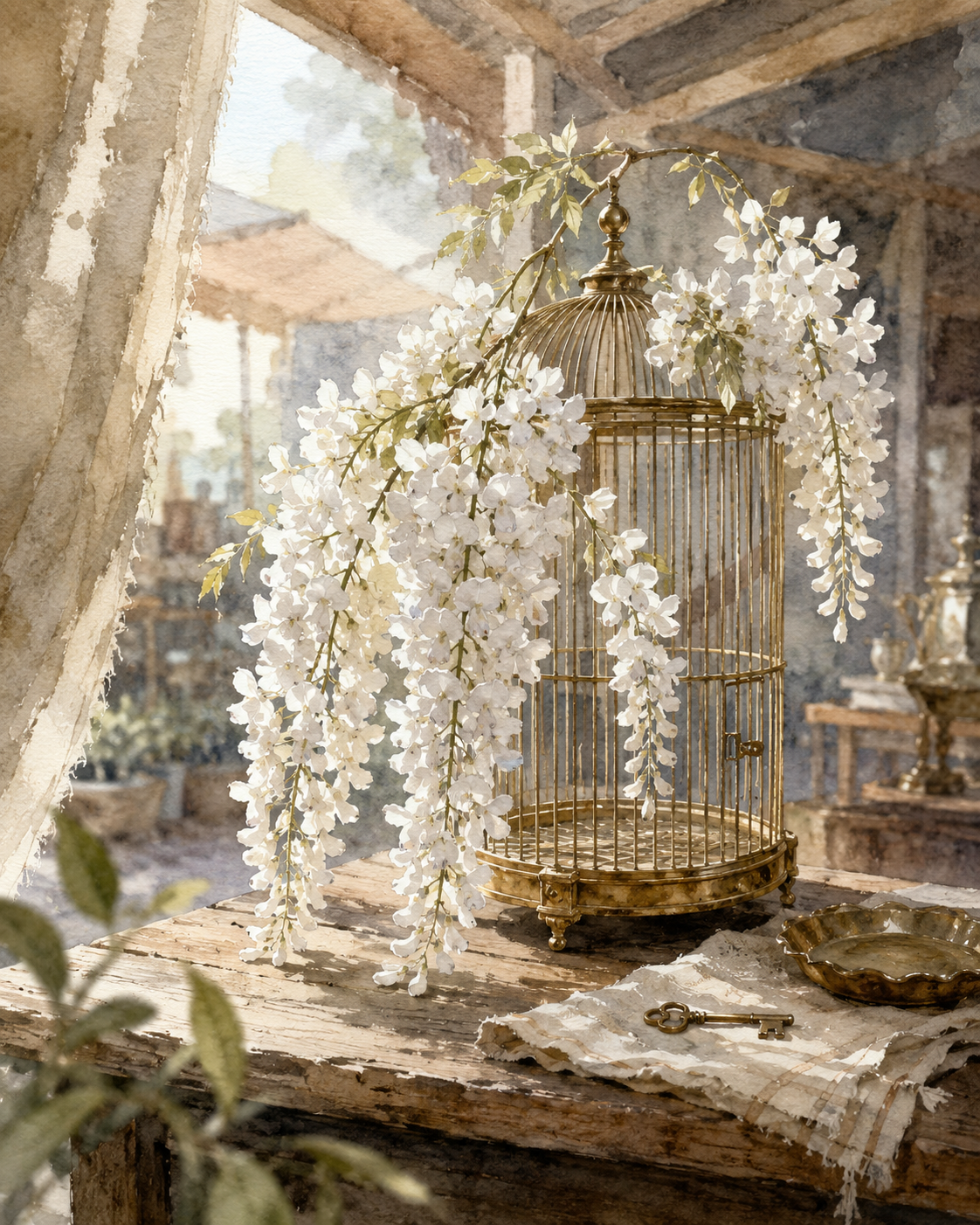
The Key to a House of White Wisteria
Critique
Introduction This sunlit still life presents an empty brass cage draped with white wisteria on a weathered table. A key lies on folded cloth. Pale architecture and garden light frame a study of openness, possession, and release. Description The cylindrical cage occupies center-right on small feet beneath a dome and finial. Its door is closed, though no bird is present. Branches arc over the top and descend in white clusters. A brass key rests on frayed fabric beside a shallow dish. A translucent curtain hangs left, while courtyard forms and plants recede behind. Analysis The cage supplies a vertical grid within an environment of sagging cloth, curved stems, and irregular petals. Wisteria creates an arch that repeats the dome but softens its symmetry. Warm brass and aged wood sit within a narrow range of cream, gray, and muted green. Backlight makes petal edges translucent and separates overlapping clusters. Sharp key and cage details contrast with diluted architecture and blurred foreground leaves, clarifying depth. Interpretation and Evaluation The empty cage and visible key relate without dictating a narrative. Closure remains, yet absent bird and abundant flowers suggest containment has lost authority. Growth crosses the bars and occupies their exterior. Restrained color, controlled light, and material contrast ground the symbolism. The outside key tensions access against unnecessary release. Conclusion At first the key appears to promise an action, but closer viewing reveals that no captive remains to be freed. The cage survives as an elegant structure supporting flowers. Through this reversal, the work transforms possession into care and makes emptiness feel less like loss than a condition for renewed growth.
Same Subcategory
 Flight from the Gilded Cage
Similar Artworks
 The Empty Cage at Wisteria Dusk
 A Letter to My Former Self
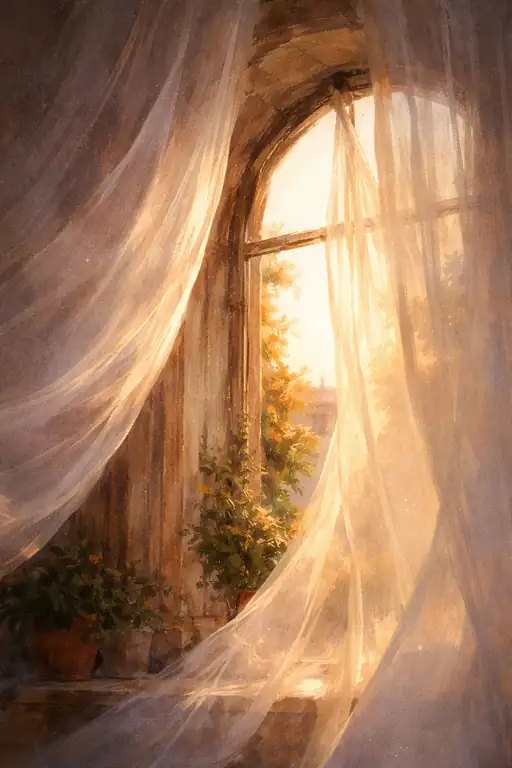 Dancing Light Through the Window
 A Letter Still Warm Beneath the Seal
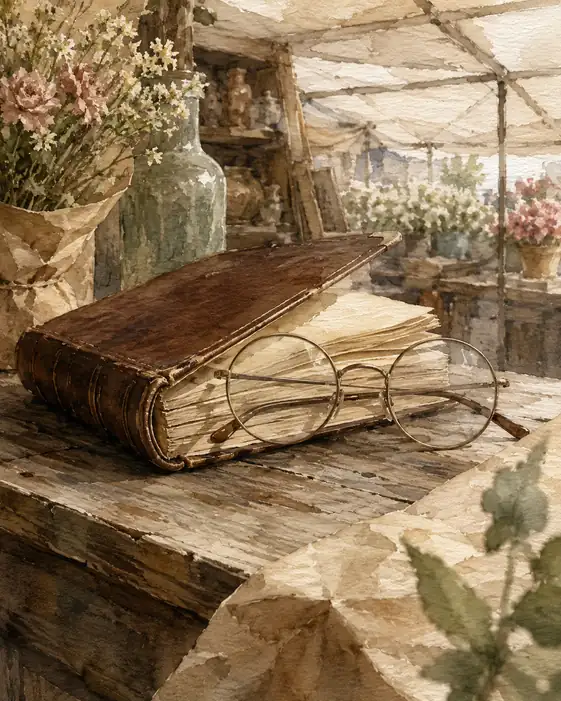 The Afternoon Left Between the Pages
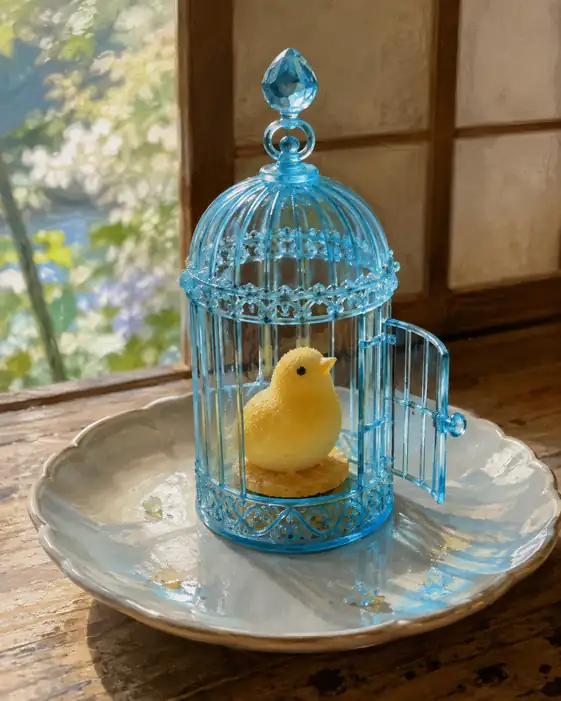 A Little Song Beyond the Open Cage
 Whispers in the Sunlit Dust
 The Fragrance of Yesterday's Dreams
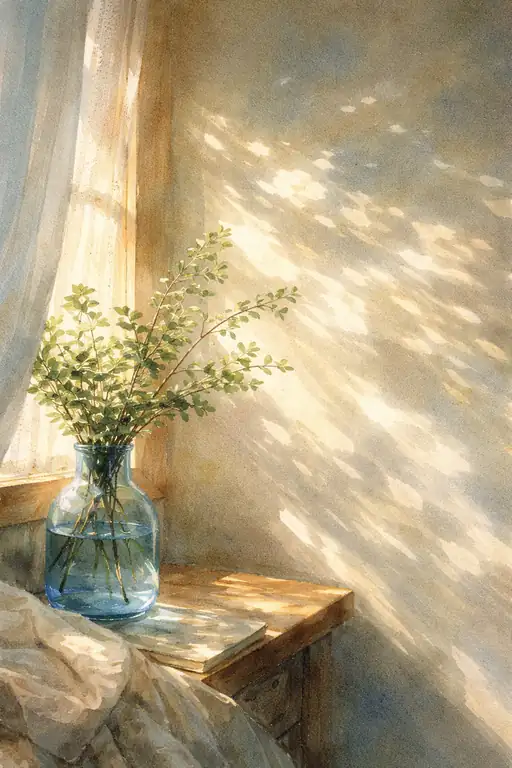 A Peaceful Corner in the Sunlight
 Light Architecture on Morning Wood