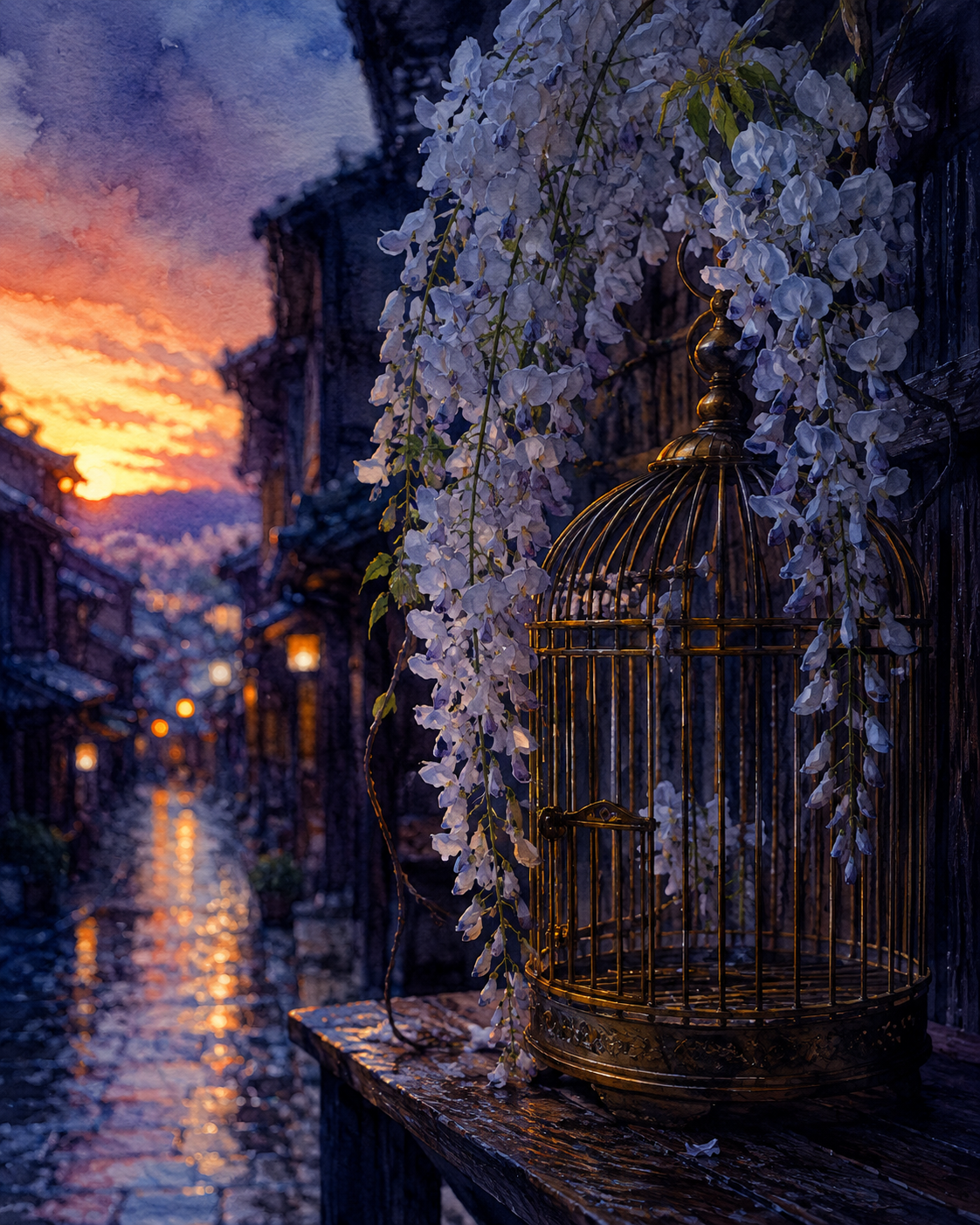
The Empty Cage at Wisteria Dusk
Critique
Introduction This still life places an empty brass cage beneath wisteria beside a wet sunset street. The cage dominates right foreground, while orange sky and lamps recede left. Enclosure, growth, and open passage meet at twilight. Description The domed cage stands on a wet ledge, its bars, base, door, and finial catching amber light. White-lavender clusters descend over the roof and bars. Its interior is empty except for petals. Behind, a narrow street runs between dark buildings toward an orange horizon. Lamps and reflections create a dotted line into depth. Analysis The cage's strong verticals and regular curves contrast with flexible flower stems and uneven petals. Its position at right balances the bright opening far left. Deep indigo and violet dominate architecture, allowing brass, lamps, and sunset to glow. Sharp metal edges and blossoms occupy the focal plane, while the street dissolves gradually. Diagonal rooflines and reflected lights guide attention from the cage toward the distance. Interpretation and Evaluation Emptiness prevents the cage from signifying confinement alone. Flowers enter and surround its bars, suggesting growth overtaking a structure meant to contain life. The open street offers release. Controlled focus, complementary color, and distinctions among wet wood, metal, petals, and masonry give the symbol physical presence. Conclusion At first the ornate cage appears to be the subject, but closer viewing shifts attention to what passes through and around it: flowers, light, and empty space. Its rigid form remains, yet its purpose has changed. The work presents freedom indirectly, through the quiet transformation of an enclosure into a support for bloom.
Same Subcategory
 A Little Song Beyond the Open Cage
Similar Artworks
 The Key to a House of White Wisteria
 Where the Sea Wind Whispers to the Glass
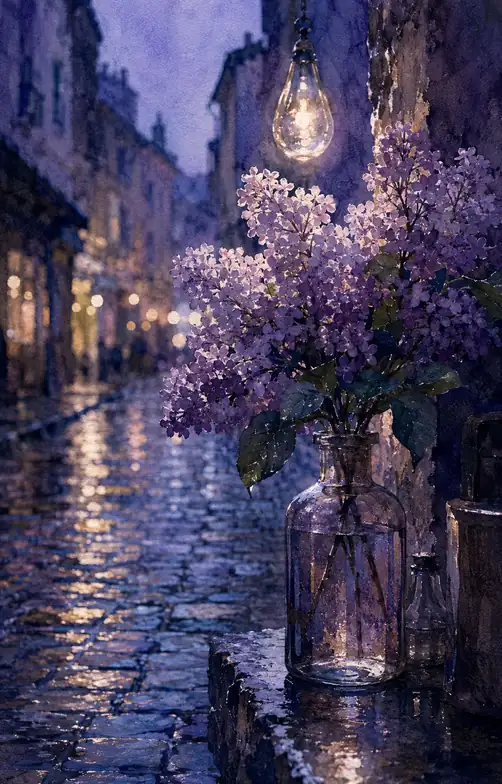 Lilacs Borrow the Last Streetlight
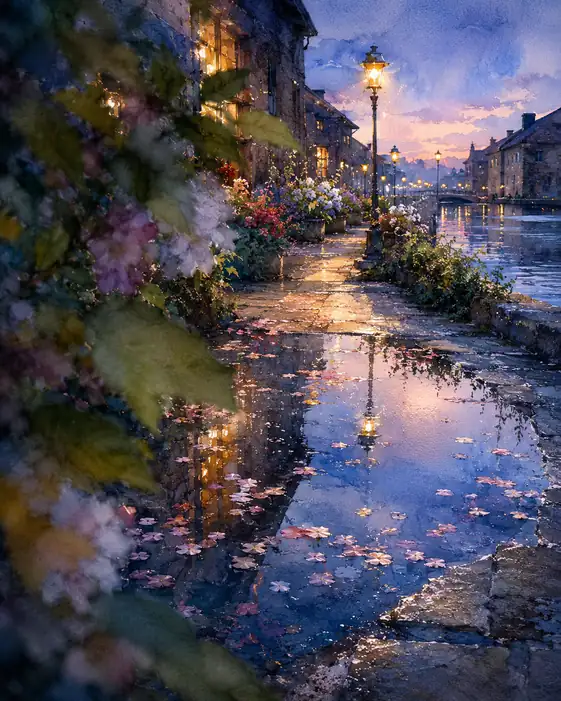 Twilight Poured into a Flower-Strewn Puddle
 Where Evening Pours Gold into the Rain
 The Lantern That Stayed After Sunset
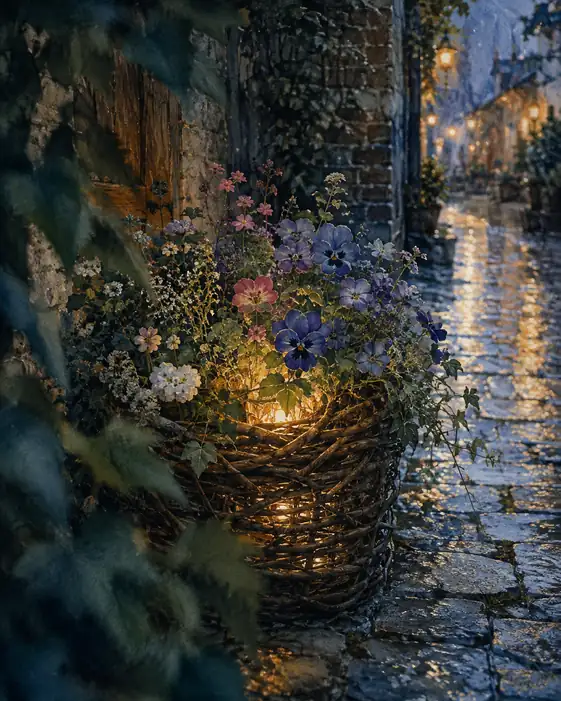 The Night Lamp Blooming in a Wicker Nest
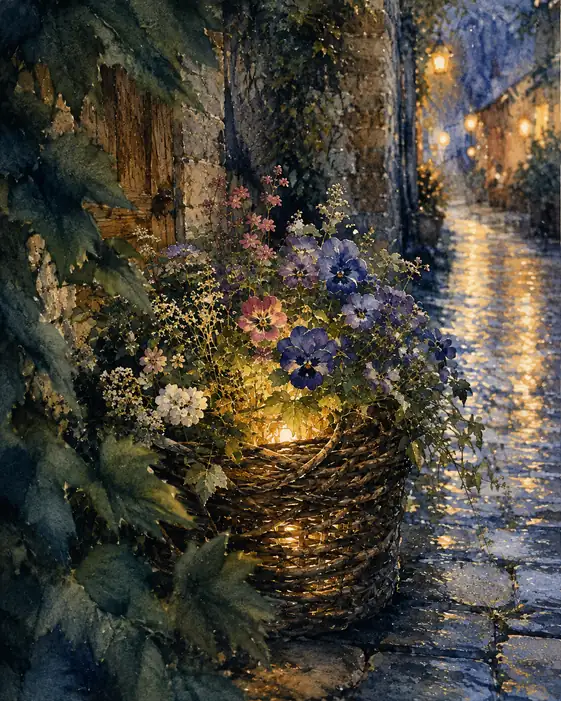 Where the Pansies Keep a Little Fire
 The Bell Waits in Twilight
 Flowers for Your Empty Bench