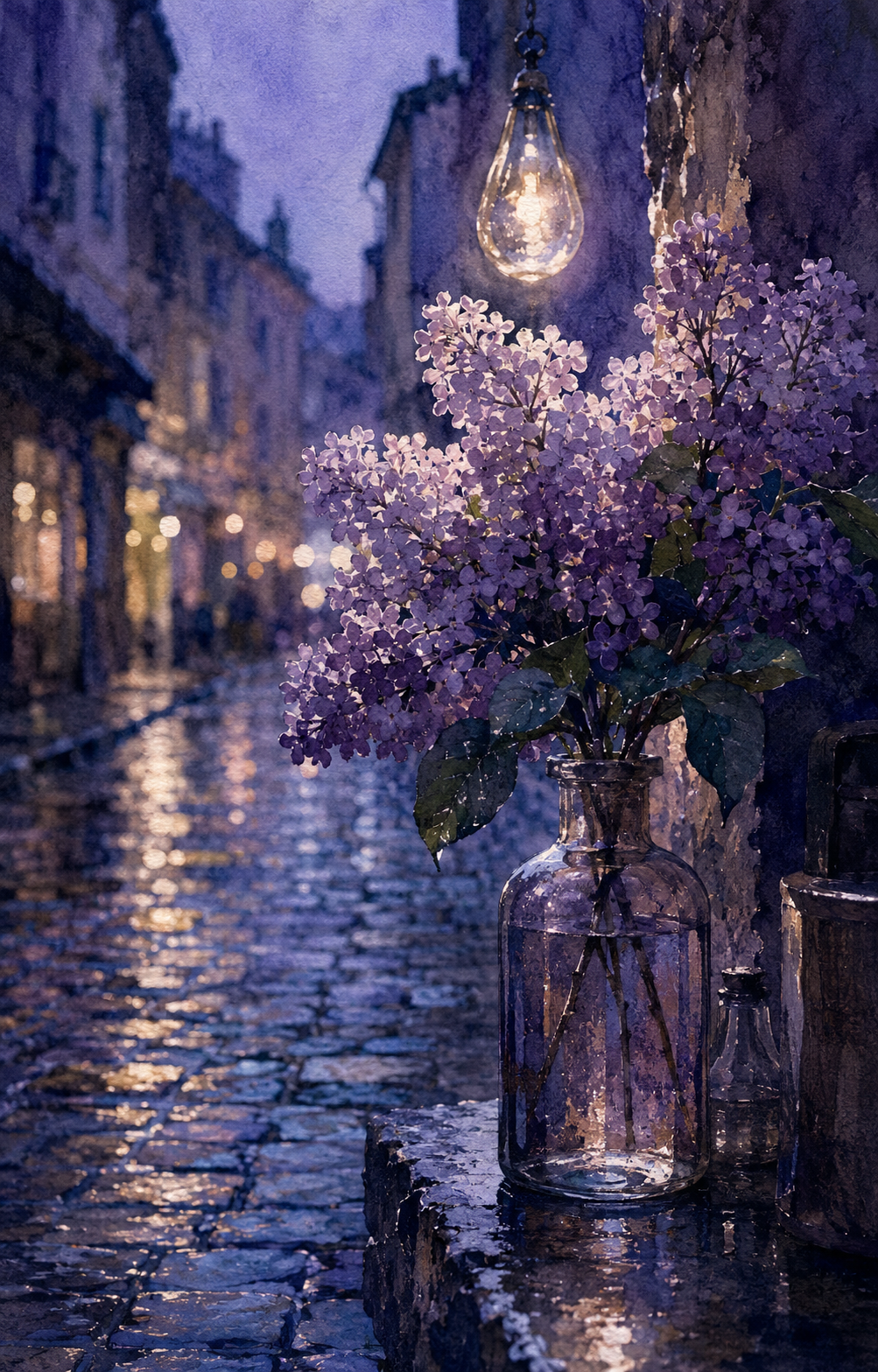
Lilacs Borrow the Last Streetlight
Critique
Introduction This still life sets lilacs on a wet ledge beside an evening street. A hanging bulb glows above. Violet twilight, warm reflections, and botanical detail join private arrangement with public passage. Description A clear bottle occupies lower right, holding purple blossoms and dark leaves. Two smaller bottles and a cropped container stand beside it against a rough wall. A teardrop bulb hangs above, enclosing warm light. The street recedes leftward between blurred buildings, its wet stones carrying gold and white reflections. Analysis The bottle and bulb form a vertical pair of transparent vessels, one containing stems and the other light. Their rounded contours contrast with the wall edge and angular street. Purple and blue dominate, so amber highlights become measured focal points. Sharp petals, glass rims, and wet ledge textures oppose the softened architecture. The street's diagonal recession gives depth while keeping the flower mass visually secure in the foreground. Interpretation and Evaluation The flowers sit between an interior wall and passing city. Their freshness contrasts with worn masonry and rain-darkened paving. The bulb illuminates without dispelling twilight. Careful focus, restrained complementary color, and glass reflections give atmospheric breadth. Botanical and urban moisture create continuity across materials. Conclusion At first the lilacs seem to be the subject, but closer viewing reveals the bulb and distant street as essential partners. Light moves from the hanging glass into petals, bottles, and paving. The work turns a modest roadside arrangement into a study of how fragile color can briefly inhabit a weathered urban space.
Same Subcategory
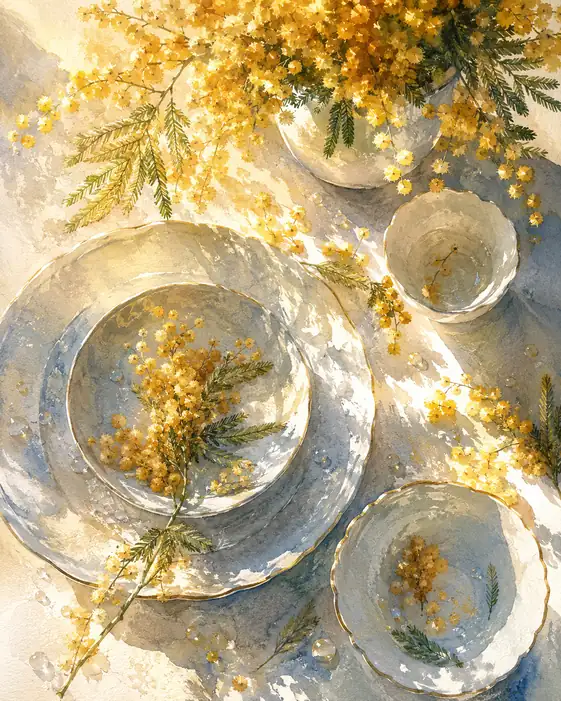 Mimosa Setting the Table for Spring
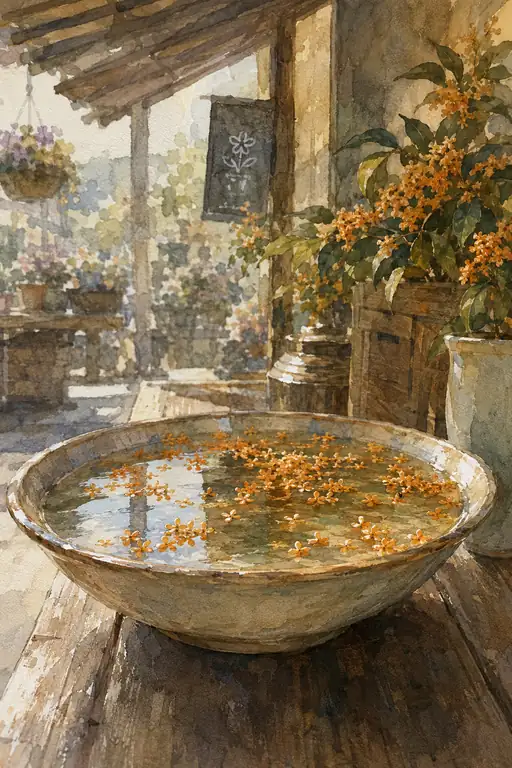 Osmanthus Stars Floating in the Garden Bowl
Similar Artworks
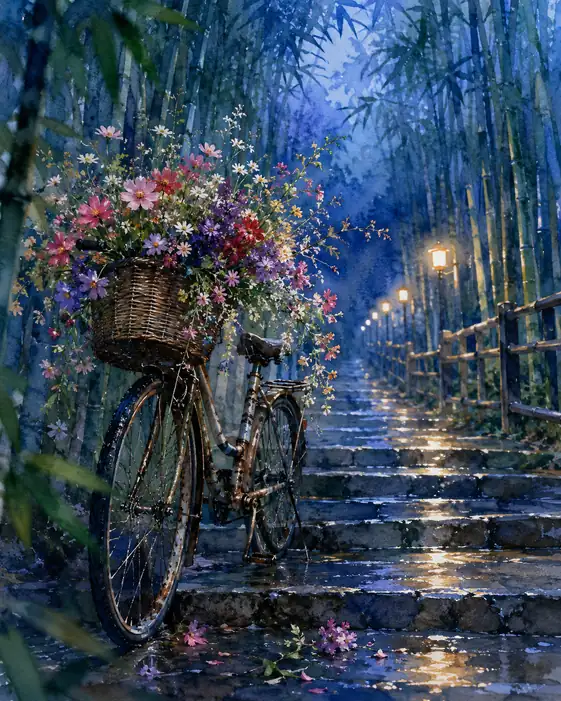 Silence on the Rain-Kissed Bamboo Steps
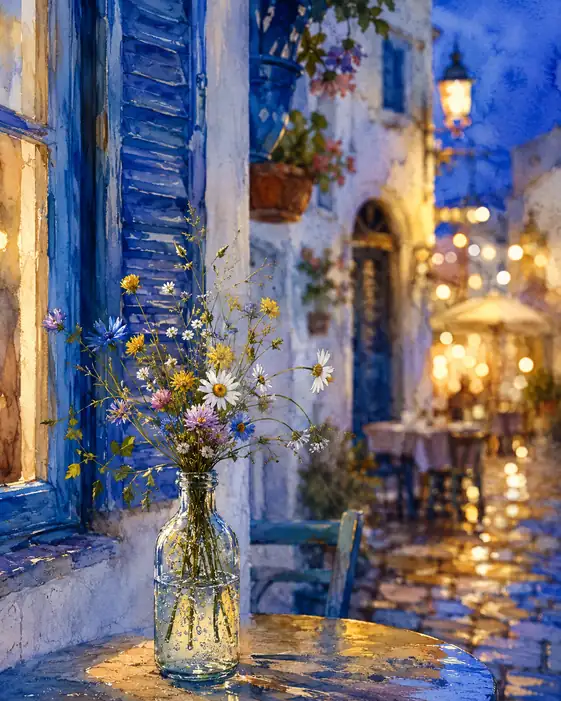 Wild Petals in the Blue Hour
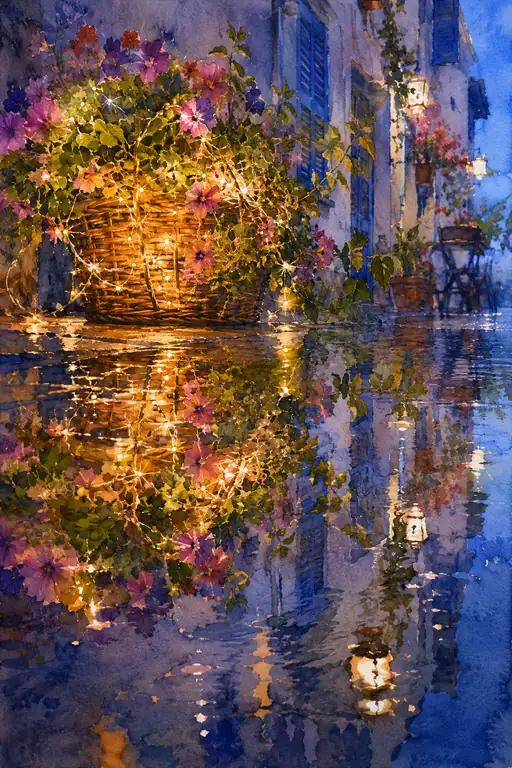 Fairy Lights Mirrored on Wet Cobblestones
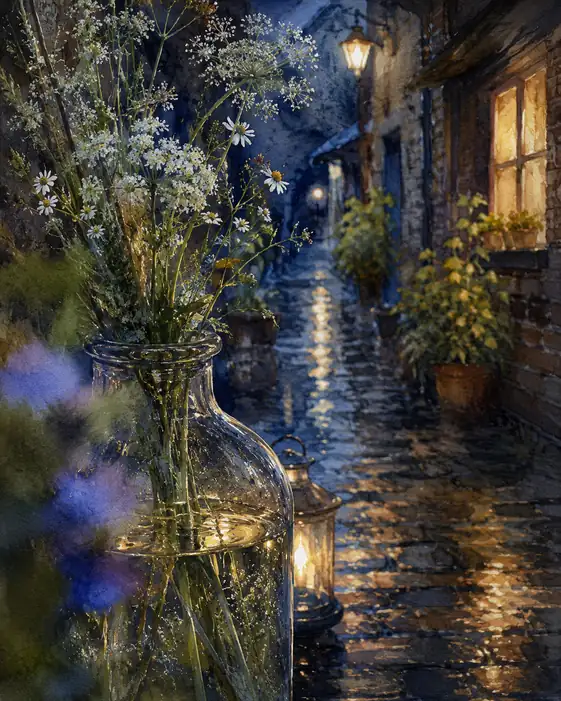 A Bottle Full of the Road's Last Light
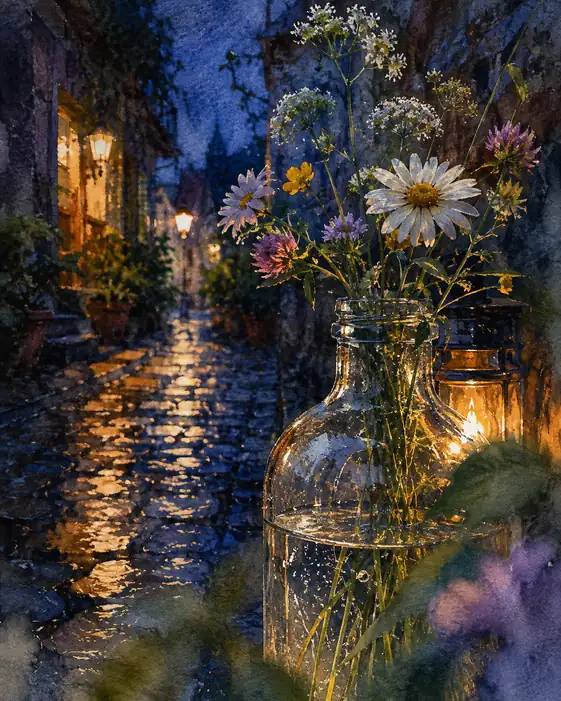 Wildflowers Borrow the Lantern's Gold
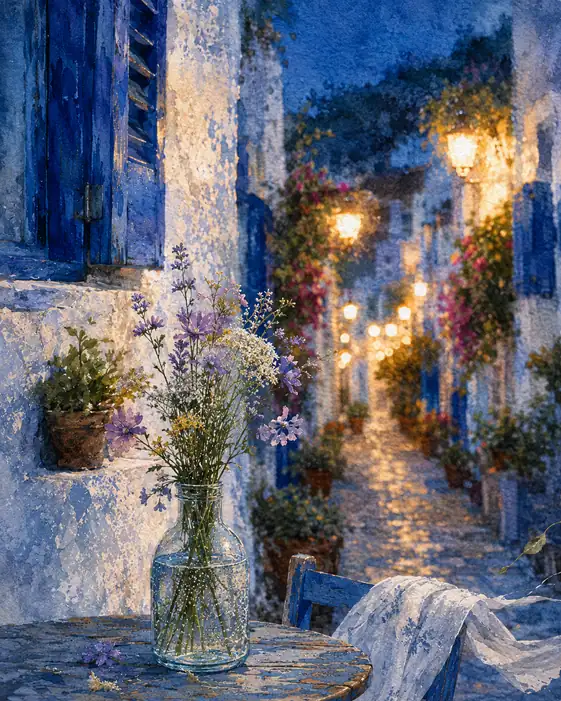 Evening Terrace with Wildflowers and Glowing Lamps
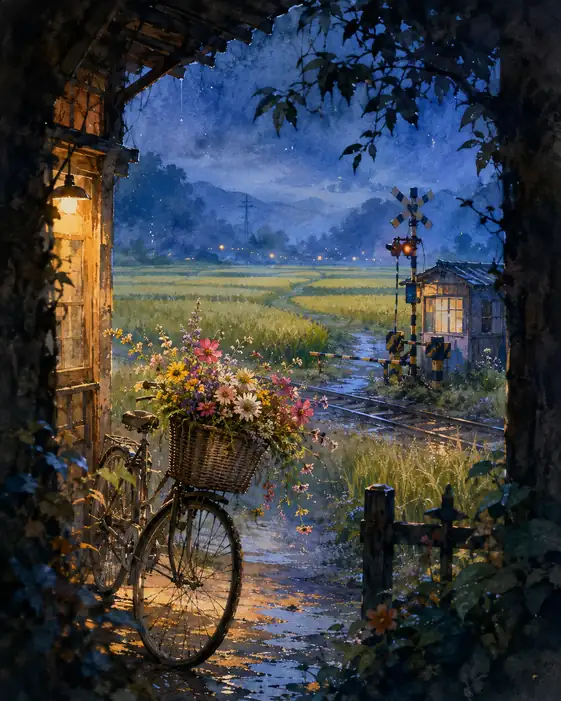 Nocturne Delivery Basket by the Station
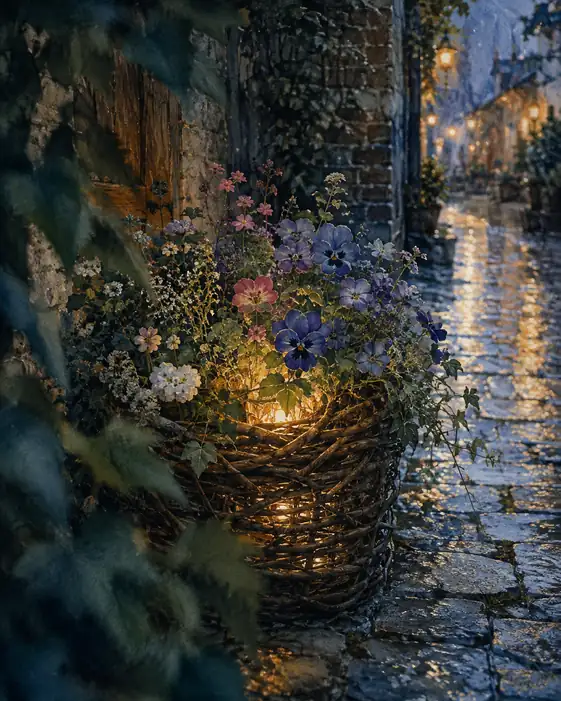 The Night Lamp Blooming in a Wicker Nest
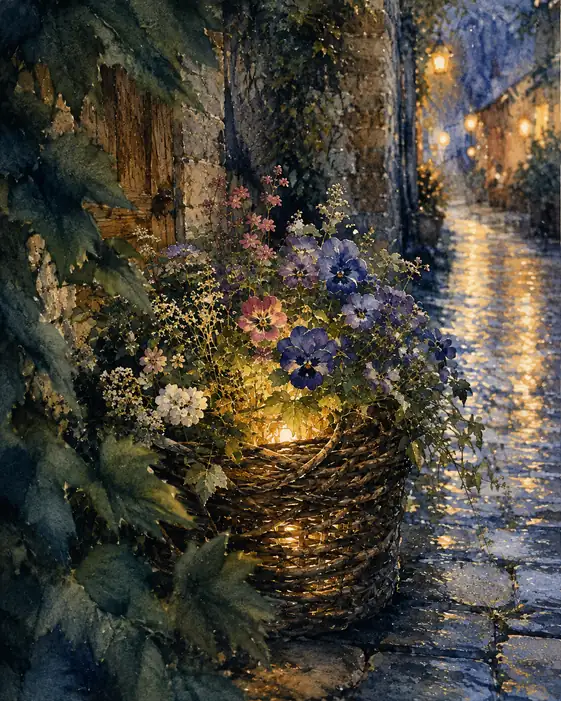 Where the Pansies Keep a Little Fire
 Journey Paused in Full Bloom