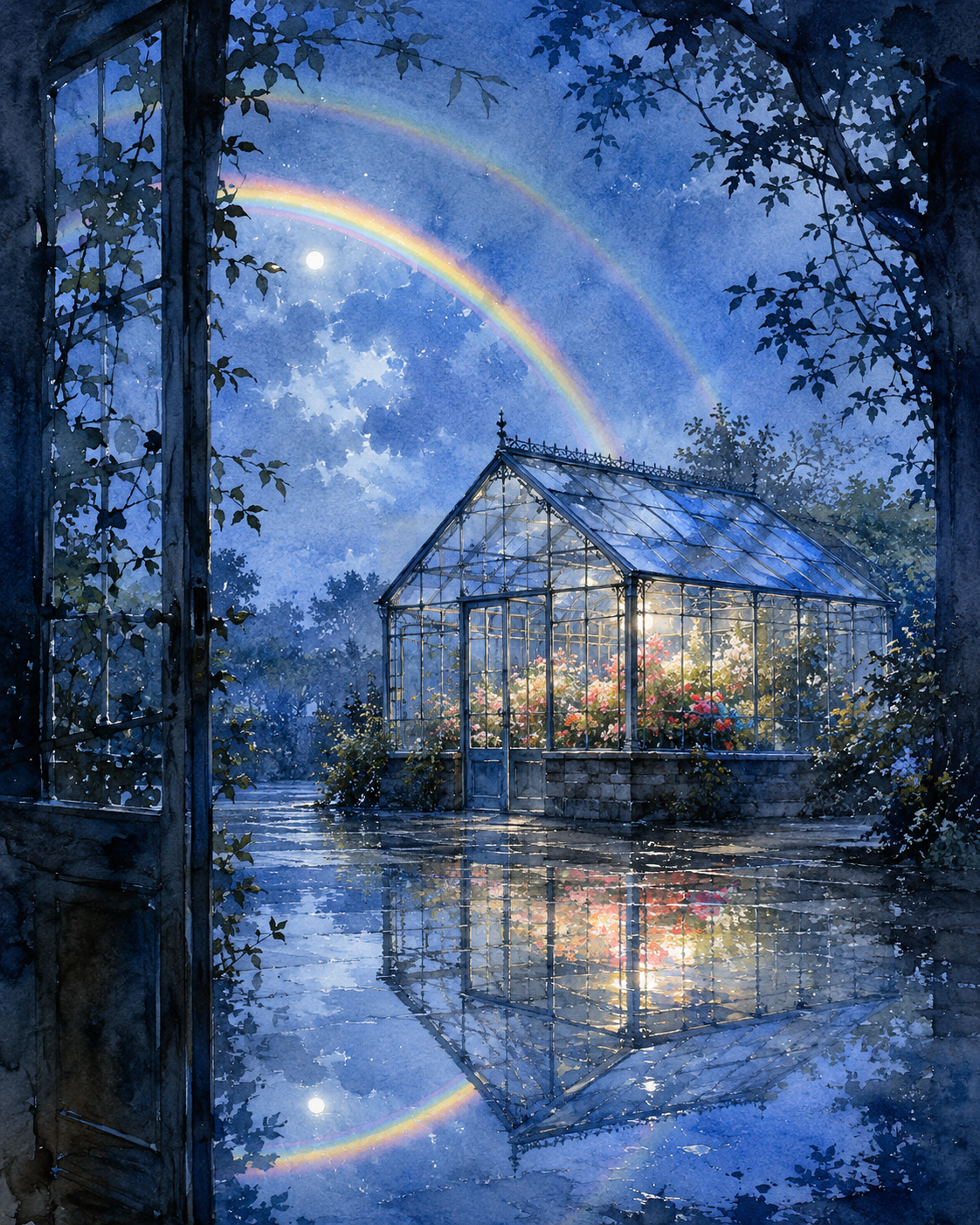
The Moonbow Greenhouse at Midnight
Critique
Introduction This night garden frames a lit glasshouse through an overgrown doorway. A double rainbow and moon cross the blue sky, while rainwater mirrors the greenhouse. Darkness, transparent architecture, and cultivated color surround sheltered light. Description Dark posts and vines frame left and top, joined by a tree at right. Beyond stands a peaked greenhouse with metal grids, glass roof, stone base, and door. Warm lamps reveal red, pink, white, and yellow flowers. The wet courtyard reflects the structure upside down. Rainbow and moon reappear below among blue shadows. Analysis The greenhouse and reflection create a tall diamond-like unit centered within the surrounding arch of foliage. Vertical posts reinforce its symmetry, while irregular leaves keep the frame organic. Cool indigo dominates exterior space, making warm interior light and floral reds prominent. Hard grid lines distinguish glass architecture from soft washes of mist and vegetation. Reflections are clear enough to extend depth yet broken enough to establish water as a separate material. Interpretation and Evaluation The glasshouse suggests refuge open to weather and night. Flowers are protected, but transparent walls admit moon, rainbow, and trees. The dark doorway places the viewer outside. Controlled framing, coherent color, and convincing reflection create depth without figures. The doubled building turns shelter into object and luminous idea. Conclusion At first attention settles on the warm greenhouse, but closer viewing reveals that water and dark framing make its radiance legible. The reflected building is less stable yet equally present. By balancing enclosure with transparency, the work presents care as a light maintained within, but never isolated from, a larger natural world.
Same Subcategory
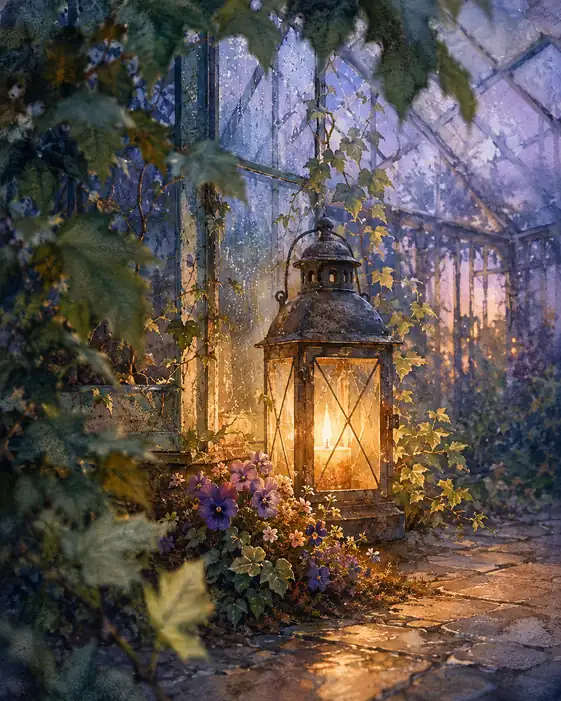 The Greenhouse Lantern Wakes the Violets
Similar Artworks
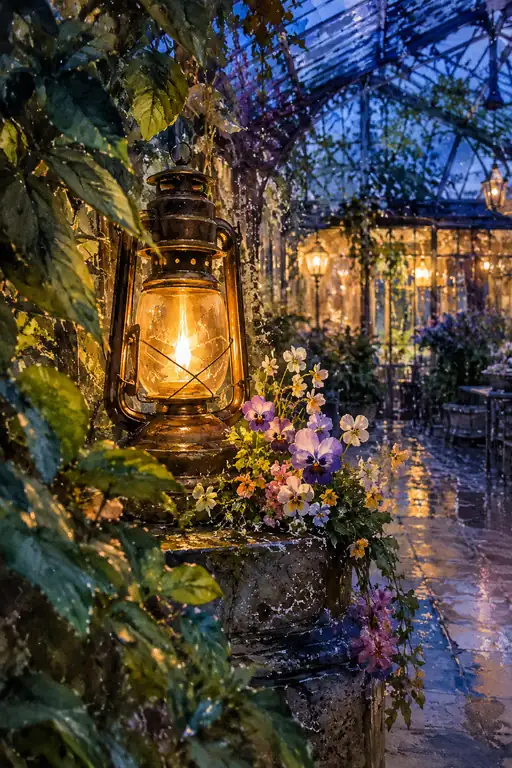 Rain Makes a Garden of Every Lantern
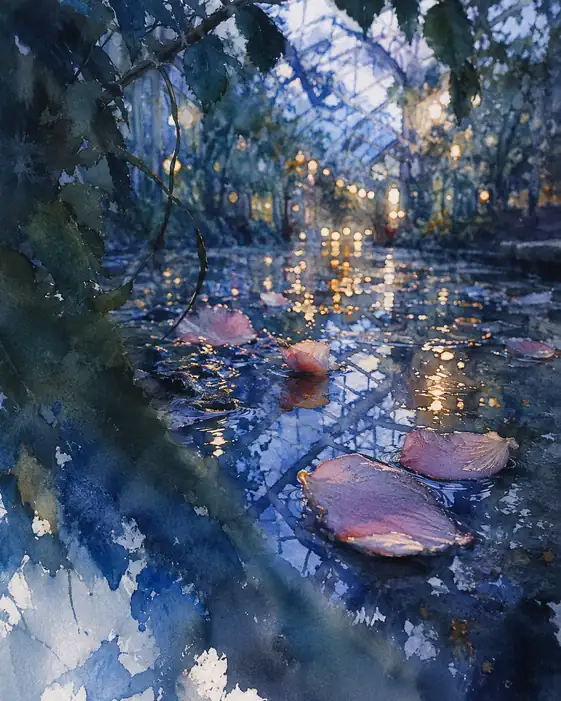 Petals Sail the Blue Glasshouse Floor
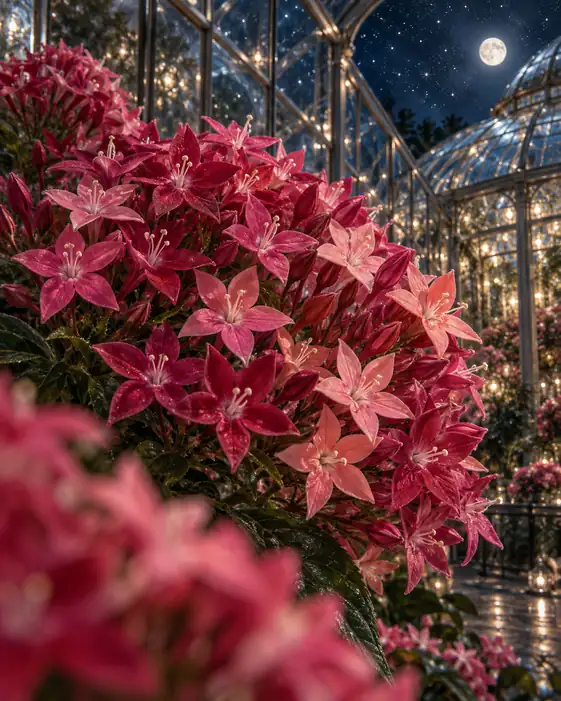 Constellation in the Glass Pavilion
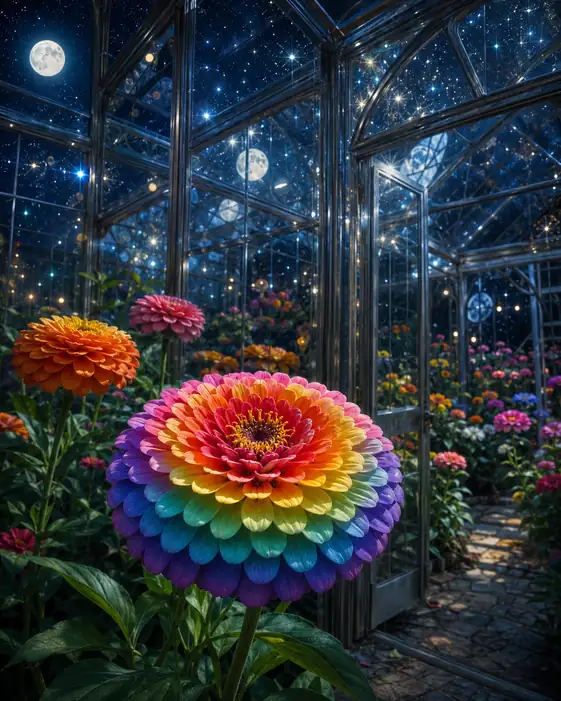 Prism Under a Mirrored Moon
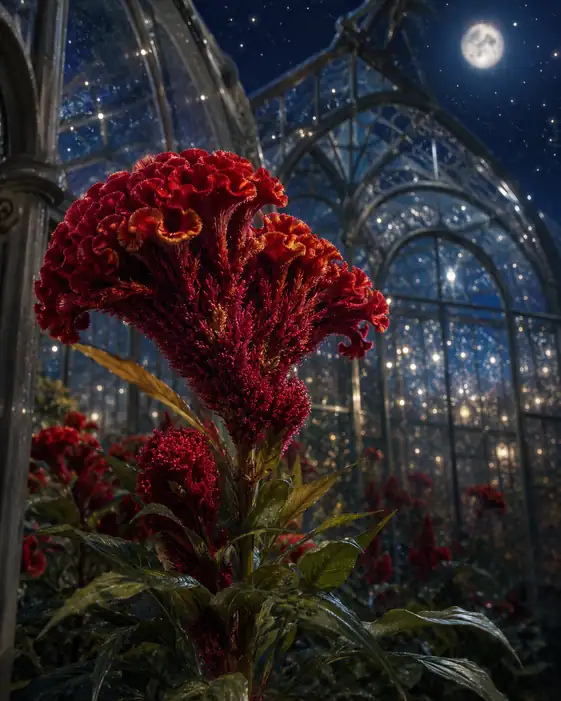 Gothic Conservatory Under the Harvest Moon
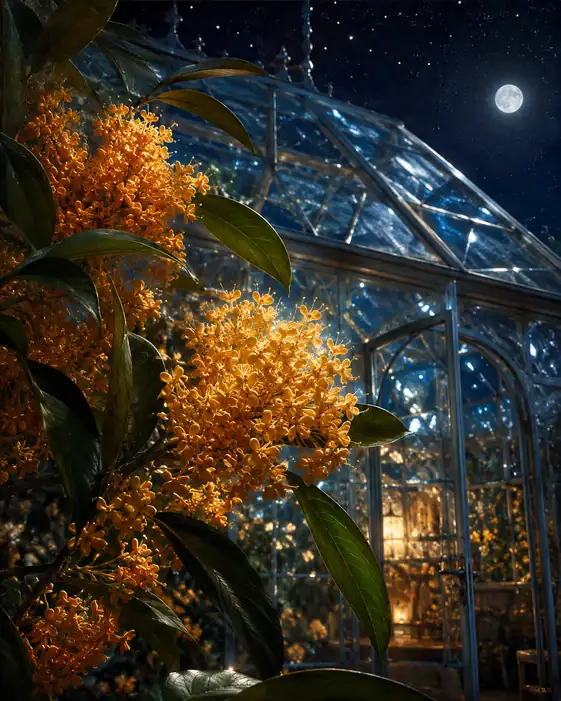 Threshold of the Moonlit Glass
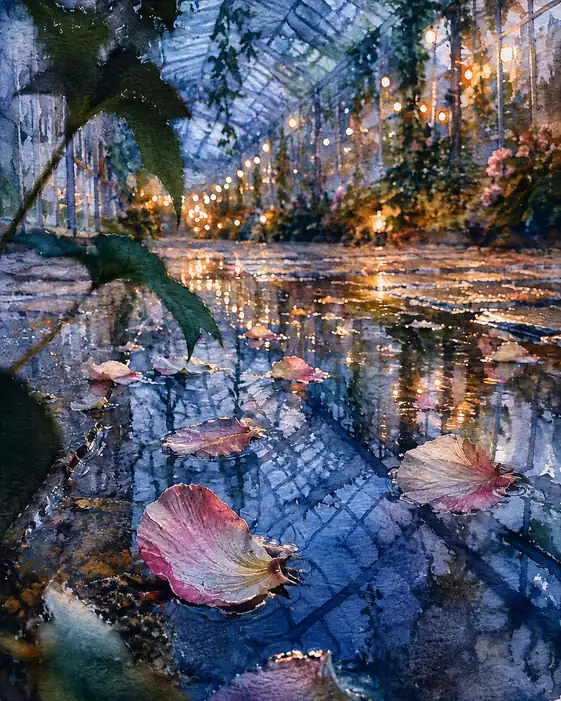 The Greenhouse Reflects a River of Petals
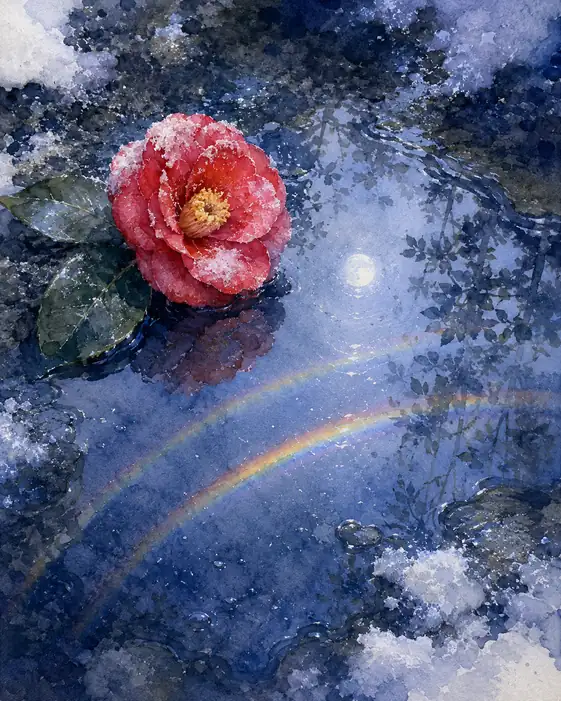 A Camellia Keeps the Moonbow Warm
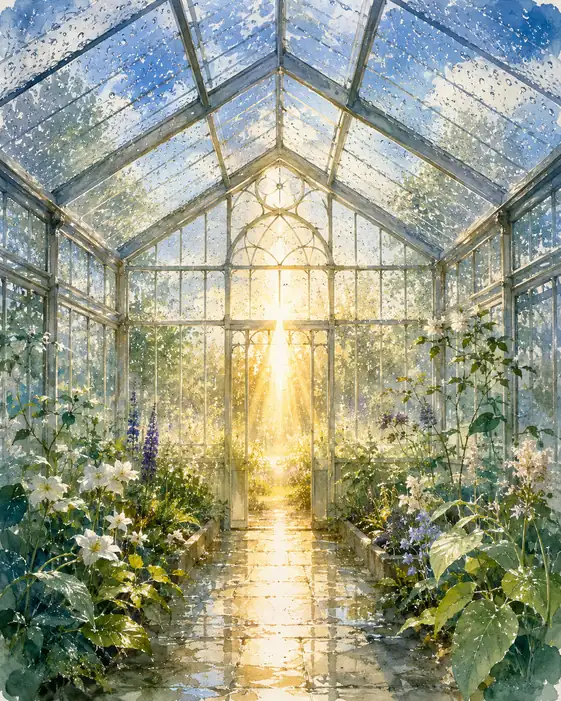 After the Rain, the Greenhouse Opens to Gold
 Where My Heart Blooms Forever