
The Lantern Road After the Rain
Critique
Introduction This scene depicts a rain-washed approach to a red shrine gate beneath a double rainbow. Glowing stone lanterns line a flooded path, while leaves and petals frame the view. Sunlight turns the passage into reflections. Description The path begins below and rises toward steps and a red gate. Lanterns repeat along both sides, growing toward the foreground, with the largest cropped at upper right. Green foliage encloses the route, and dripping leaves blur at upper left. Rainbows cross the sky toward a bright opening. Water reflects lanterns, gate, trees, sun, petals, and spectrum. Analysis Strong one-point perspective aligns path, lantern rows, steps, and gate. Their bilateral rhythm creates order, while unequal foliage and the cropped lantern prevent rigidity. Orange-red architecture and lamps glow against green leaves and blue sky. Sunbeams enter diagonally from the upper right, intersecting the rainbow and the central axis. Crisp droplets and lantern edges contrast with soft background light, and the mirrorlike path doubles depth downward. Interpretation and Evaluation The approach suggests passage from ordinary weather into heightened attention. Lanterns act as guides and measured stages toward the gate. Rainwater transforms ground into an active image. Perspective and repetition control the vivid palette. Precise illumination, varied focus, and wet surfaces give the ceremonial setting immediacy without figures. Conclusion At first the double rainbow appears to crown the shrine, but closer viewing reveals that the flooded path carries the experience. It gathers every vertical form and celestial color into a second, unstable architecture. The work thus presents arrival as a movement through light, reflection, and ordered natural abundance.
Same Subcategory
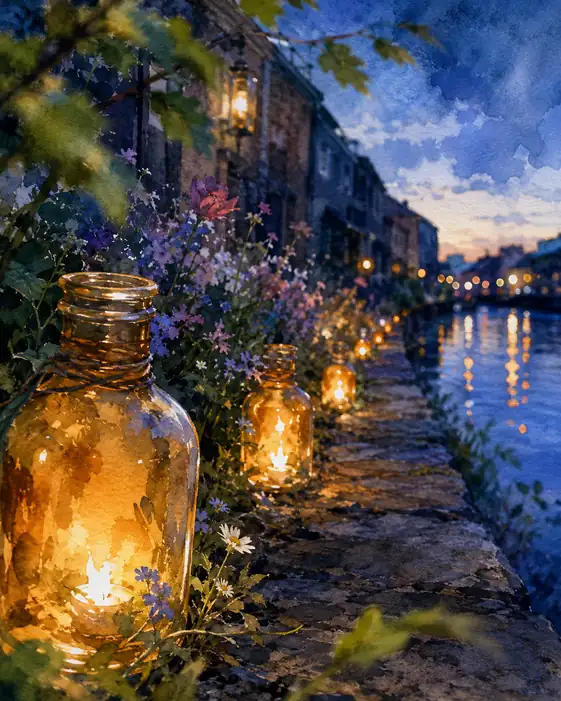 The Canal Follows a Trail of Little Suns
Similar Artworks
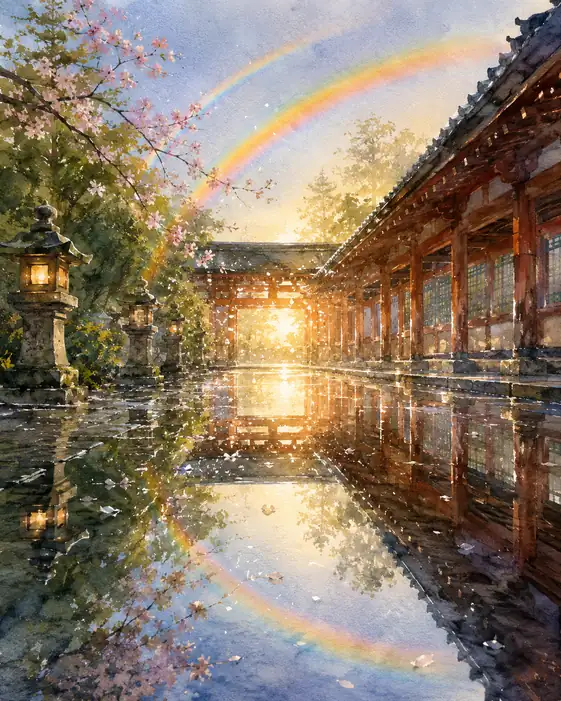 Spring Enters Through the Temple Gate
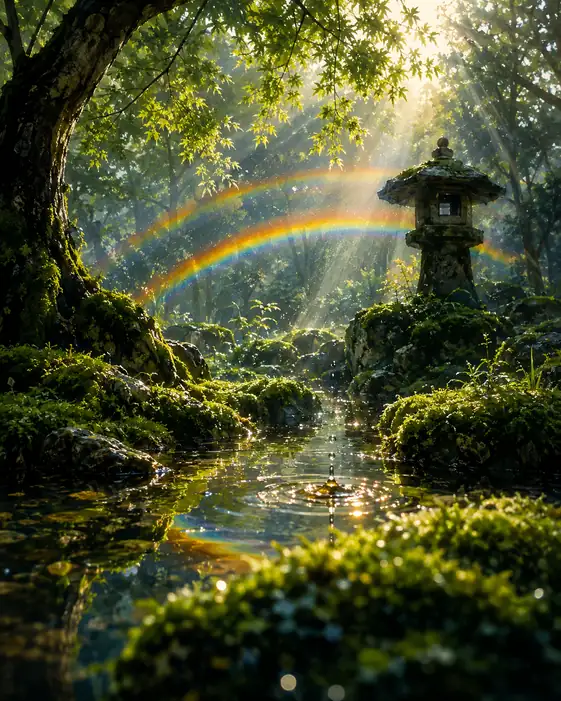 The Garden Where Rain Learns to Shine
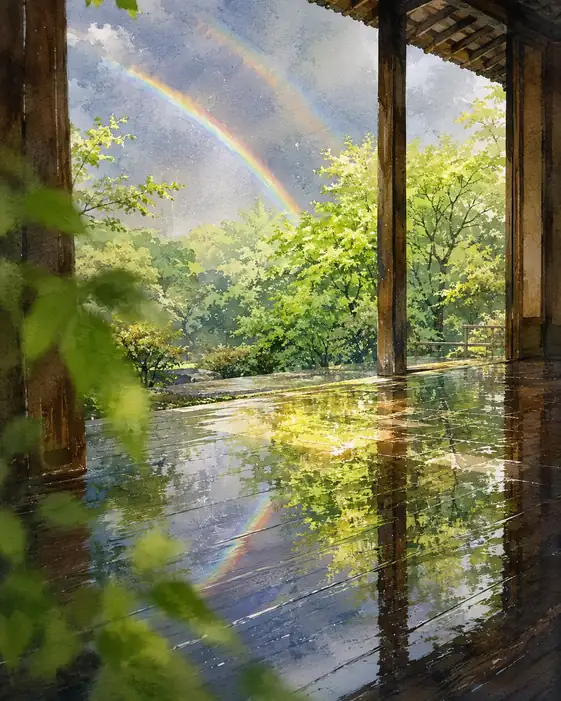 Rainbows Resting on the Engawa Floor
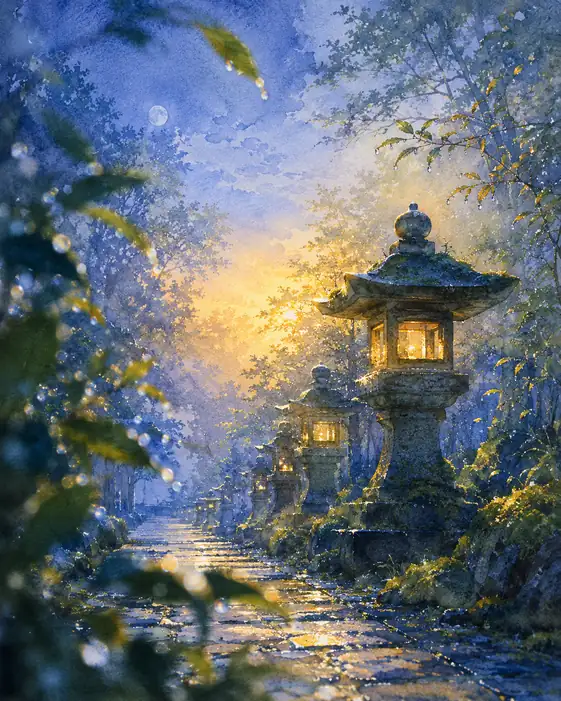 Stone Lanterns Guard the Blue Hour
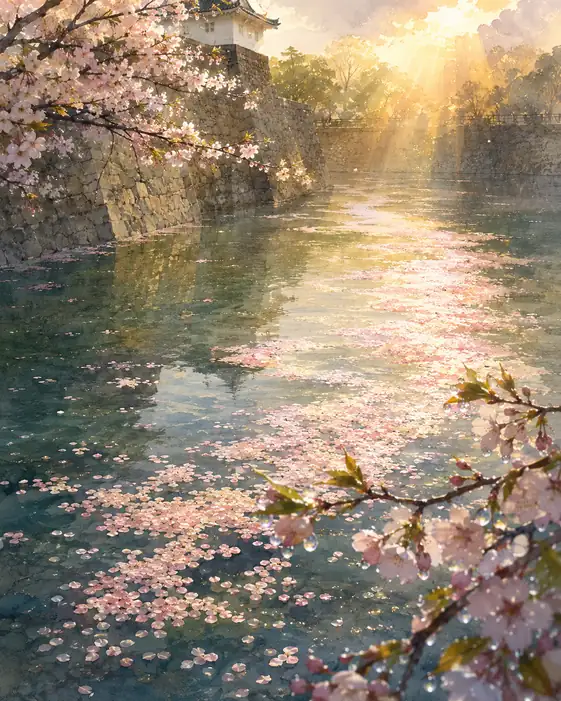 Whispering Dews at First Light
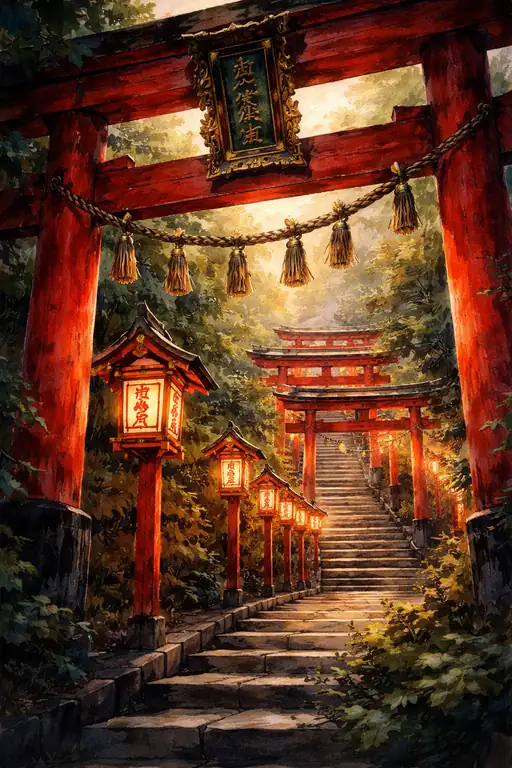 Stairway Between the Worlds
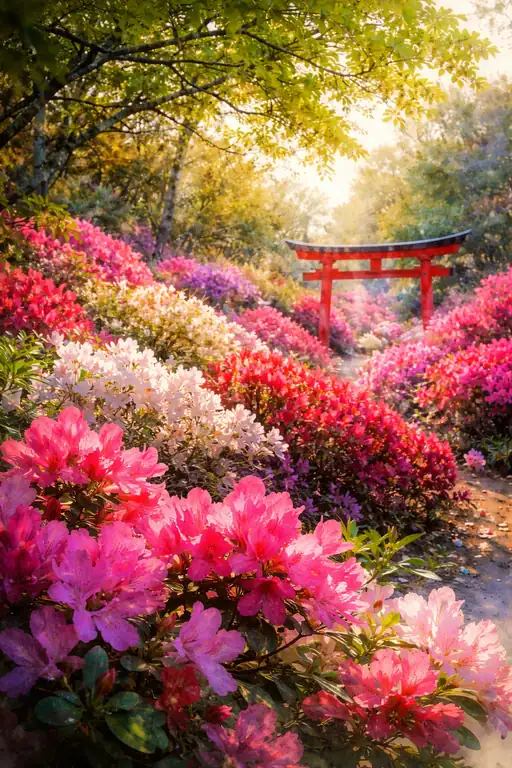 Threshold of the Blooming Sanctuary
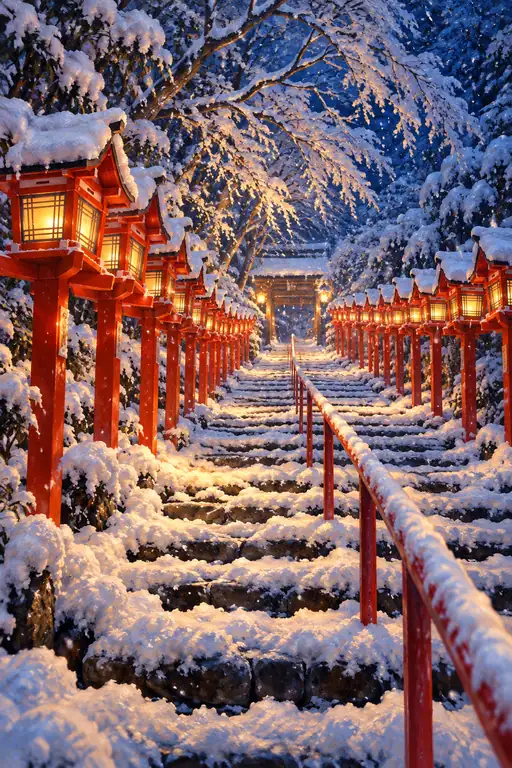 Winter Makes Room for My Prayer
 Each Step Carries a Little Hope
 A Warmth That Waits on the Way