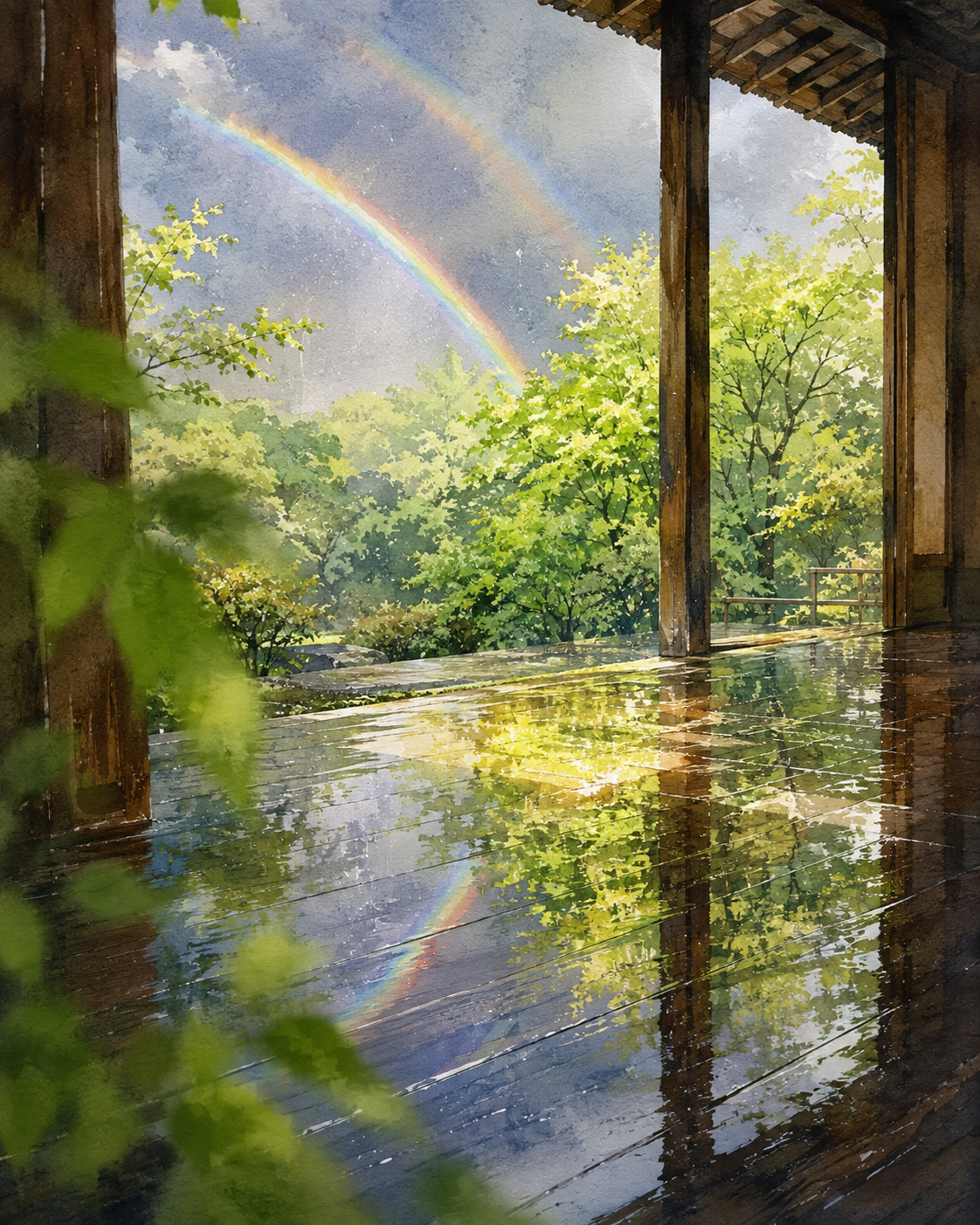
Rainbows Resting on the Engawa Floor
Critique
Introduction This landscape views a double rainbow from a wooden veranda after rain. Dark posts and roof beams frame a luminous garden, while the wet floor brings outdoor light into shelter. Architecture and weather divide protection from openness. Description Timber posts stand at left and right beneath receding rafters. Beyond them, green trees fill a descending garden beneath blue-gray clouds. A saturated rainbow curves from upper left toward foliage with a faint outer arc. Rainwater covers polished boards, reflecting posts, leaves, sky, and broken spectrum. Foreground leaves blur across the lower left. Analysis The vertical posts create a stable frame within the picture, while the diagonal floorboards lead outward toward the garden. The rainbow's curve counters the building's rigid grid. Dark brown wood anchors bright yellow-green foliage and cool sky, and the reflected colors soften within the blue floor. Sharp architectural edges contrast with dissolved leaves and cloud washes. Foreground blur, middle veranda, and distant trees establish three clear spatial layers. Interpretation and Evaluation The veranda becomes a threshold where the interior receives a transformed outside world. Rain turns the floor into a second sky. Empty architecture invites the viewer into shelter. Controlled perspective, restrained color, and convincing reflections give the familiar rainbow a contemplative precision. Conclusion At first attention moves outward to the bright arc, but closer viewing reveals the floor reflection as the work's organizing element. It brings garden and sky beneath the roof without erasing the boundary between them. Through this doubled view, the painting presents shelter not as separation from nature, but as a place for attentive contact with it.
Same Subcategory
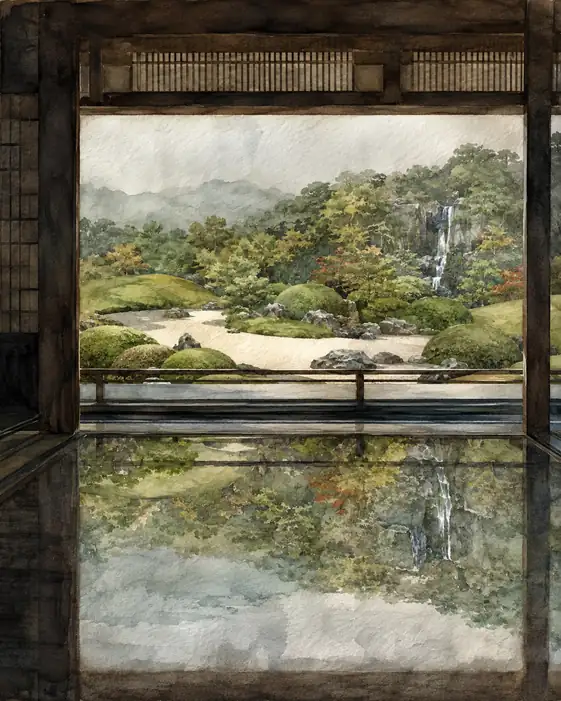 Silence Has a Second Garden
 Rain on the Round Window and Pure Blooms
Similar Artworks
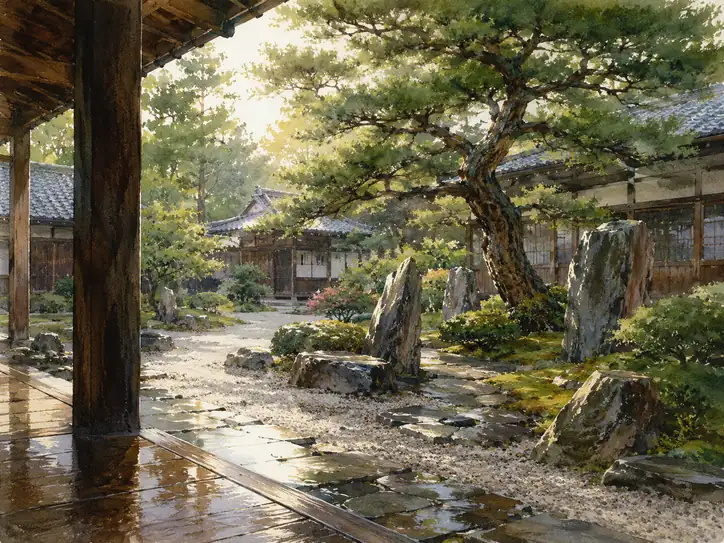 Reflections of Tranquility: Sunlight on the Wet Engawa
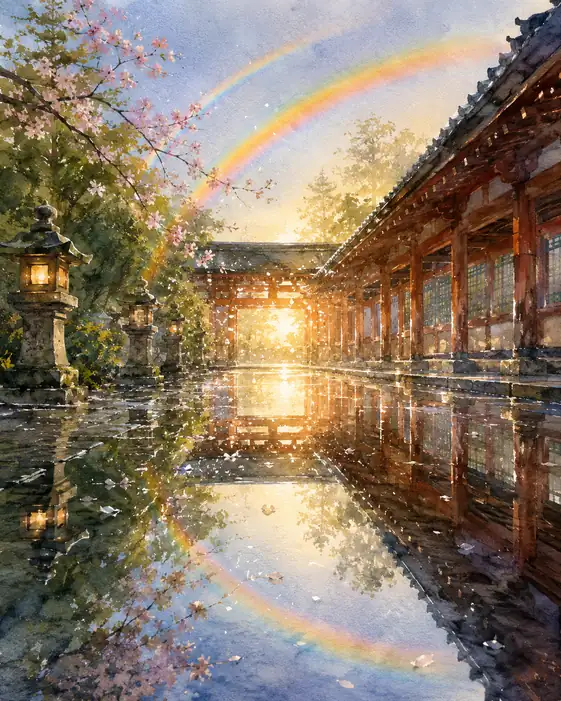 Spring Enters Through the Temple Gate
 Three Basins of Monastic Stillness
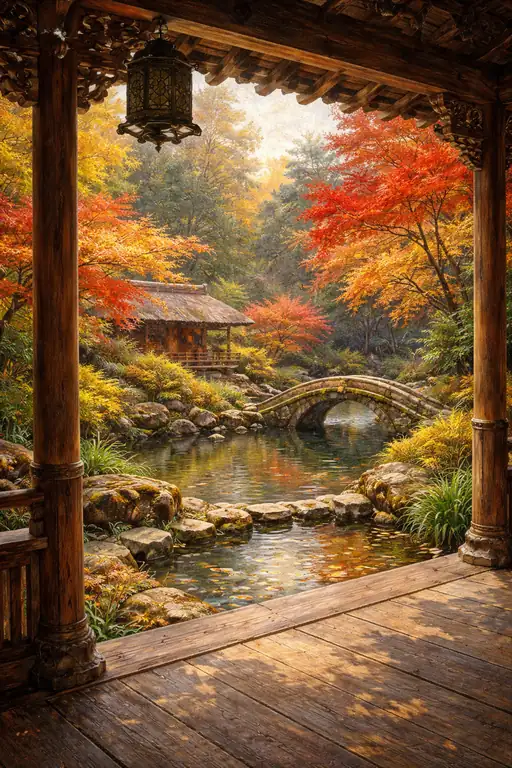 Crimson Reflections
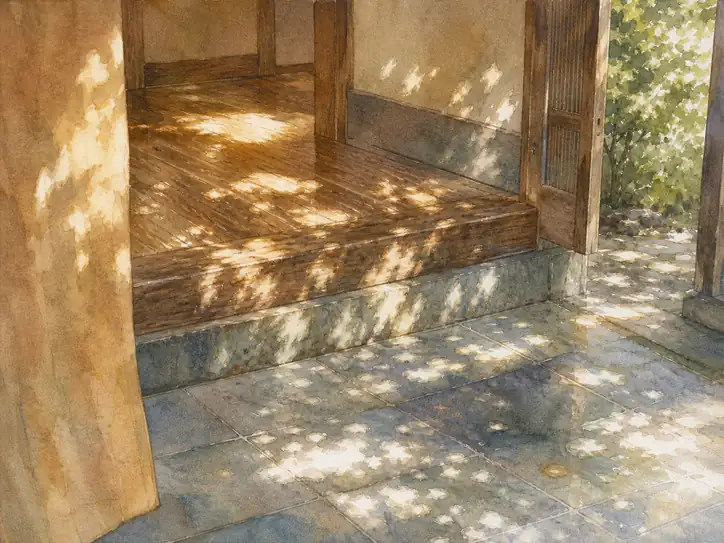 The Starry Threshold of Sunlit Memories
 The Lantern Road After the Rain
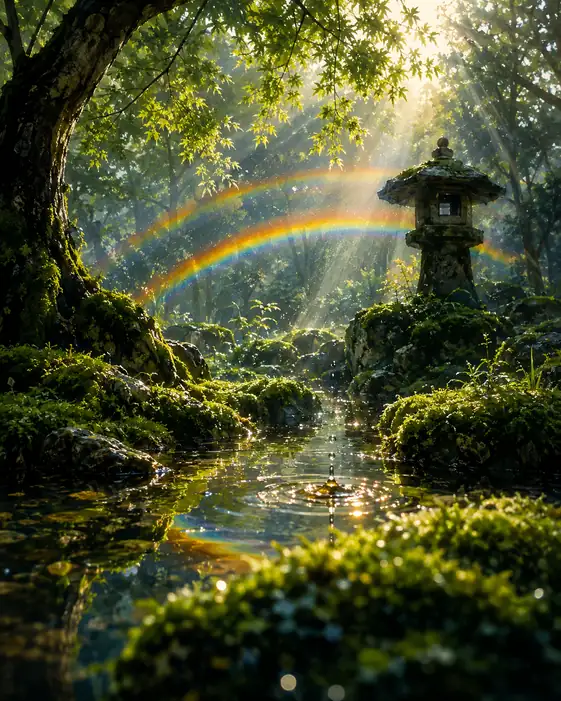 The Garden Where Rain Learns to Shine
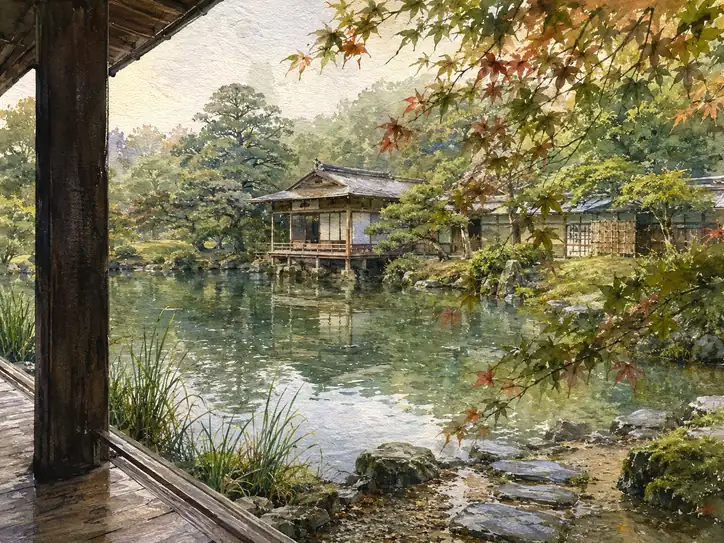 Autumn Whispers in the Water's Mirror
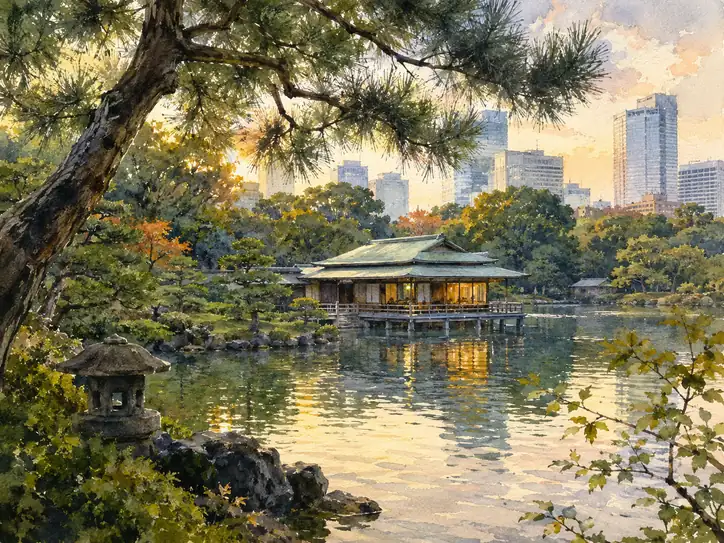 Twilight Sanctuary Between Eras
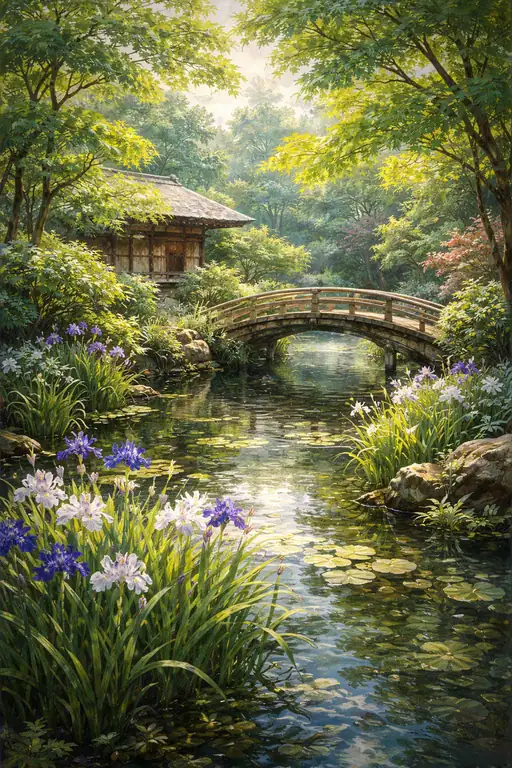 Morning Reflection on the Wooden Arch