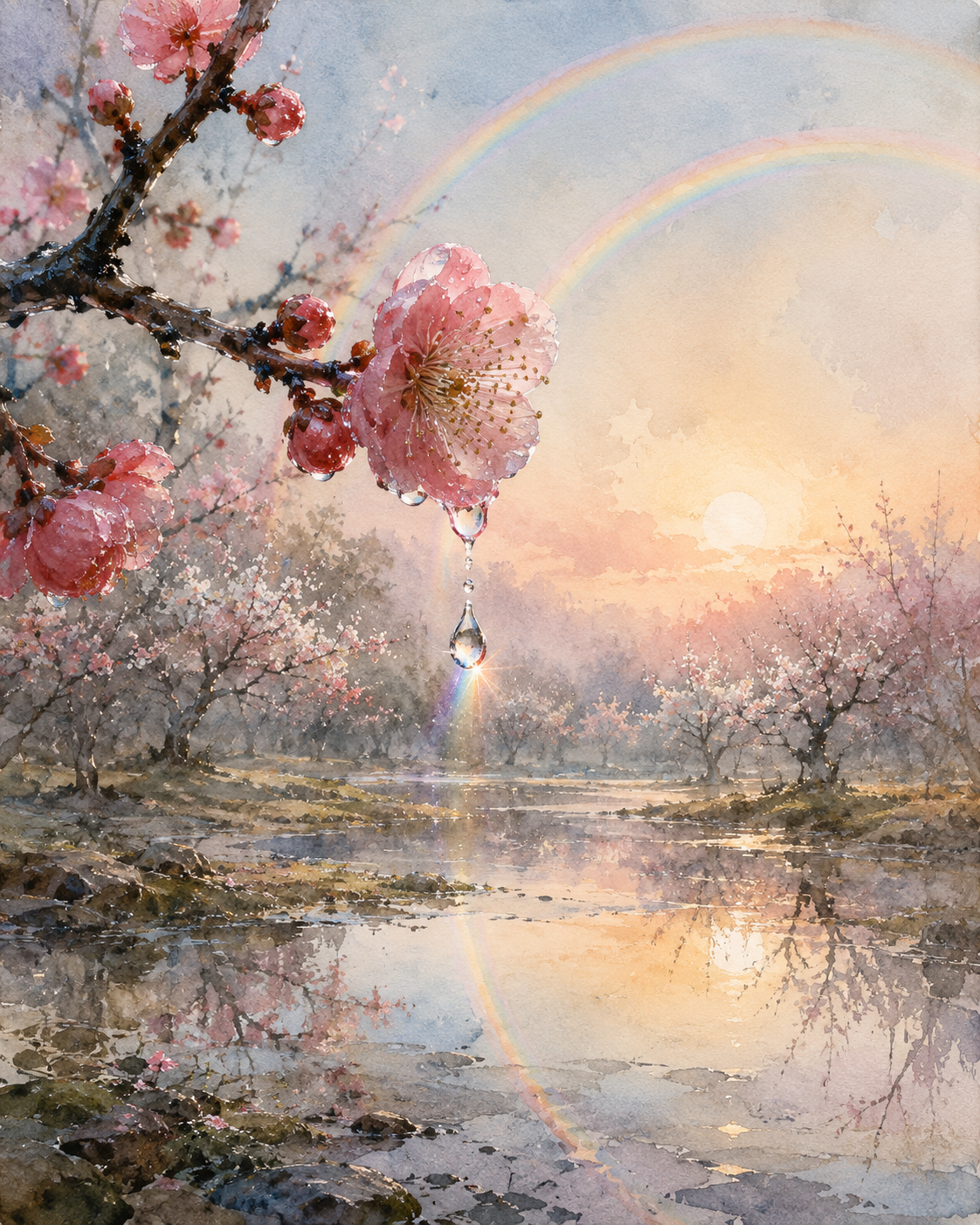
A Dewdrop Carries Spring Across the Orchard
Critique
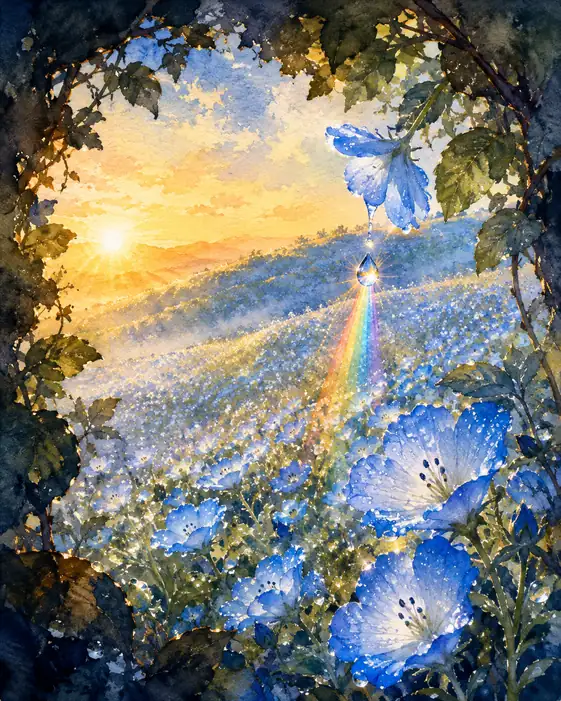
Introduction This landscape brings a dew-covered blossom close above an orchard and wet ground. Two rainbows cross a pale sunrise sky. A falling droplet links botanical detail to the wider atmosphere. Description A dark branch enters from the upper left with flowers and buds. The largest bloom displays fine stamens and beads along translucent petals. One drop hangs below it, followed by smaller drops; the lowest catches a spectral flare. Blossoming trees recede beside shallow water. The low sun glows at right, while rainbow reflections curve through the pool. Analysis The diagonal branch provides a strong near plane against the open sky and distant orchard. Droplets establish a vertical axis from flower to reflected water, crossing the horizontal landscape. Pale peach, pink, and blue create a restrained harmony, with dark bark and ground supplying weight. Precise petal edges and glasslike drops contrast with dissolved clouds, misty trees, and broad water washes. Repeated arcs connect petals, rainbows, droplets, and reflections. Interpretation and Evaluation The falling drop condenses the weather surrounding the orchard. Its prism-like flare repeats the rainbow, placing atmospheric change within a minute event. The nearby blossom encourages observation, while recession prevents isolated decoration. Controlled color, transparency, and spatial layers give the spring motif delicacy and strength. Conclusion At first the flower and rainbows share attention, but closer viewing reveals the suspended droplets as the work's temporal center. They mark the passage from branch to water and from stillness to motion. Through this measured descent, the painting joins renewal in the orchard with a precise observation of light, gravity, and moisture.
Same Subcategory
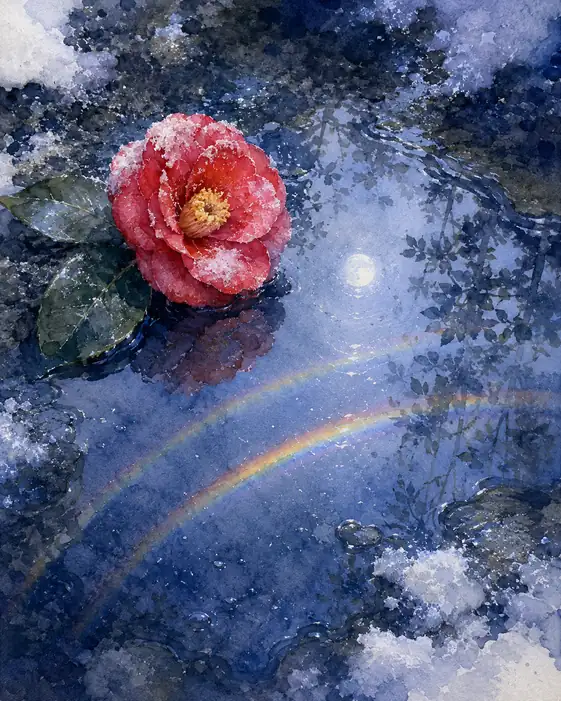 A Camellia Keeps the Moonbow Warm
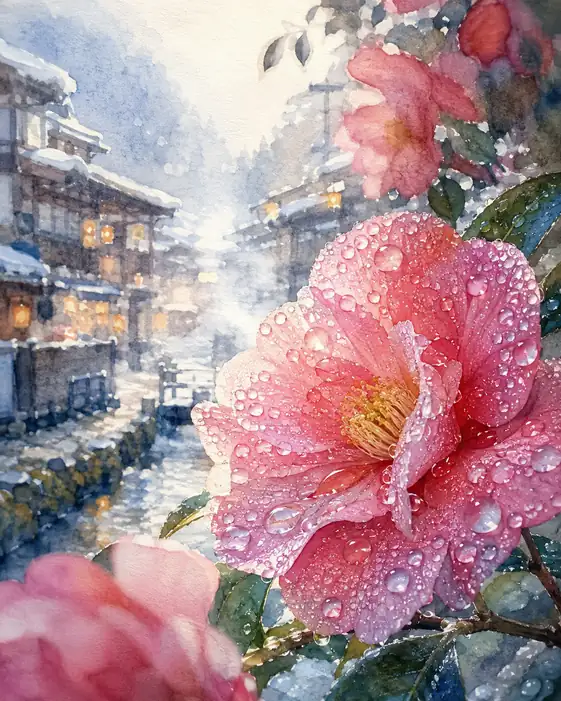 A Camellia Holds the Snow Village in Every Drop
Similar Artworks
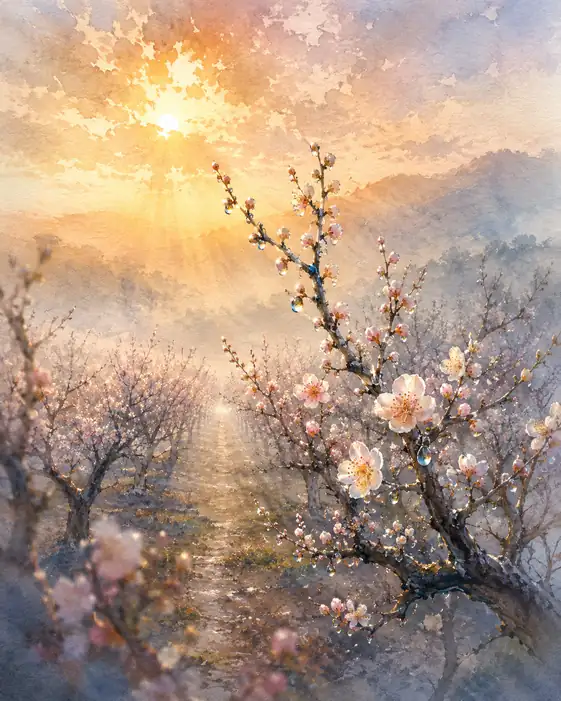 Plum Blossoms Wake the Mountain Mist
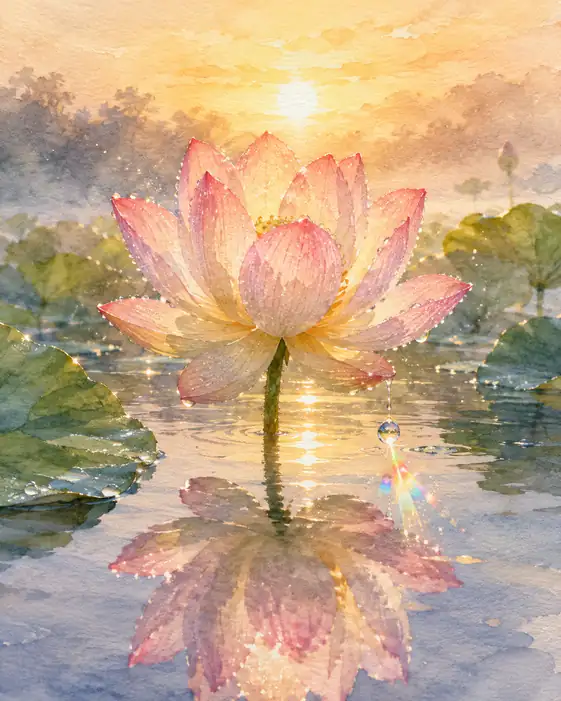 Prismatic Lotus Awakening in Dawn’s Light
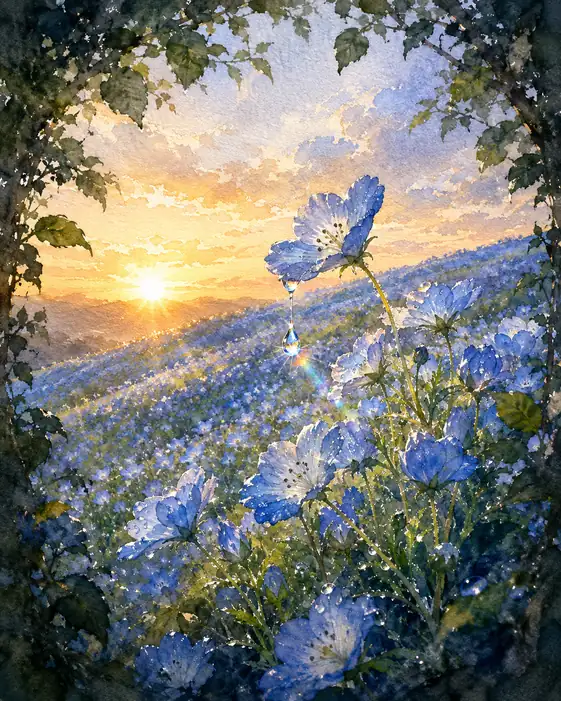 A Rainbow Born of a Single Blue Tear
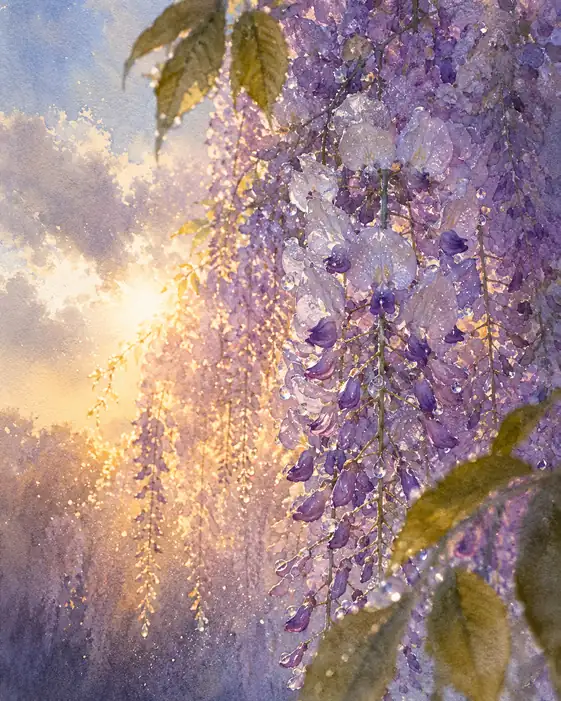 Dawnlight Dripping from Violet Petals
 Autumn Flowers Beneath a Double Promise
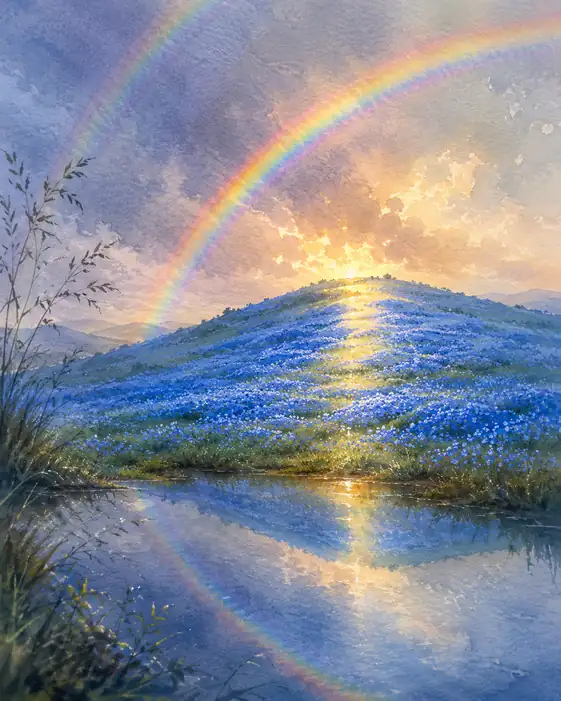 Spring Keeps a Rainbow Over the Blue Hill
 One Tulip against the Golden Storm
 Rays of Light in the Post-Rain Plum Orchard
 Prismatic Tears of the Blue Hill
 The Dream of the Misty Shangri-La