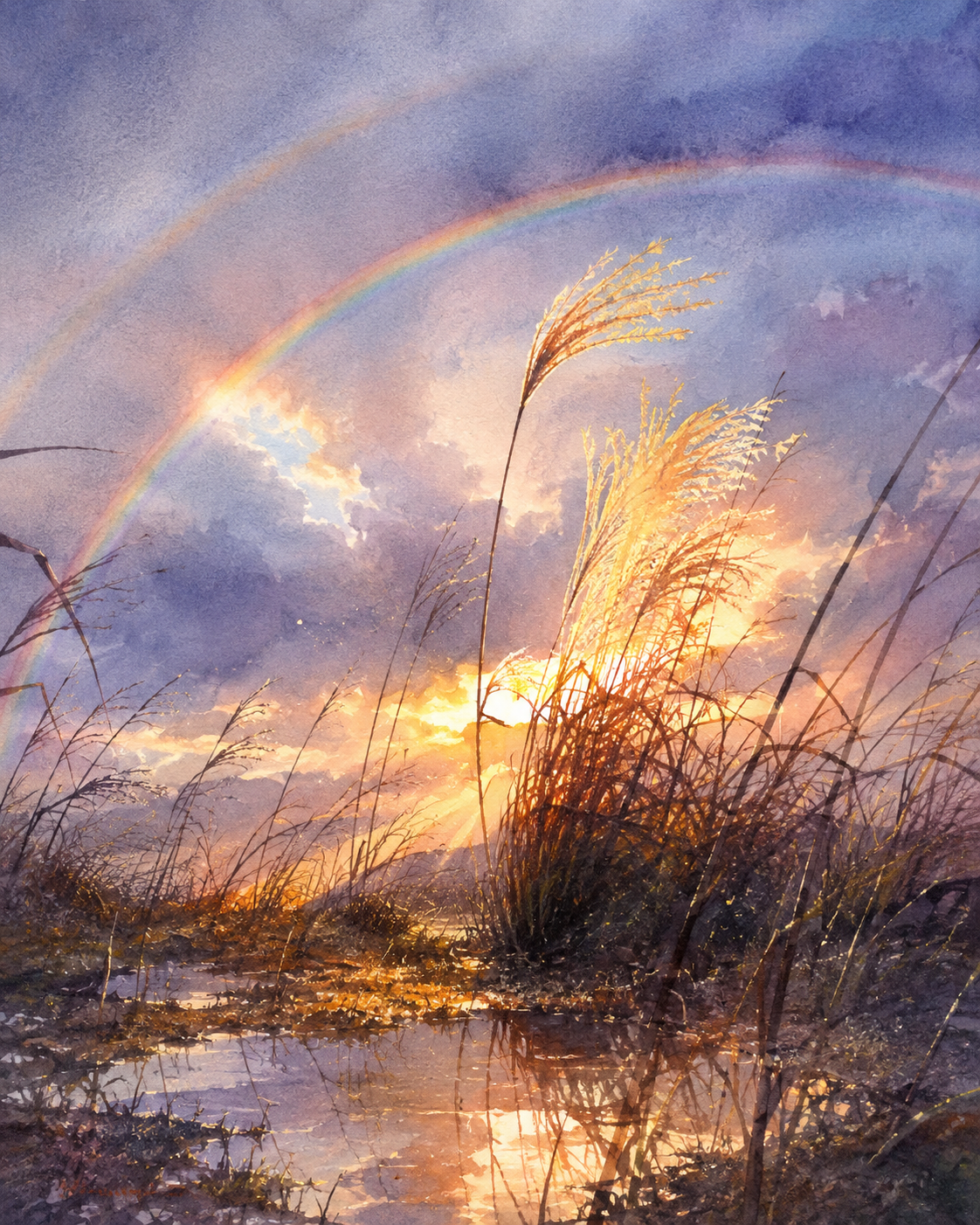
Autumn Bows Beneath Two Rainbows
Critique
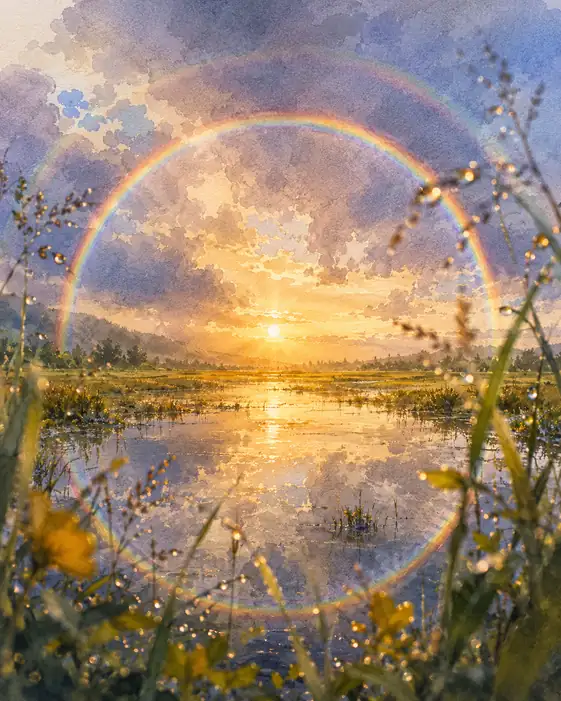
Introduction This landscape views a double rainbow and low sun through autumn grasses. A marshy foreground pool reflects orange light. Delicate seed heads rise against a violet sky, giving modest vegetation a monumental role. Description A reed clump occupies the right center, dark stems crossing beneath golden feathery tops. Smaller grasses lean across the left and middle distance. The low sun sends rays through gaps. One rainbow arcs from the left across the sky with a fainter outer band. Mud, stones, and water fill the bottom, where sunset forms a broken reflection. Analysis The tallest reed divides the sky and interrupts the rainbow's smooth curve, joining foreground detail to atmospheric scale. A low horizon allows the grasses to silhouette against layered clouds. Warm orange concentrates around the sun and seed heads, while lavender and blue-gray occupy surrounding space. Thin dry lines contrast with broad wet washes; bright touches along stems suggest both moisture and backlight. The pool repeats the sky's glow in darker, fragmented form. Interpretation and Evaluation The scene elevates weathered grasses through their ability to catch transient light. Bent stems imply wind, yet illuminated tips remain active. The rainbow supplies grandeur without displacing local terrain. Directional structure, restrained complementary color, and varied brushwork make the marsh edge compelling. Fragile weeds become the principal measure of a vast sky. Conclusion At first the rainbow defines the scene, but closer viewing transfers attention to the individual stems crossing its arc. They make atmospheric light tangible and place the viewer at ground level. Through this exchange between broad weather and precise vegetation, the work presents endurance as flexible, luminous, and rooted in ordinary land.
Same Subcategory
Similar Artworks
 Autumn Flowers Beneath a Double Promise
 Spring Keeps a Rainbow Over the Blue Hill
 Where Two Rainbows Return to the Sky
 After the Storm, the Field Becomes Light
 Two Rainbows Promise the Same Tomorrow
 The Last Reed Holds the Sunset
 Lavender Twilight on the Crystal Salt Lake
 After the Storm, the World Becomes Whole
 The Cloud Builds a Palace of Light
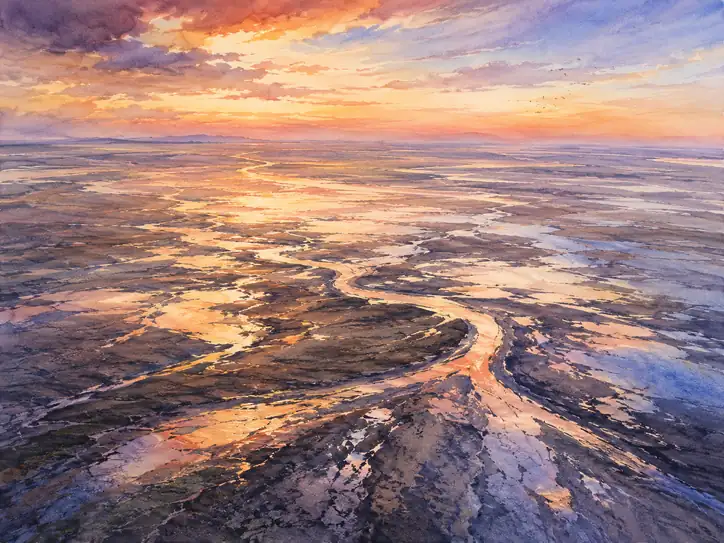 Veins of the Golden Twilight