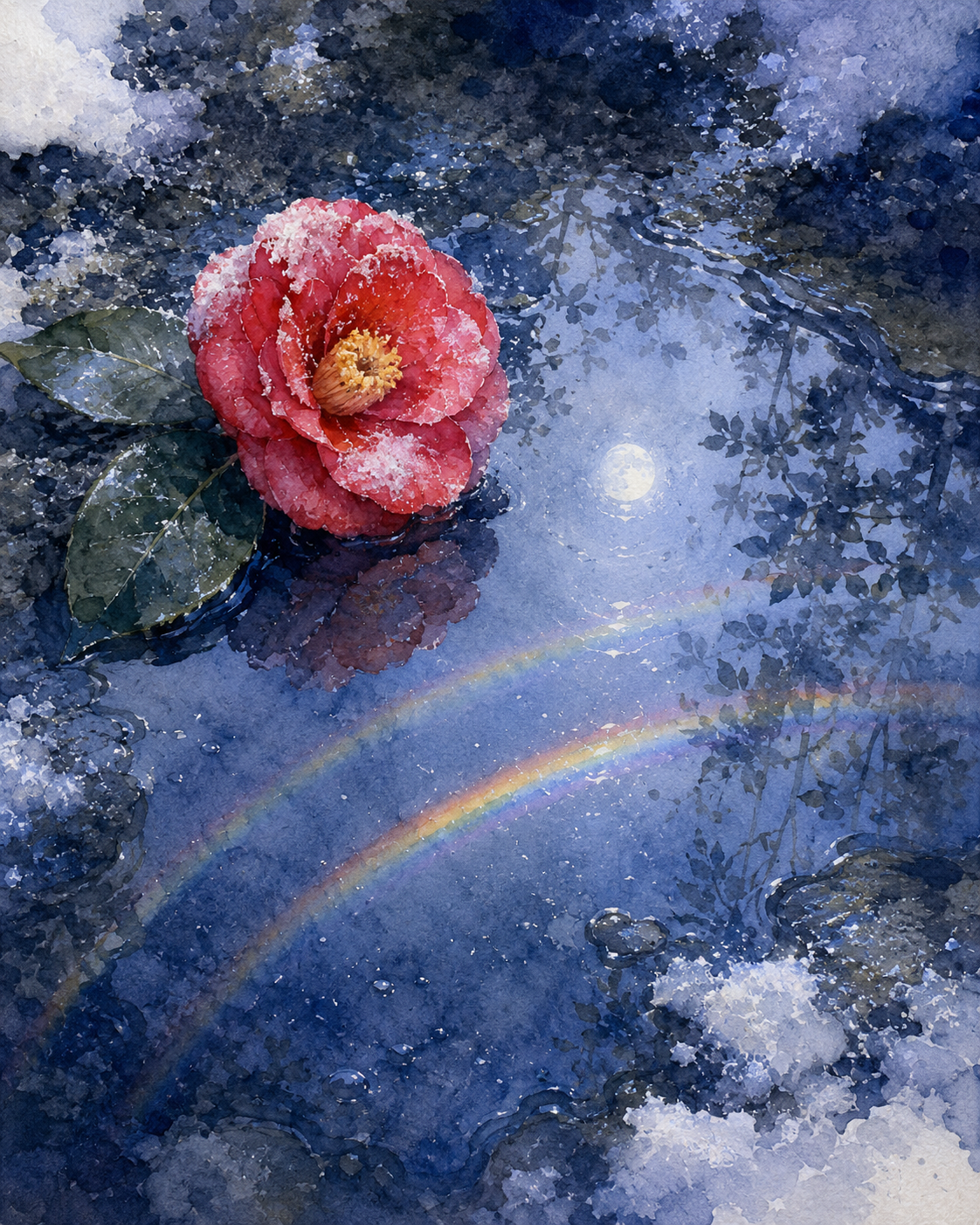
A Camellia Keeps the Moonbow Warm
Critique
Introduction This still life depicts a red camellia beside a winter puddle. Snow and dark stones surround water reflecting a pale moon, branches, and double rainbow. Warm flower and cold setting establish quiet tension. Description The camellia occupies the upper left, layered petals edged with snow and yellow stamens exposed. Two green leaves extend behind it into water. The indigo puddle fills most of the picture. A white moon appears near center, while foliage shadows cross the right. Twin spectra curve diagonally among pebbles, bubbles, and snowy banks. Analysis The flower forms a dense red mass against the puddle's open blue field. Its placement above and left of the moon creates an asymmetrical balance, while the rainbows sweep attention toward the lower right. Crisp petal folds and icy granules contrast with diluted reflections and soft submerged shadows. Repeated circles in moon, bubbles, stones, and flower center link separate materials. The restricted red-blue palette gives each small yellow accent unusual clarity. Interpretation and Evaluation The image presents winter as a condition where color persists. The camellia touches water without losing solidity, while sky appears only through reflection. This reversal makes the puddle expansive. Careful cropping, tonal control, and distinctions among snow, leaf, petal, and water create originality within a simple subject. Conclusion At first the red blossom commands attention, but closer viewing reveals the puddle as the work's true spatial center. It gathers moonlight, foliage, and rainbow around the flower. The painting thus turns a small wintry surface into a measured reflection on resilience, transience, and the coexistence of warmth and cold.
Same Subcategory
 We Bloomed Inside the Rain
Similar Artworks
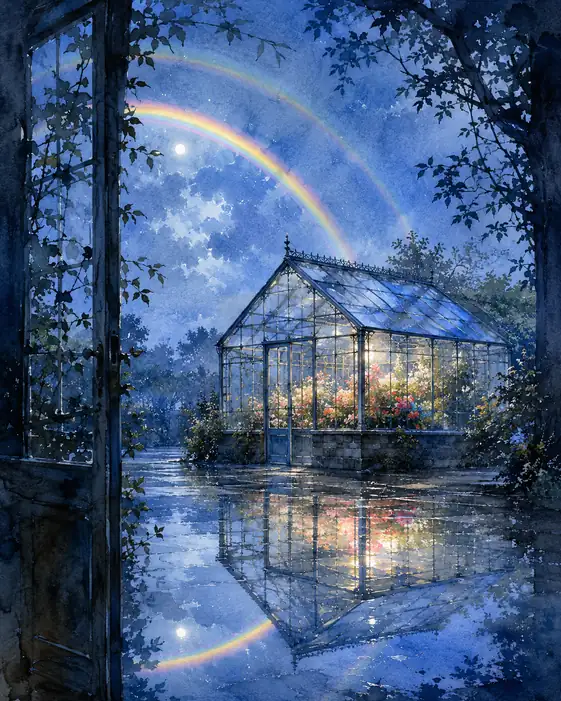 The Moonbow Greenhouse at Midnight
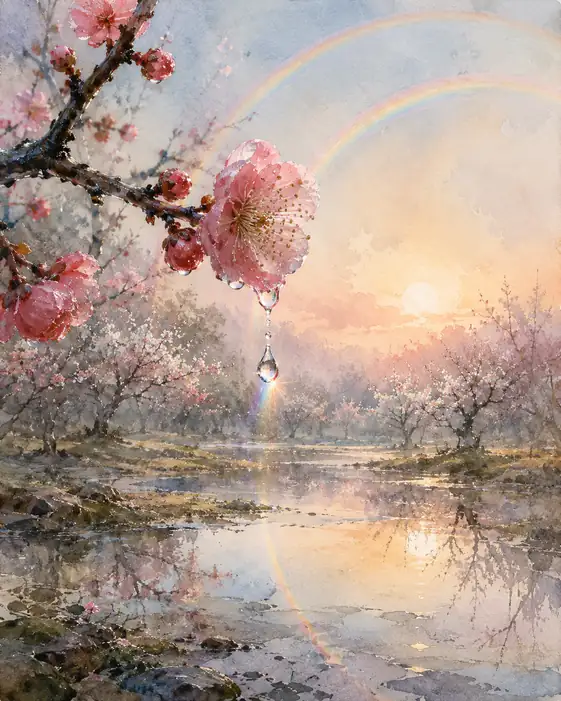 A Dewdrop Carries Spring Across the Orchard
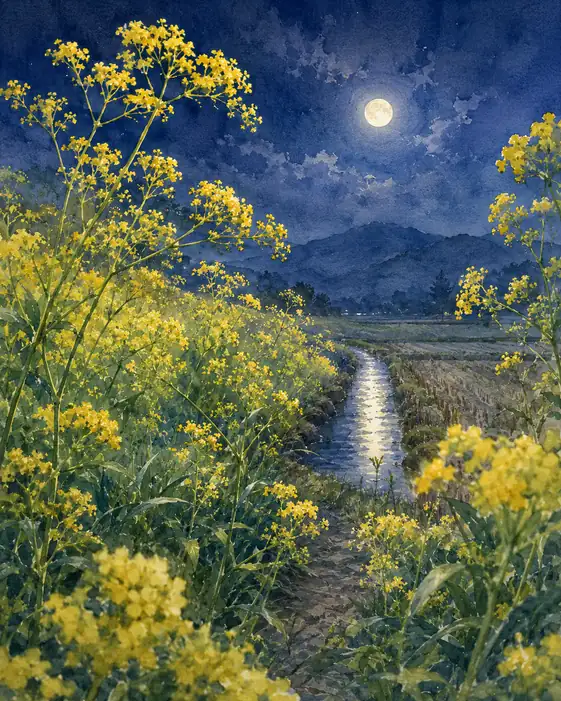 Golden Autumn Along the Moonlit Waterway
 Nocturne of Moon and Lotus Shadow
 Night Lake Framed in Falling Wisteria
 Spring Keeps a Rainbow Over the Blue Hill
 Morning Planted in a Thousand Mirrors
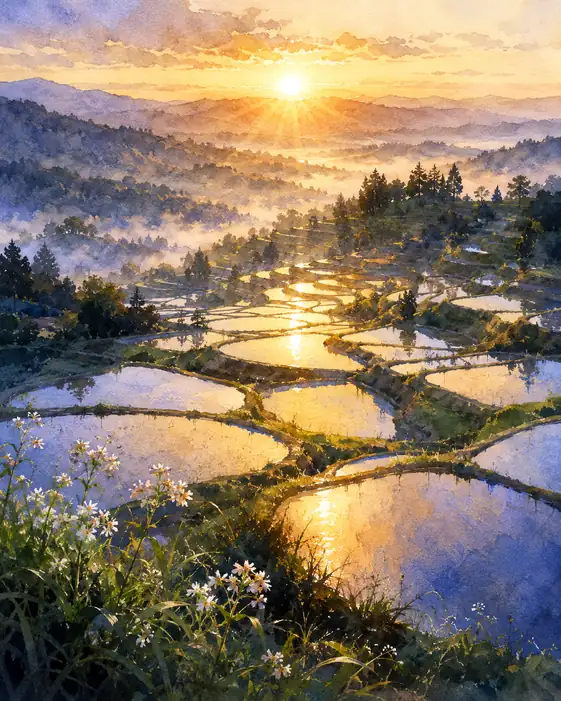 As Stars Fade, the Mountain Mirrors Embrace the Rising Sun
 Beyond the White Wisteria, Time Unravels
 Clouds Bloom Below the Sunflowers