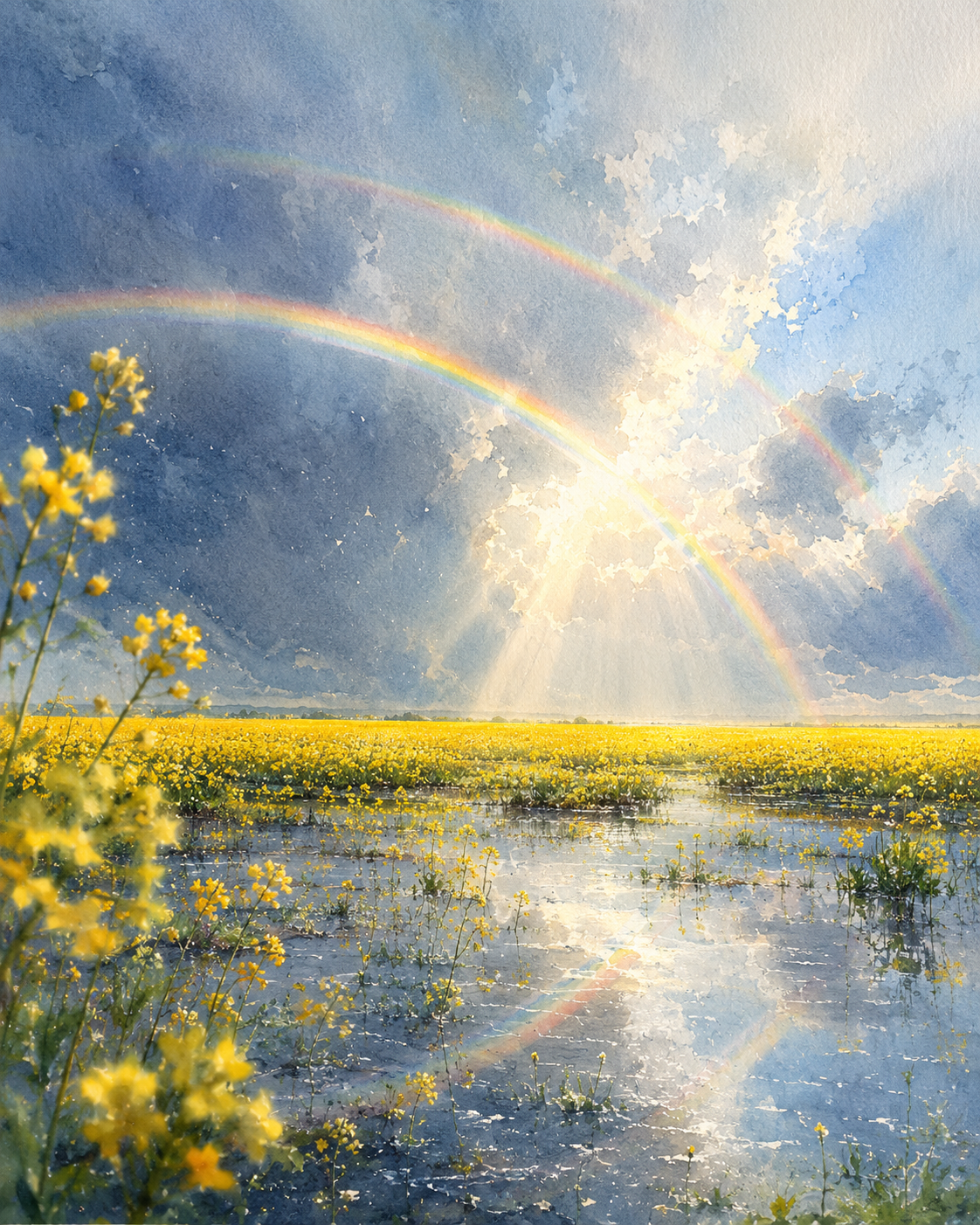
After the Storm, the Field Becomes Light
Critique
Introduction This landscape presents a flooded field beneath a double rainbow and clearing storm. The low horizon gives most of the image to sky, while water brings light forward. Flowers at left establish the viewing position. Description Yellow blossoms form a narrow luminous band across the middle distance and continue in scattered clusters through shallow water. Two broad arcs cross from the dark upper left toward a brilliant opening at the right. Sunbeams descend through broken clouds near the larger rainbow's end. In front, stems rise from blue-gray water that reflects white light and a faint inverted spectrum. Analysis Horizontal divisions of water, field, and horizon stabilize the scene, while rainbows supply movement. Blurred flowers at left overlap sky and water, strengthening depth against the dotted distant field. Cool slate blues occupy broad areas, so yellow and the warm cloud opening become emphatic. Dry marks describe blossoms, while pooled washes and broken highlights convey wet atmosphere and rippling water. Interpretation and Evaluation The work treats the interval after rain as a moment when ordinary lowland terrain becomes radiant. Its doubled arcs link the near flowers, remote horizon, and reflective foreground without requiring a narrative figure. The off-center burst of light balances the darker flower screen on the left. Controlled color contrast, layered distance, and varied watercolor textures give the familiar rainbow motif descriptive freshness and compositional clarity. Conclusion At first the celestial arcs dominate, but closer viewing reveals the flooded field as the element that distributes their light throughout the image. Reflections and scattered blossoms turn the ground into an active counterpart to the sky. The painting therefore succeeds through the measured exchange between weather, water, and seasonal growth.
Same Subcategory
Similar Artworks
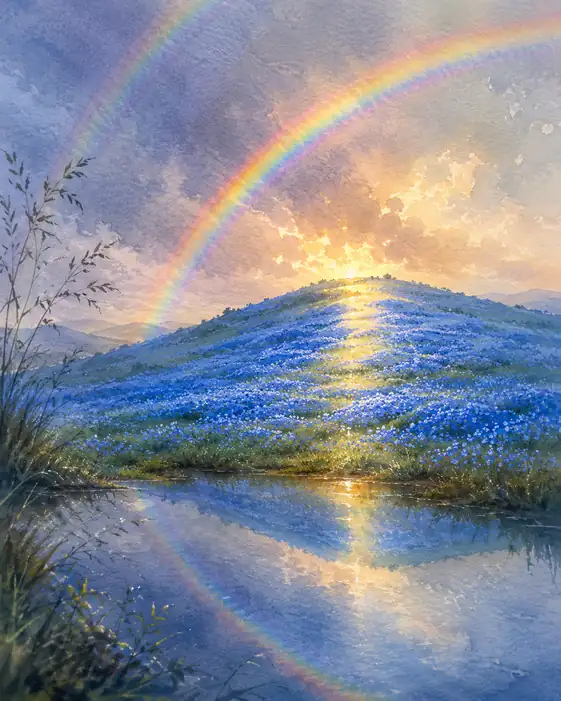 Spring Keeps a Rainbow Over the Blue Hill
 Autumn Flowers Beneath a Double Promise
 Autumn Bows Beneath Two Rainbows
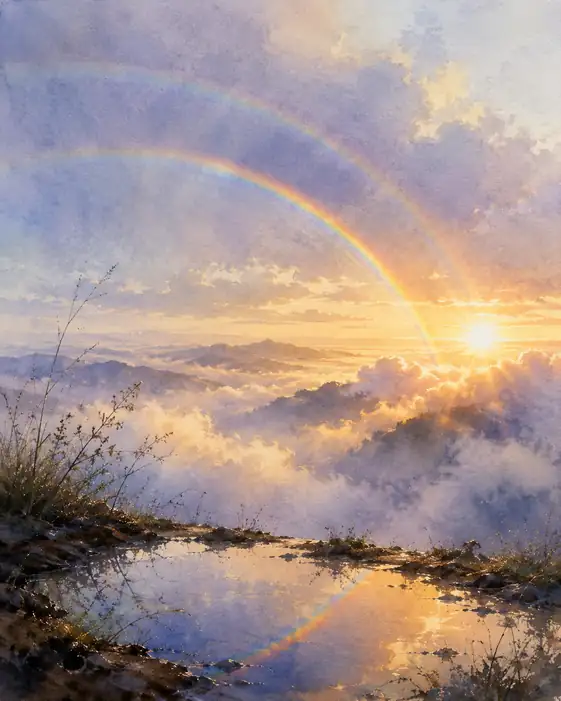 Where Two Rainbows Return to the Sky
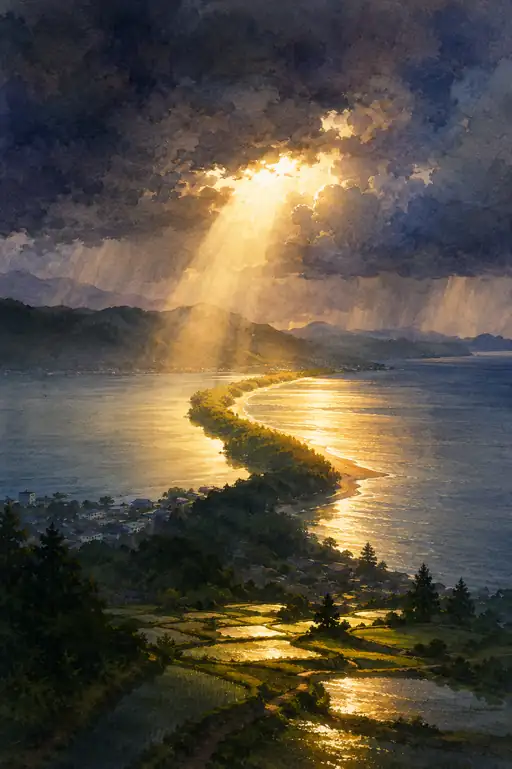 Golden Rays Before the Thunderstorm
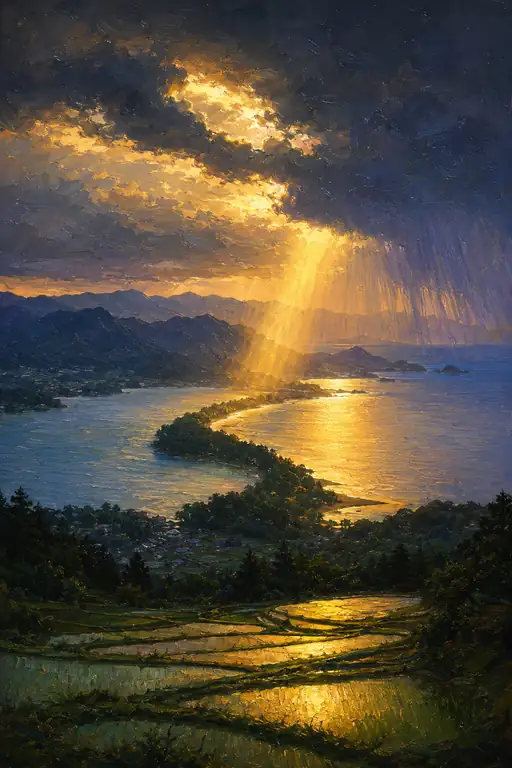 The Last Sanctuary of Light
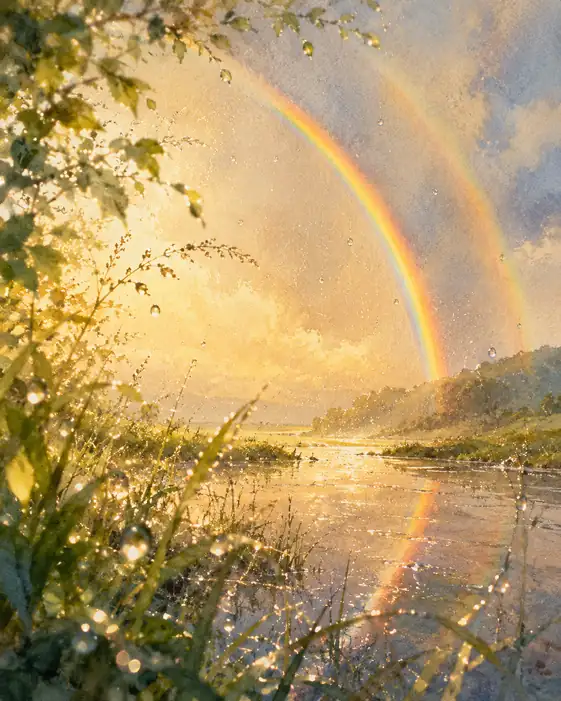 Two Rainbows Promise the Same Tomorrow
 Light Piercing the Desolate Soul
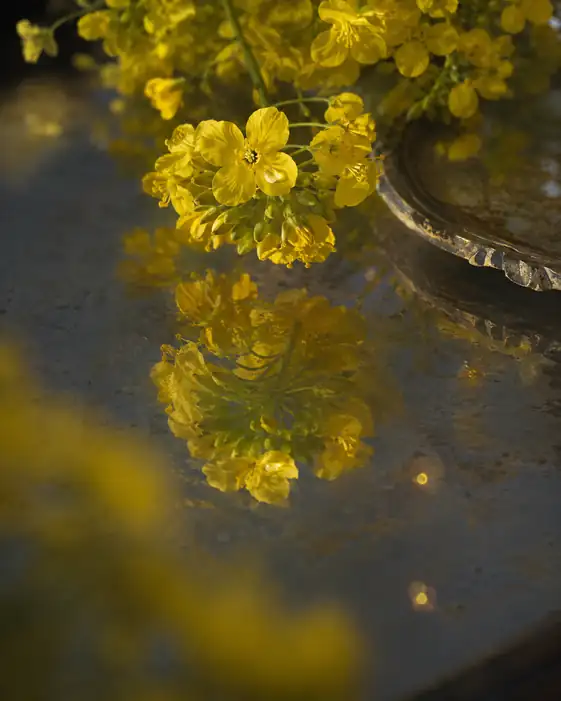 Canola Blossom on Silver Tray
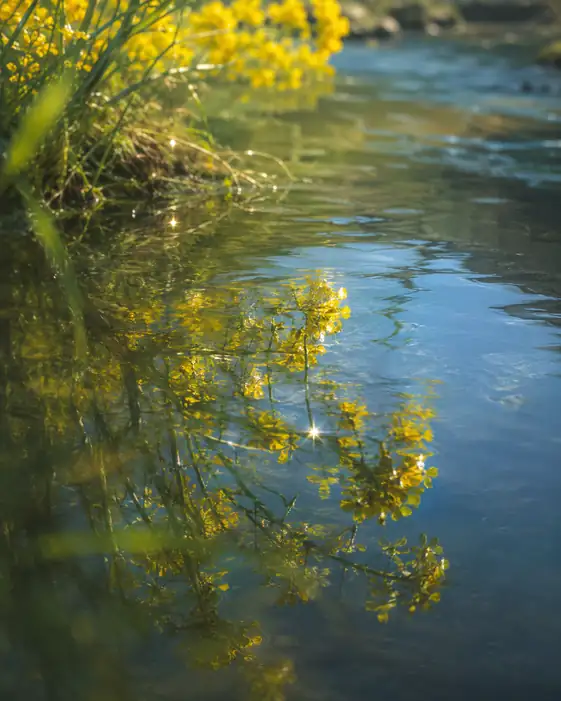 Spring Stream and Mustard Bloom Reflection