
Where Two Rainbows Return to the Sky
Critique
Introduction This landscape depicts a double rainbow above a mountain cloudscape. A shallow foreground pool reflects the warm sky and lower arc. The vertical format joins earth, atmosphere, and light in an upward sequence. Description Dark soil, stones, and sparse grasses border the water. Beyond this ledge, ridges and cloud banks recede toward a low horizon. The sun shines near the right edge, sending rays across orange vapor, while two rainbows sweep from the left. Lavender-gray clouds occupy the upper sky and soften around cream light. Analysis Depth develops through plants, the mirror-like pool, dark ridges, and pale cloud bands. Rainbow curves counter horizontal strata and connect sky to sun. Violet and blue-gray washes make the gold at right luminous. Broken edges suggest vapor, while thin grasses and crisp reflections give the foreground firm texture. Interpretation and Evaluation The scene treats a transient weather event as an encounter between distance and immediacy. The rainbow appears both overhead and in the small pool, allowing the immense atmosphere to be grasped within a nearby surface. The composition is skillfully balanced by placing the brightest light off center and the darkest vegetation opposite it. Sensitive tonal transitions, restrained color, and varied wet and dry textures provide descriptive force without sacrificing calm. Conclusion At first the double rainbow commands attention, but sustained viewing reveals that the modest pool organizes the experience of the whole landscape. It gathers sunlight, sky color, and the arc into one quiet foreground plane. The work ultimately derives its strength from this dialogue between expansive meteorological spectacle and close, fragile detail.
Same Subcategory
Similar Artworks
 Autumn Flowers Beneath a Double Promise
 Autumn Bows Beneath Two Rainbows
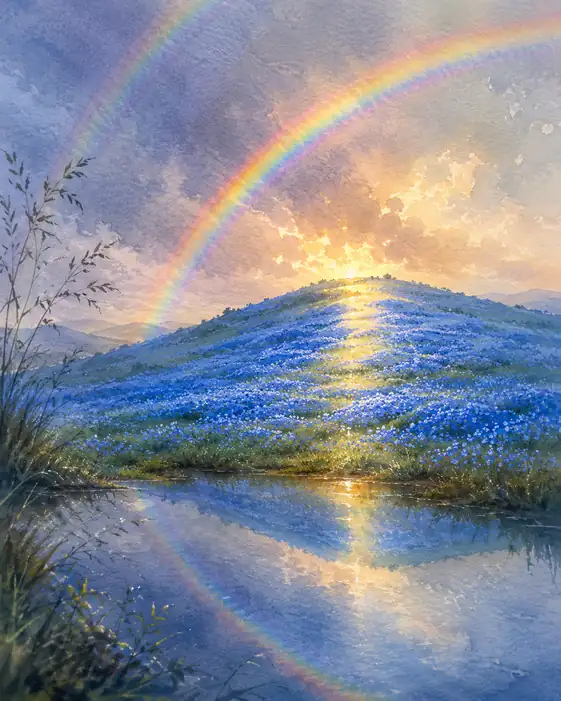 Spring Keeps a Rainbow Over the Blue Hill
 The Cloud Builds a Palace of Light
 After the Storm, the Field Becomes Light
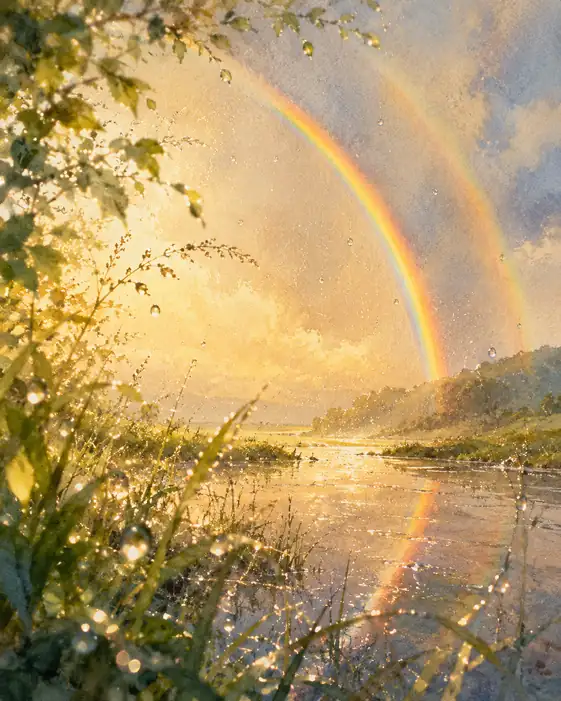 Two Rainbows Promise the Same Tomorrow
 Lavender Twilight on the Crystal Salt Lake
 Sky Floating on the Silver Salt Lake
 Silent Hymn of Highland Dew
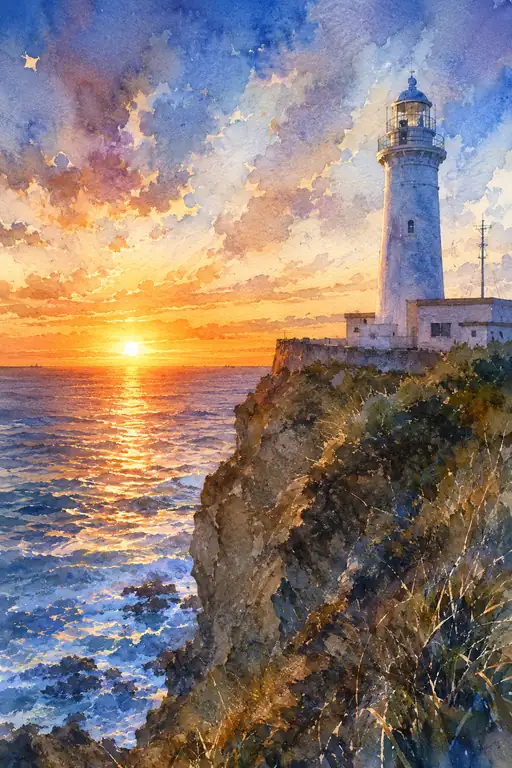 Beacon of Hope in the Burning Twilight