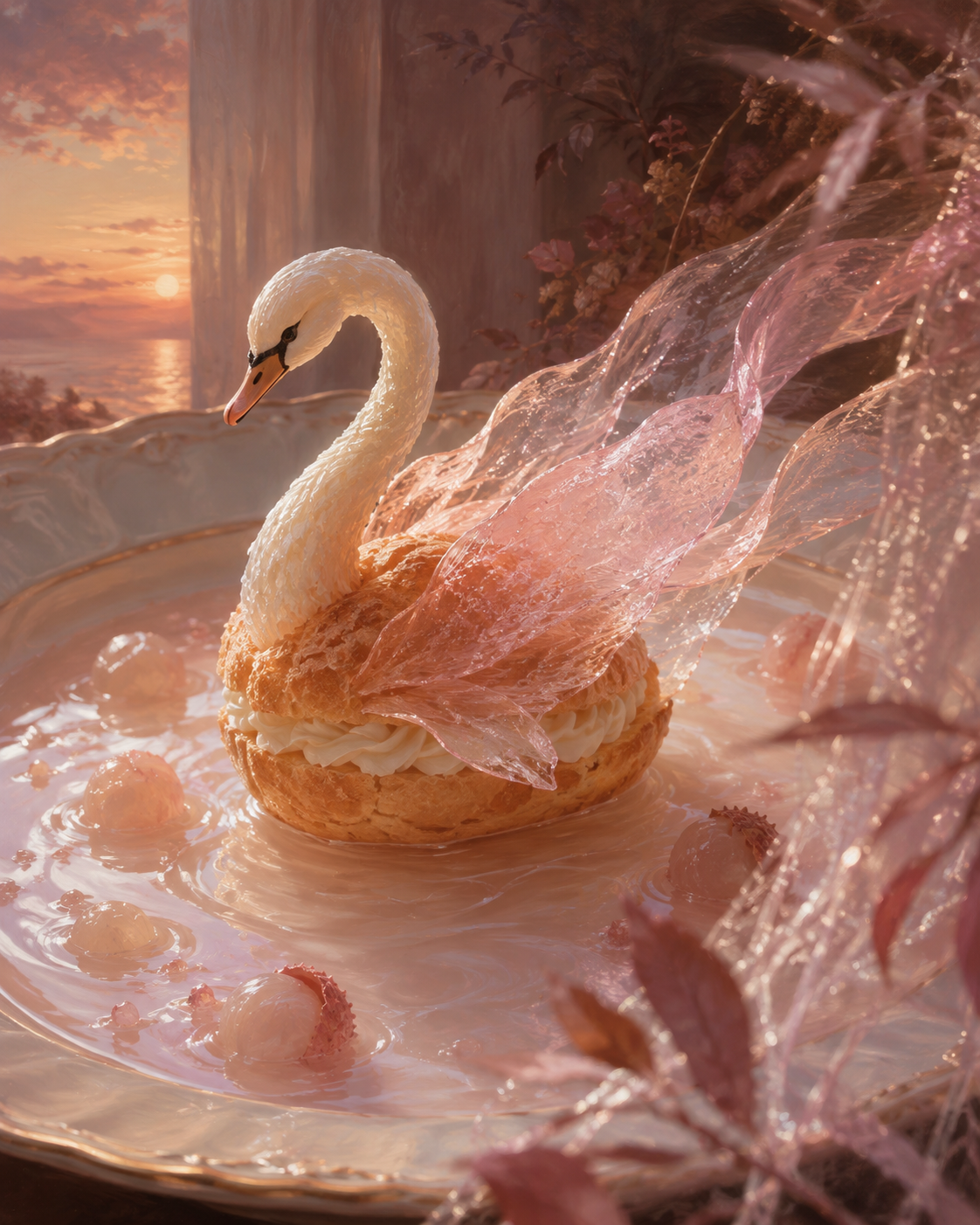
A Swan Sails Through the Rose-Gold Hour
Critique
Introduction A white swan rises from pastry as transparent pink wings stream through sunset light. Animal grace, brittle sugar, and a watery garden merge into a theatrical but coherent image. Description The swan’s textured neck curves down from the left, ending in an orange beak and dark eye. Its body is a round split pastry filled with piped white cream. Layered translucent wings extend to the upper and lower right, their pointed membranes catching rose and gold. Pale pink fruits sit in milky liquid around the base, each making circular ripples. A sunset sea appears at far left; columns, dark foliage, and blurred leaves enclose the scene. Analysis The neck’s inward curve counterbalances the wings’ forceful sweep to the right. A low circular pastry anchors those elevated diagonals. Warm peach unifies bread, wings, fruit, and sky, while white cream and feathers provide the highest solid values. Light passes through the sugar wings, revealing bubbles, ridges, and overlapping edges. The liquid plate doubles the sunset glow and turns scattered fruits into rhythmic satellites. Blurred foreground foliage increases depth. Interpretation and Evaluation The swan appears between rest and departure. Its edible body belongs to the table, but wings continue beyond the frame, implying transformation. Water, glasslike sugar, and sunset are linked by transparency, so the fantasy feels materially consistent. The ornate setting risks overwhelming the figure; however, the bright neck and dark eye hold attention, and the broad wing direction organizes surrounding detail. Conclusion Softness and brittleness meet as cream, feathered neck, crisp pastry, and glassy wings remain distinct. Ripples give the posed creature a present moment. Clear silhouette and movement control romantic color. The result rests between dessert and living apparition.
Same Subcategory
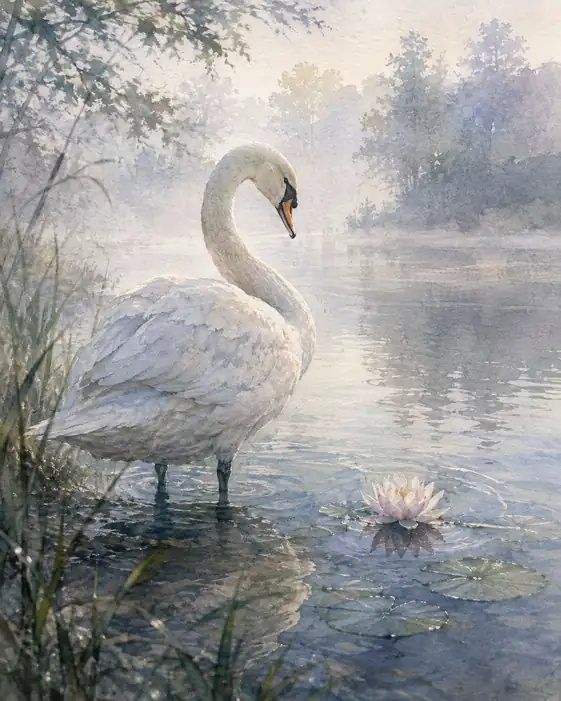 The Swan and the Lotus Share the Morning
Similar Artworks
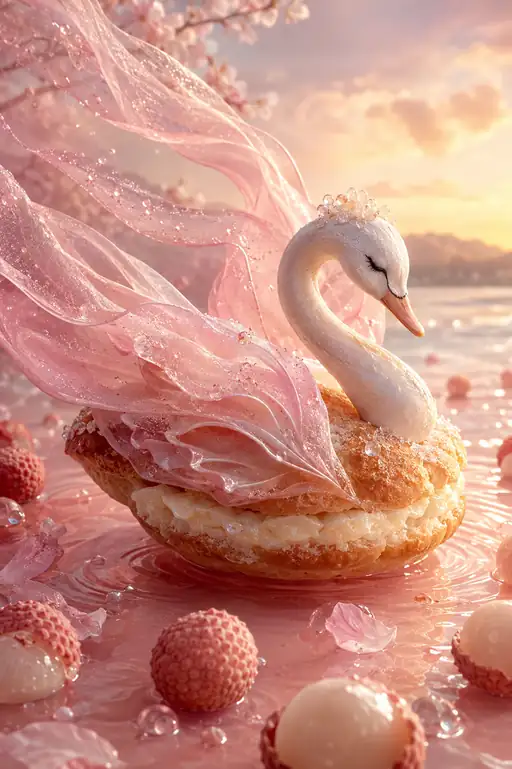 The Swan Who Gathered the Sakura Dawn
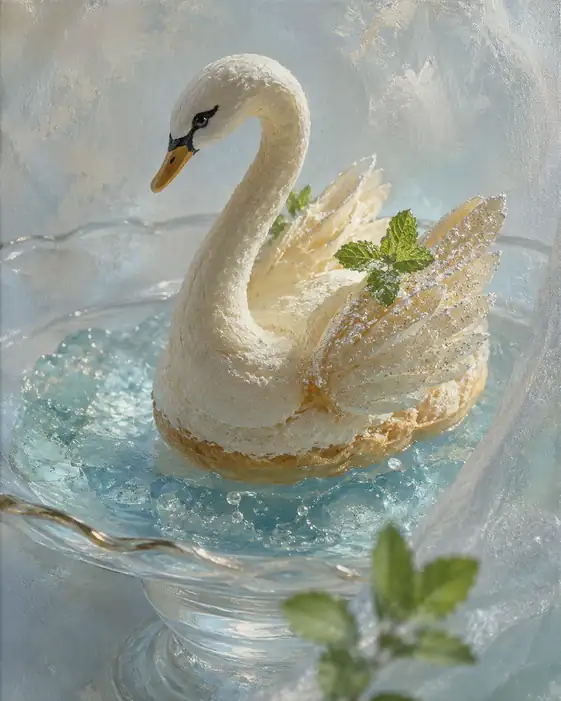 A White Swan Drifts Across the Soda Lake
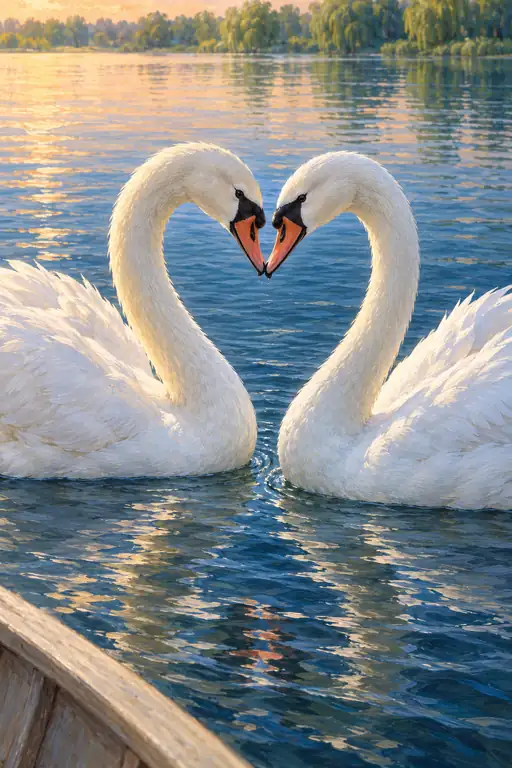 Eternal Vow upon the Water
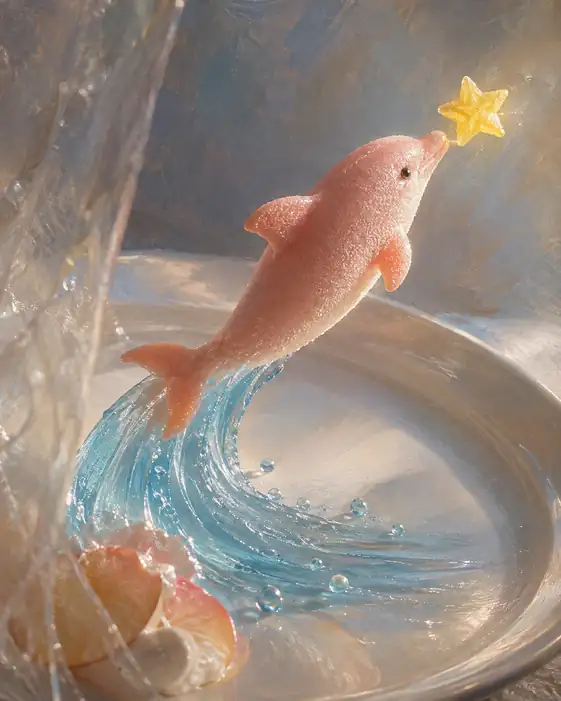 One Leap Closer to a Star
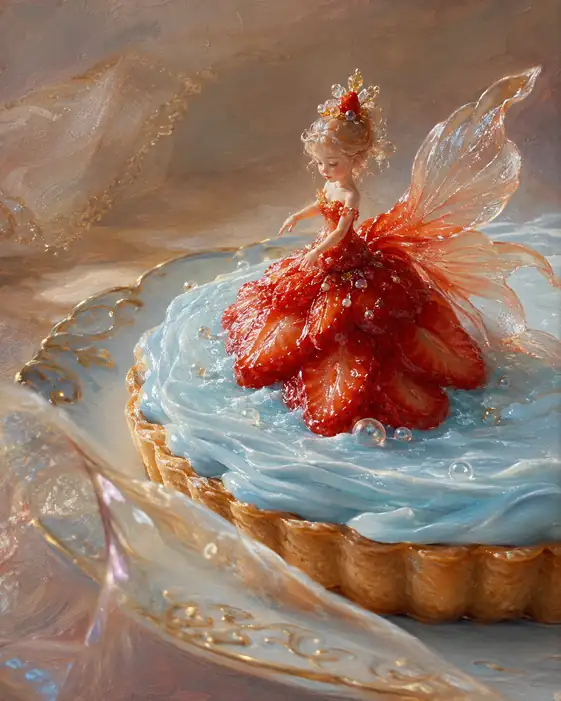 Strawberry Wings over a Blue Dream
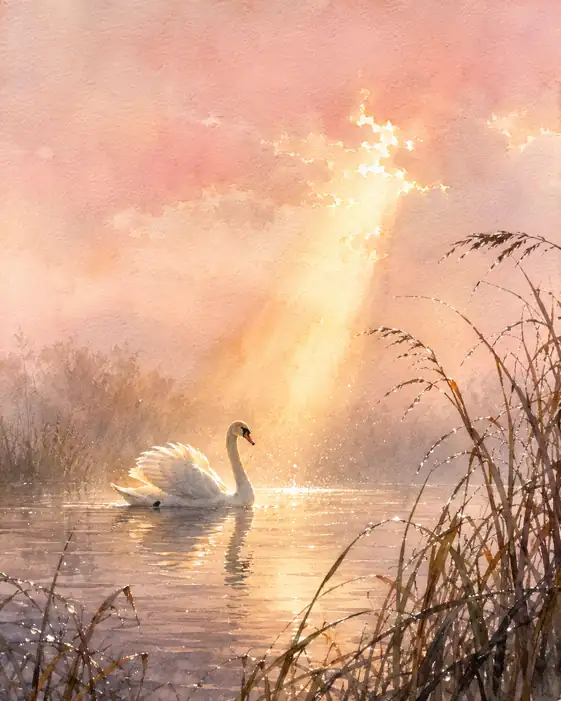 The Swan in the Rose-Colored Dawn
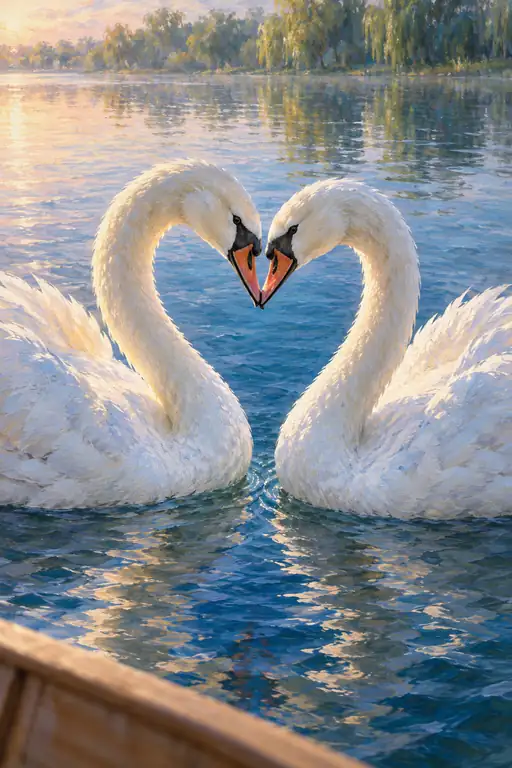 Harmony of the Morning Lake
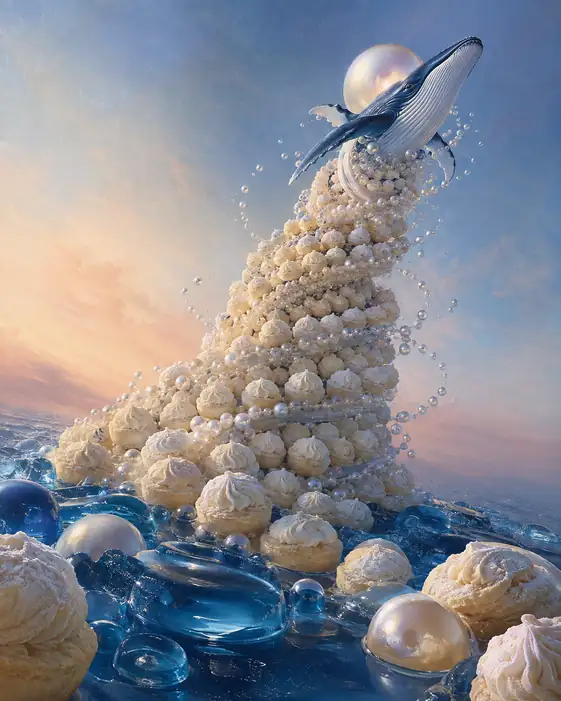 The Whale at the Summit of Pearls
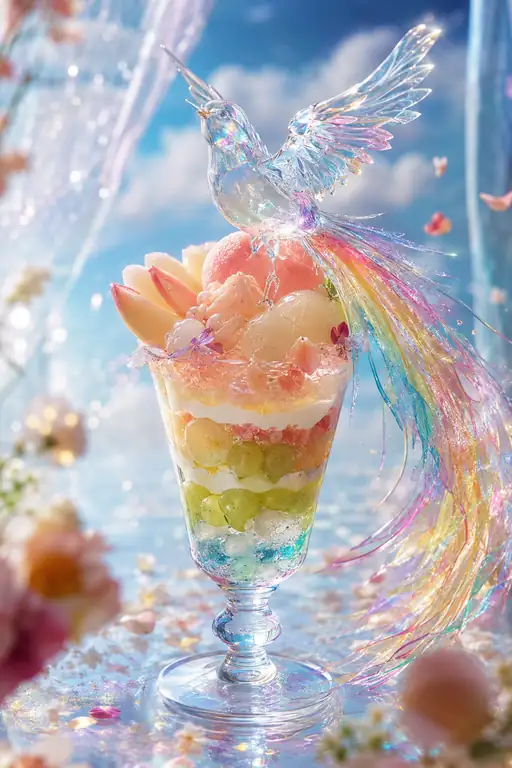 The Bird Who Brought Dawn in Its Tail
 She Wore the First Strawberry of Spring