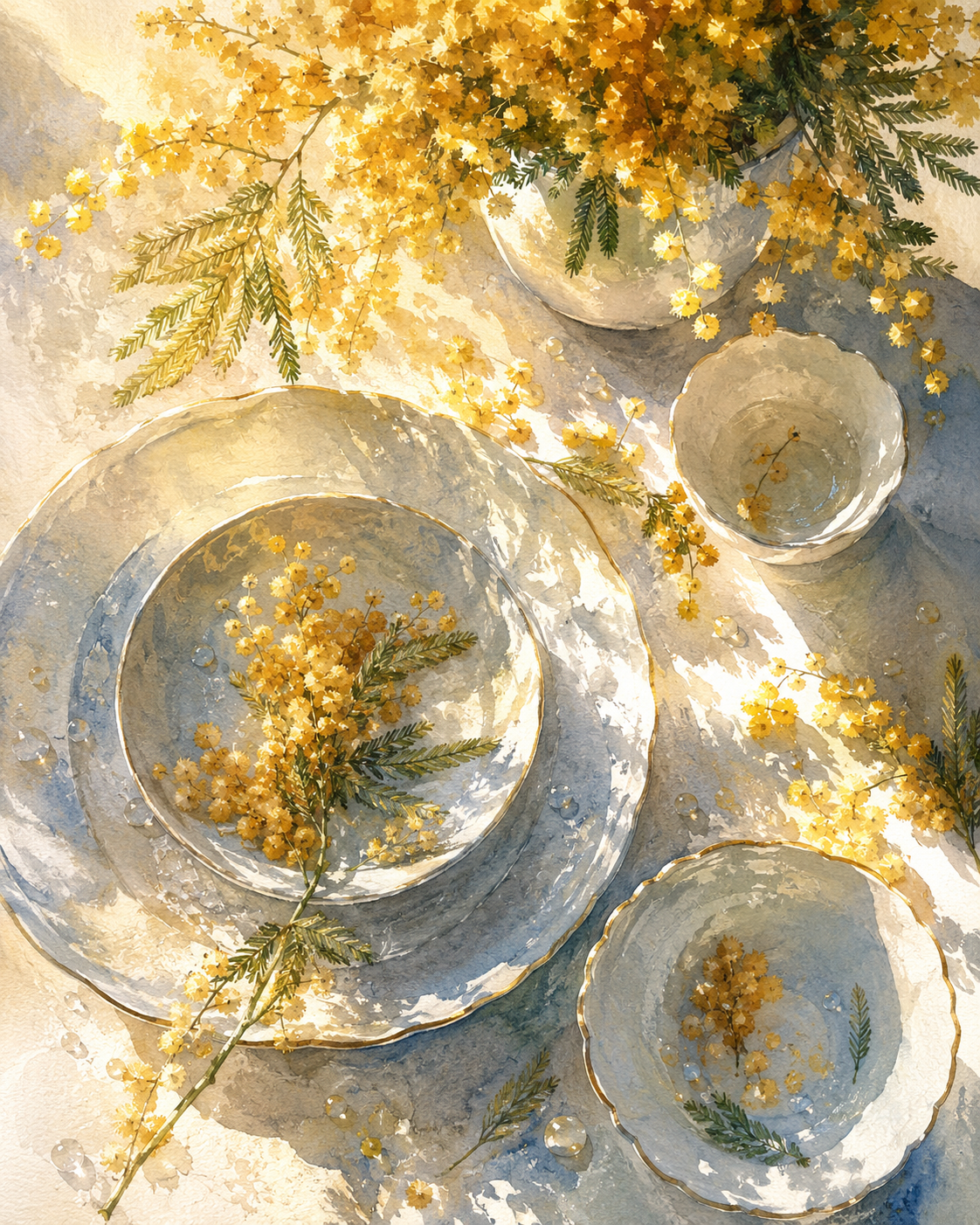
Mimosa Setting the Table for Spring
Critique
Introduction Pale ceramic vessels and yellow mimosa become a study in sunlight, translucency, and circular rhythm. No single object dominates; tableware and flowers share attention through repetition and distributed emptiness. Description A large irregular platter occupies the left center, holding a smaller translucent bowl with a sprig of mimosa. Three additional pale bowls appear at upper center, upper right, and lower right. Their uneven rims carry thin golden edges. Abundant yellow blossoms and feathery green leaves enter from the top and cross diagonally through the arrangement. Clear droplets scatter over a mottled cream-and-blue surface. Analysis Nested circles establish the central rhythm, then the surrounding bowls extend it across the rectangle. Flower stems interrupt those stable curves with diagonals, preventing the place setting from becoming static. Warm yellow clusters concentrate at the top and reappear sparsely below, balanced by cool blue-gray shadows. The watercolor alternates opaque white, transparent wash, and untouched paper so ceramic, glasslike glaze, water, and petals remain distinguishable. Cropping implies abundance beyond the frame. Interpretation and Evaluation The empty vessels suggest hospitality before or after use, yet the flowers have already entered and occupied them. Mimosa becomes both decoration and measure of scale. Irregular rims and scattered droplets keep refinement from seeming sterile. Particularly effective is the central bowl: its visible underlying platter creates several layers of translucent space. The diffuse shadows indicate strong daylight without fixing the scene to rigid realism. Conclusion This is a still life of receptivity. Bowls, plates, and water receive light, flowers, or reflections, while open areas let them breathe. A restrained palette gains richness through temperature and transparency. Yellow branches make ordinary tableware graceful and memorable.
Same Subcategory
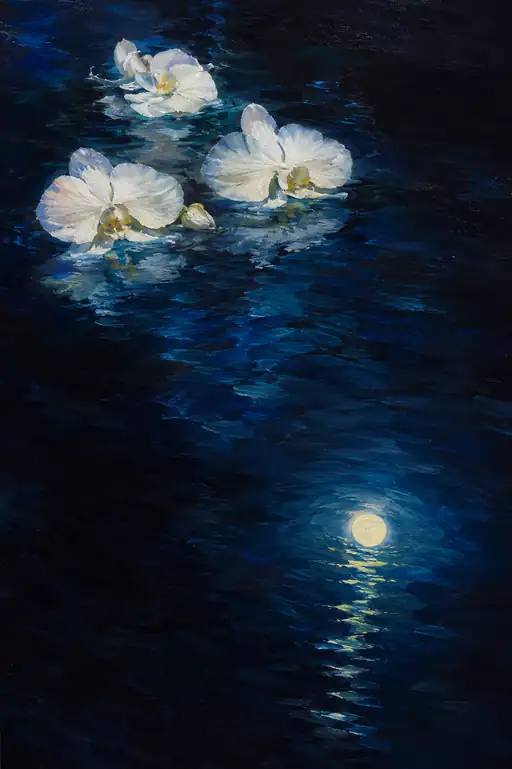 A Silent Dream on Midnight Waters
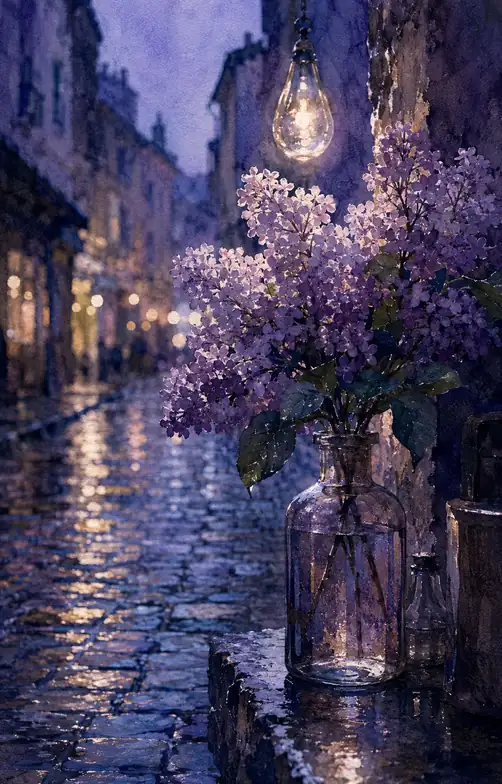 Lilacs Borrow the Last Streetlight
Similar Artworks
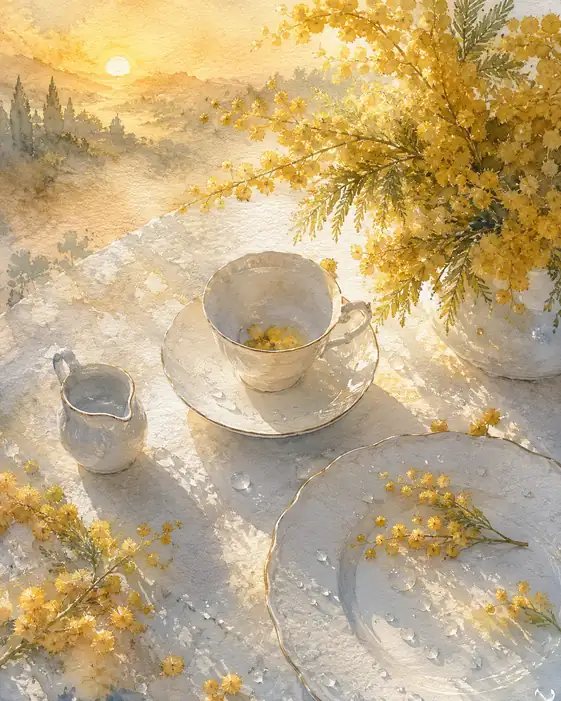 Mimosa Spills Morning into the Cup
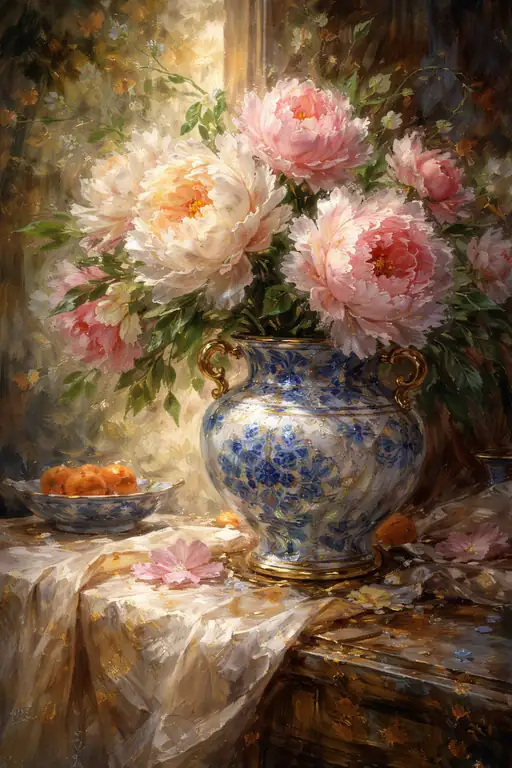 Serenade of the Soft Shadows
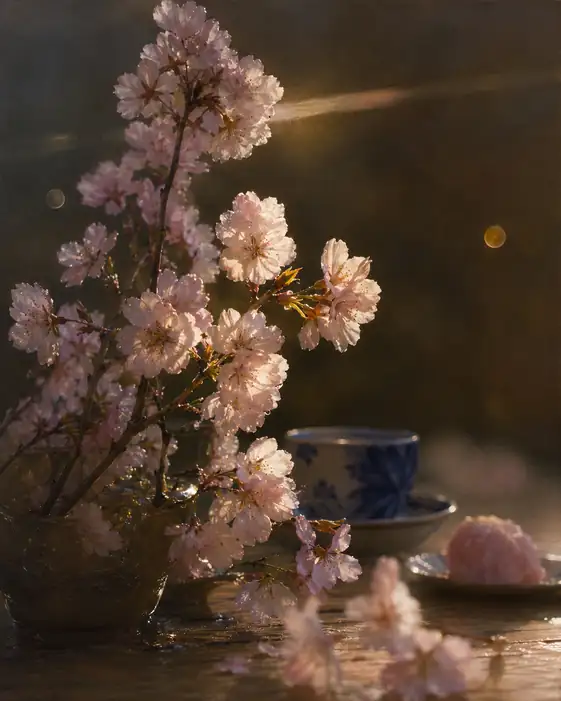 Spring Repast with Cherry and Porcelain
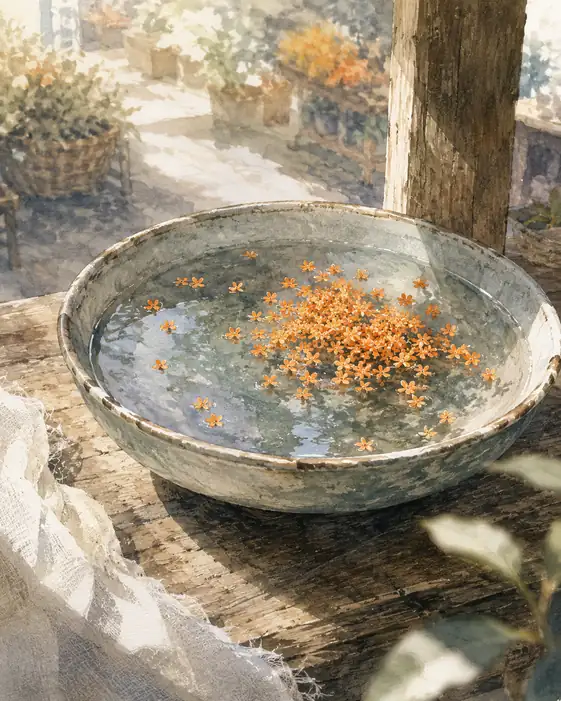 Autumn's Fragrance Drifting in a Bowl
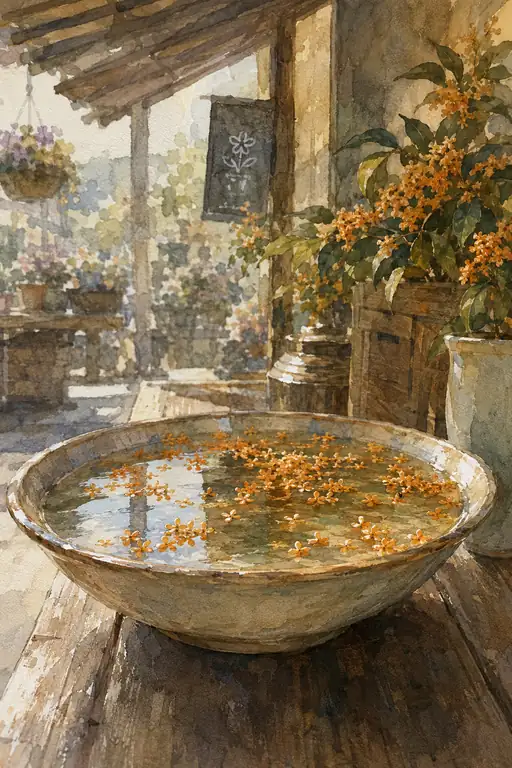 Osmanthus Stars Floating in the Garden Bowl
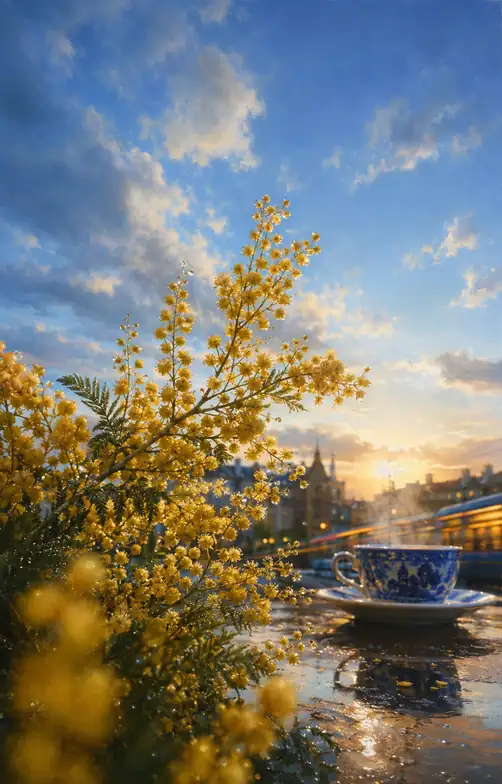 Sunset Tea and Golden Mimosa
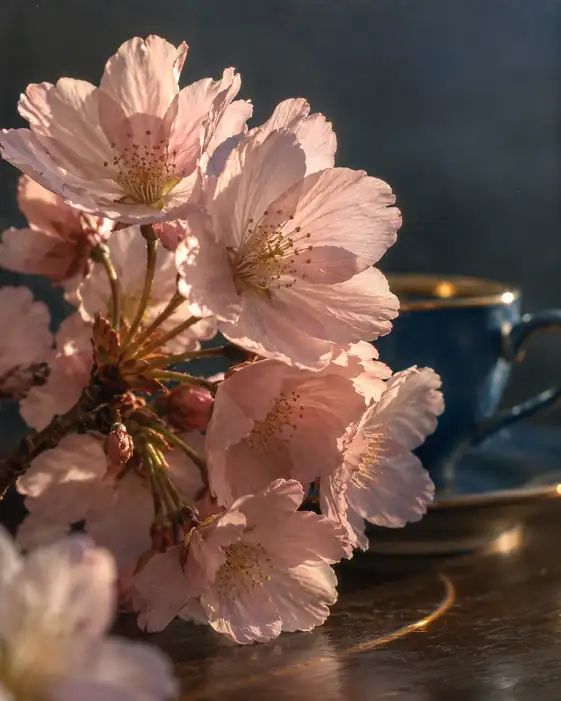 Shadows and Blossoms on the Dark Wood
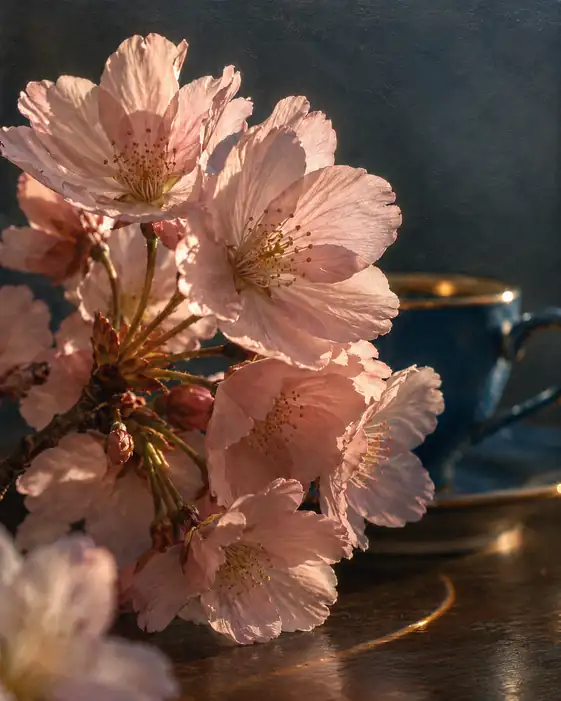 Morning Tea Beside a Branch of Bloom
 Journey Paused in Full Bloom
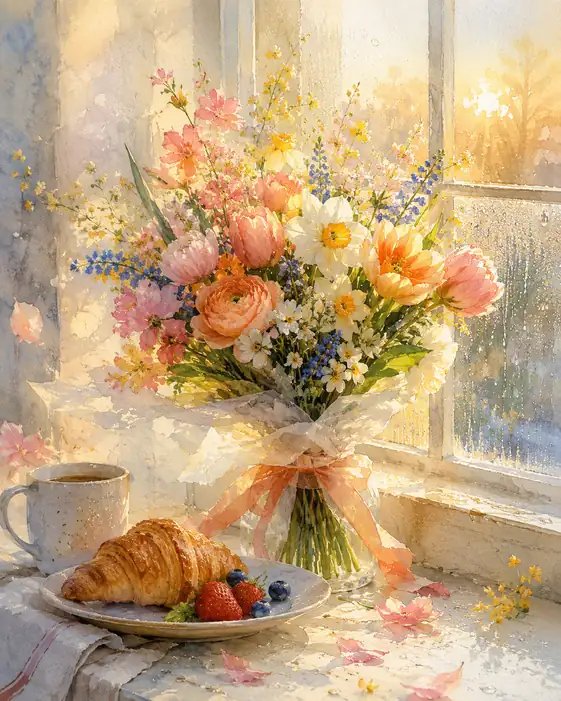 A Bouquet Sets the Morning Table