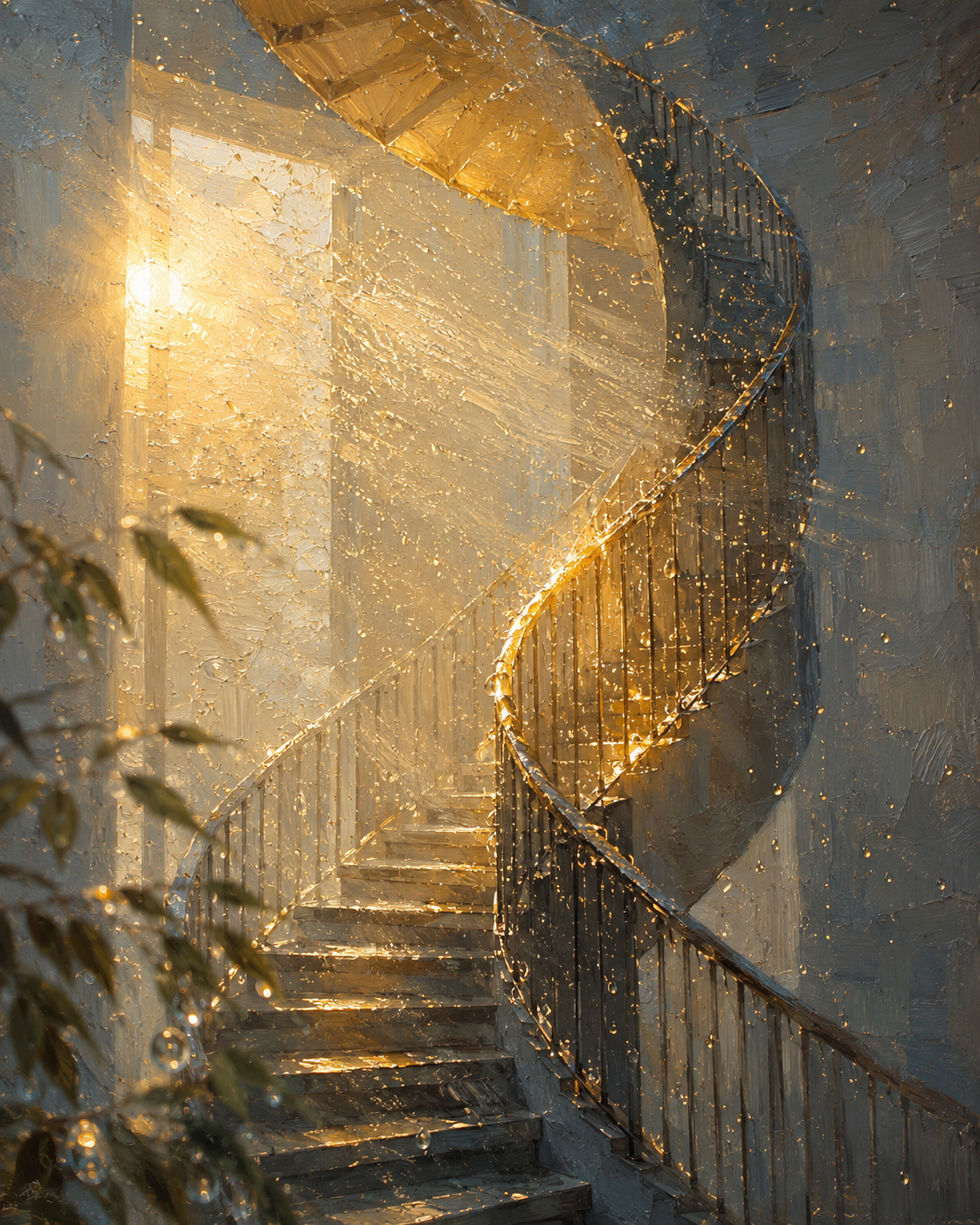
The Stairway That Caught the Evening
Critique
Introduction A spiral stair climbs through a dim interior as golden window light ignites suspended droplets. An ordinary passage becomes an event of ascent. Tactile handling grounds the radiance in walls, steps, and metal. Description Stone steps rise, bend left, then coil behind a dark iron balustrade. A bright window and lamp occupy the upper left. Warm light sweeps across gray-blue plaster, catching rails and stair edges. Droplets and flecks fill the air, with a blurred plant intruding from lower left. Heavy brush marks articulate ceiling, walls, and treads. Analysis The staircase supplies both an S-curve and a strong upward vector. Its alternating pale and dark sections reveal the helix while withholding the destination. Golden diagonals from the window cross the circular movement, producing tension between direct light and turning architecture. The darkest railing forms a vertical spine at center right. Impasto-like strokes make the wall resistant and solid, whereas pinpoint highlights dissolve the air into glitter. Repeated bars measure depth as they narrow above. Interpretation and Evaluation Ascent here is less a practical journey than an encounter with illumination. The unseen upper landing encourages projection, while the lower steps remain available and bodily. Droplets may suggest rain carried indoors, spray, or purely heightened perception; their ambiguity is productive because each converts light into a visible particle. The abundance of sparks approaches excess, yet the disciplined stair geometry prevents sentiment from becoming formless. Conclusion The work succeeds through friction between weight and radiance. Stone and iron assert gravity; the spiral and airborne gold promise release. Controlled values keep the window from flattening the room. Light, rhythm, and an unresolved destination make this intimate architecture expansive.
Same Subcategory
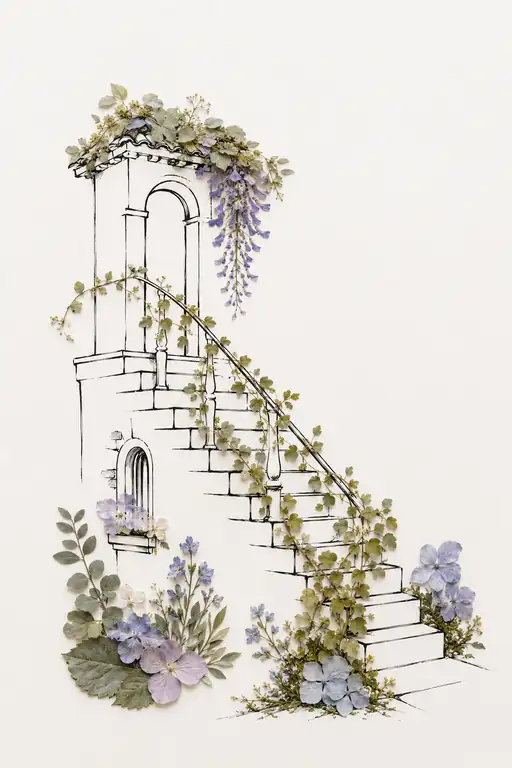 Wisteria Cascades Along the Tower Stair
Similar Artworks
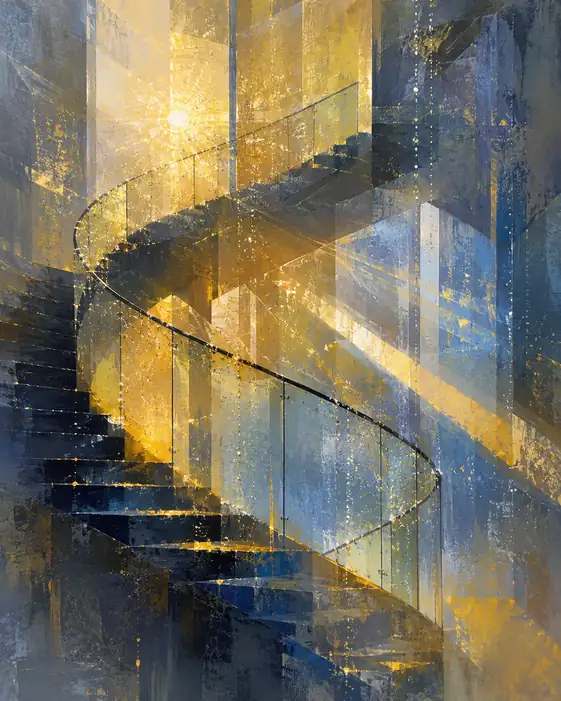 The Staircase Turns toward Golden Silence
 Spiral of Amber and White Petals
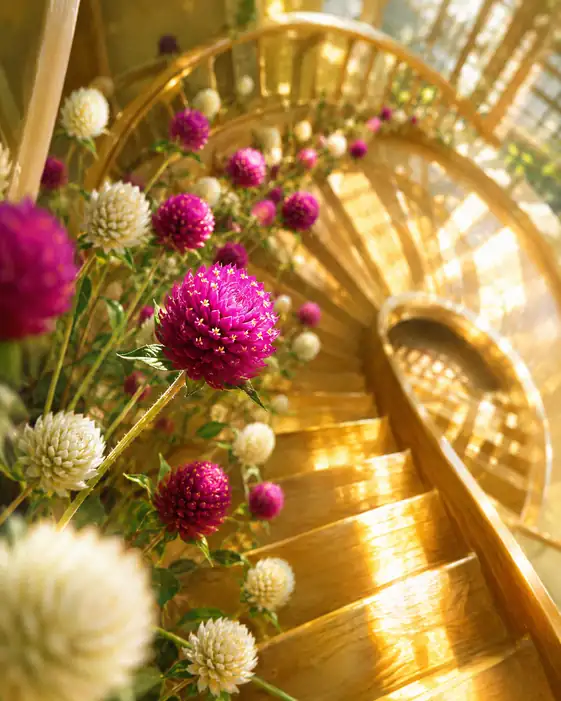 Ascent of the Golden Spiral and Amaranth
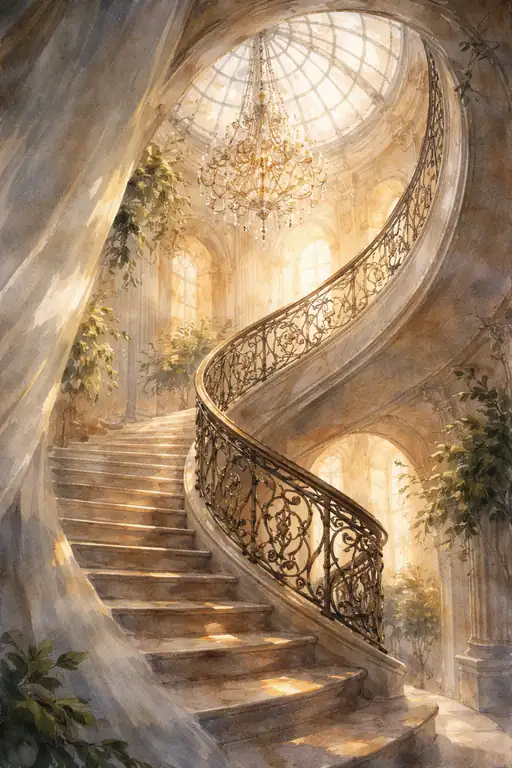 Spiral of Sunlight
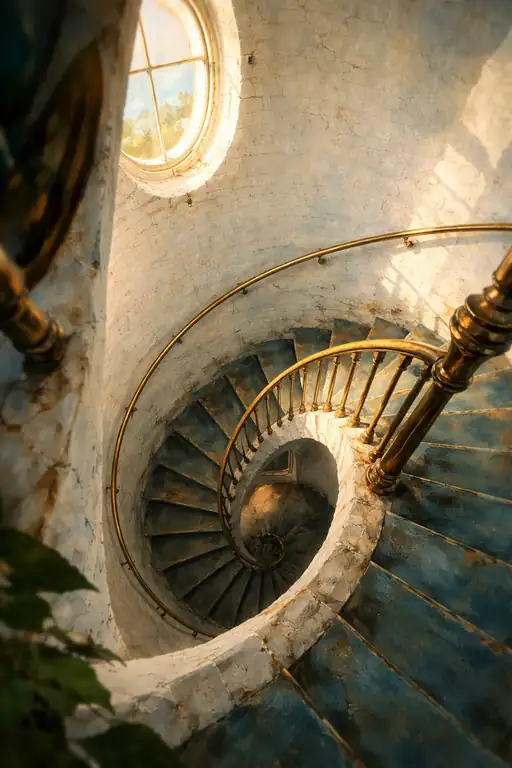 Descent into the Azure Abyss
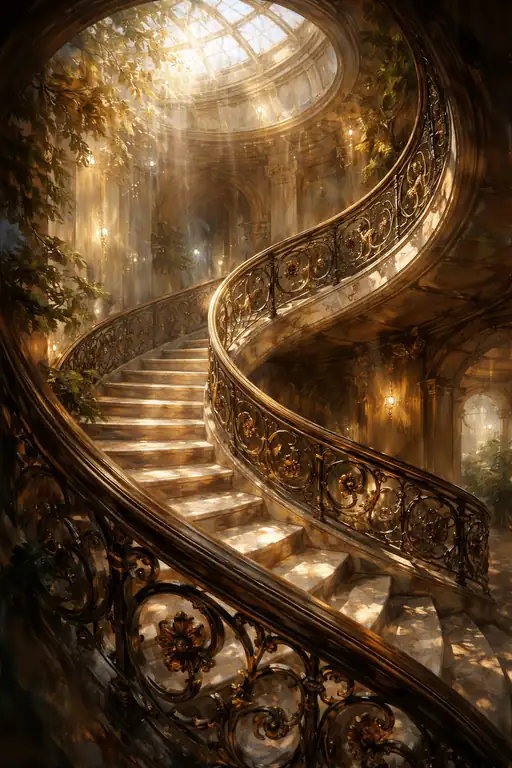 Ascension Through the Amber Light
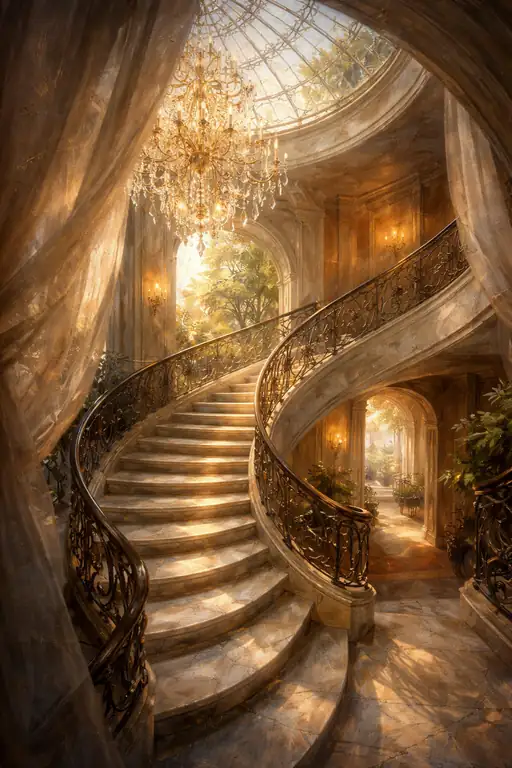 Golden Ascent to the Heavens
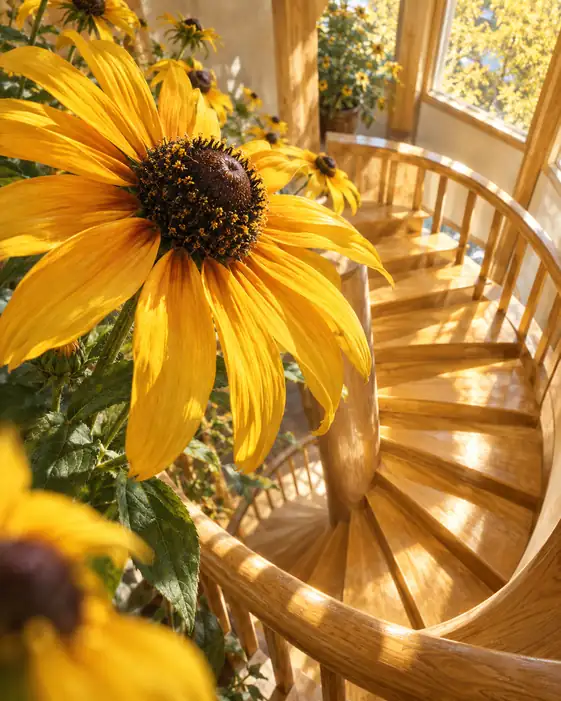 Sunlit Spiral in the Sunroom
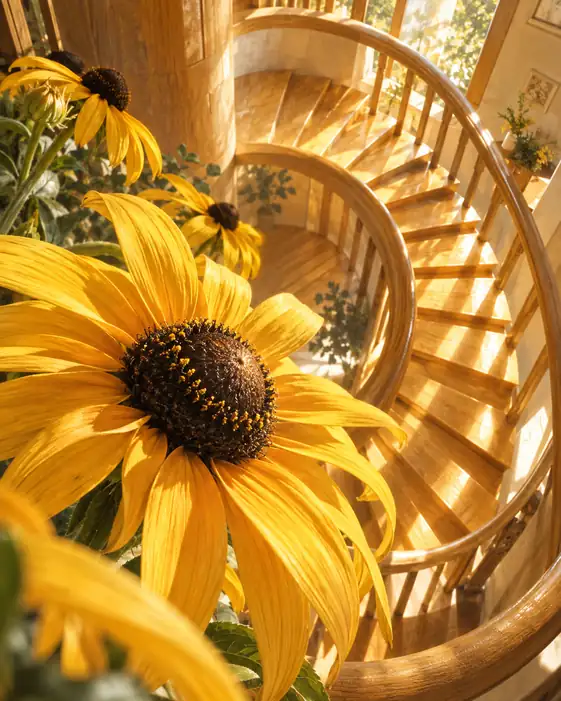 Golden Spiral and the Sunflower
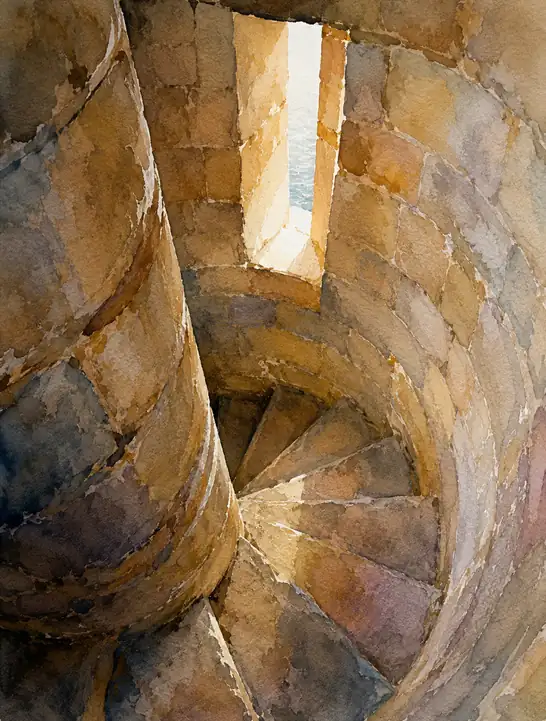 The Winding Journey