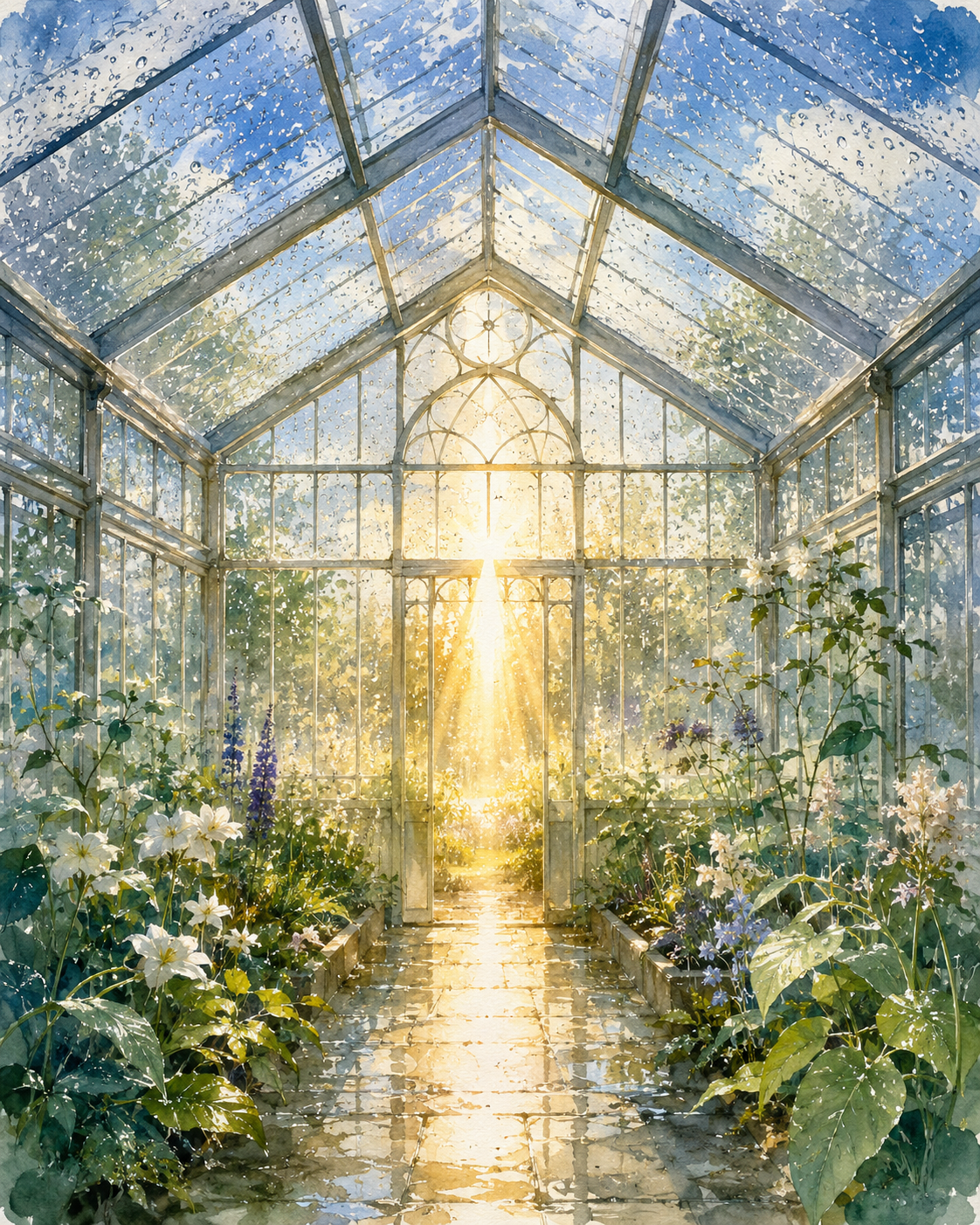
After the Rain, the Greenhouse Opens to Gold
Critique
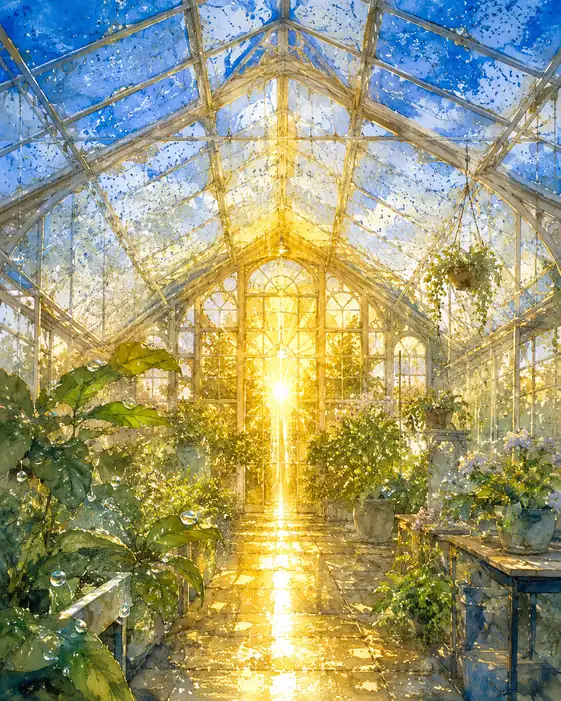
Introduction A rain-washed glasshouse opens toward golden sunlight, its path bordered by white and blue flowers. Architecture becomes a vessel for weather and growth, while precise perspective supports the radiant atmosphere. Description Steel-gray ribs divide the pitched glass roof and walls into transparent panes covered with droplets. A wet stone path leads to narrow open doors at the center. Dense beds of broad green leaves, white blossoms, and violet flower spikes rise on both sides. Beyond the doorway, low sun floods the garden in yellow light. Circular tracery decorates the upper end wall. Analysis Nearly symmetrical roof beams and planting beds funnel the eye toward the bright doorway. Their hard converging lines contrast with irregular foliage and scattered marks of rain. Cool blues dominate the upper glass, while warm gold expands from the vanishing point and reflects along the paving. Transparent washes preserve airiness; darker leaf masses anchor the lower corners. Droplets repeat across panes, leaves, and floor, unifying separate surfaces through one recent shower. Interpretation and Evaluation The greenhouse appears both protected and open: glass encloses cultivated life, yet the doors release it toward sunlight. Rain is not treated as gloom but as the condition that makes every surface receptive to light. The ornamental circle above the entrance lends a quiet ceremonial note without overwhelming the practical structure. The strict central composition could have felt static, but varied plant heights and sparkling water keep it alive. Conclusion The garden building becomes a threshold between storm and renewal. Linear structure, wet texture, and radiant depth work together. The shining path leads through a change of weather and mood. The result is lucid and hopeful.
Same Subcategory
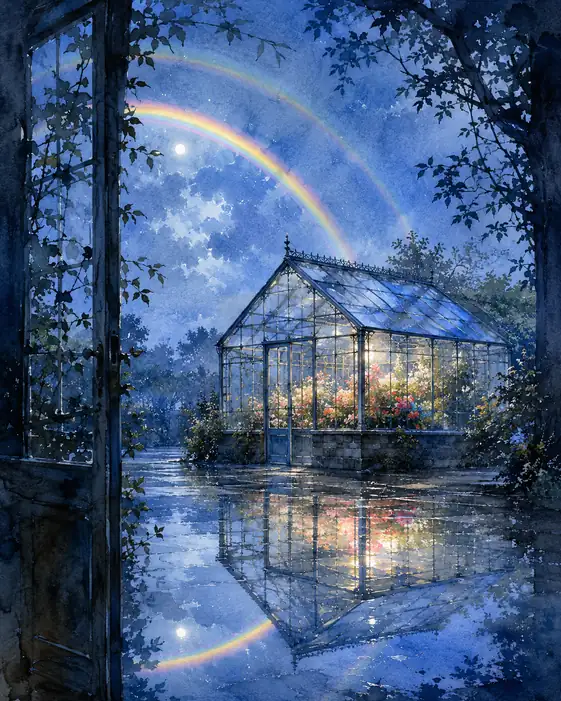 The Moonbow Greenhouse at Midnight
Similar Artworks
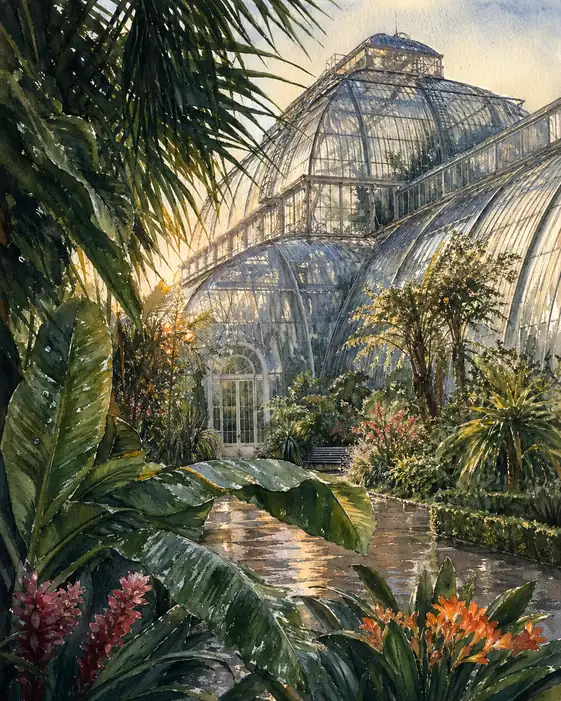 Breath of the Glass Eden
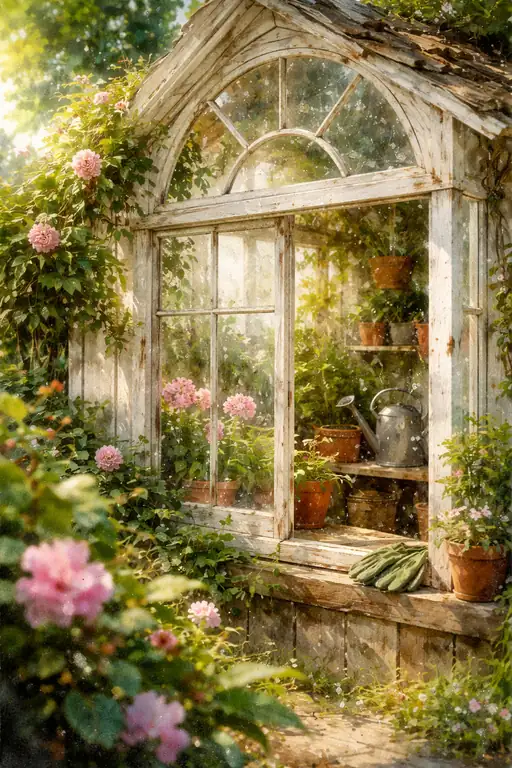 Whispers of the Rustic Greenhouse
 Sunlit Conservatory and Elegant Petals
 The Greenhouse Keeps a Private Sun
 A Symphony of Glass and Green
 Sunbeams in the Secret Glass Sanctuary
 Sanctuary of the Sunlit Dome
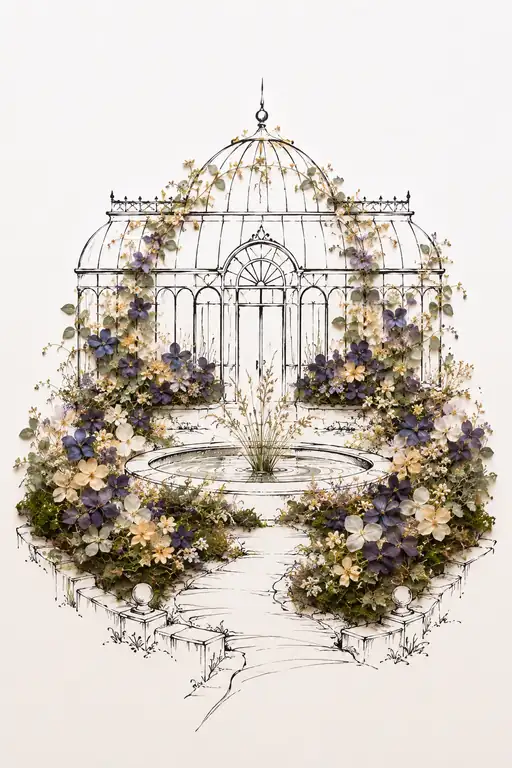 Glass Conservatory Gilded in Violet Blossoms
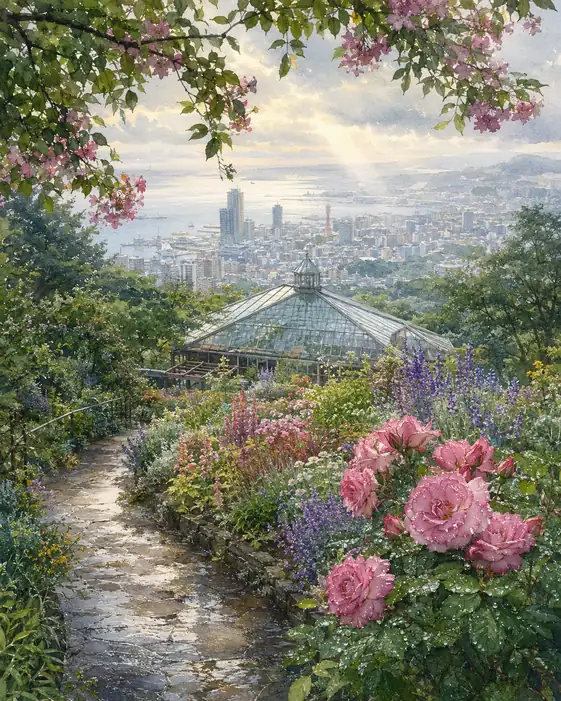 Roses Look Down Upon the Harbor
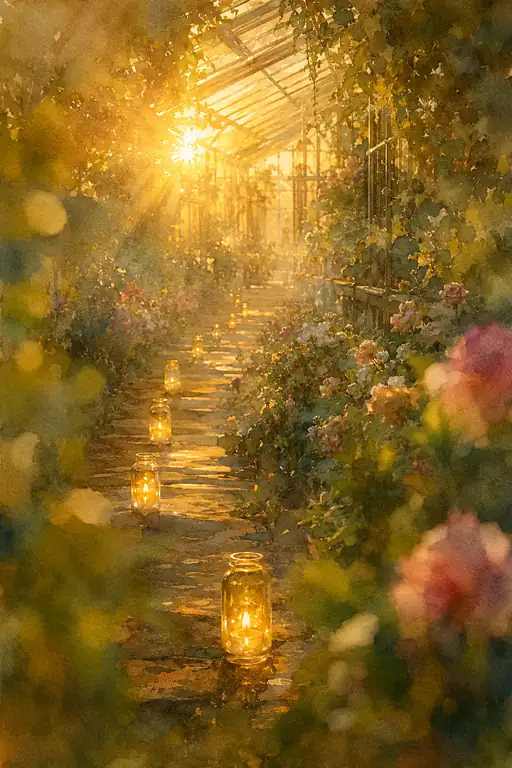 Path of Candles, Dawn of Hope