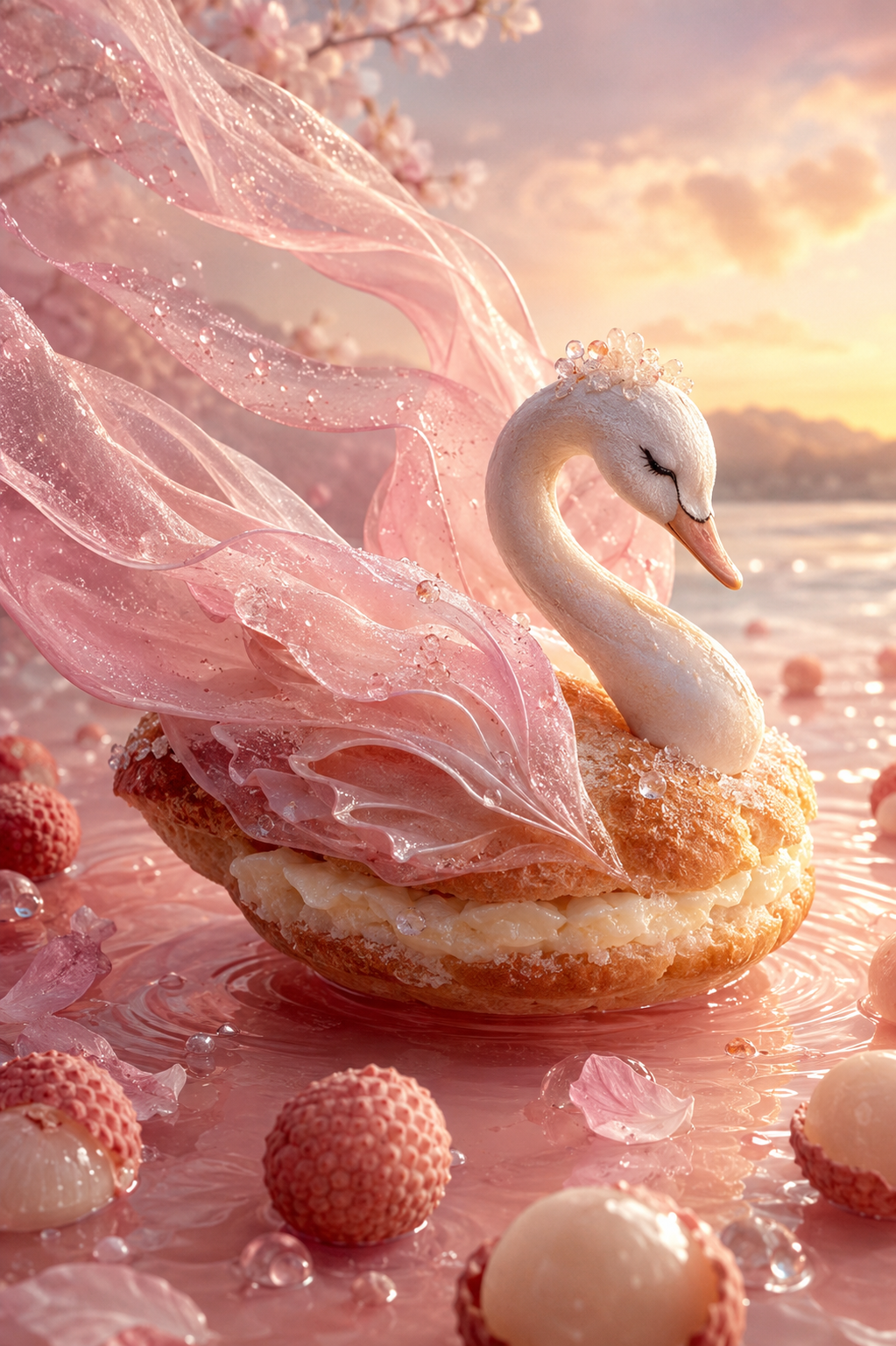
The Swan Who Gathered the Sakura Dawn
Critique
Introduction A white swan rises from cream-filled pastry amid translucent pink wings against a sunset lake. Lychees, petals, and blossoms extend the rosy atmosphere. The confection joins bodily grace to baked weight. Description The swan’s neck curves to a peach beak beneath closed lashes and a crystal crown. Layered pink membranes form broad wings and trailing plumes. Its body rests on split golden pastry filled with cream. Pink fruits and white spheres scatter across a glossy surface. Distant water and clouds glow yellow, peach, and lavender. Analysis The neck supplies a compact S-curve, countered by the wings’ expansive diagonals. The pastry forms a stable oval base under the light membranes. Pink dominates but shifts from saturated roots to nearly colorless edges. Warm bread connects with the sunset, while the white head and filling create calm focal areas. Rough crust, soft cream, matte neck, glassy wings, textured fruit, and wet surface are separately modeled. Backlight reveals thin wing layers and suspended droplets. Interpretation and Evaluation The closed eyes suggest self-contained calm amid expansive display. Wings appear formed from water, blossom, or fading evening light, allowing the swan to embody the landscape rather than simply occupy it. The composition balances large asymmetry with a clear base. Color harmony is strong, and translucent rendering is technically persuasive. The edible seam preserves humility beneath ceremonial beauty. Conclusion At first glance, the work presents romantic spectacle. Closer viewing reveals a measured relation among repose, extension, fragile material, and sunset weight. The curved neck gathers attention inward while the wings release it outward. Its success lies in joining monumental grace to tactile pastry without losing either identity.
Same Subcategory
 Voices Rise From the Winter Mist
Similar Artworks
 A Swan Sails Through the Rose-Gold Hour
 A White Swan Drifts Across the Soda Lake
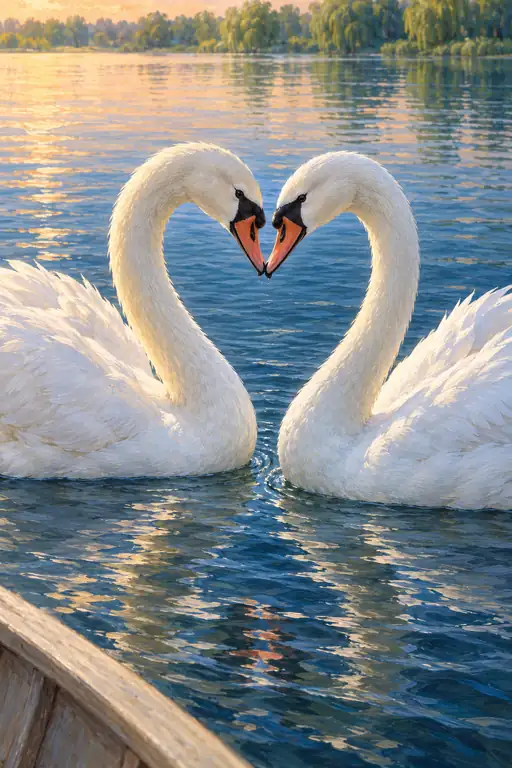 Eternal Vow upon the Water
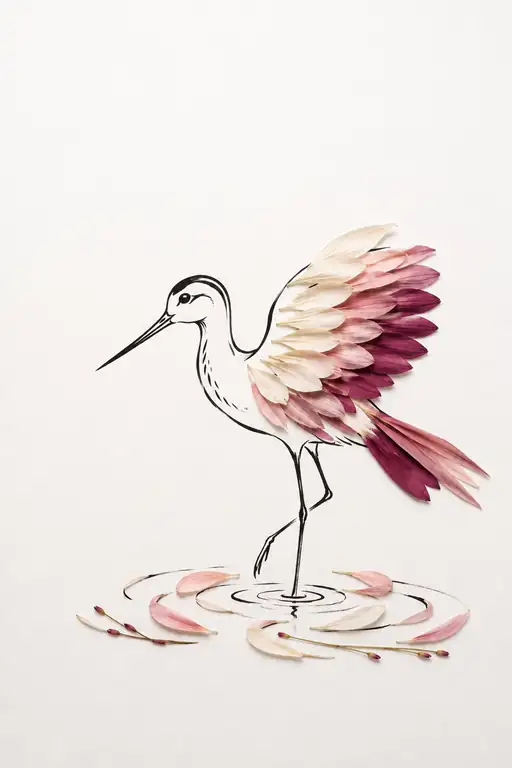 Crimson Plumage Poised Above Still Waters
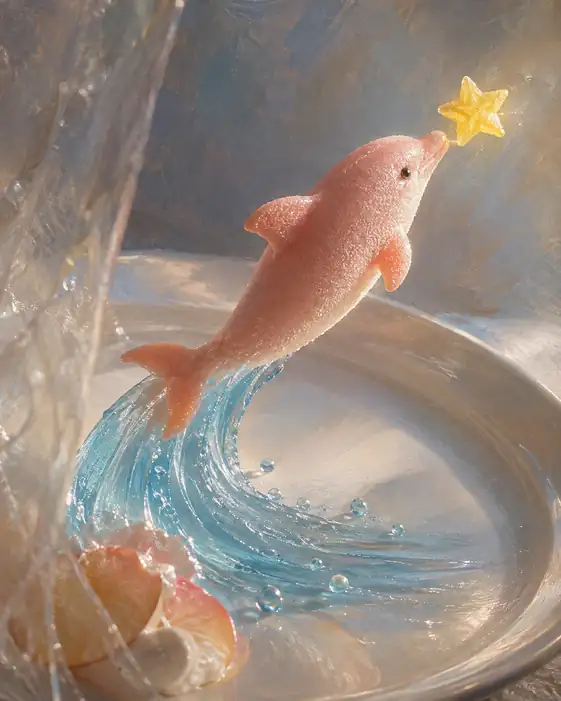 One Leap Closer to a Star
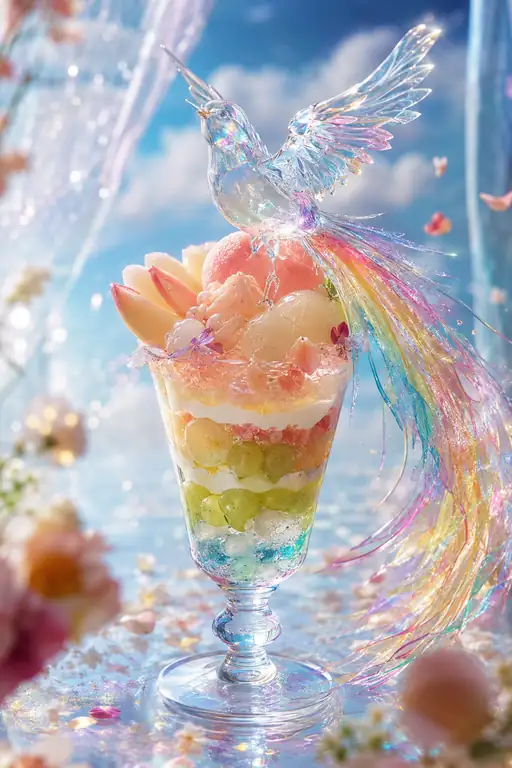 The Bird Who Brought Dawn in Its Tail
 Strawberry Wings over a Blue Dream
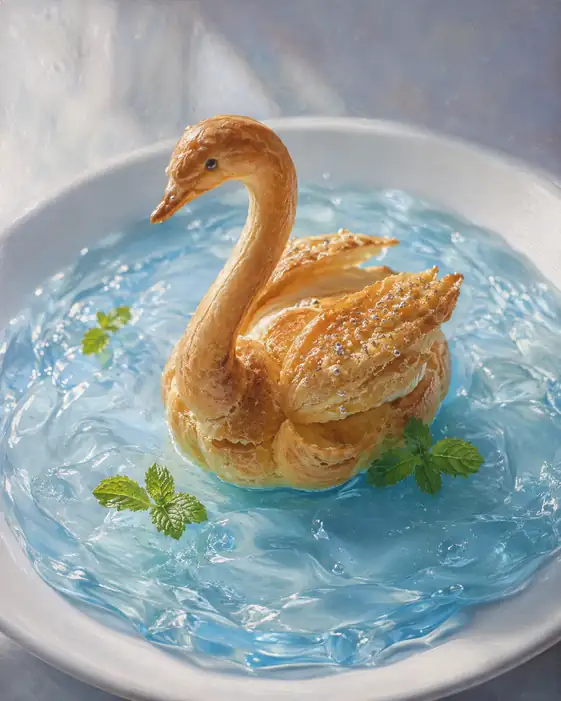 The Swan Carries Blue Silence
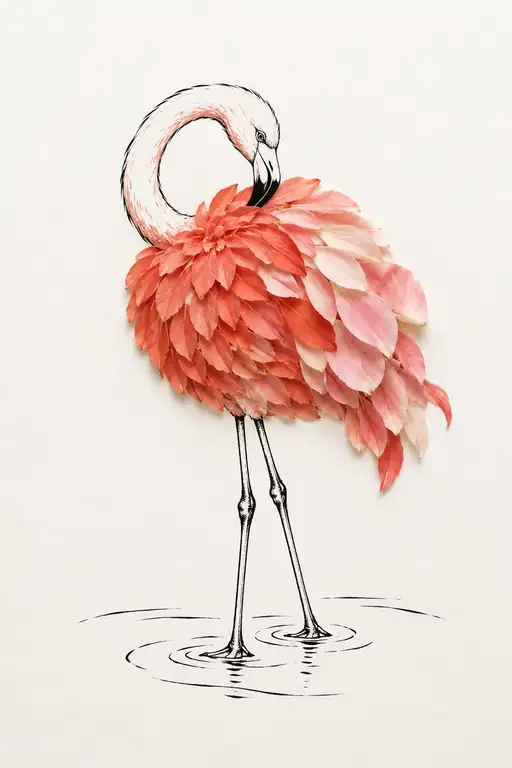 Turning Gently Inward
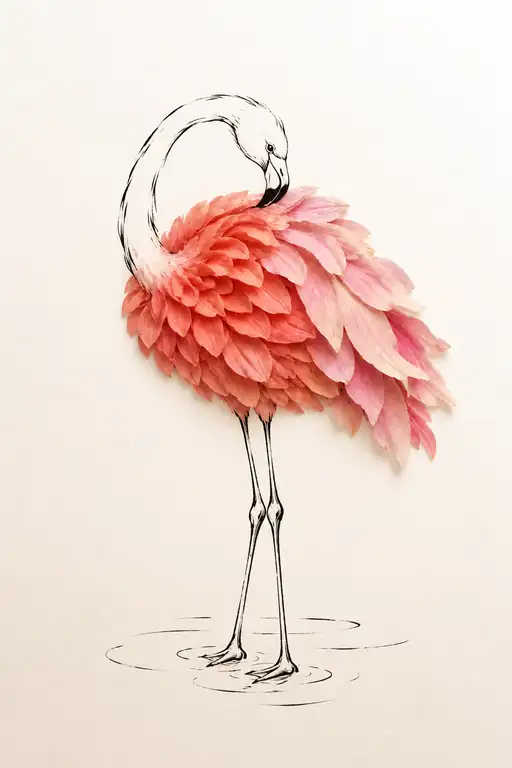 A Pause in Rose