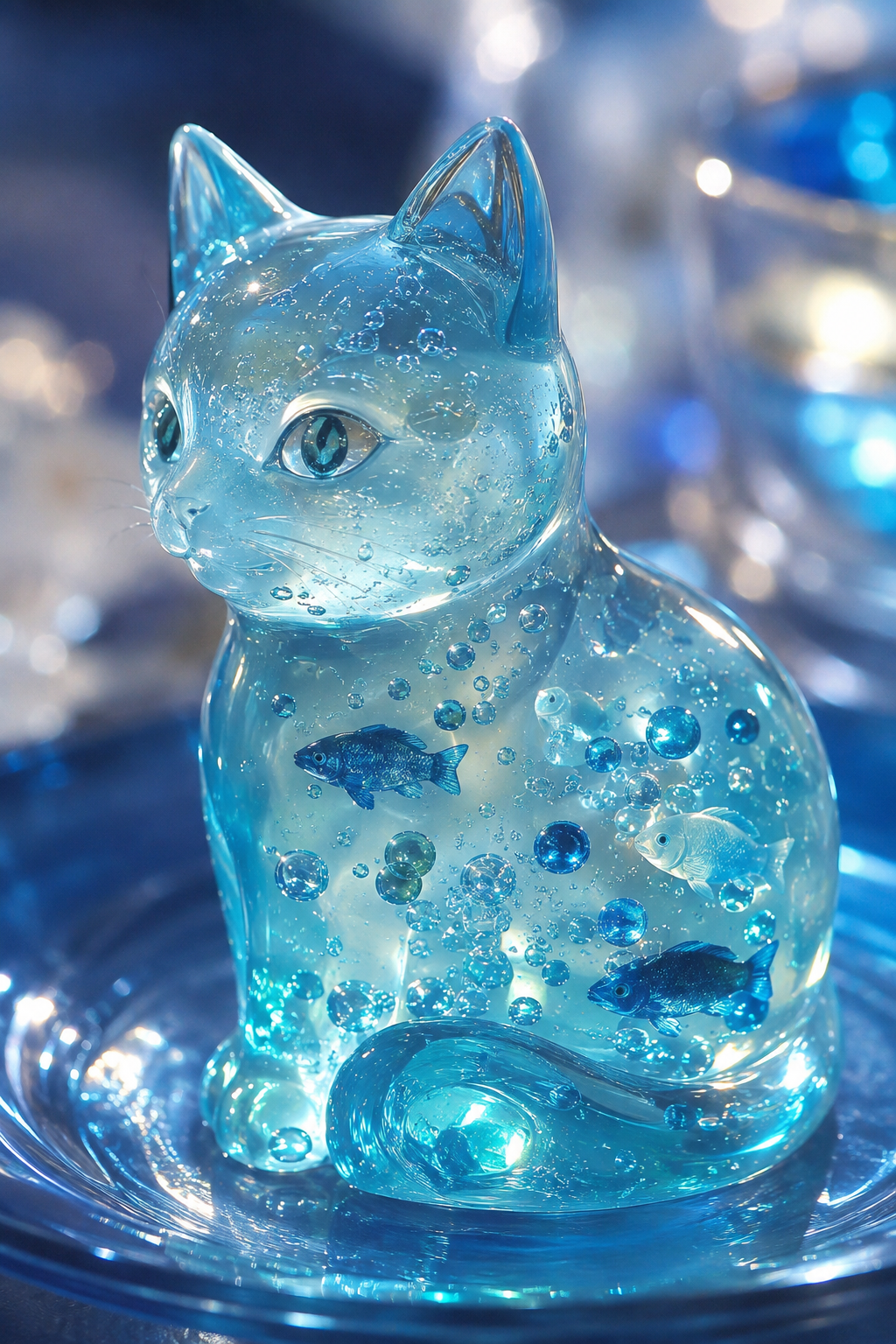
The Cat Who Dreamed in Fishes
Critique
Introduction A transparent cat contains fish, bubbles, and current. Its seated silhouette is both character and aquarium. Cold light gives the whimsical object lucid presence. Description The cat faces left with pointed ears, almond eyes, muzzle, whisker lines, rounded chest, forelegs, and a tail curled across the base. Several dark and pale fish swim inside its torso among bubbles of varied sizes. The head contains smaller droplets rather than fish. Blue light rises from below, while the clear plate and blurred background repeat circular highlights in white and cyan. Analysis The stable seated outline contains active diagonals created by the fish. The curled tail forms a low spiral that anchors the body and echoes internal bubbles. Transparency shifts from pale face to saturated lower torso, clarifying depth. Dark fish provide strong points within the near-colorless material, while the pale fish almost merges with reflected light. Smooth outer glass, suspended bubbles, scaled bodies, etched whiskers, and wet plate are distinctly rendered. Bright rim light separates the ears. Interpretation and Evaluation The cat becomes an environment for the creatures it might ordinarily watch, reversing predator and aquarium. Its attentive eyes look outward while another world moves within, suggesting calm identity containing independent life. The composition is direct, and blue tonal control is effective. Fish remain readable without appearing pasted onto the body. The tail’s internal wave makes anatomy and habitat continuous. Conclusion At first glance, the work is a playful glass animal. Closer viewing reveals a careful exchange between silhouette, inner movement, transparency, and reflected light. The cat remains whole while housing multiple directions of life. Its originality is supported by clear structure and convincing optical depth.
Same Subcategory
 Where the Tide Meets the Crimson Bloom
Similar Artworks
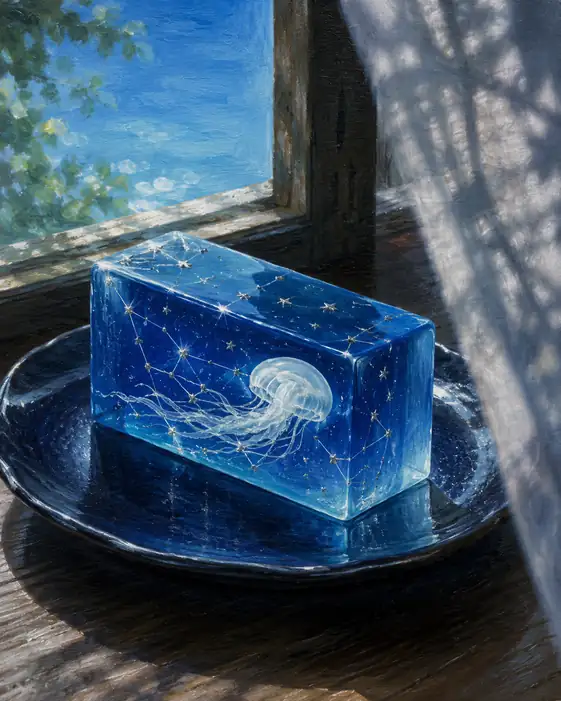 A Jellyfish Maps the Afternoon Stars
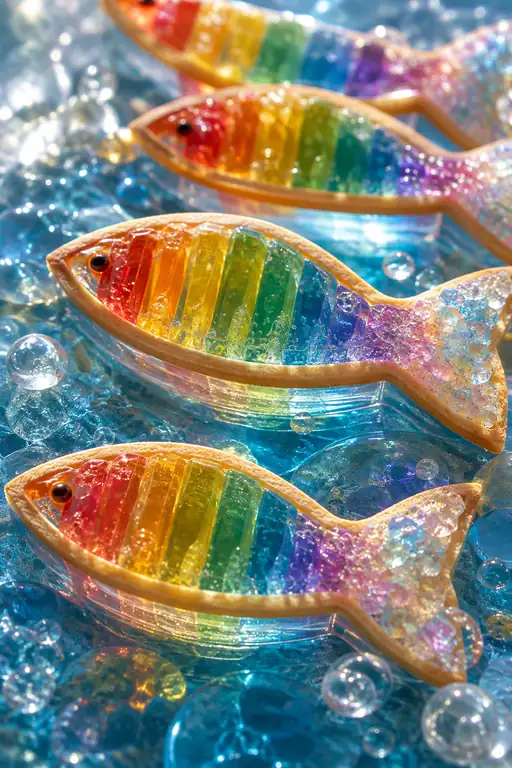 Together Through the River of Colors
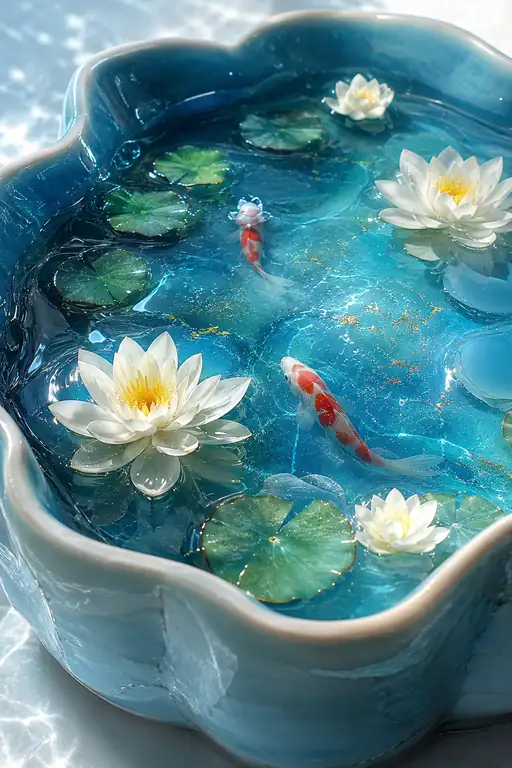 Two Koi Beneath the Quiet Sun
 I Washed It Just for You
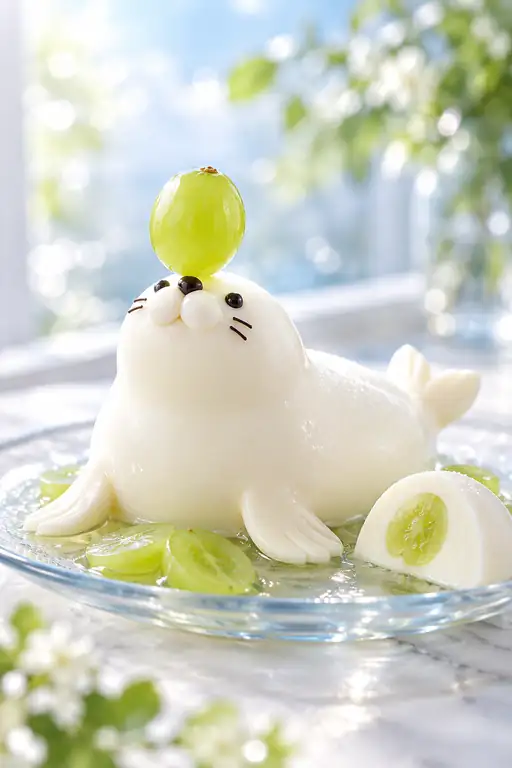 One Grape Above, One Secret Within
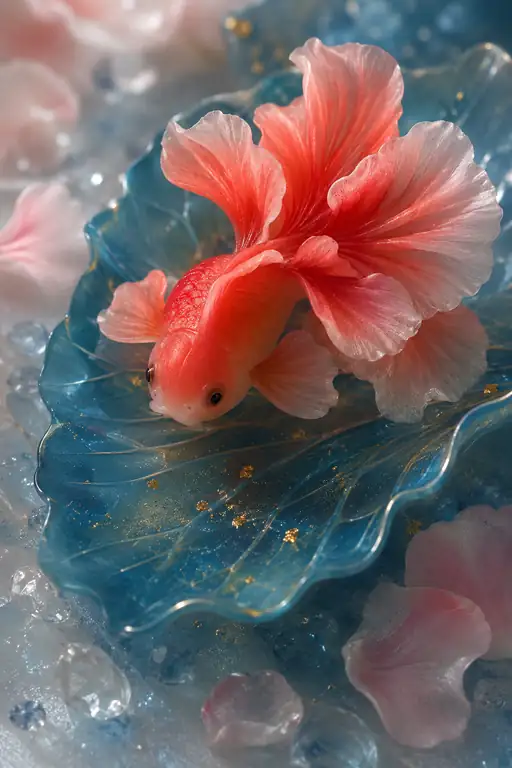 The Goldfish Wearing Summer Petals
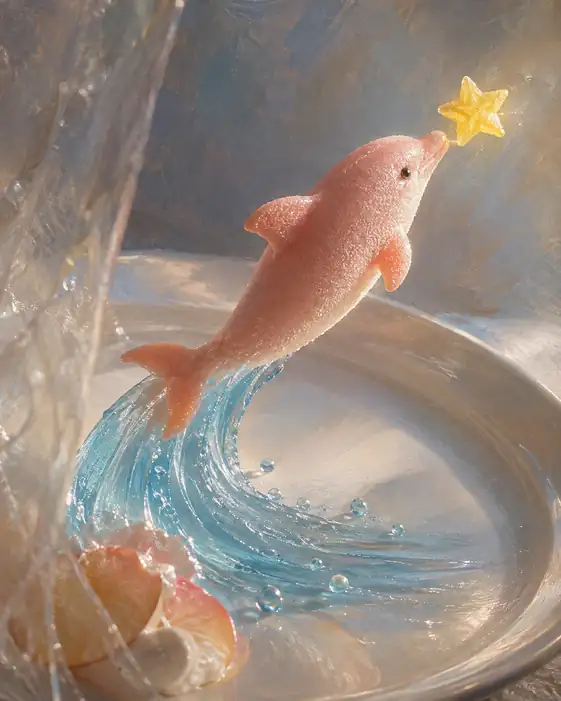 One Leap Closer to a Star
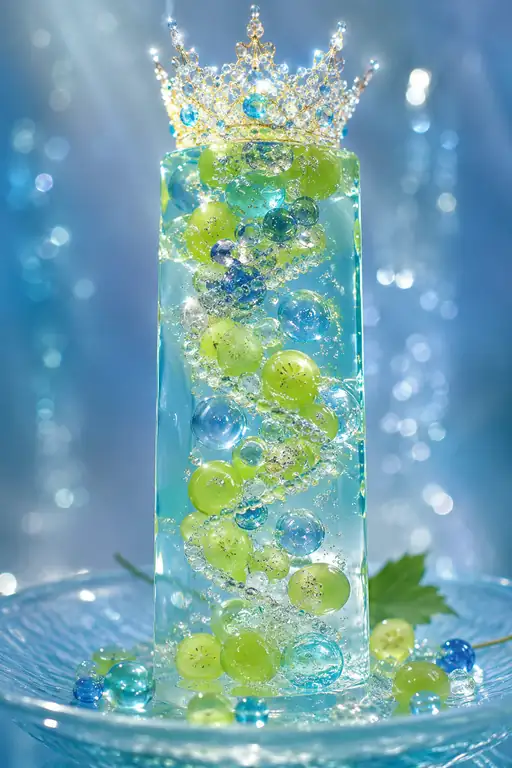 Crowned by the First Drop of Summer
 Rainbow Fish Carry the Festival Home
 A Clear Note of Autumn