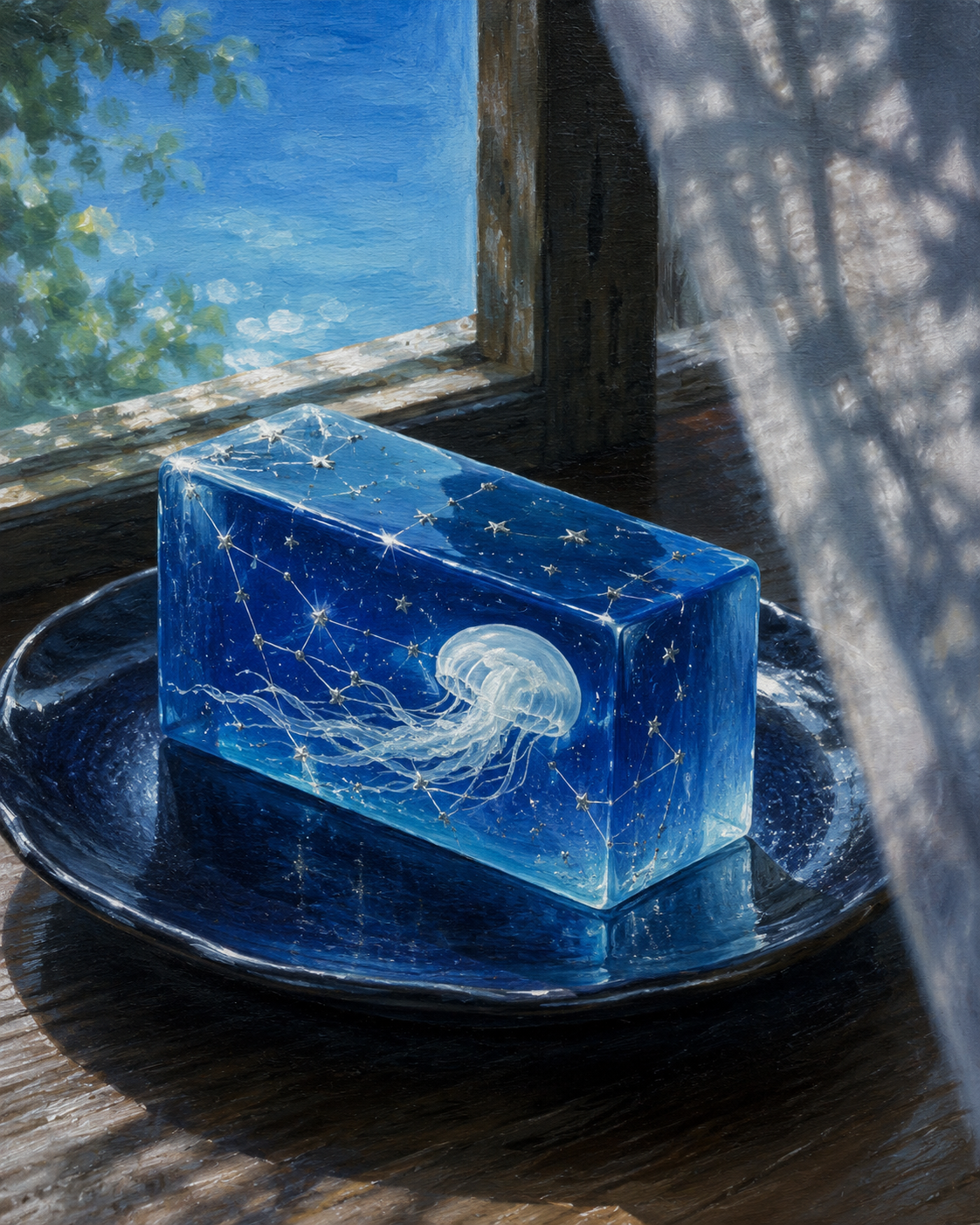
A Jellyfish Maps the Afternoon Stars
Critique
Introduction A blue jelly block contains a jellyfish and silver constellations. On a dark plate by a window, it joins aquarium depth with mapped night sky. Strict geometry stills the subject. Description The cuboid shifts from cobalt above to cyan near base and edge. A pale jellyfish drifts leftward from center-right. Metallic stars and lines cross front, sides, and top. The plate reflects a darker rectangle. Sunlight enters left; a curtain casts mottled shadow. Analysis The hard rectangle encloses soft radial anatomy and wandering lines. The jellyfish sits off center, balanced by denser constellations at left and lower right. Its white body becomes the main focus without opaque heaviness because blue remains visible through it. Stars define the block’s planes, continuing around corners and clarifying volume. Smooth jelly, fine tentacles, metallic points, glazed plate, wood, and fabric shadows are carefully separated. The base reflection doubles the geometric weight. Interpretation and Evaluation The jellyfish seems to swim through a universe rather than water, while constellations resemble both stars and a web of tentacles. The transparent block preserves movement without freezing it into rigidity. Composition and blue tonal control are strong. Daylight creates a productive contradiction: a night-sky object is fully visible in a domestic morning. The restraint of one creature within a wide field prevents the symbolism from becoming crowded. Conclusion At first glance, the work appears as a decorative aquarium jelly. Closer inspection reveals a study of mapped space, suspended motion, and transparent depth. Rectangle, drifting body, and linked stars remain distinct yet mutually explanatory. The result is quiet, precise, and contemplative.
Same Subcategory
Similar Artworks
 Two Koi Beneath the Quiet Sun
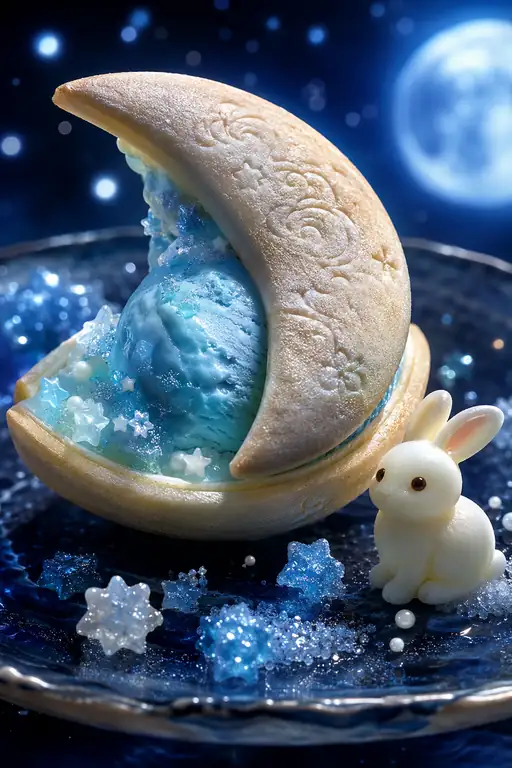 The Rabbit Waiting Beside the Crescent
 The Cat Who Dreamed in Fishes
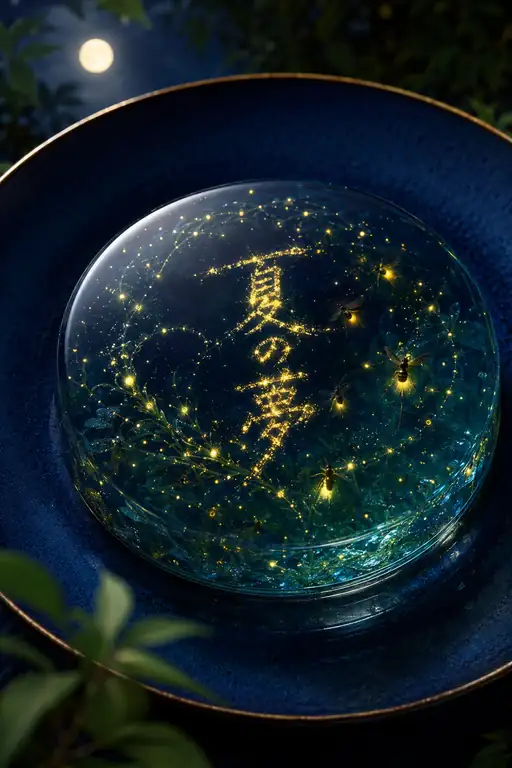 Fireflies Writing a Summer Dream
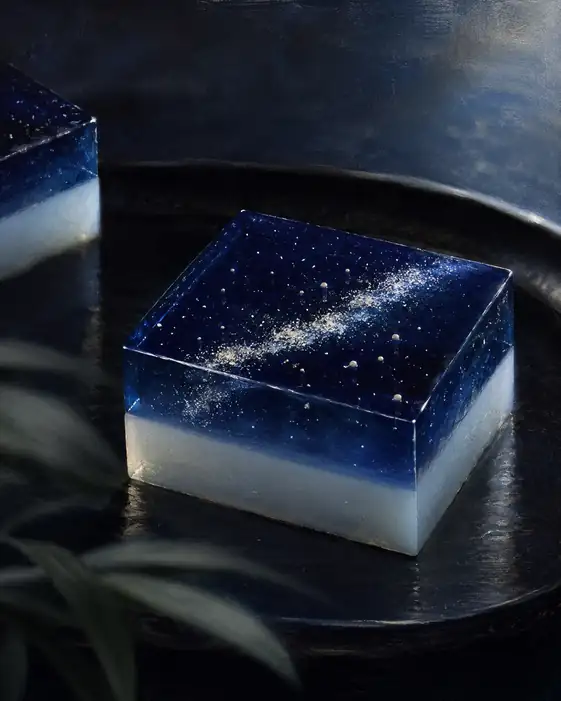 The Milky Way Sleeps in a Square of Night
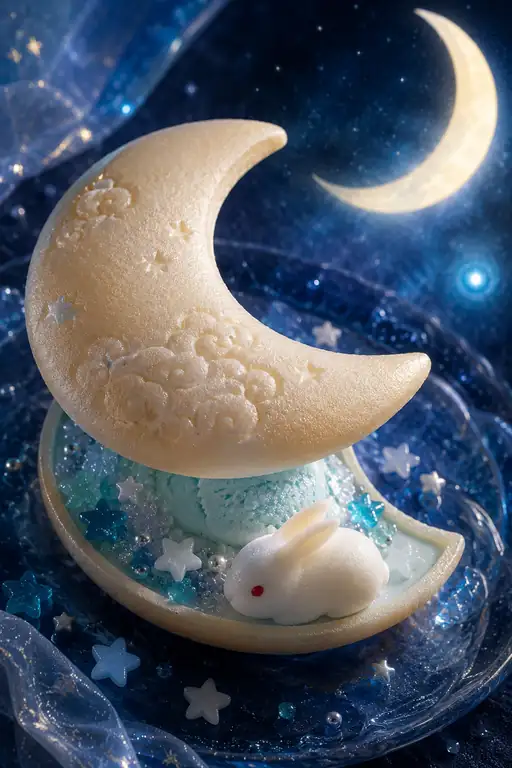 Open the Moon, and Find a Rabbit’s Dream
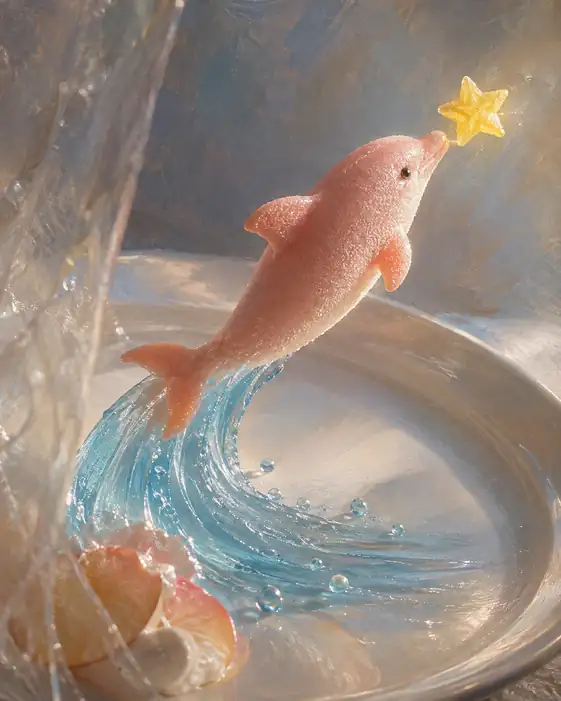 One Leap Closer to a Star
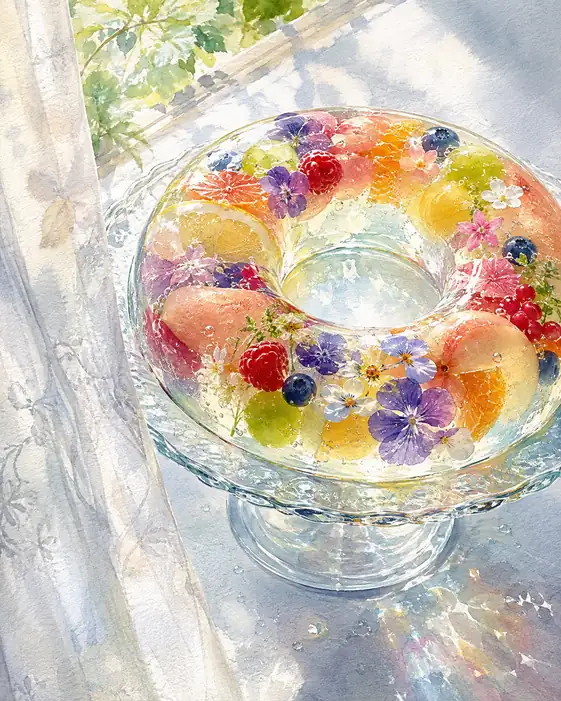 A Ring of Summer Waiting by the Window
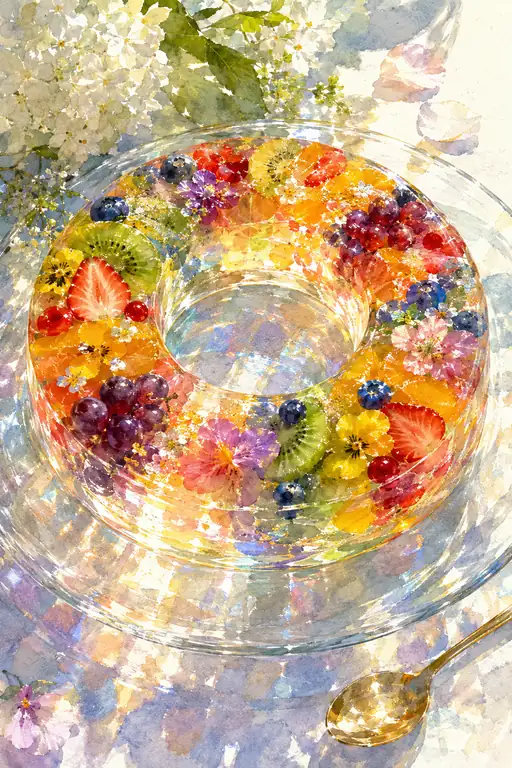 Summer Makes a Wreath of Light
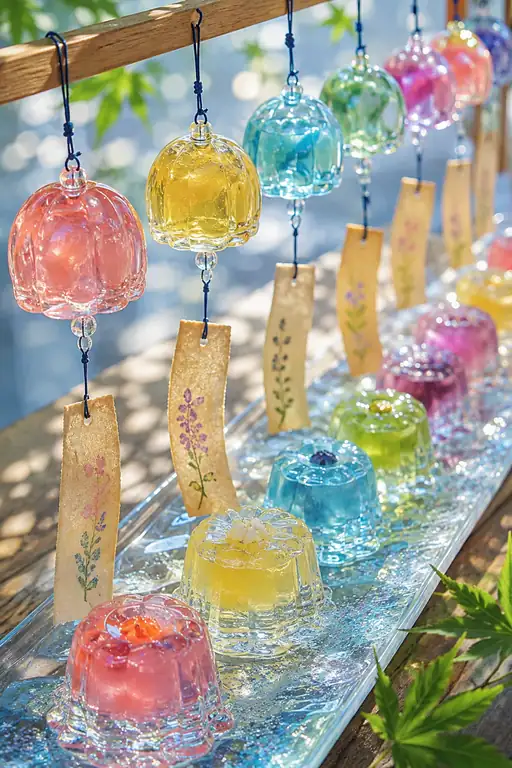 The Afternoon Breeze Tastes of Flowers