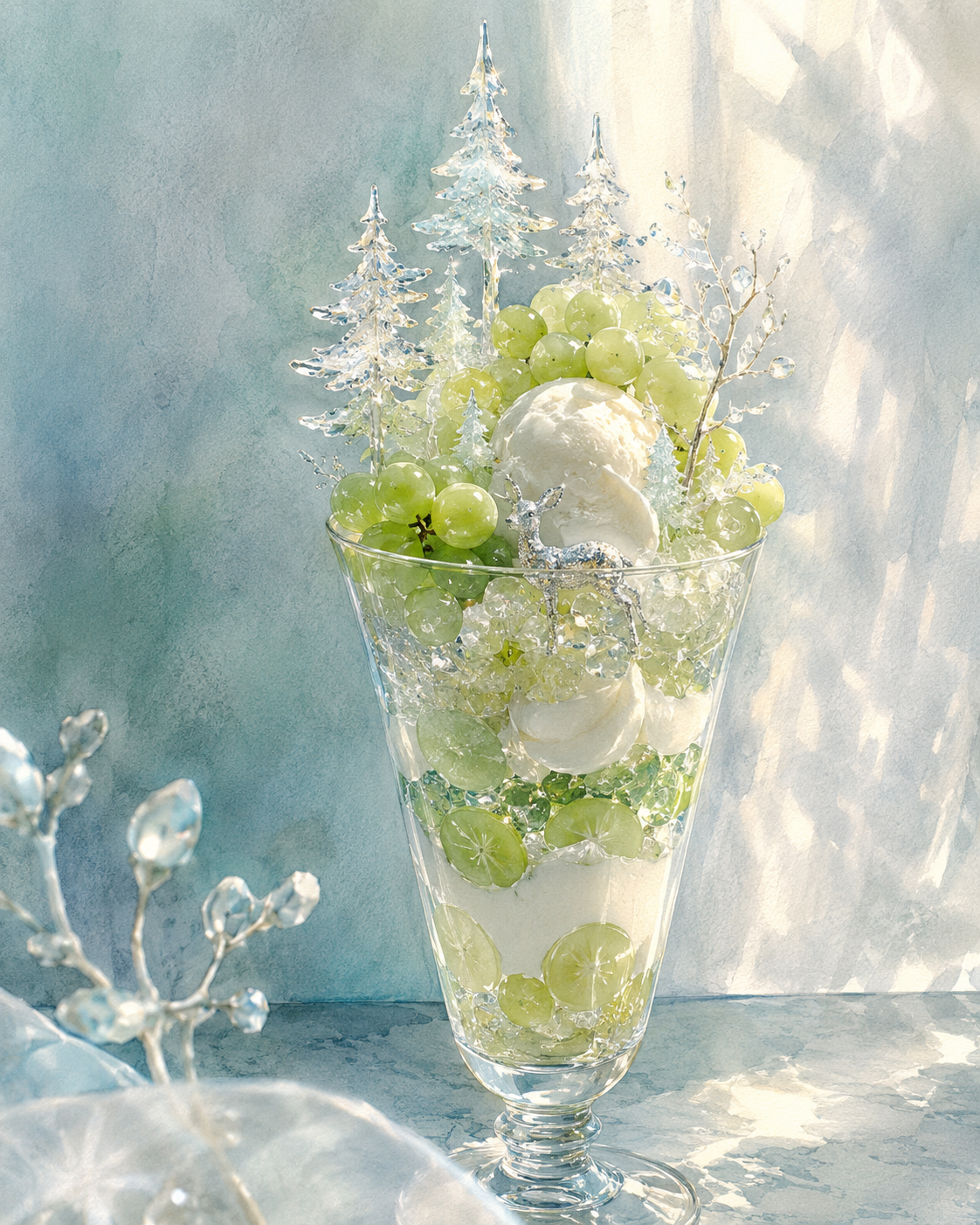
Morning Enters the Glasswood Grove
Critique
Introduction A grape parfait becomes a daylight forest with a silver deer. Unlike a dense nocturnal version, it favors pale space, green-white color, and visible glass layers. The fantasy is botanical. Description The vessel alternates grapes, jelly, cream, and bubbles. Whole clusters and white scoops rise above. Glass firs and budded branches surround them. The deer stands near the rim among fruit and ice. Blue wall and bright curtain simplify the background; crystal branches blur left. Analysis The tapering glass provides a firm vertical base, expanding into a triangular crown of trees and grapes. Repeated spheres connect fruit, bubbles, branch tips, and reflections. The deer establishes scale and a modest focal point below the tallest tree. Green remains luminous against white and pale blue, while transparent forms borrow both colors. Cut fruit, smooth skins, whipped cream, faceted ice, thin glass foliage, and reflective metal are separated with careful highlights. Side light casts leafy shadows on the curtain. Interpretation and Evaluation The forest seems to grow from preserved fruit and cold light, making nourishment appear as landscape. Daylight exposes the construction rather than hiding it, so wonder depends on visible layering and craft. Composition and color restraint are persuasive. The deer is small enough to inhabit rather than dominate the scene, and the branching forms keep vertical growth varied. The clear background gives every overlap room to remain legible. Conclusion At first glance, the work is an elegant green parfait. Closer inspection reveals a measured woodland built from repetition, transparency, and scale. The visible layers below support the imagined forest above. Its achievement lies in making a complex miniature environment feel airy, stable, and materially credible.
Same Subcategory
 Stream of Floating Plumeria over the Sunlit Emerald Sea
Similar Artworks
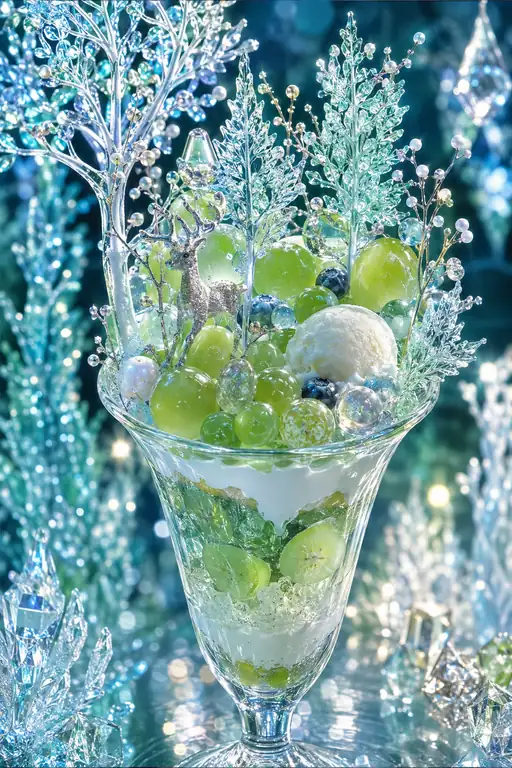 The Deer Who Found the Crystal Orchard
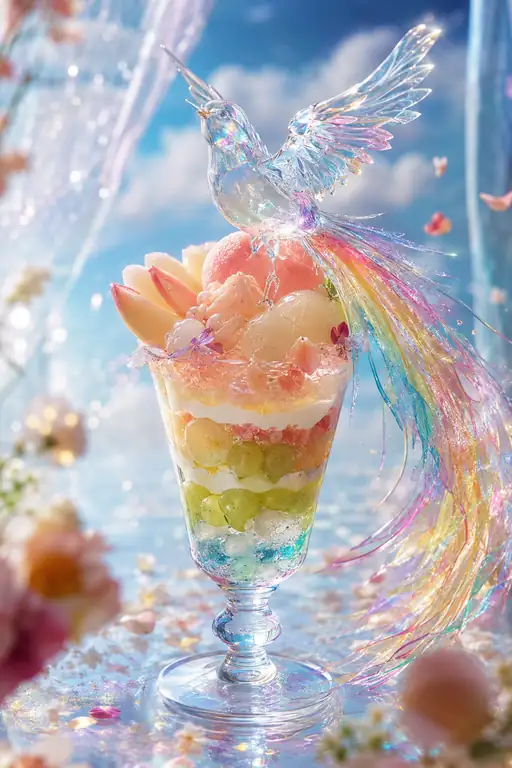 The Bird Who Brought Dawn in Its Tail
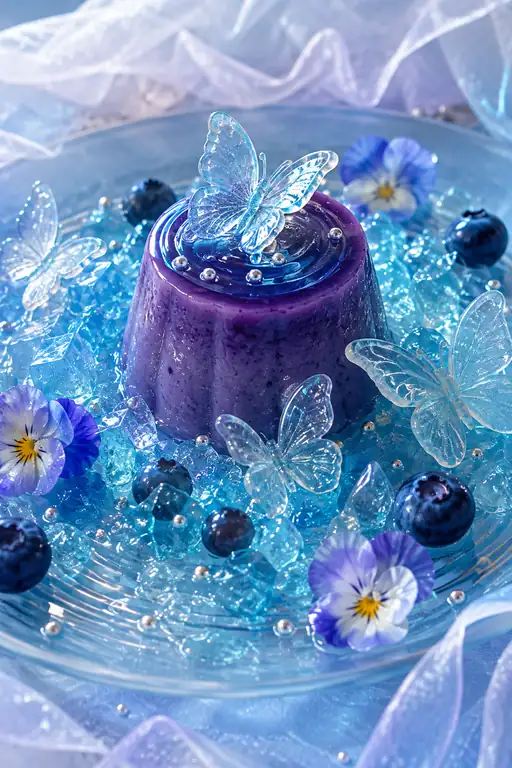 Butterflies Drink the Violet Silence
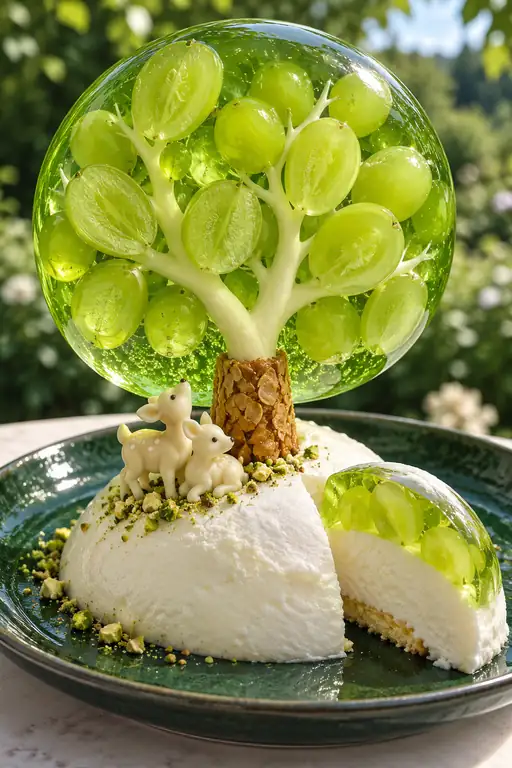 Sanctuary of Luminous Orchard
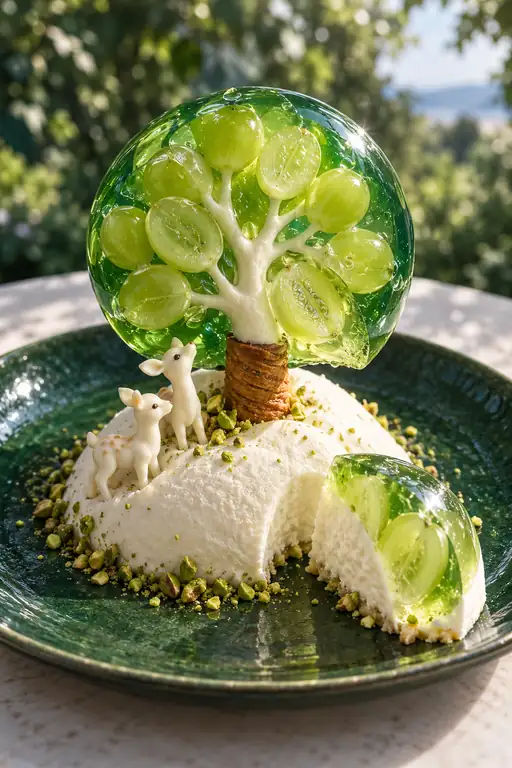 Sanctuary Beneath the Emerald Canopy
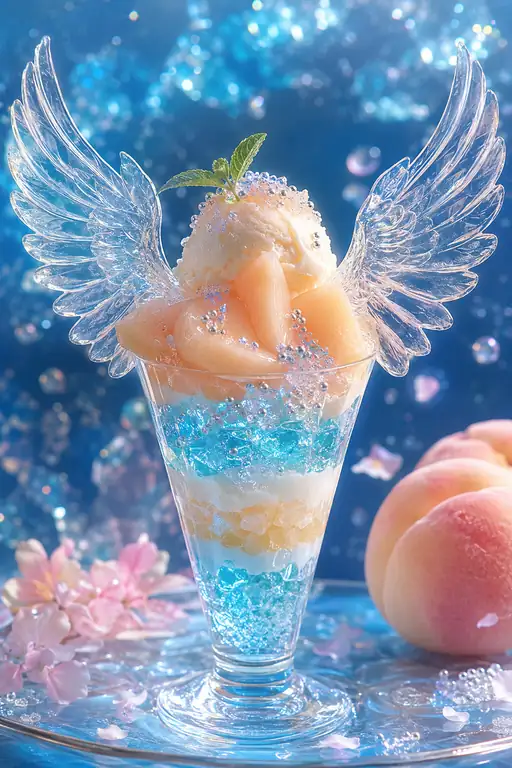 Wings Born from Peachlight
 Summer Snow and Blue Rain Meet beneath a Rainbow
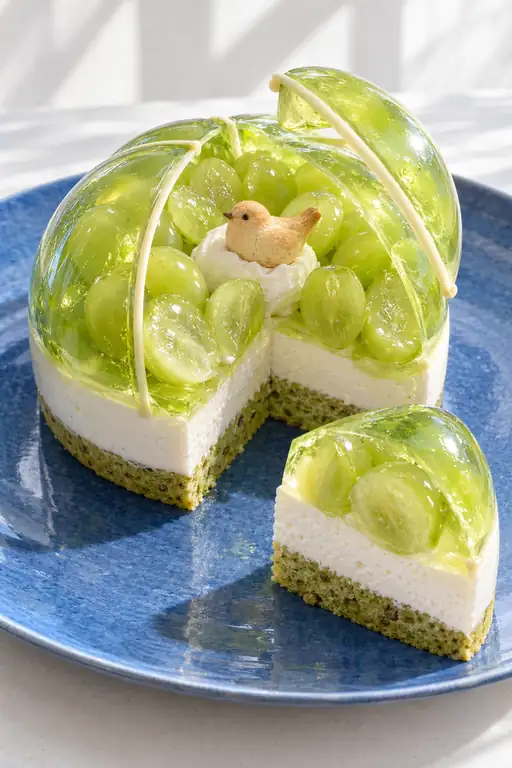 Haven of the Glass Dome
 Haven in the Glasshouse
 Song Above the Cascading Stream