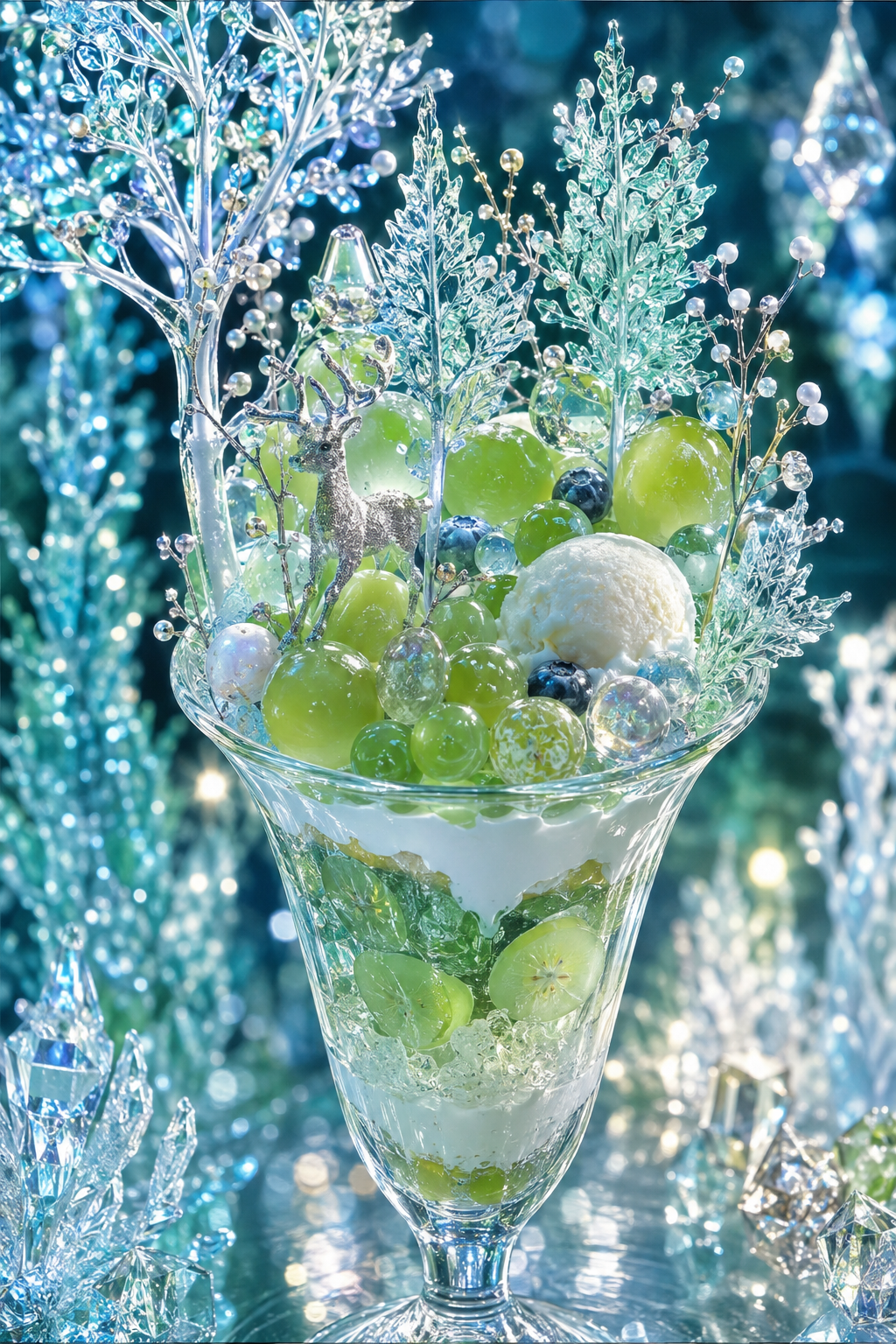
The Deer Who Found the Crystal Orchard
Critique
Introduction A grape parfait becomes a crystalline forest with a silver deer. Trees, leafy spires, pearls, fruit, and ice rise beyond the rim, joining woodland depth with dessert abundance. Description The glass contains jelly, halved grapes, cream, and fruit. Above, grapes, blueberries, spheres, and a white scoop form a mound. A deer stands among trunks. Mint leaf forms and trees rise behind, dotted with pearls. Blue-green crystals fill the distance. Analysis The narrow glass establishes a vertical axis that expands into a wide forest crown. Fruit spheres repeat at several sizes, linking edible grapes, bubbles, pearls, and distant lights. The deer provides scale and a matte focal figure amid transparency. Green advances through pale lime, emerald, and icy mint, while blueberries create dark punctuation. Smooth fruit, faceted jelly, creamy scoop, glass foliage, metal antlers, and pearl buds are distinctly rendered. Overlapping trunks produce depth without fully obscuring the contents. Interpretation and Evaluation The parfait suggests a forest grown from stored sweetness and light. The deer appears sheltered but alert, giving the abundance a living witness. Because grapes resemble both fruit and luminous seeds, the boundary between ingredient and landscape remains fluid. Composition and color hierarchy are strong, and complex transparent forms retain readable edges. The upward growth feels organic despite the formal symmetry of the vessel. Conclusion At first glance, the work dazzles as a jeweled parfait. Closer viewing reveals an organized ecosystem of repeated spheres, branching lines, and layered greens. The deer turns decorative density into inhabitable space. Its achievement lies in allowing edible abundance and woodland atmosphere to reinforce rather than compete with one another.
Same Subcategory
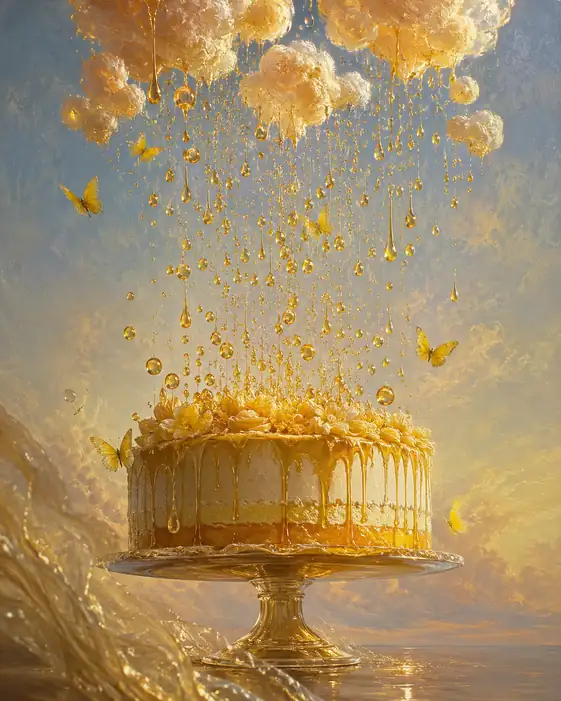 Honey Falls from Heaven's Garden
Similar Artworks
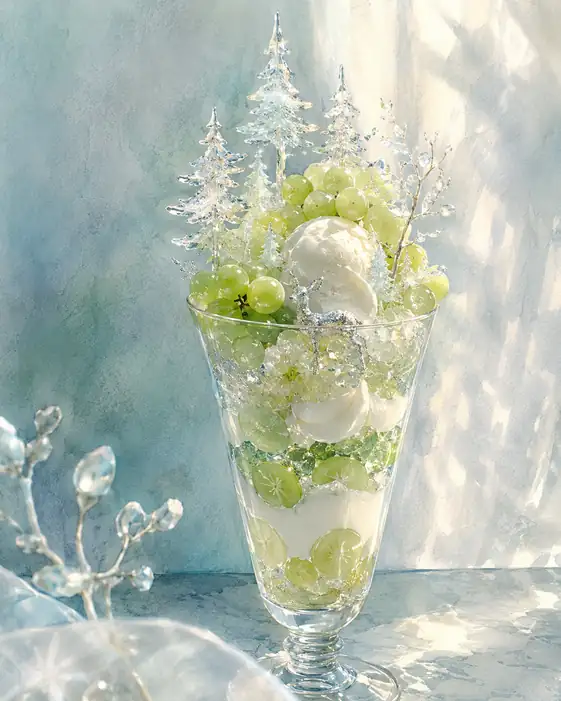 Morning Enters the Glasswood Grove
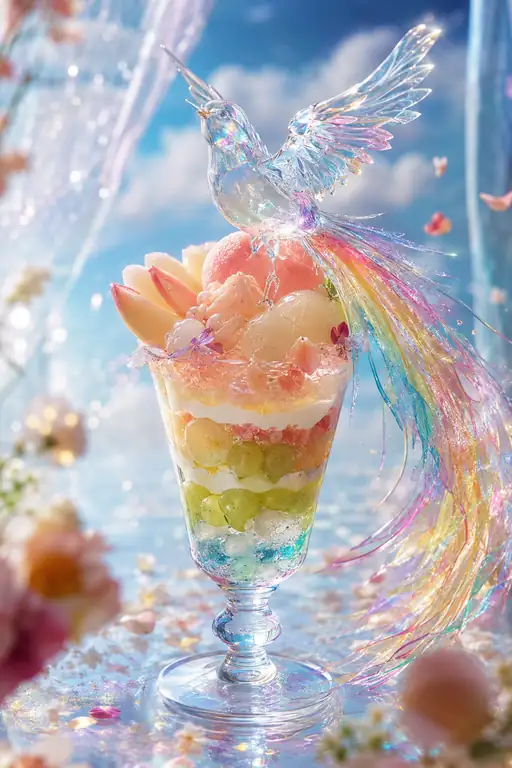 The Bird Who Brought Dawn in Its Tail
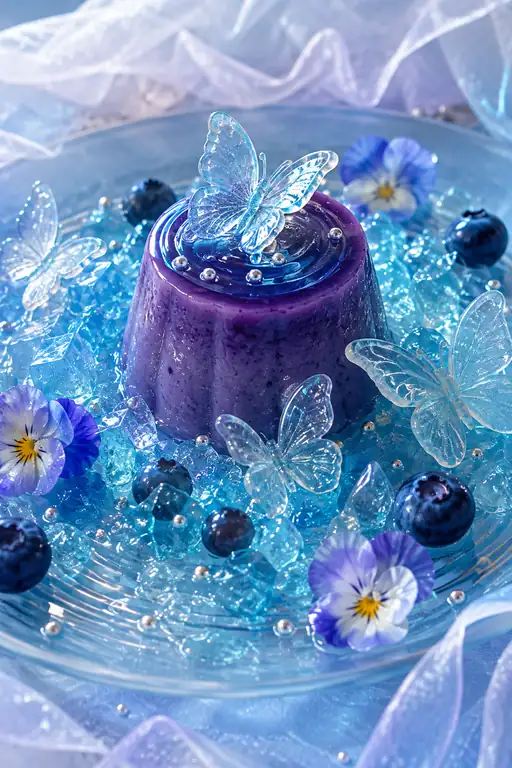 Butterflies Drink the Violet Silence
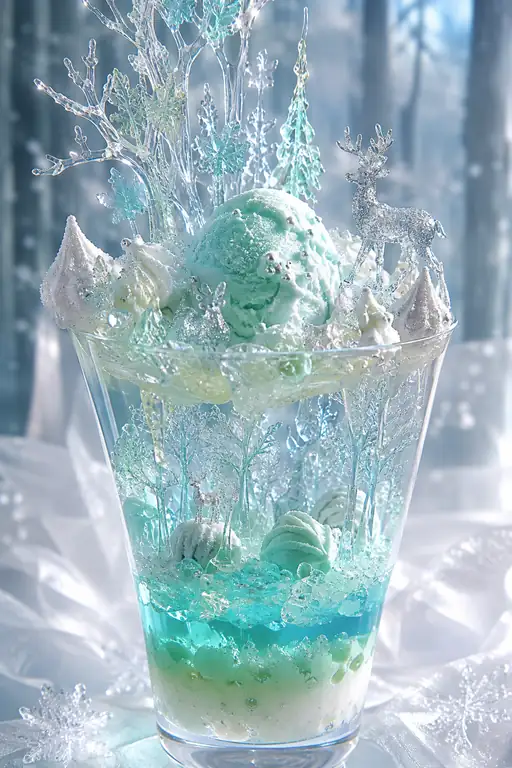 Winter Grows Beyond the Glass
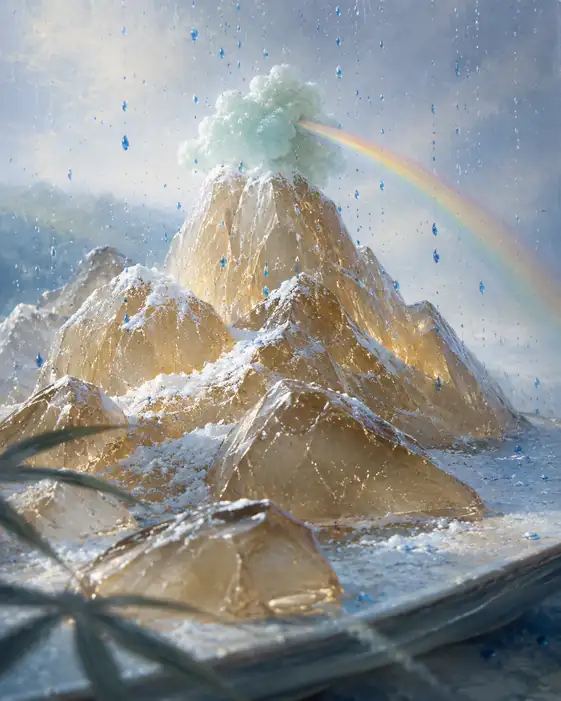 Summer Snow and Blue Rain Meet beneath a Rainbow
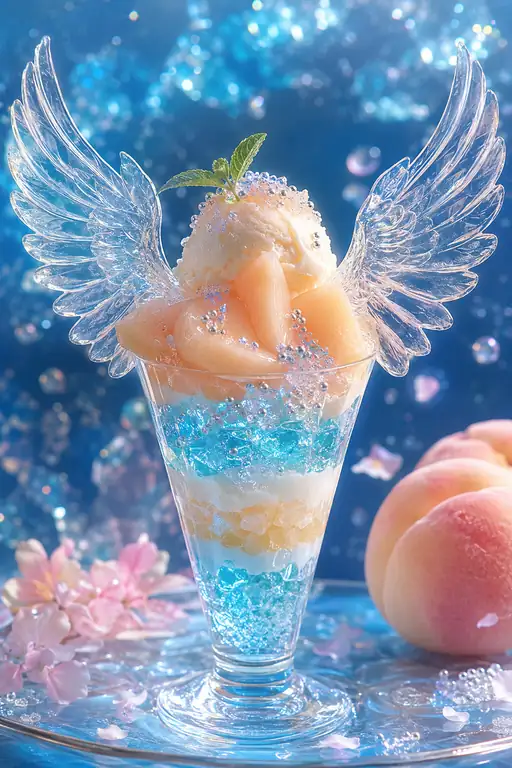 Wings Born from Peachlight
 The Forest Sleeping Inside Winter
 Summer Snow Falls from a Mint Cloud
 Strawberry Wings over a Blue Dream
 A Unicorn Dreaming Past the Window