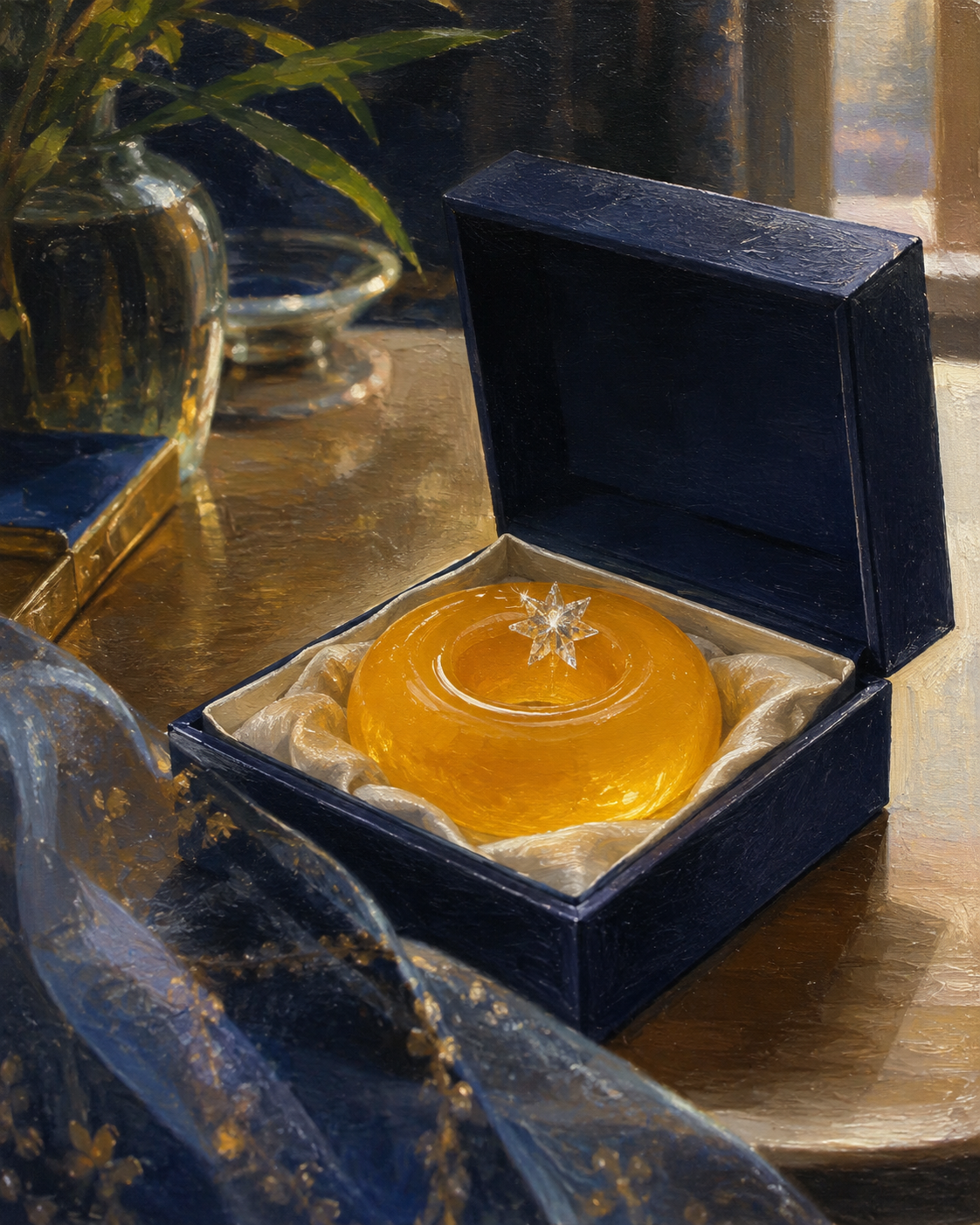
A Star Kept for the Golden Hour
Critique
Introduction An amber ring jelly rests in a blue box, cushioned by fabric and topped with a clear star. A windowlit room contrasts with ceremonial packaging, treating dessert as valuable. Description The low torus has a shallow depression around its opening. A faceted star stands centrally. Ivory satin folds inside a navy box with upright lid. It sits beside vase, leaves, and books. Window light passes through amber and reflects on wood. Analysis The square box frames the circular jelly, establishing a clear contrast between angular enclosure and rounded object. The open lid creates a dark vertical plane behind the glowing form. Amber advances strongly against navy, while ivory fabric mediates their tonal difference. The transparent star catches the highest light and marks the central axis. Smooth jelly, wrinkled satin, matte box, glass vase, paper edges, and wood are differentiated through controlled texture. Reflected gold extends beyond the box. Interpretation and Evaluation Presentation converts a simple ring into a token, award, or preserved light. The star suggests distinction, but its small scale avoids excessive symbolism. Daylight makes the amber appear to generate warmth from within, while the dark box protects and concentrates it. Composition and color economy are effective. The painterly setting gives the precise jelly a lived context, and the restrained props support rather than distract from its value. Conclusion At first glance, the work resembles a jewel displayed in a case. Closer inspection reveals an exchange between edible transparency, domestic daylight, and ceremonial framing. Circle, square, gold, and blue provide concise structural contrasts. The result gives a modest dessert unusual dignity through light and placement.
Same Subcategory
 Where the Lemon Tide Learns to Lace
Similar Artworks
 The Promise Worn by Starlight
 The Leaf That Held the Light
 An Emerald Tower for a Cherry
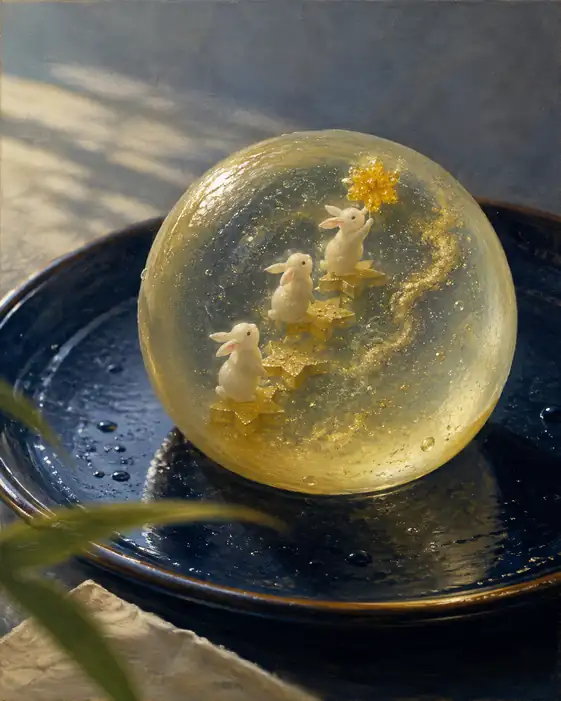 On the Last Star Before Dawn
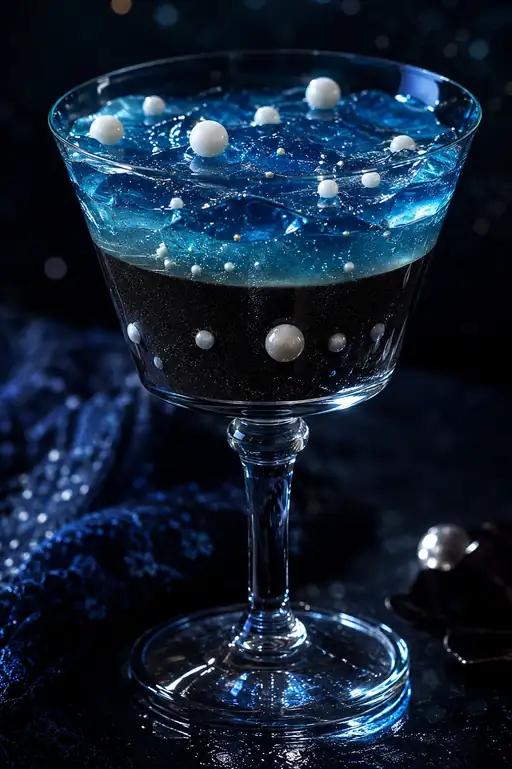 Pearls Sink into the Deepest Night
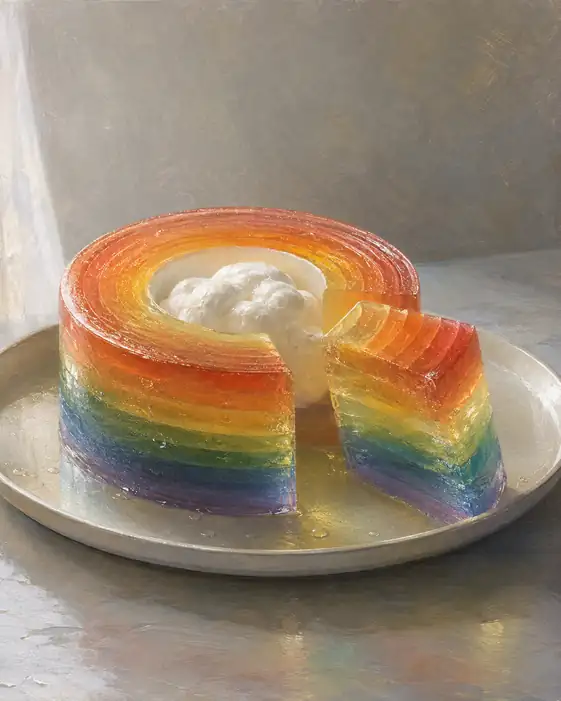 The Rainbow Keeps a Cloud at Heart
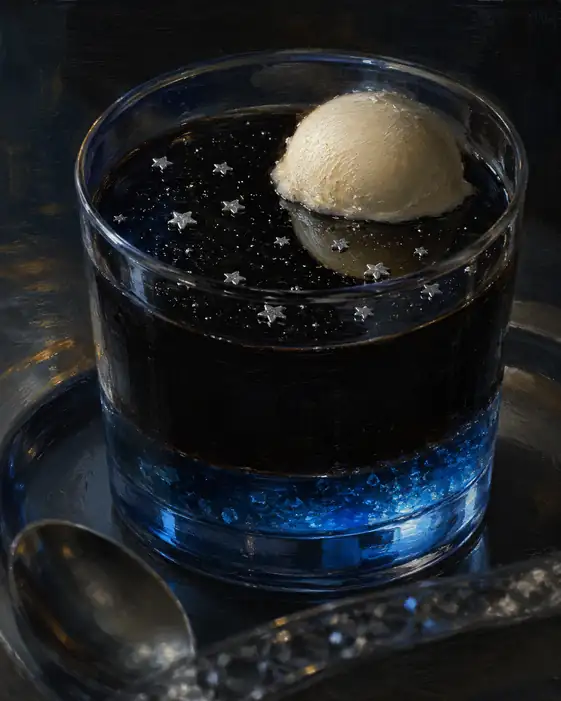 The Moon Rests in Black Coffee
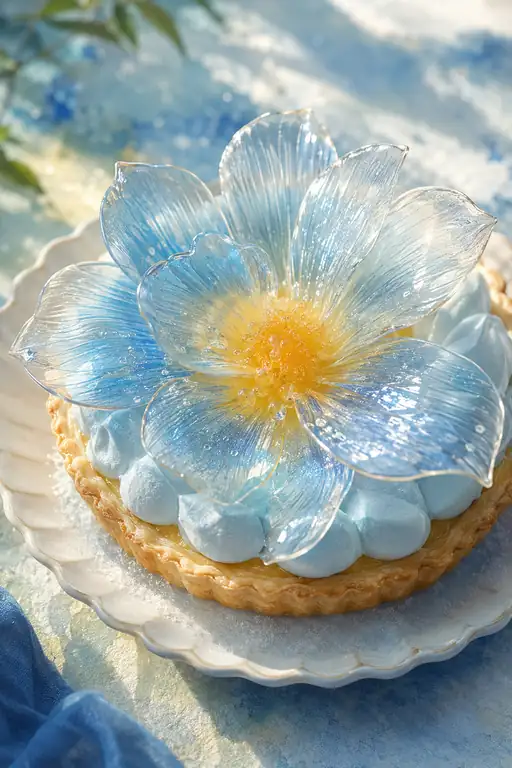 A Flower Made of Morning Water
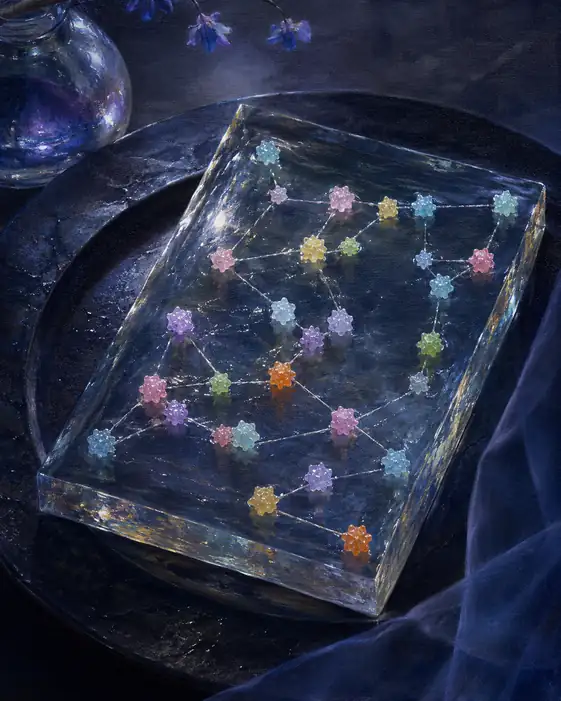 Stars Preserved in Clear Night
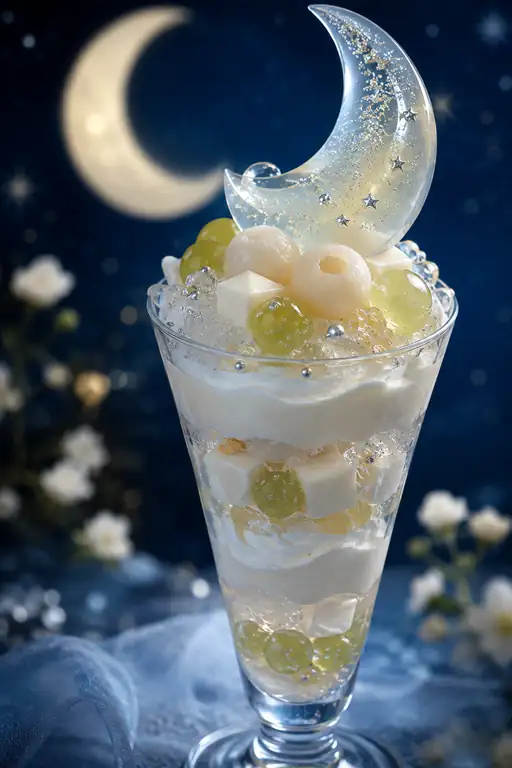 The Crescent Moon Melts into the Parfait