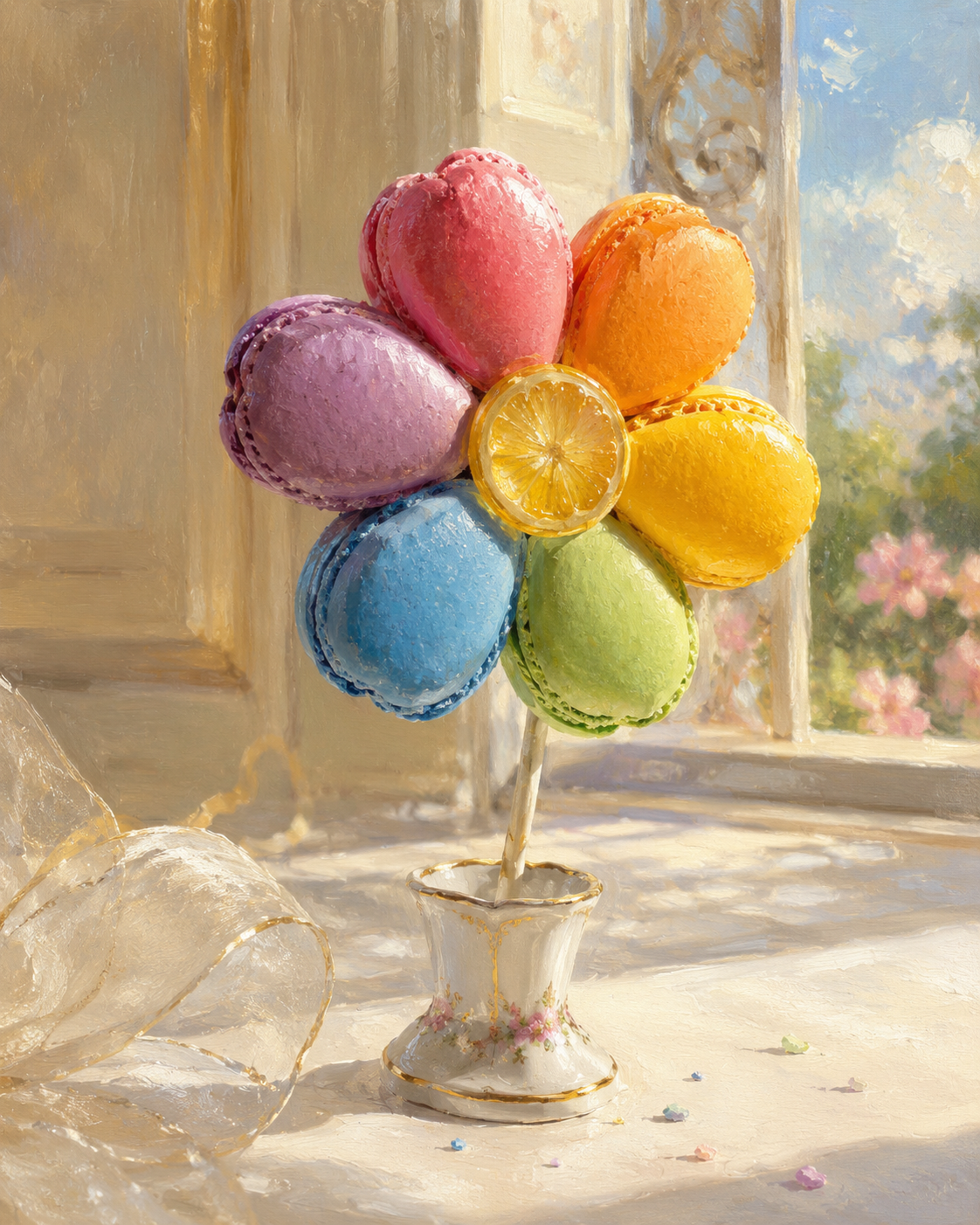
A Bouquet That Tastes of Sunlight
Critique
Introduction Six macarons form petals around a lemon center in a porcelain vase. Pastry, bouquet, and still life unite. Window light preserves each shell’s tactile irregularity. Description Pink, orange, yellow, green, blue, and violet shells radiate from lemon. Cream seams face outward. A thin stem enters a gold-edged floral vase. Crumbs scatter on the sill. Ribbon curls left, and blossoms appear outside. Analysis Radial symmetry gives the macaron flower immediate legibility, but differences in tilt and size prevent mechanical stiffness. The lemon center acts as a luminous hub and repeats the circular shells at a smaller scale. Colors move around the spectrum rather than following strict natural petals. The narrow stem and small vase provide a delicate vertical support beneath the heavy cluster. Rough shells, glossy citrus, glazed porcelain, metallic trim, and gauzy ribbon respond differently to directional sunlight. Interpretation and Evaluation The image converts a temporary assortment of sweets into the enduring convention of a floral still life. Edibility and ornament remain equally present because crumbs and uneven seams counter the formal bouquet. The composition is clear, and the spectrum is balanced across the radial shape. Technique is especially effective in the translucent lemon, whose segments concentrate window light. The modest vase adds domestic intimacy and scale. Conclusion At first glance, the arrangement reads as a cheerful visual pun. Closer viewing reveals careful control of weight, symmetry, texture, and illumination. The flower seems both constructed and freshly opened. Its appeal comes from making familiar circular pastries participate convincingly in botanical order without losing their baked individuality.
Same Subcategory
 Whales Dream in the Spiral of Night
Similar Artworks
 The Cloud at the End of Every Color
 You Are My Small Summer Sun
 The Sunflower Pudding That Grows Stars
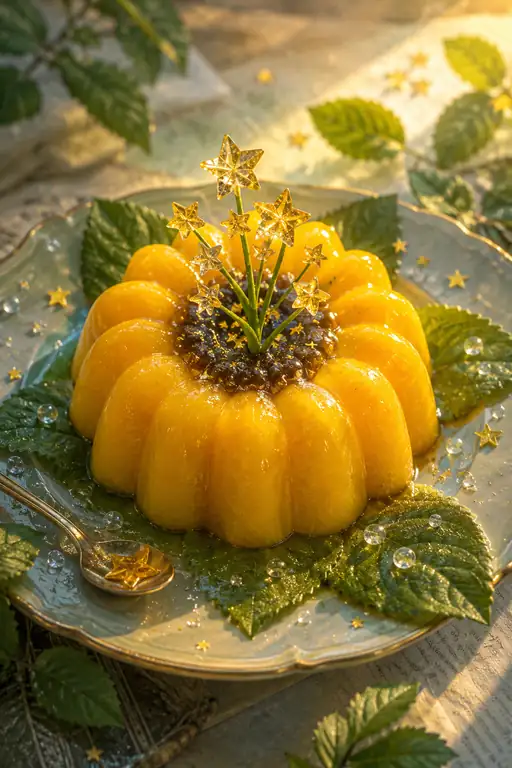 Sunflowers Sprouting Little Stars
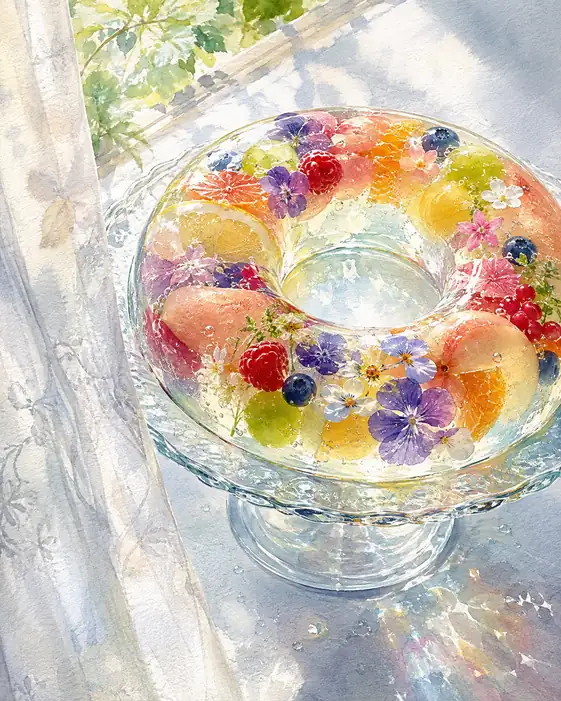 A Ring of Summer Waiting by the Window
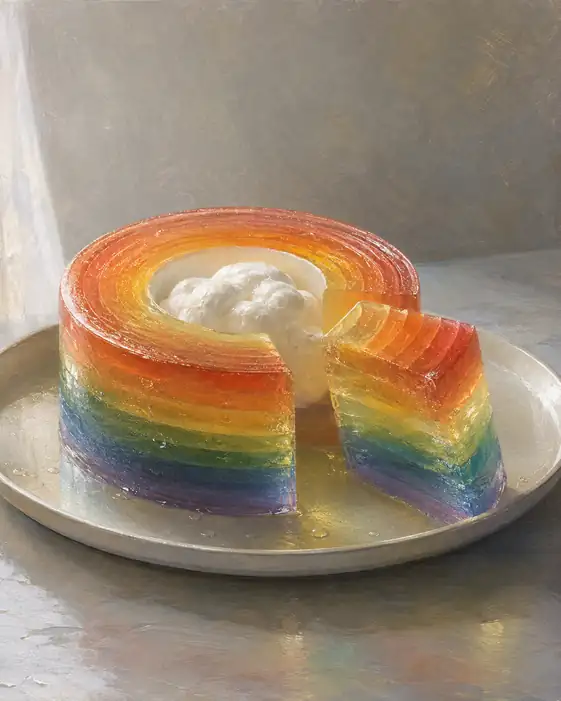 The Rainbow Keeps a Cloud at Heart
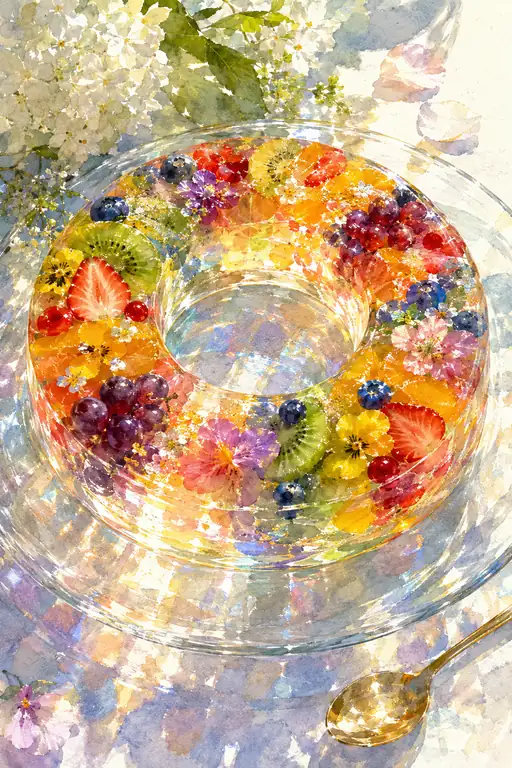 Summer Makes a Wreath of Light
 Spoonful of Summer Sky
 The Sun Learned to Smile
 A Rainbow Blooms Around Vanilla Dawn