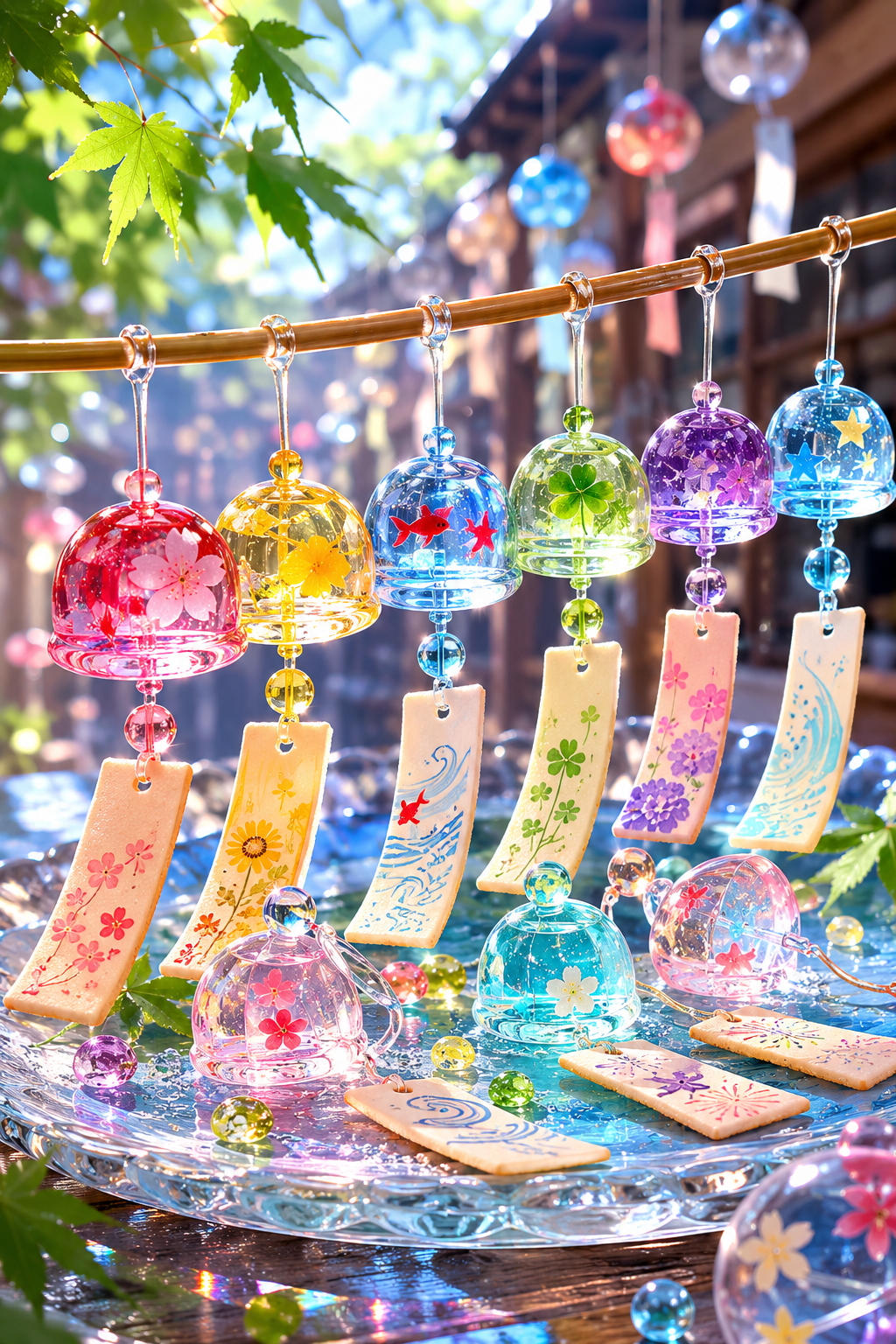
A Festival Made of Summer Light
Critique
Introduction Glass wind chimes hang before a traditional wooden street, joining summer ornaments with aged architecture. Saturated bells contrast with muted buildings, balancing festivity and place. Description Blue, pink, green, amber, and violet bells descend from a wooden frame. Clappers and strips hang at varied heights. Beads occupy the lower display. Timber façades, roofs, and a narrow street recede behind them. Sunlight strikes glass sharply. Analysis Vertical cords create the foreground rhythm, while rooflines and street edges carry the eye diagonally backward. This crossing of directions separates display from setting without isolating either. Saturated glass colors are distributed across the width, balanced by the restrained wooden field. Transparent overlaps mix hues, and narrow highlights clarify rims. Unequal spacing suggests wind and prevents the repeated bells from feeling mechanical. The shallow foreground and deeper street produce a layered, inhabitable space. Interpretation and Evaluation The chimes can be understood as brief seasonal voices placed against durable architecture. Their fragile transparency records changing light, whereas timber implies accumulated memory. Rather than oppose old and new, the image lets each renew the other: color animates the street, and the street gives ornament cultural weight. The handling of fine cords against complex façades is especially controlled. Enough blur is used to preserve depth without erasing local character. Conclusion This work is most persuasive as a portrait of time held in different materials. Glass anticipates motion and sound; wood carries stillness and history. Repetition organizes the lively surface, while the receding street opens a quiet route through it. The result is celebratory but grounded, making a transient summer display feel inseparable from the place that hosts it.
Same Subcategory
Similar Artworks
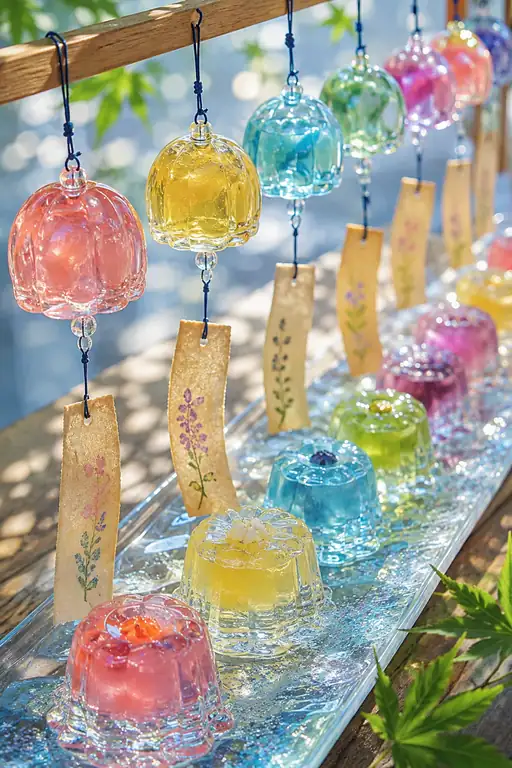 The Afternoon Breeze Tastes of Flowers
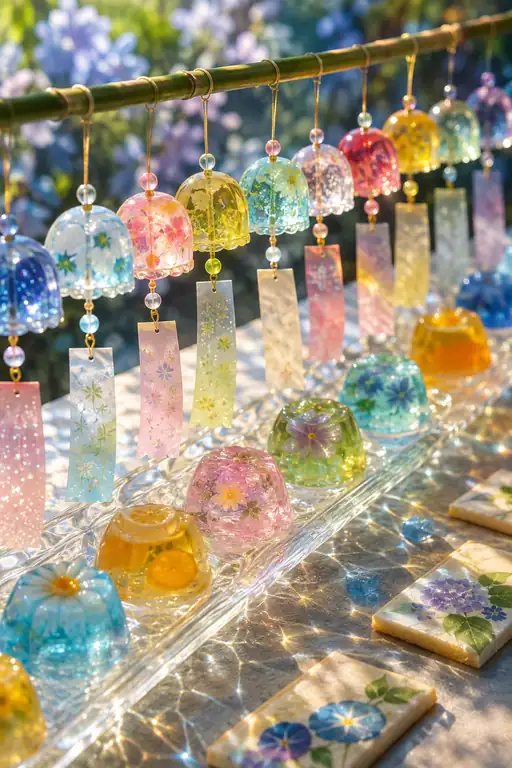 When the Breeze Rings in Seven Colors
 Two Swimmers in the Summer Sky
 Whispers in Glass and Summer Breeze
 Summer Makes a Wreath of Light
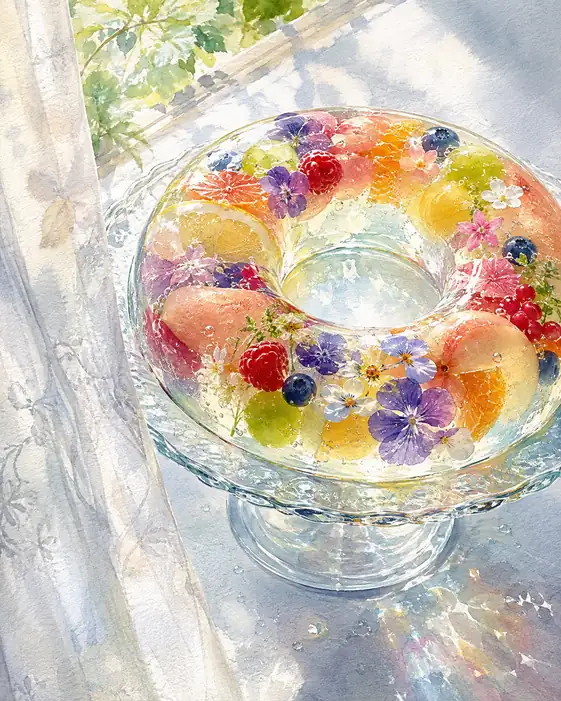 A Ring of Summer Waiting by the Window
 Whispers of the Wind
 The Sunflower Pudding That Grows Stars
 Sunflowers Sprouting Little Stars
 A Bouquet That Tastes of Sunlight