The Sea Wove a Dress of Pearls
Critique
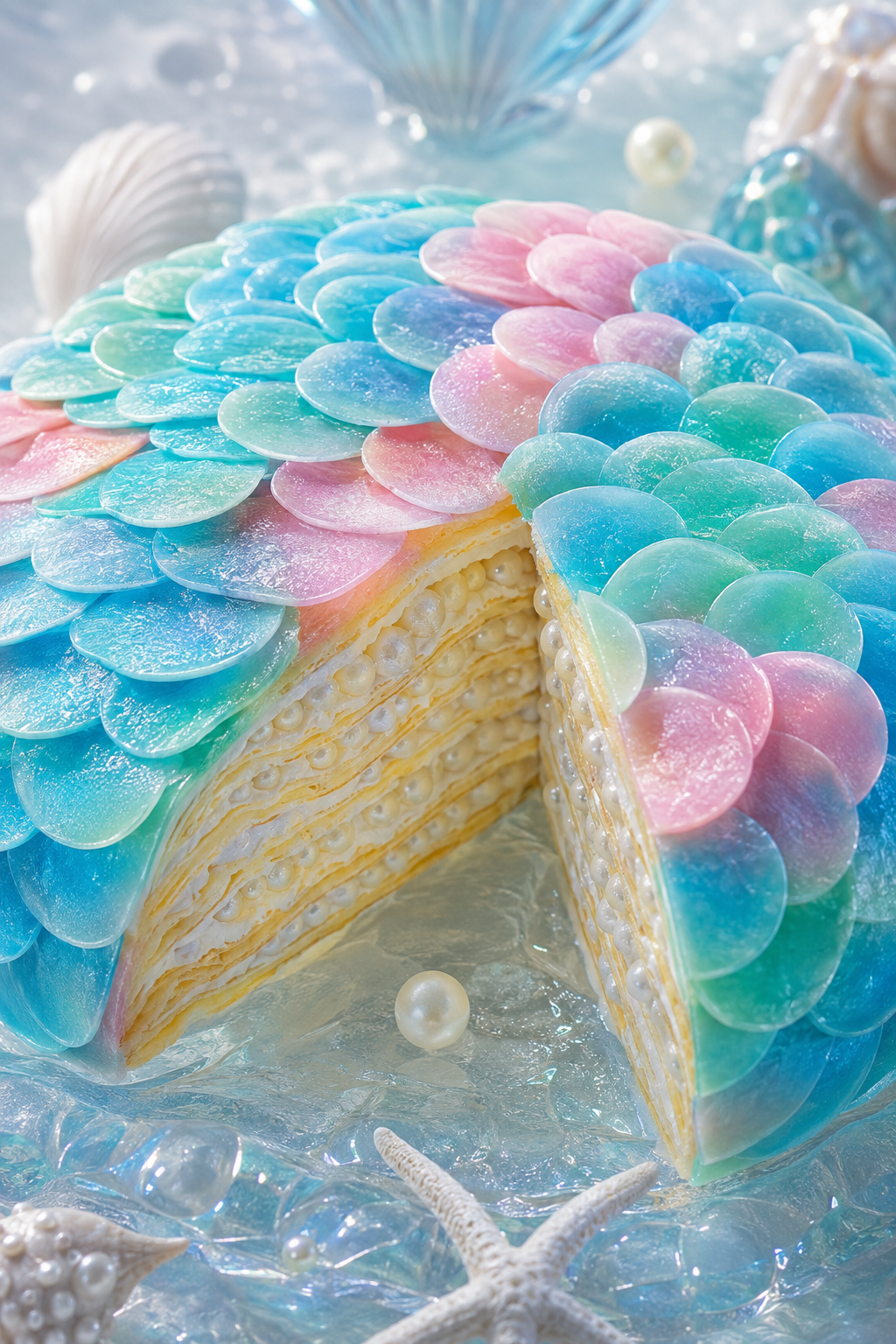
Introduction A pastel cake of translucent scales is cut open. Seashells surround it, placing the confection between pastry and marine organism. Its glasslike skin creates material ambiguity. Description Curved scales in blue, pink, lavender, cream, and mint cover the cake. A removed slice exposes thin layers. Shells, pearls, and droplets rest nearby. Light casts tinted shadows through the outer pieces. Analysis The missing wedge breaks the circle and turns decorative repetition into structural evidence. Rows of scales follow the cake’s curvature, while the cut edges introduce strong straight diagonals. Pastel hues change gradually rather than forming separate stripes, and overlapping translucent pieces generate new colors. Opaque crumb, clear scales, matte shells, and glossy pearls are carefully differentiated. The displaced slice balances the opening and leads the eye from exterior ornament to interior construction. Interpretation and Evaluation Scales and shells suggest a creature or treasure formed beneath the sea, yet the clean cut insists on edible reality. This tension between living skin and crafted dessert gives the image its slight uncanniness. The exposed layers also make beauty appear accumulated rather than superficial. Technical control is strongest in the thin overlapping edges, where transparency remains readable without losing the larger pattern. The restrained background lets subtle color carry the work. Conclusion The composition succeeds through revelation: removing one piece makes the whole object more mysterious. Circular rhythm, diagonal incision, and scattered shells create a balanced exchange between completeness and absence. Its pastel calm does not weaken its imaginative force. The cake becomes a delicate marine artifact whose interior is as considered as its luminous surface.
Same Subcategory
 On the Last Star Before Dawn
 The Cloud at the End of Every Color
Similar Artworks
 Pearls Along the Summer Shore
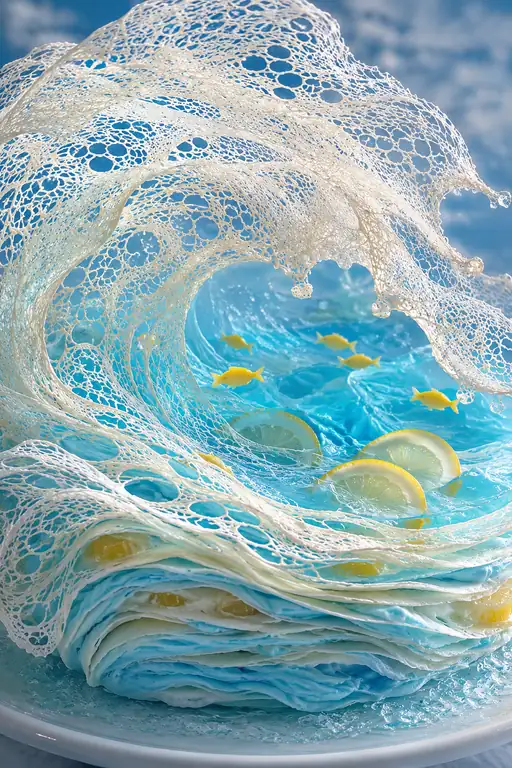 Where the Lemon Tide Learns to Lace
 Three Summer Moons Burst into a Shower of Jewels
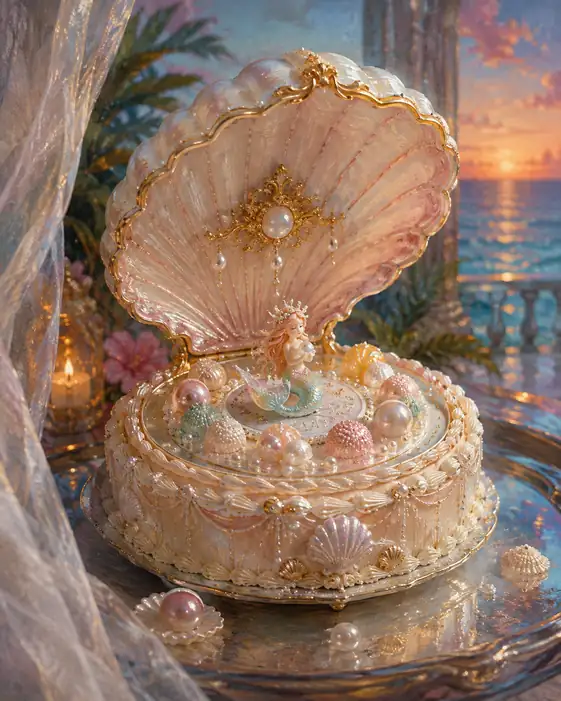 The Mermaid Turns Pearls into a Sunset Melody
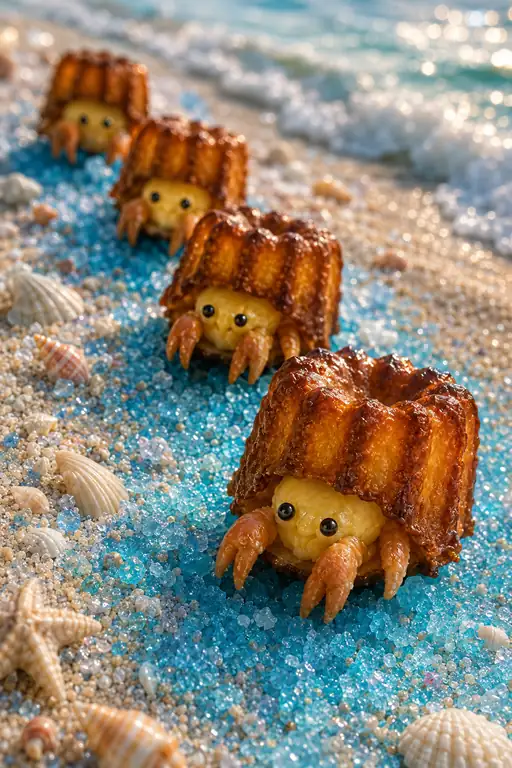 Little Hermit Crabs March Along the Sugar Shore
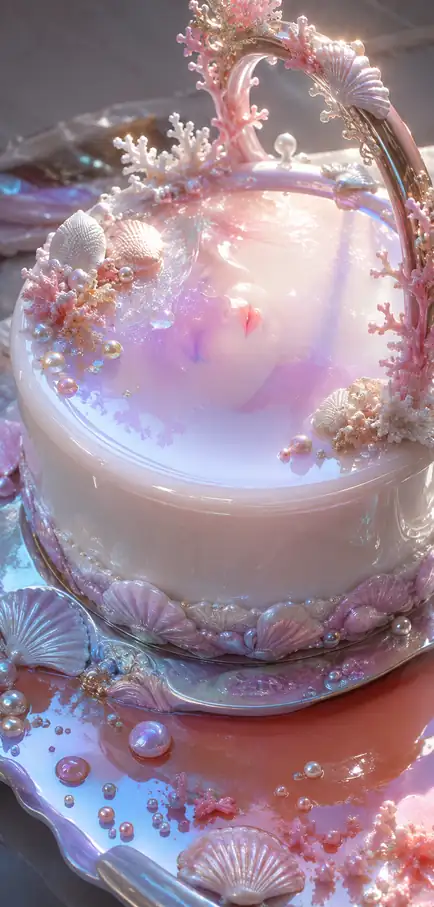 The Pink Moon Wakes in Its Silver Nest
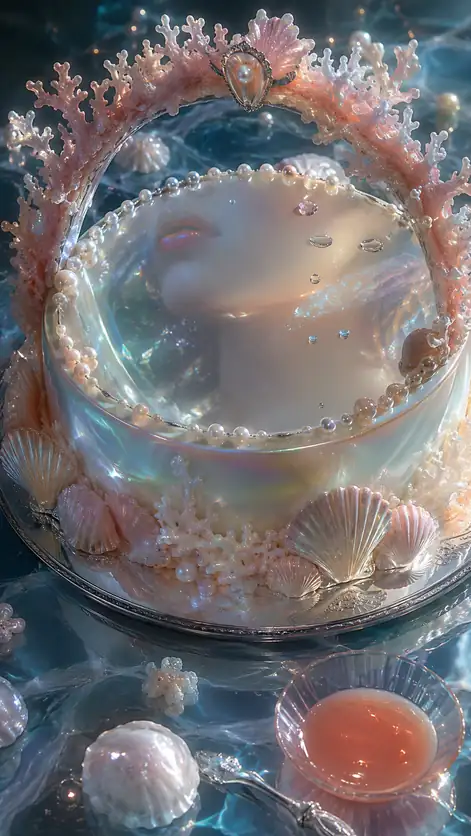 The Sea Remembers My Reflection
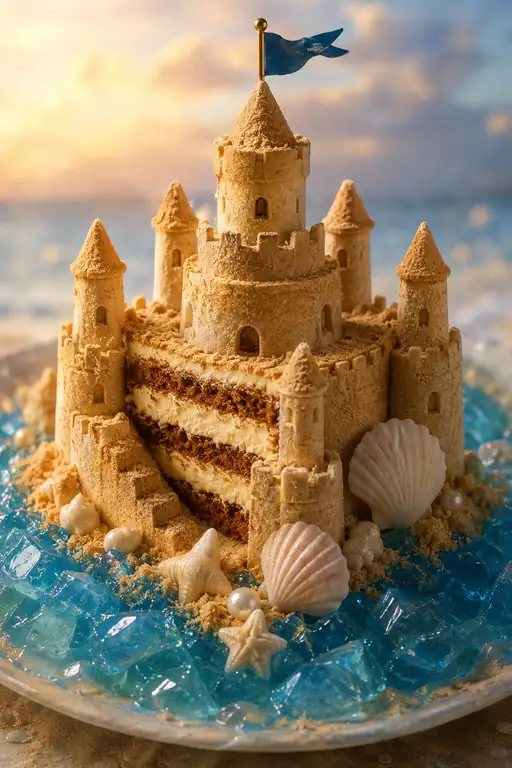 The Sandcastle Keeps the Taste of Summer
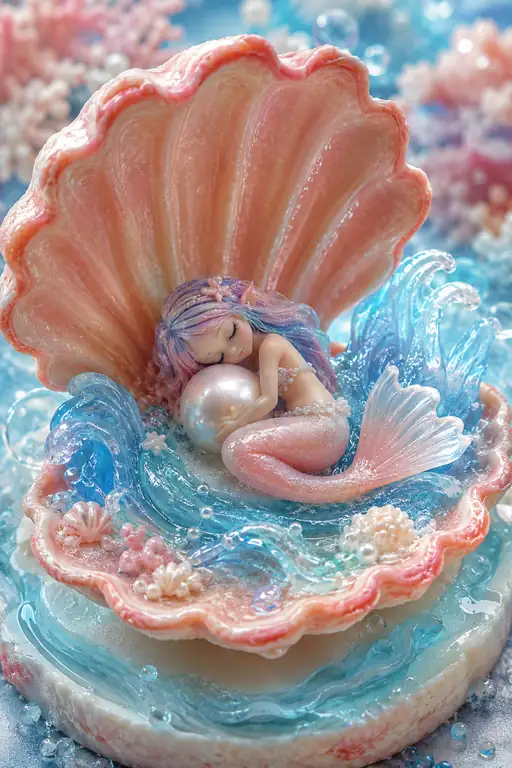 The Mermaid Sleeps Where Pearls Are Born
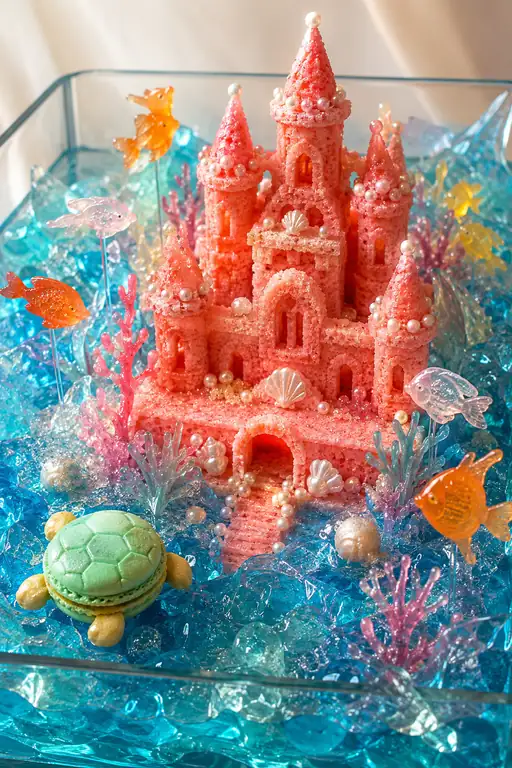 The Smallest Palace Under the Sea