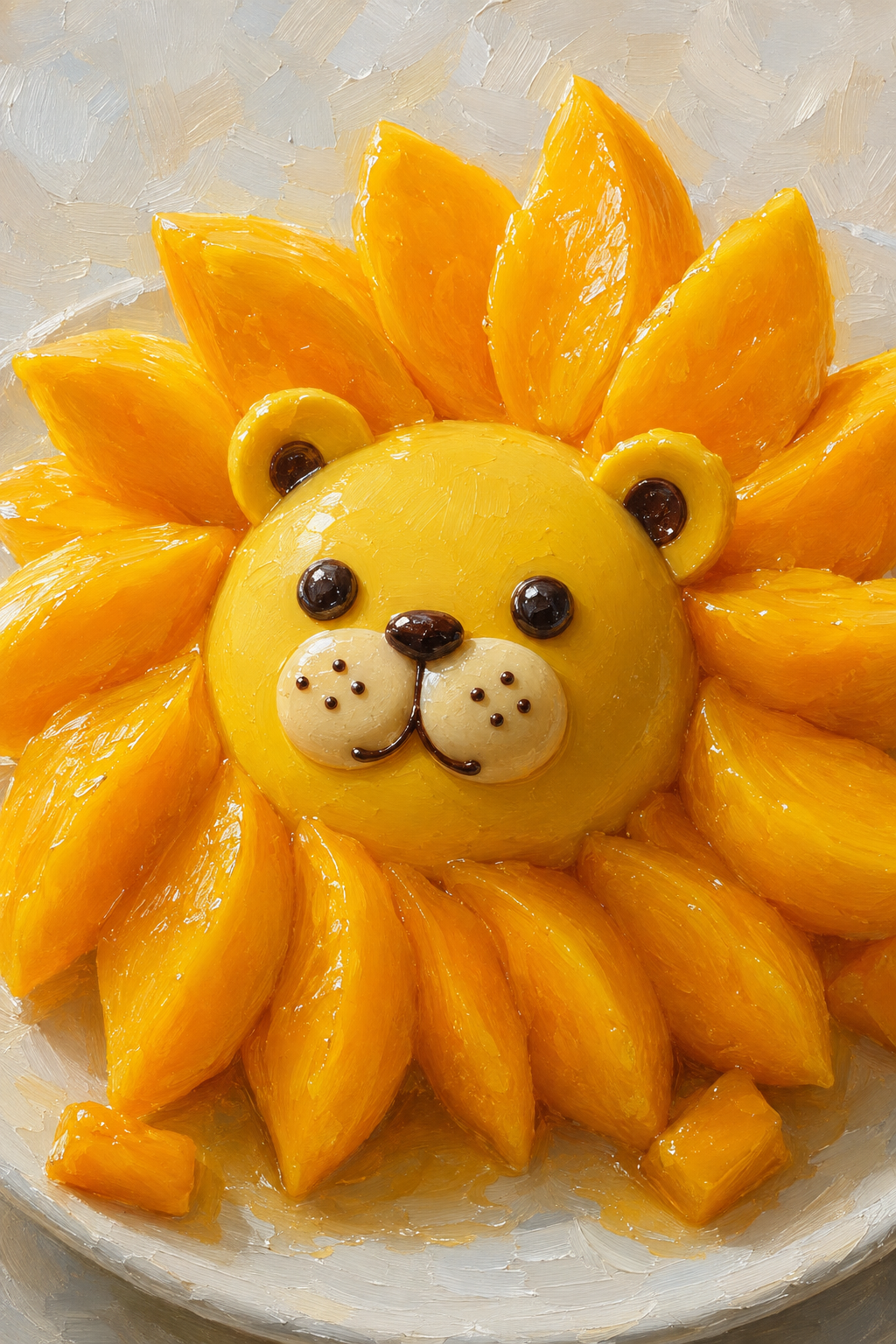
The Sun Learned to Smile
Critique
Introduction This close image forms a lion’s face from yellow confectionery and surrounds it with two rings of glossy orange petals. Filling almost the entire vertical frame, the frontal motif combines animal portrait, sunflower, and sun into a single warm emblem. Description The central yellow dome carries rounded ears, two dark eyes, a black-brown nose, cream muzzle pads, a curved mouth, and small chocolate whisker dots. Pointed orange segments radiate around the head in overlapping layers. Two loose orange cubes rest near the lower edge, while the pale background is built from broad cream-colored strokes. Analysis Radial symmetry establishes immediate clarity, but changes in petal length and overlap keep the mane active. The small ears and muzzle distinguish the lion from a generic smiling sun. Frontal light produces hard white highlights on the glossy petals and softer modeling across the face. Orange, yellow, cream, and dark brown form a concise hierarchy. Smooth glaze, fibrous segments, raised facial pieces, and matte background remain distinct. Interpretation and Evaluation The work links the lion’s mane with sunflower petals and solar rays, allowing strength, warmth, and friendliness to coexist. Its direct gaze gives the edible emblem a portrait-like presence. The centered composition is disciplined, the color saturated but controlled, and the facial proportions carefully judged. Using repeated fruit forms to construct both flower and animal demonstrates economical visual invention. Conclusion What first seems simply cheerful reveals a precise negotiation between pattern and character. Minor irregularities in the orange mane preserve handmade vitality, while the stable face and limited palette make the image immediate, tactile, and memorable.
Same Subcategory
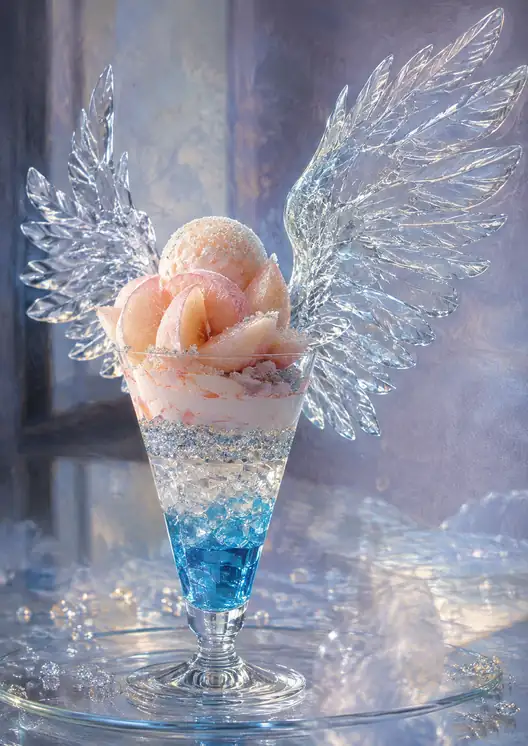 Peach Wings Before Dawn
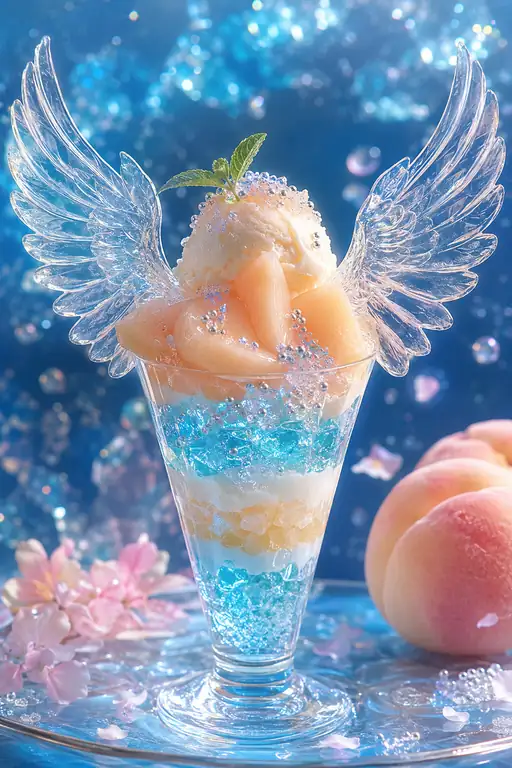 Wings Born from Peachlight
Similar Artworks
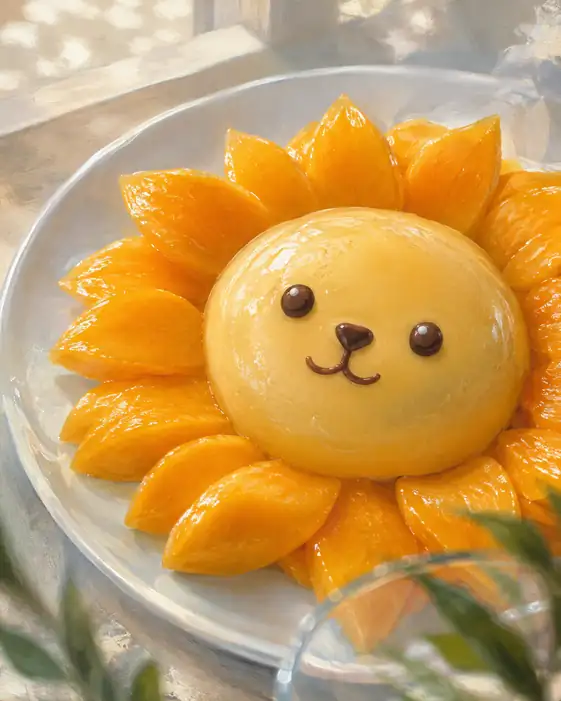 You Are My Small Summer Sun
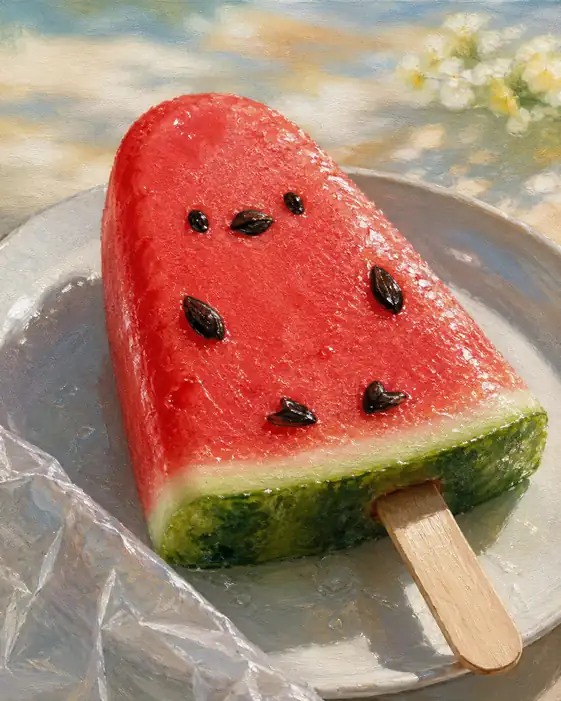 Midsummer Held on a Wooden Stick
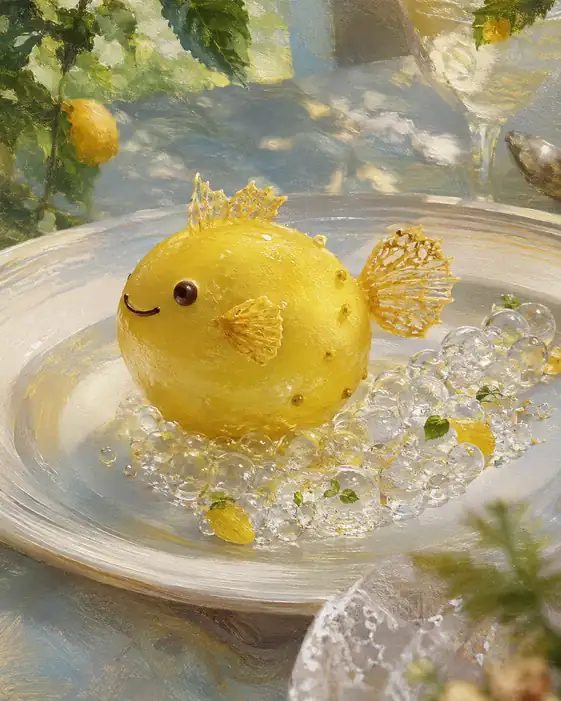 The Lemon Fish Smiles among Sunlit Bubbles
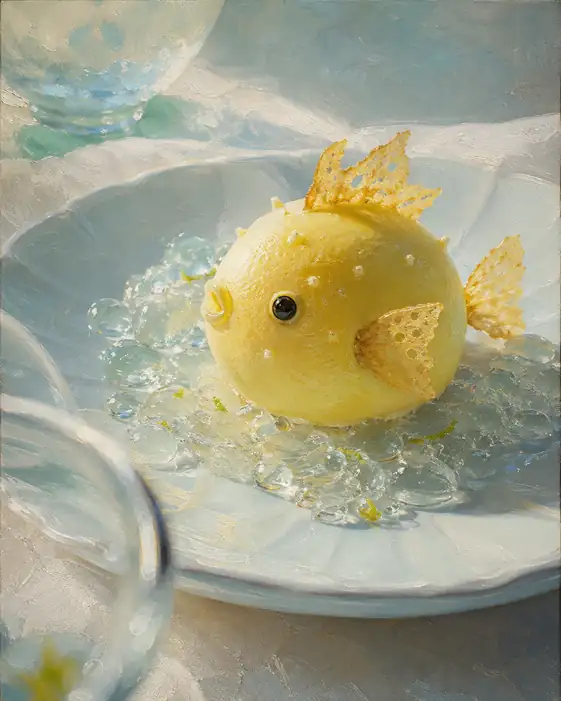 The Little Lemon Fish Blows Bubbles of Sunlight
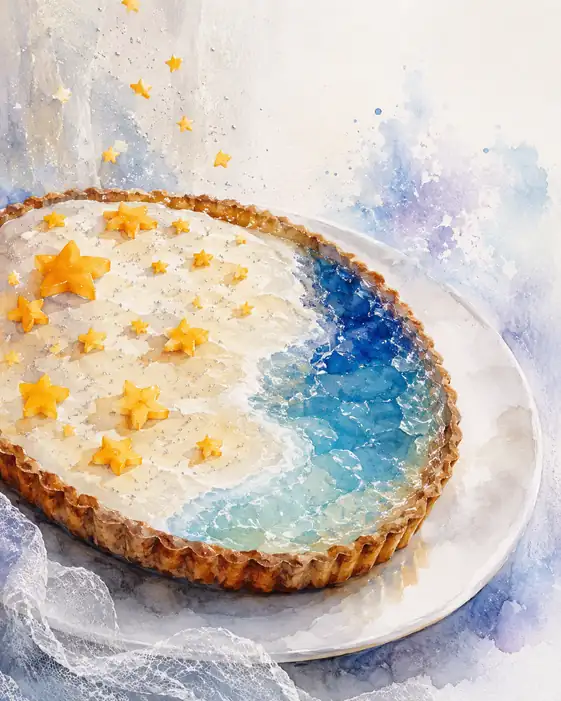 Stars Come Ashore for Cheese
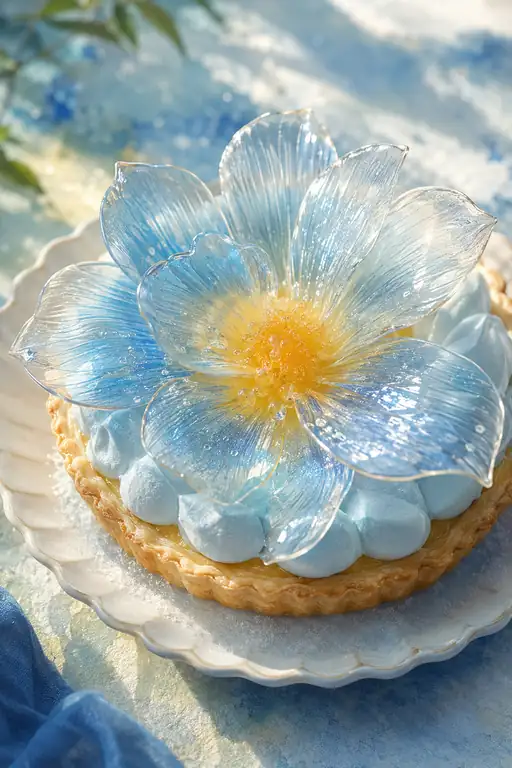 A Flower Made of Morning Water
 The Sunflower Smiles Above the Sea of Clouds
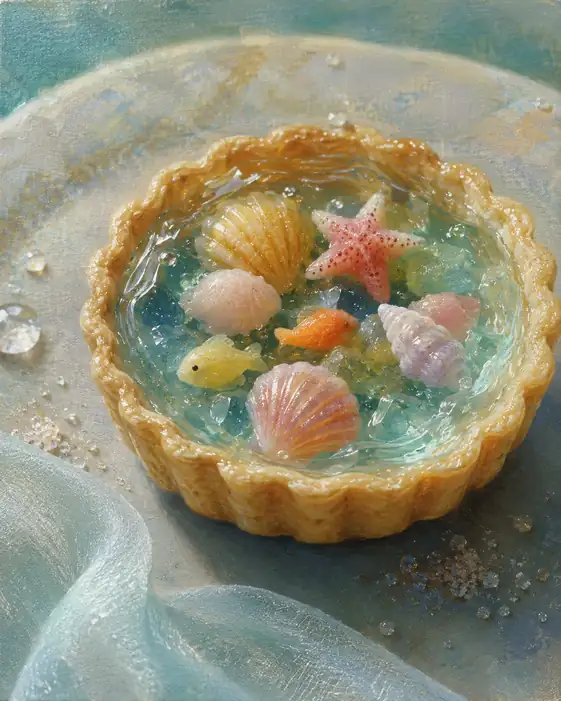 The Tiniest Sea Holds Shells, Stars, and Two Bright Fish
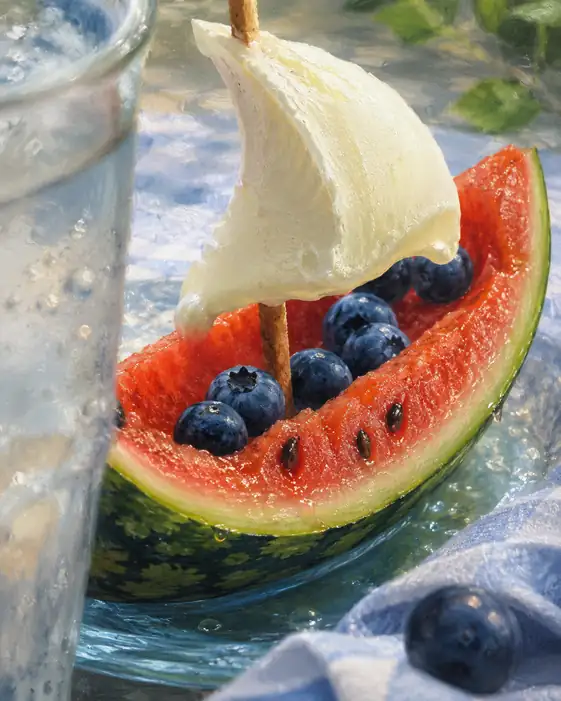 A Watermelon Boat Carries Blueberries into Summer
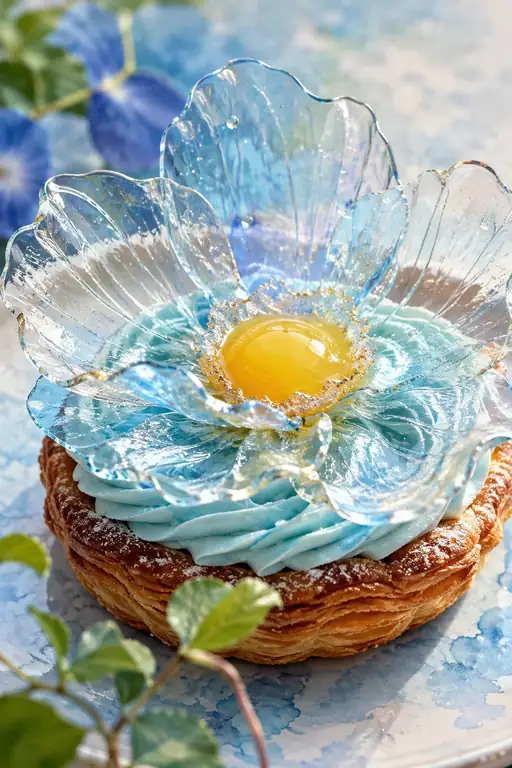 Morning Glory Holds a Drop of Sun