The Warmest Door Beneath the Moss
Critique
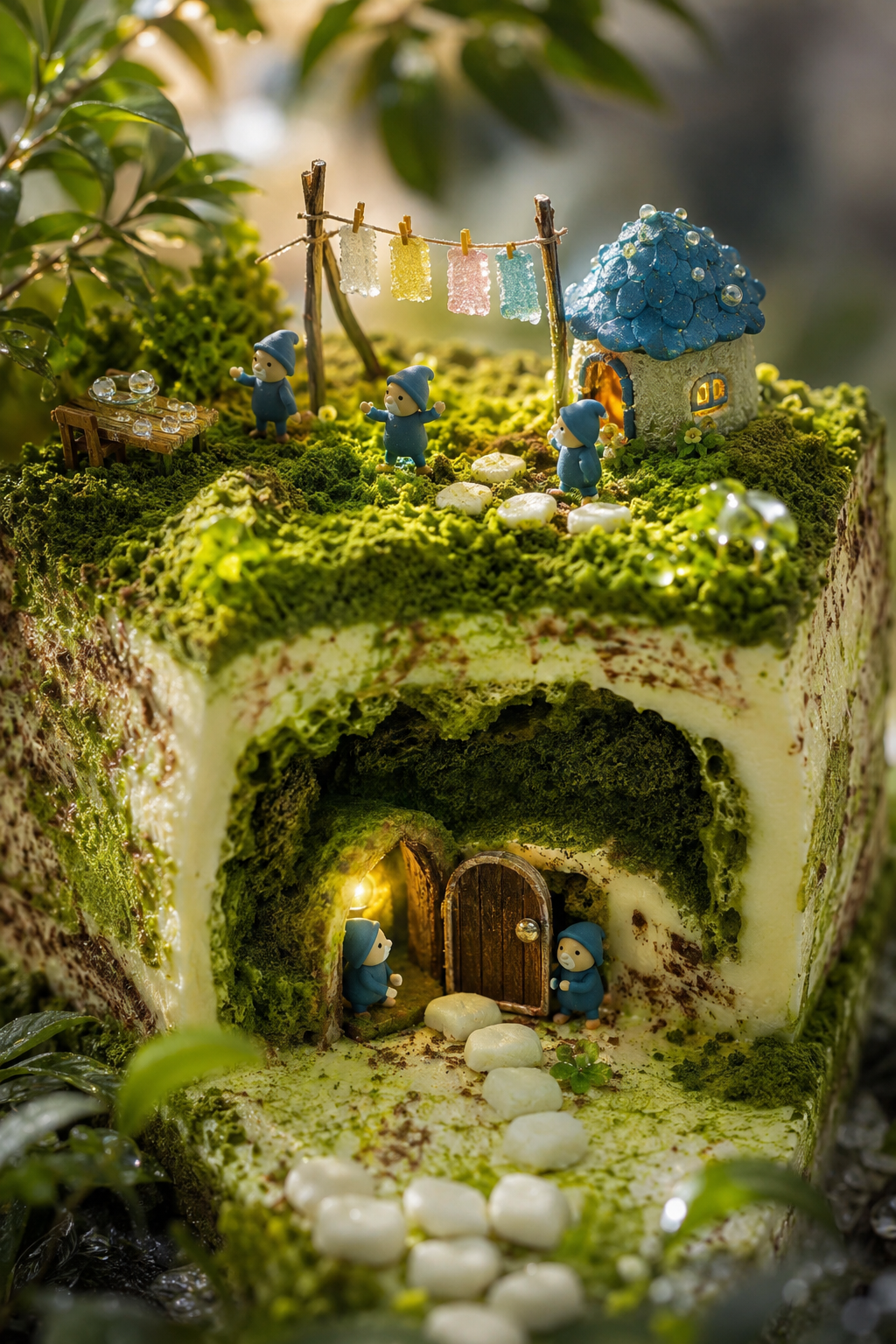
Introduction This image presents a tall cutaway dessert as a two-level moss-covered dwelling for small blue-clad figures. The upper garden and lower cavern are shown simultaneously, allowing the rectangular block to function as landscape, architecture, and geological section. Description On the top, three figures stand near a clothesline carrying four translucent pastel cloths. A tiny house with a rounded blue shingle roof glows at upper right, reached by pale stepping stones. Below, a large arched cavity exposes white cream and dark green layers; an open wooden door, warm lamp, and two figures occupy the sheltered interior. Moss, leaves, water droplets, and scattered stones cover the edges. Analysis The block’s vertical sides and horizontal strata establish stability, while paths and figures create diagonal movement. The bright upper clothesline forms a horizontal counterpoint to the dark lower arch. Warm light concentrates in the house and cavern, contrasting with the cool green exterior. Velvety moss, porous cake, smooth cream, rough wood, glossy droplets, and scaled roof tiles are carefully differentiated. Interpretation and Evaluation The cutaway reveals that domestic life continues beneath the visible garden, making shelter an internal condition rather than surface decoration. Open doors above and below connect the levels conceptually. Multiple spaces remain legible because the composition uses distinct light zones and repeated blue clothing. Strong miniature depiction, coherent green-blue color, and convincing edible strata demonstrate technical and imaginative control. Conclusion What first resembles a whimsical garden model becomes an image of layered community. The visible section invites viewers to move between public activity and hidden refuge, giving the compact dessert a persuasive sense of inhabited depth.
Same Subcategory
 Three Rabbits Climb the Moon's Secret
Similar Artworks
 Laundry Day in the Moss Kingdom
 Beyond the Blue Door, the Lemon Castle Awaits
 The Door Beyond Every Cloud
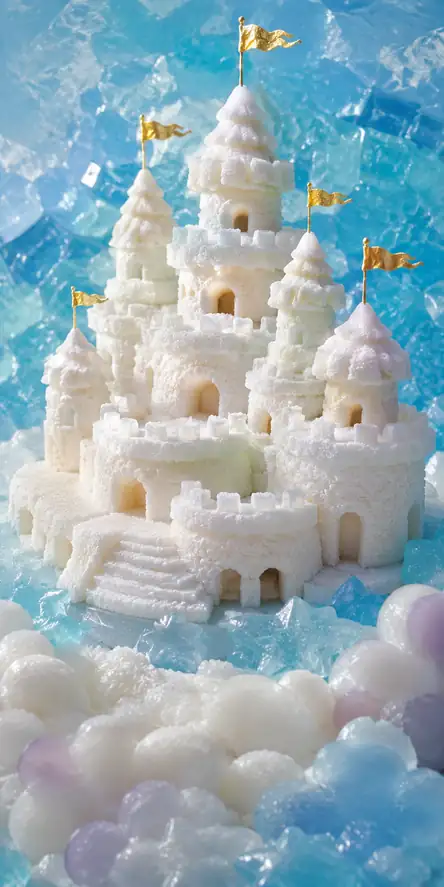 A Castle Built from the Breath of Snow
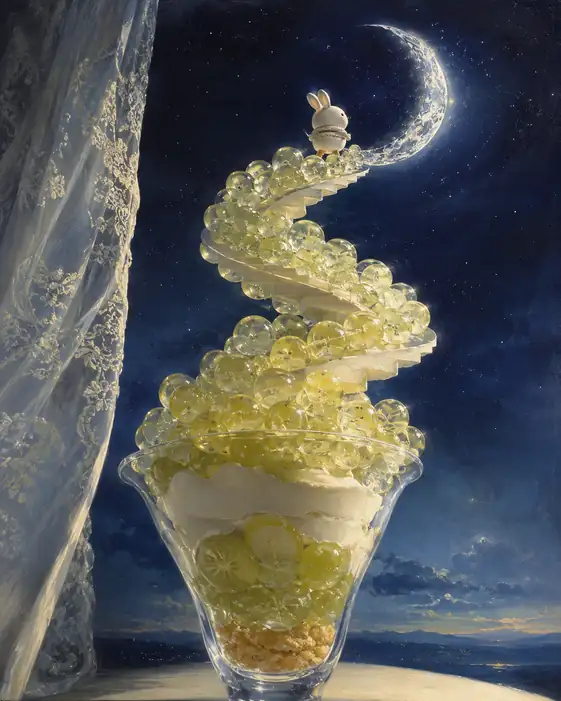 Each Little Light Became a Step
 Dream Waves Carry the Rainbow Zebra Home
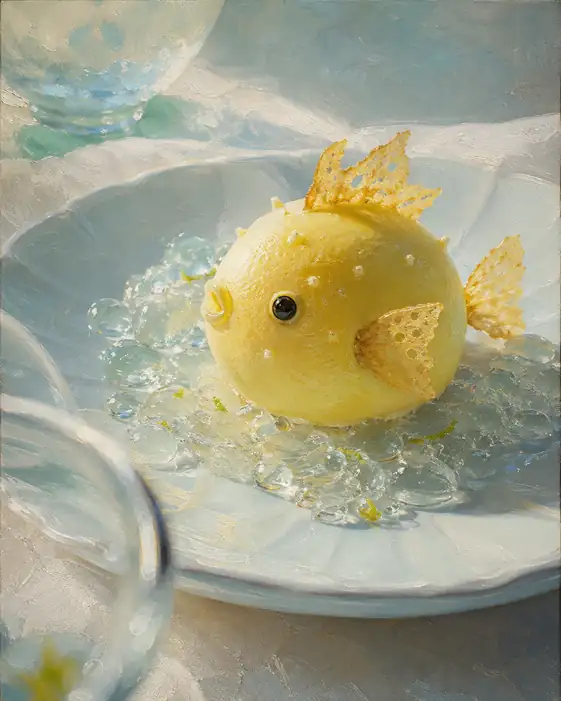 The Little Lemon Fish Blows Bubbles of Sunlight
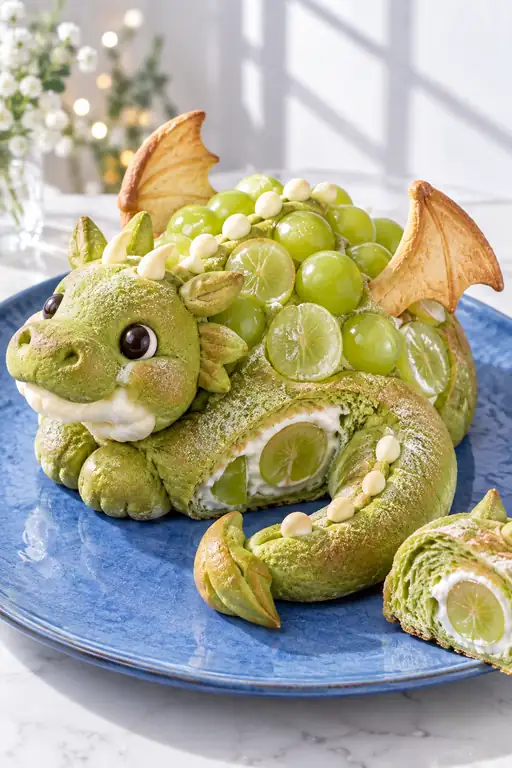 Little Wyrm of the Emerald Vine
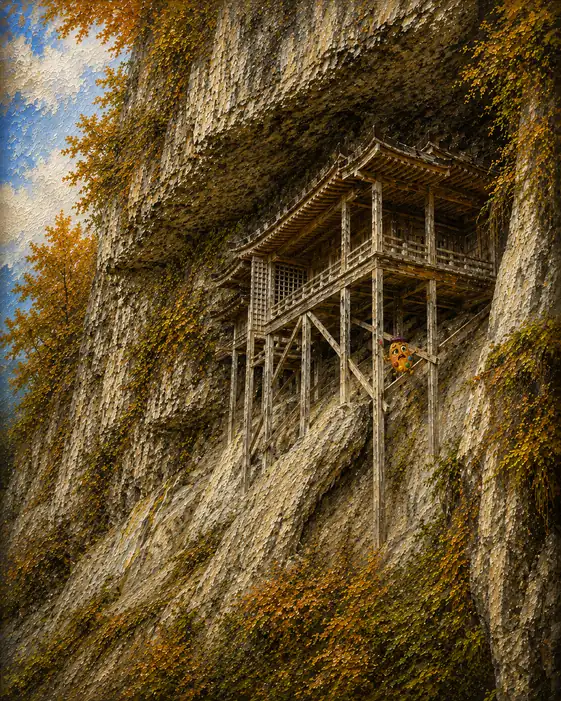 Perilous Balance on the Timber Frame
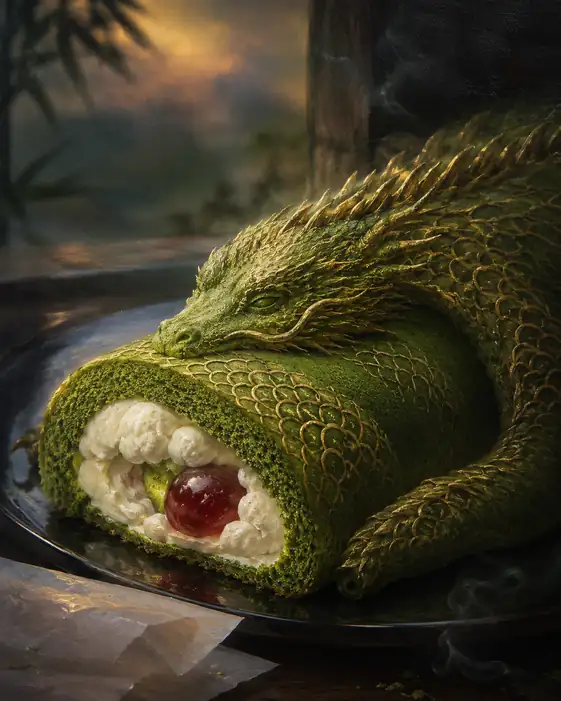 The Dragon Guarding the Ruby Heart