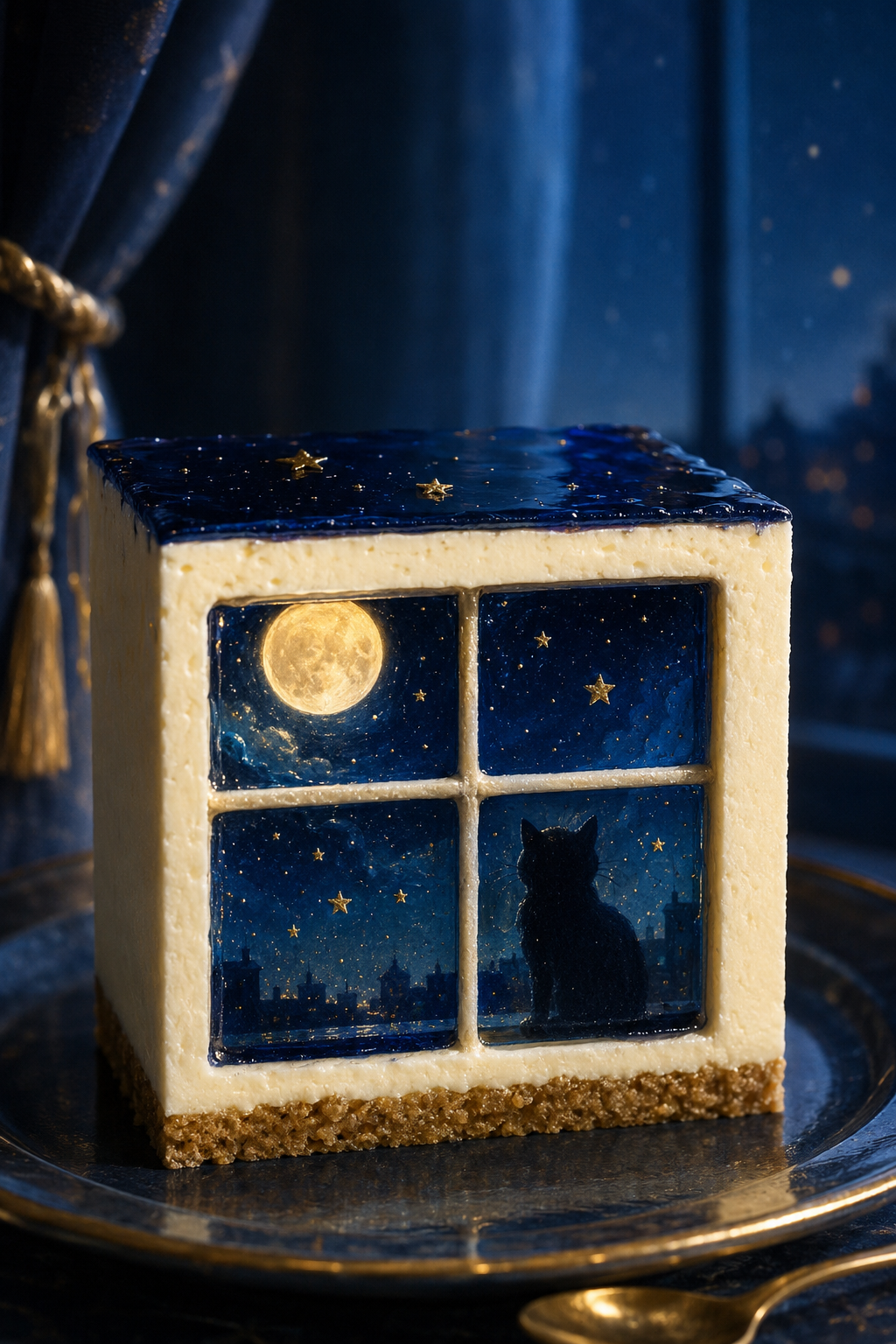
The Night We Watched the Moon Together
Critique
Introduction This square cake resembles a window onto a moonlit city, with a seated cat silhouetted behind the lower right pane. Against dark curtains and a night-blue background, the compact dessert becomes an architectural frame for looking outward. Description Four deep-blue panels are divided by thick cream-colored mullions. A luminous full moon fills the upper left pane, gold stars scatter across the others, and a low skyline stretches along the bottom. The black cat faces left with its tail curled beside it. A glossy navy top, tiny gold stars, pale side walls, and a coarse brown base complete the block. Analysis The window grid imposes strong horizontal and vertical order, while the moon and cat create a diagonal exchange across opposing corners. Warm gold light contrasts with saturated blue and near-black silhouettes. The thick cream frame advances visually, separating the painted depth of the panes from the physical cake. Glossy glaze, porous filling, granular base, flat night panels, and soft curtain folds provide distinct material registers. Interpretation and Evaluation The cat’s inward stillness and outward gaze make the scene about attentive solitude rather than simple decoration. The window is both image and barrier: the animal belongs to the distant city yet remains enclosed by the edible frame. Clear geometry, controlled color, and precise small-scale imagery demonstrate strong composition and depiction. The fusion of cake façade, picture plane, and imagined view is especially inventive. Conclusion At first the work reads as a nocturnal motif, but sustained viewing reveals a staged relationship between interior and exterior. The opposing focal points, tactile frame, and restrained golden accents turn the object into a quiet meditation on watching, distance, and companionship.
Same Subcategory
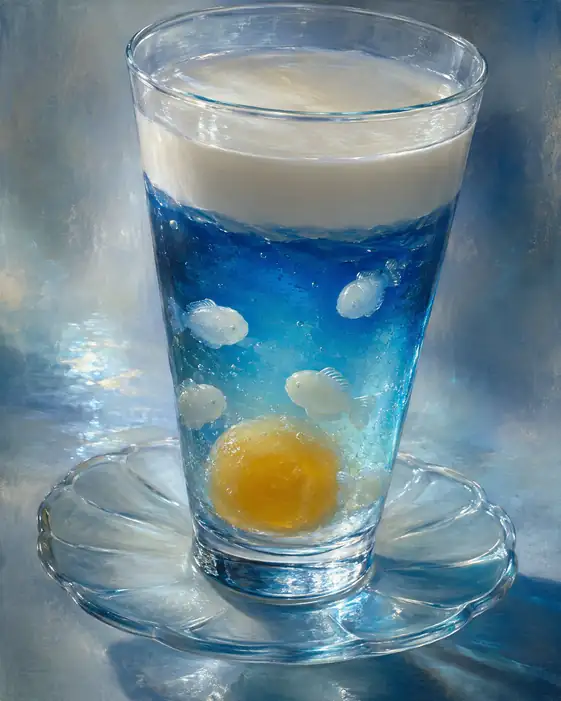 A Small Sun Beneath a Milk-White Sea
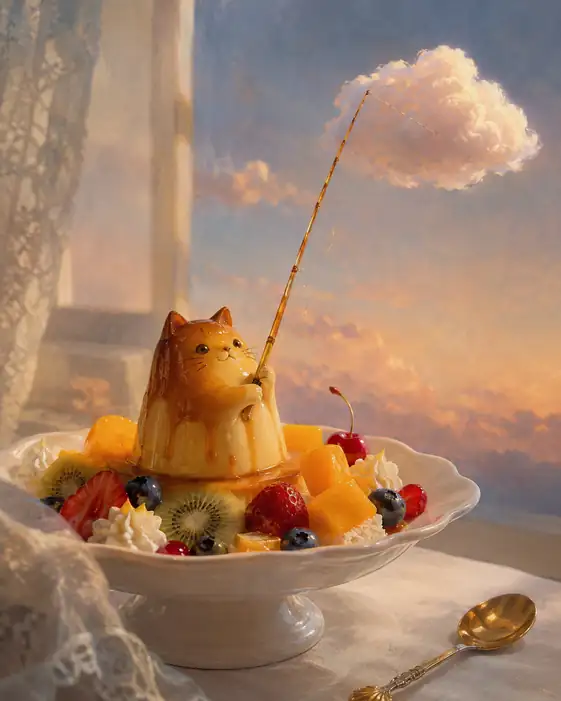 Fishing for Tomorrow's Cloud
Similar Artworks
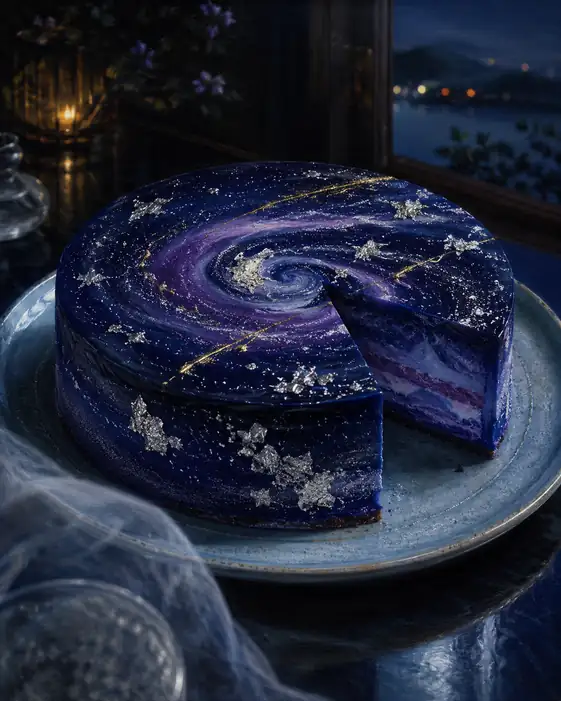 A Slice Taken from the Heart of the Galaxy
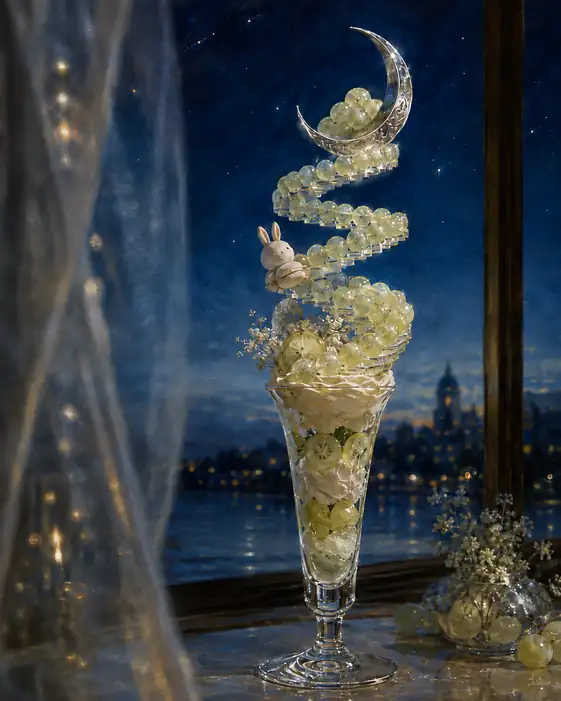 One More Step to the Crescent Cradle
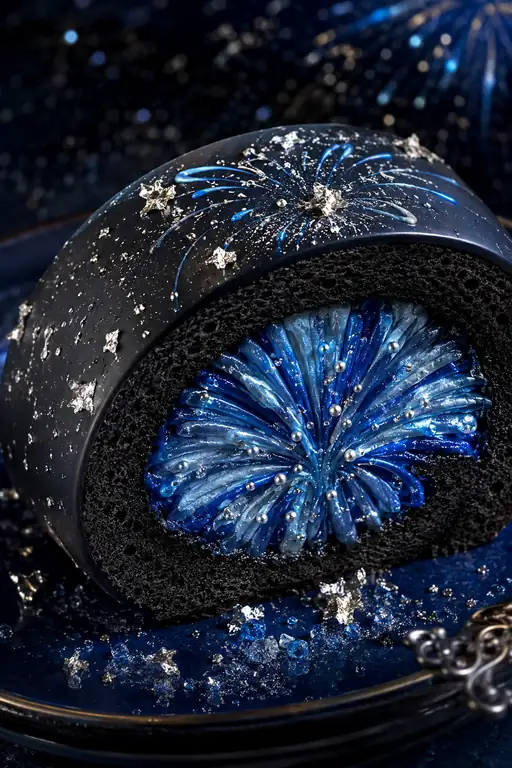 Blue Fireworks Unfurl in the Heart of the Night
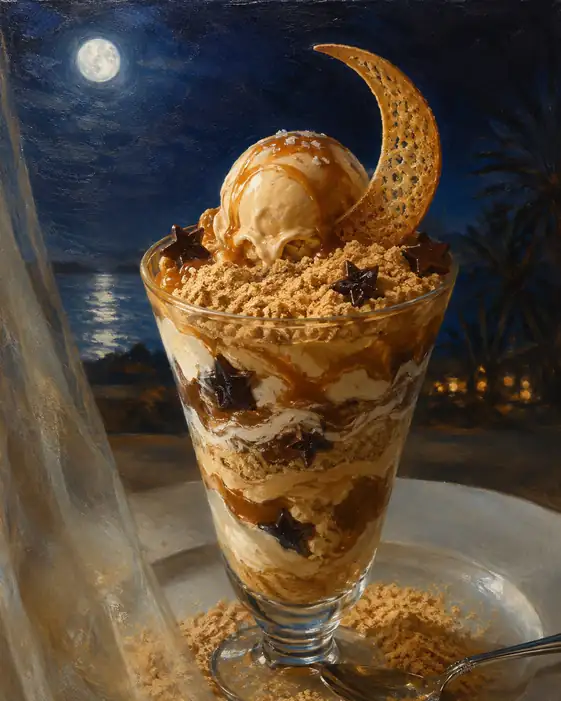 Midnight Melts into Caramel
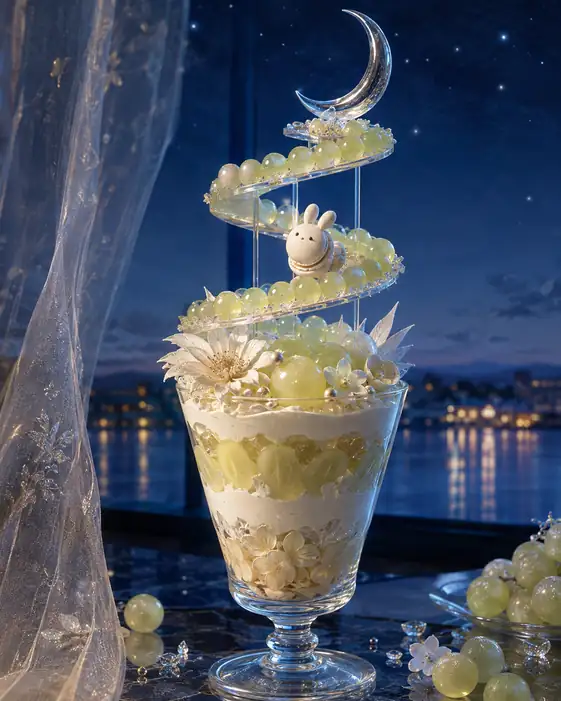 The Rabbit Climbs a Stairway of Moonlight
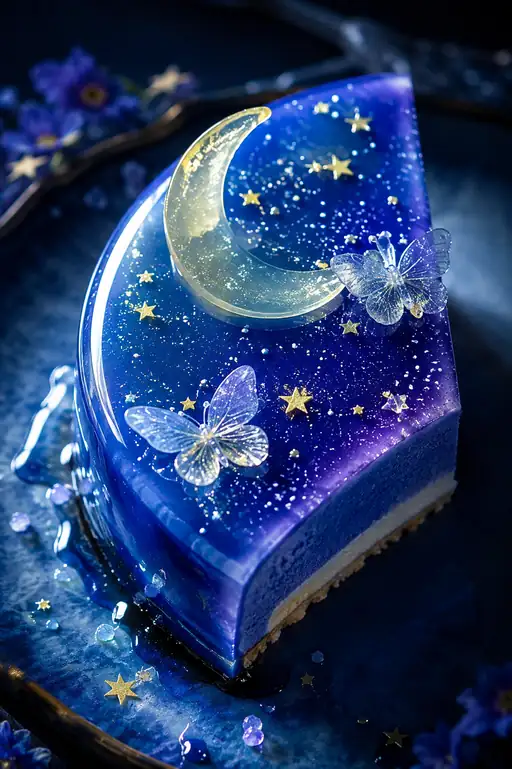 The Moon Sleeps inside a Blue Slice
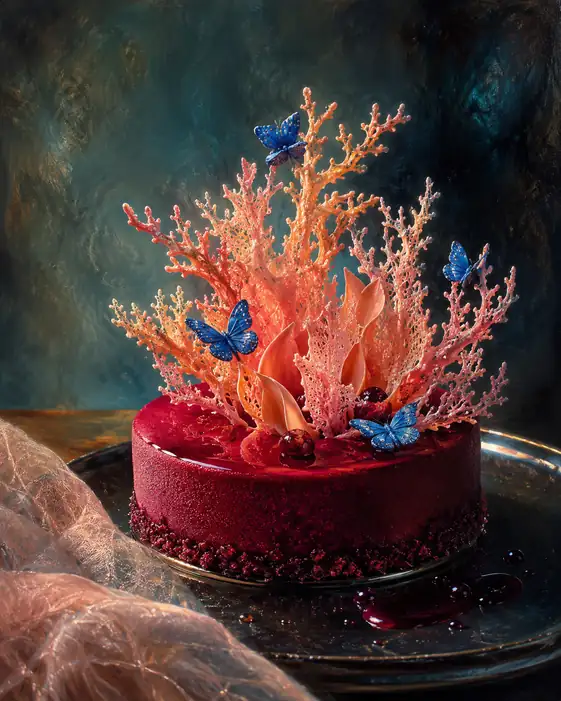 Blue Butterflies Wander through the Cassis Coral Forest
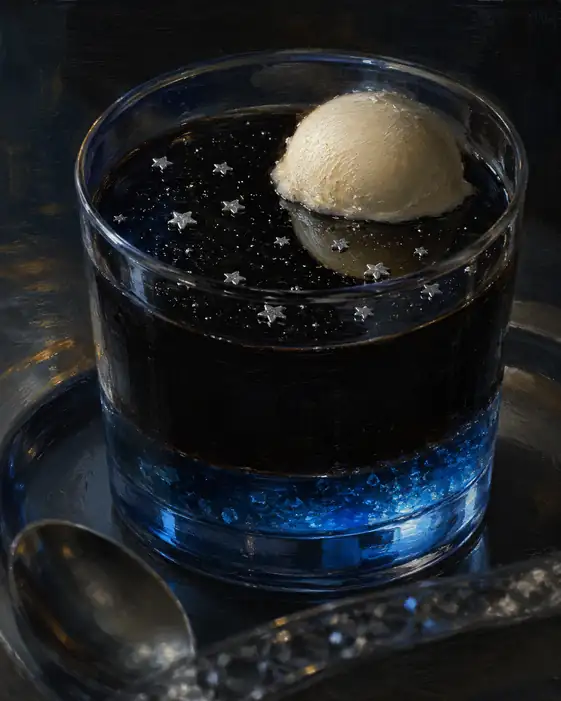 The Moon Rests in Black Coffee
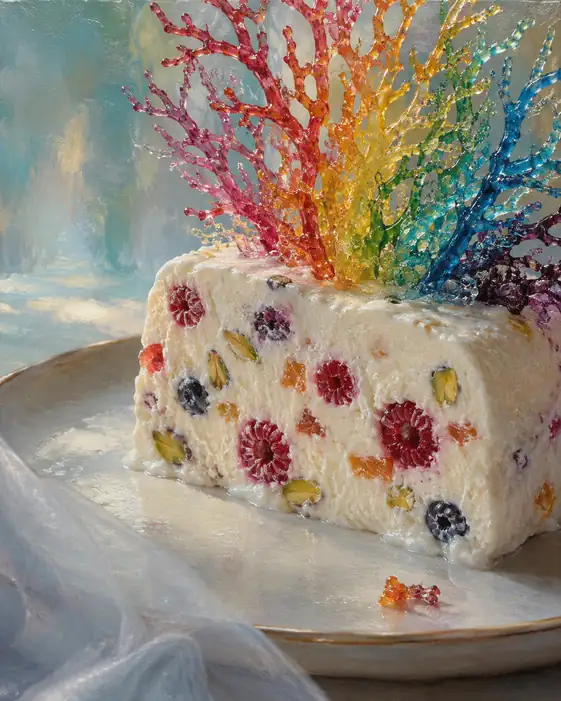 Where a Rainbow Grows from Sweet Winter
 Where Night Learns to Flutter