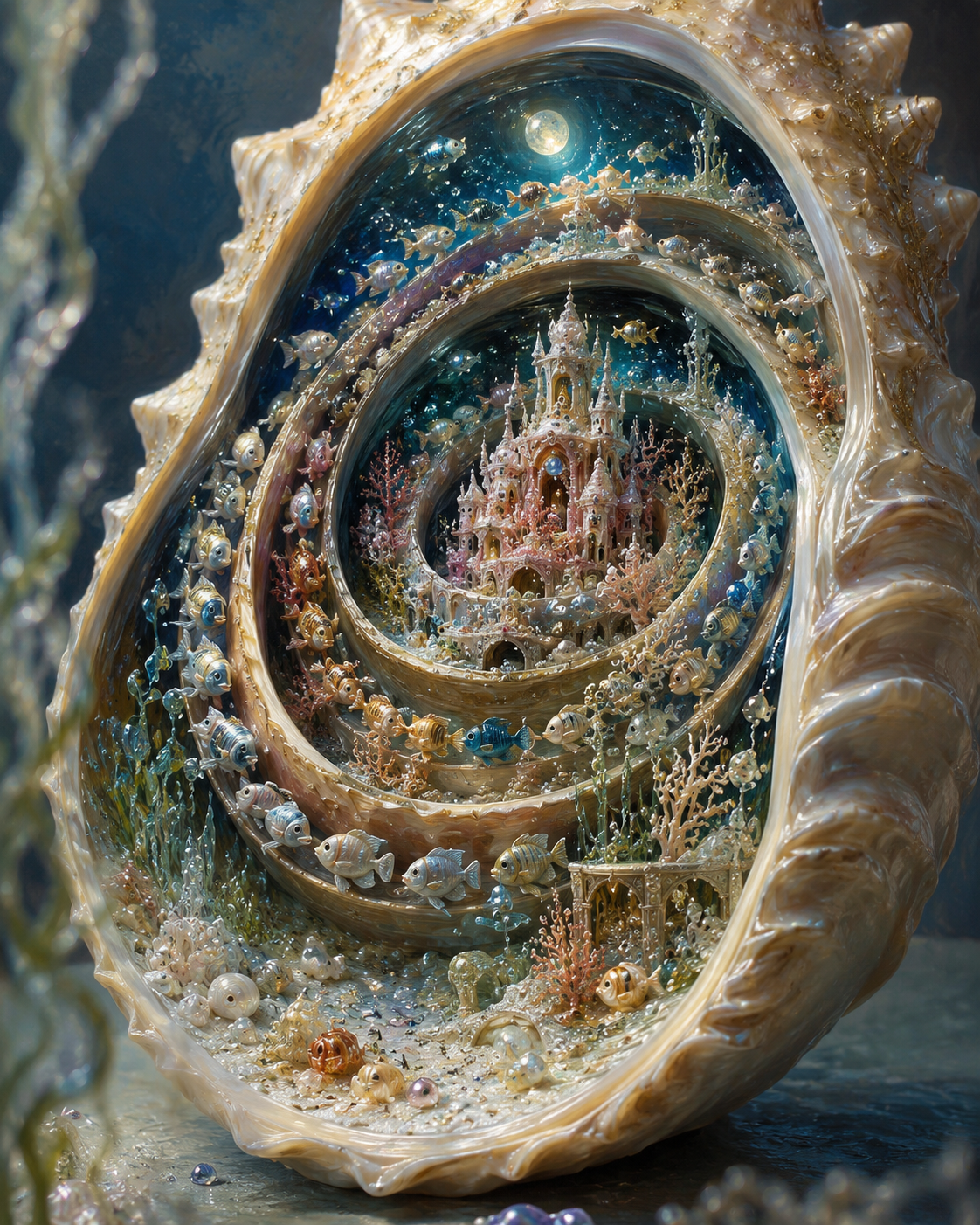
Where Every Tide Returns Home
Critique
Introduction This work depicts an elaborate underwater city nested inside a monumental spiral shell. Fish circle along successive ridges toward a coral-colored tower at the center. The frontal close view combines natural enclosure, architecture, and marine migration within a single deep structure. Description The cream shell fills the frame and opens toward the viewer. Several concentric bands coil inward, each carrying schools of small blue, gold, ivory, and orange fish. Coral branches, pearls, sea plants, arches, and miniature pavilions occupy the lower cavity and the spaces between ridges. At the spiral's center rises a many-tiered palace with pointed towers and illuminated openings. A pale moon glows in the dark water above it. Analysis The spiral provides a continuous route from the broad lower lip to the central palace. Repeated fish reinforce this inward movement, while vertical towers oppose the circular flow. Cream, gold, coral pink, and deep teal form a controlled palette with both warm and cool depth. Ribbed shell, smooth fish, porous coral, hard architecture, granular seabed, and suspended bubbles are carefully differentiated. Scale diminishes toward the center, producing convincing recession despite the dense detail. Interpretation and Evaluation The image imagines civilization as something grown within a protective natural form. The shell is both boundary and road, directing inhabitants toward a communal center rather than simply enclosing them. Fish following its ridges suggest circulation through an established city. The palace remains visually dominant through height and warm color, even amid abundant ornament. Spatial organization, miniature rendering, and material variety demonstrate substantial technique, while the union of shell morphology and urban planning gives the work clear originality. Conclusion What first appears to be extravagant marine decoration becomes a study of habitation shaped by its environment. The spiral turns enclosure into purposeful movement. Strong depth, disciplined repetition, and a readable central hierarchy make the imagined city persuasive.
Same Subcategory
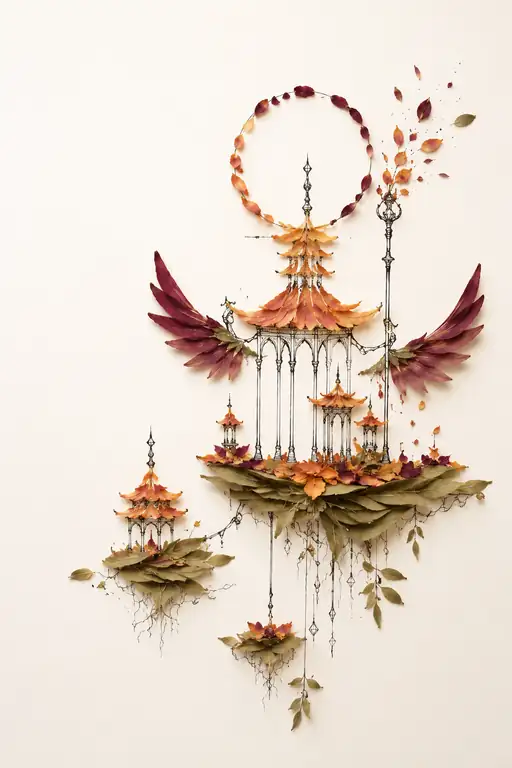 Winged Pavilion Floating in the Ether
Similar Artworks
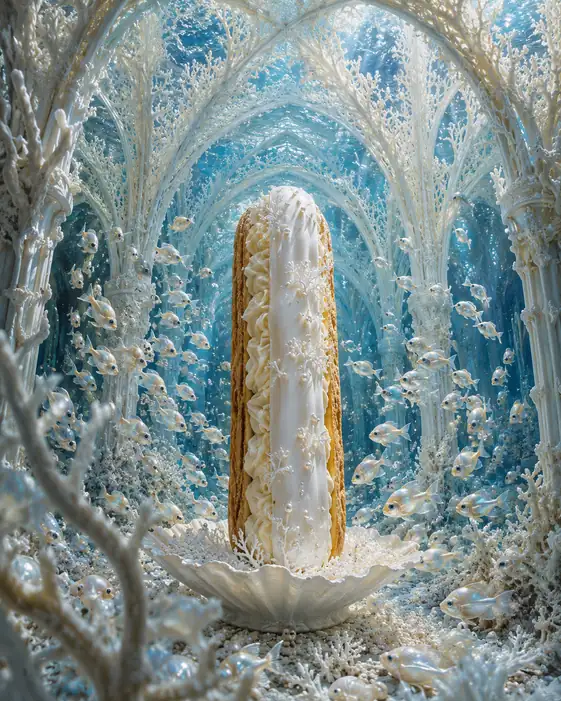 Where the Reef Learned to Pray
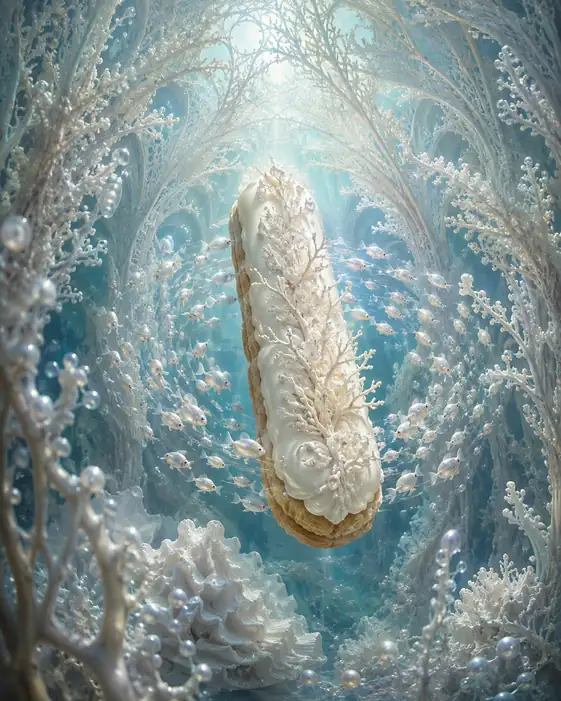 The Stillness All Lives Choose
 Tomorrow Glows on the Sweetest Shore
 Dreaming Beneath the Tides of Light
 Where the Sea Learns Reverence
 The Sea Remembers My Reflection
 Where Lantern Windows Cross the Abyss
 The Pink Moon Wakes in Its Silver Nest
 Until My Light Reaches You
 The City Waiting to Be Born