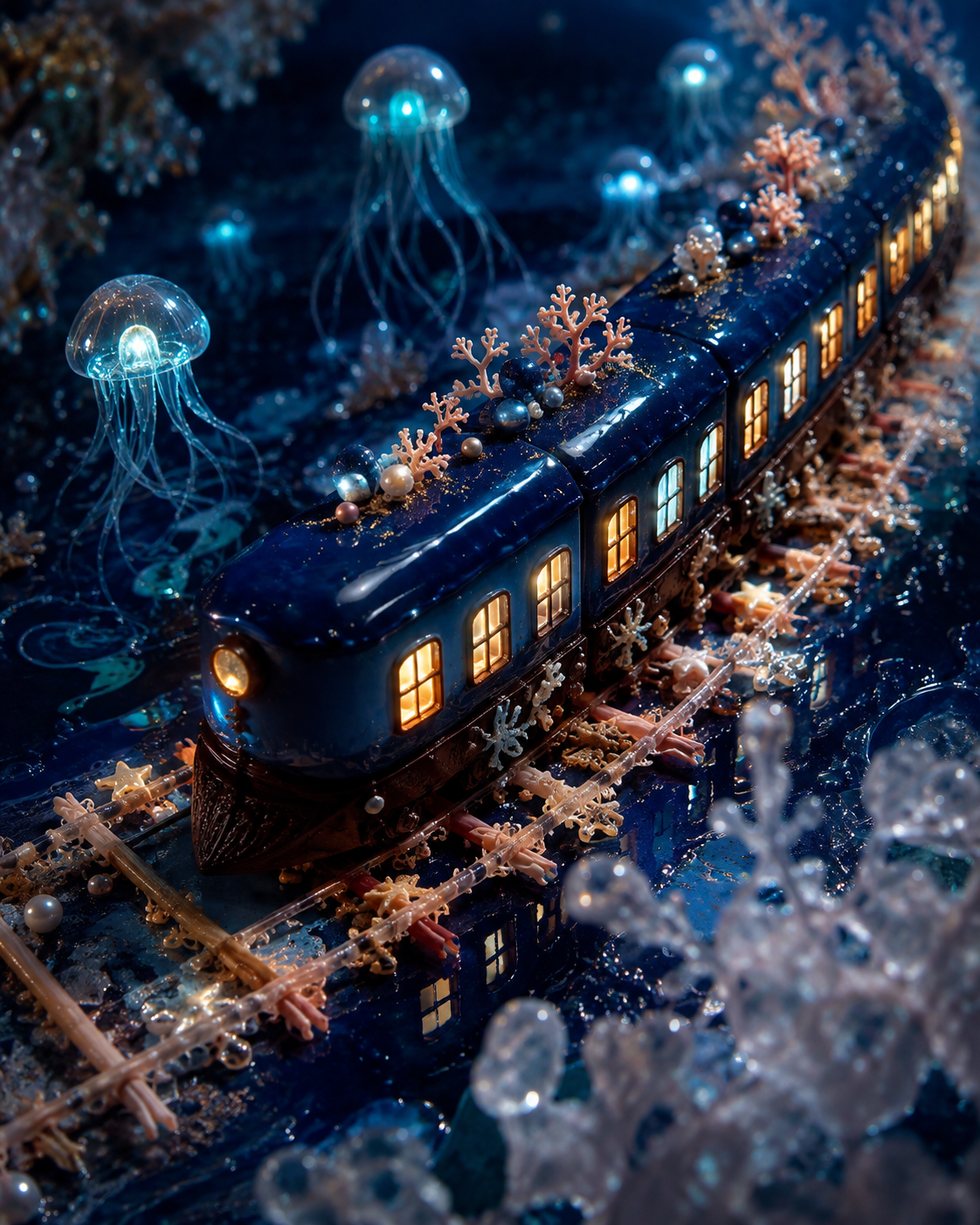
Where Lantern Windows Cross the Abyss
Critique
Introduction This close underwater scene shows a glossy navy train advancing through coral and jellyfish. It closely resembles a marine railway, but the low, tight framing gives the vehicle greater speed and physical presence. Warm windows remain the principal visual counterweight to the surrounding blue darkness. Description The train enters from the lower left and extends sharply toward the upper right, filling most of the frame. Its headlamp glows amber, and paired windows continue along several carriages. Coral branches and clusters of dark blue, ivory, and pink pearls sit on the roofs. A large luminous jellyfish floats at left, with three smaller cyan forms receding behind it. Transparent coral and beads blur across the lower-right foreground, while wet rails mirror the windows. Analysis The steep diagonal and cropped front enlarge the train relative to its environment. Shallow focus isolates the first cars, allowing the rear carriage, distant jellyfish, and foreground coral to dissolve gradually. Repeated windows and sleepers create parallel rhythms, while tentacles supply curved vertical lines. Cobalt and black-blue dominate; orange windows and pale coral produce controlled contrast. Polished enamel, glass bodies, branching sugarlike coral, smooth pearls, and reflective water retain separate textures despite the concentrated lighting. Interpretation and Evaluation The image emphasizes protected passage through darkness. The train's sealed, luminous interior suggests continuous human routine within an environment that appears strange but not hostile. Coral ornaments on the roof imply adaptation, while mirrored windows below double the sense of an inhabited route. The close perspective is technically effective because it turns a miniature object into credible transport. Selective focus, precise highlights, and disciplined color produce strong hierarchy without suppressing the surrounding ecosystem. Conclusion An initially charming fantasy becomes a compact study of speed, shelter, and coexistence. Compared with a wider view, this framing makes the train rather than the marine setting dominant. Its forceful diagonal, warm repetition, and carefully layered transparency create a convincing nocturnal journey.
Same Subcategory
Similar Artworks
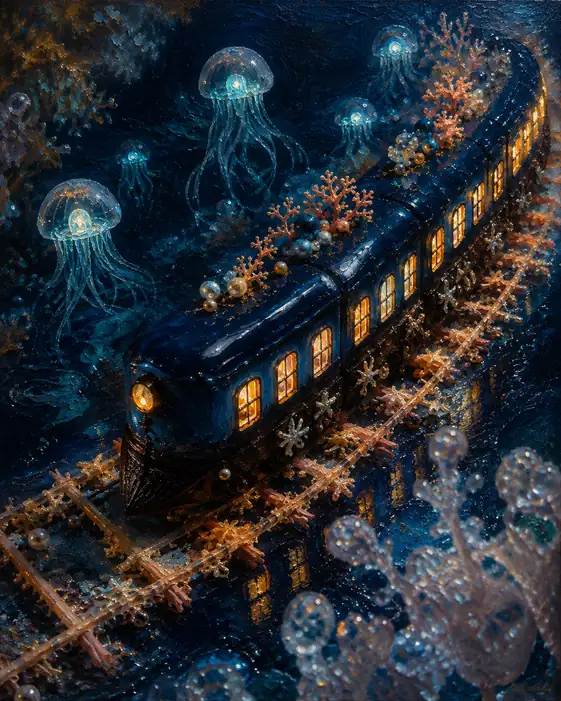 Last Train Beneath the Sleeping Sea
 The Stillness All Lives Choose
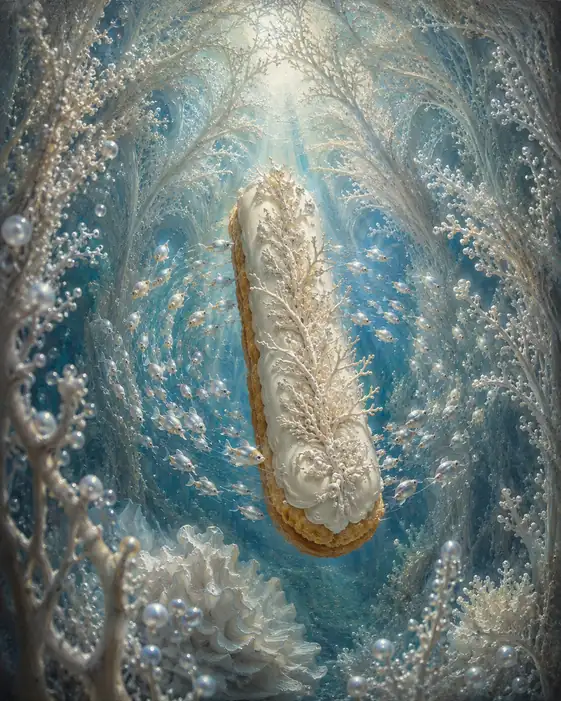 Where the Sea Learns Reverence
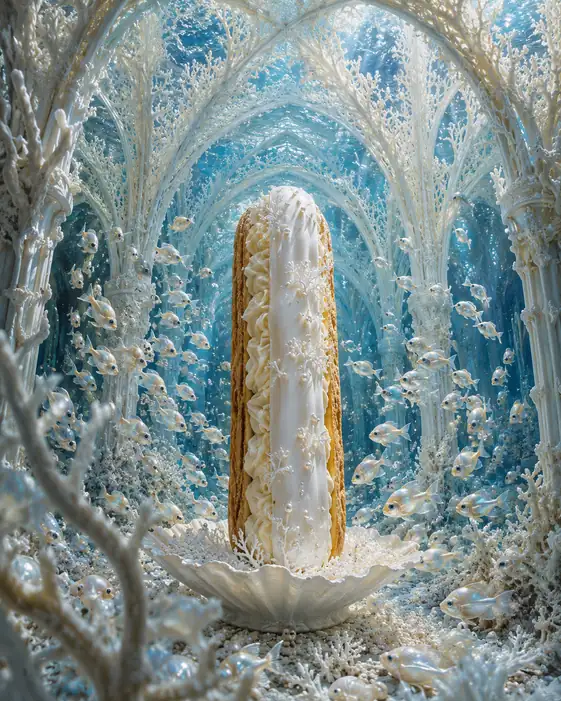 Where the Reef Learned to Pray
 The Sea Remembers My Reflection
 Until My Light Reaches You
 The Midnight Express Through the Milky Way
 The Lighthouse Sends Sugar Light to Sea
 The Night Ascends in Spirals
 Tomorrow Glows on the Sweetest Shore