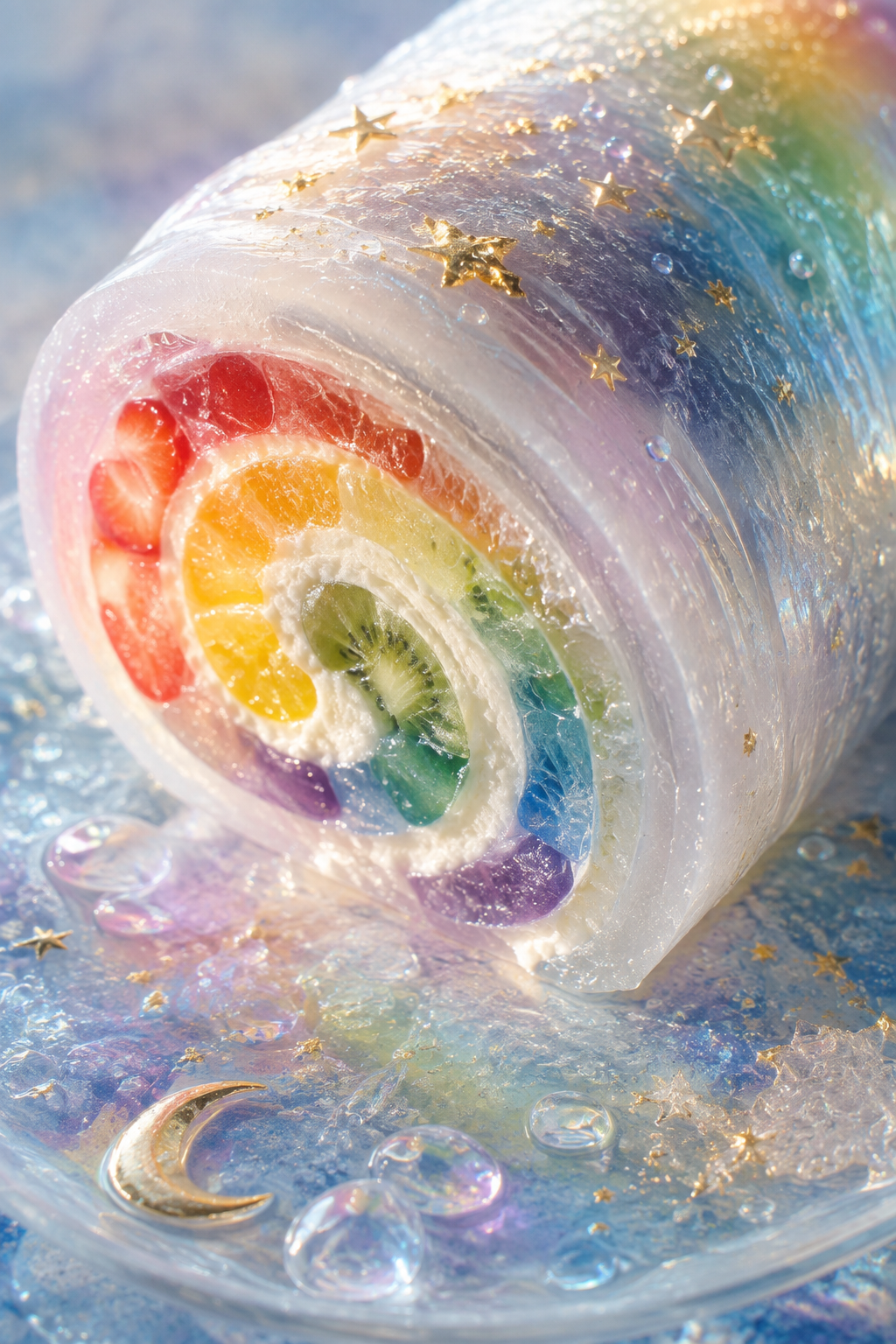
The Sky Rolled Itself Into Sweetness
Critique
Introduction This rolled cake encloses fruit beneath a star-studded translucent skin. Its spiral resembles weather and galaxy, while iridescent glaze pools around it. Description The cross-section coils through strawberries, orange, kiwi, blue-green jelly, purple pieces, and cream. A clear sheath wraps the cylinder, shifting from pink and lavender to blue, green, and gold. Metallic stars, gold flecks, and droplets cover it. Pastel glaze spreads across a plate among bubbles, crystals, a gold crescent, and stars. Analysis The spiral organizes many colors into a continuous inward route. Warm fruit begins near the outer left, moves through yellow and green, and ends in cool blue-purple, echoing the sheath’s gradient. Cream separates saturated bands and preserves readability. Juicy fruit, soft cake, whipped filling, glasslike coating, and brittle decorations promise varied textures. The diagonal cylinder adds depth, while the liquid pool visually extends its colors beyond the cut face. Interpretation and Evaluation The cake turns a rainbow into something rolled, stored, and sliced, suggesting wonder held within ordinary technique. Stars and crescent shift atmospheric color toward a cosmic reading, so day and night coexist in one spiral. Decoration approaches excess, especially across the pooled glaze, but recognizable fruit stabilizes flavor. The transparent outer layer reveals rather than hides, making preservation itself part of the spectacle. Conclusion At first the spectrum and sparkle dominate. Longer viewing follows the spiral and recognizes pastry craft beneath the illusion. The work succeeds because fantasy remains structurally intelligible: fruit, cream, and cake generate the rainbow, while the luminous skin lets that internal order radiate into a larger imagined sky.
Same Subcategory
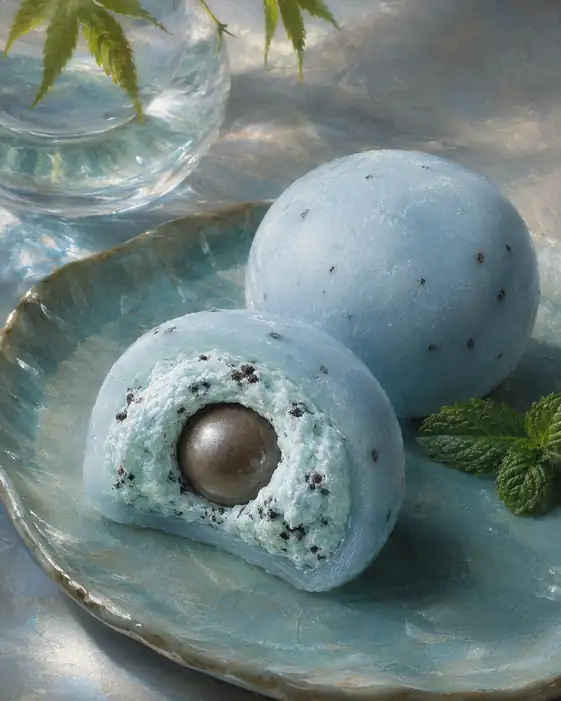 The Secret at the Heart of Coolness
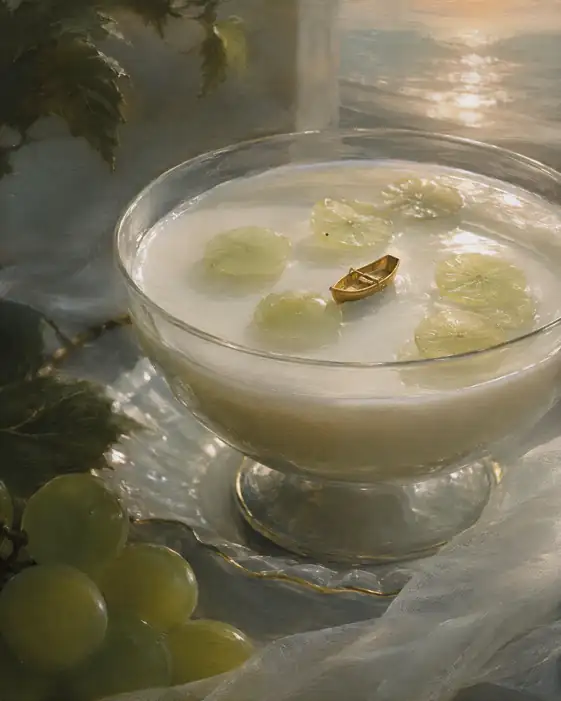 A Voyage Small Enough for a Spoon
Similar Artworks
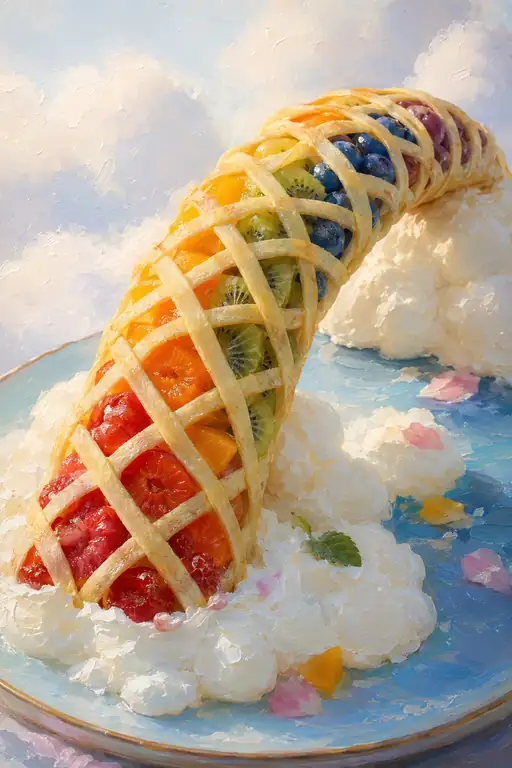 A Rainbow Baked across the Sky
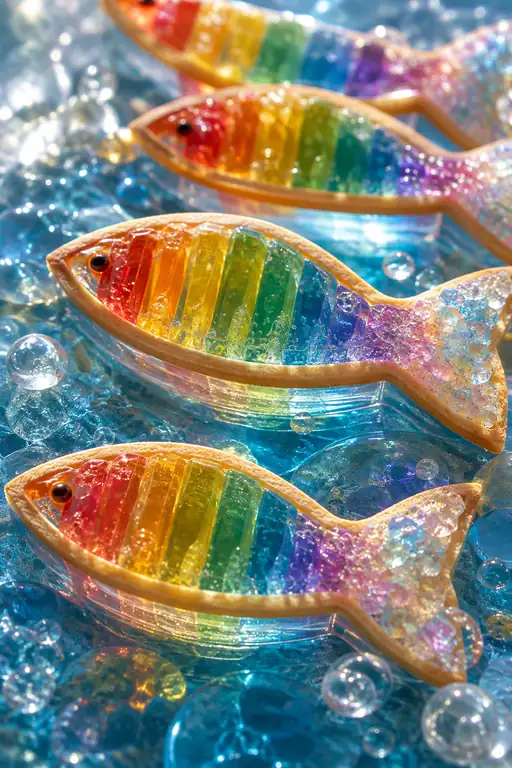 Together Through the River of Colors
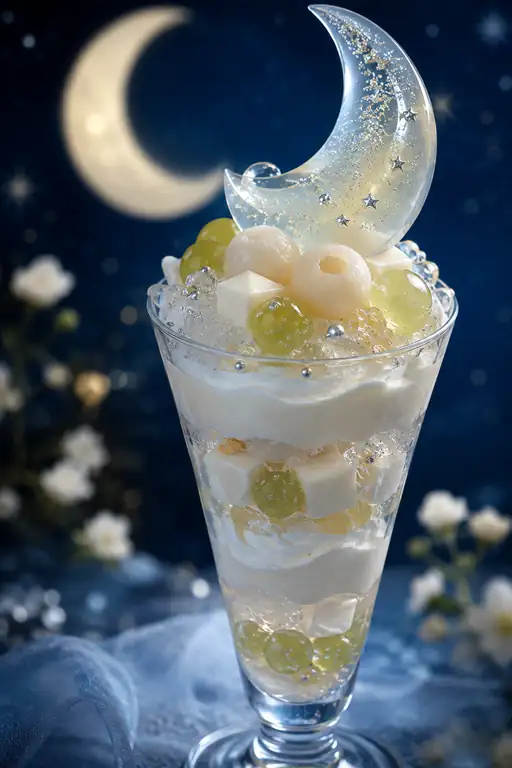 The Crescent Moon Melts into the Parfait
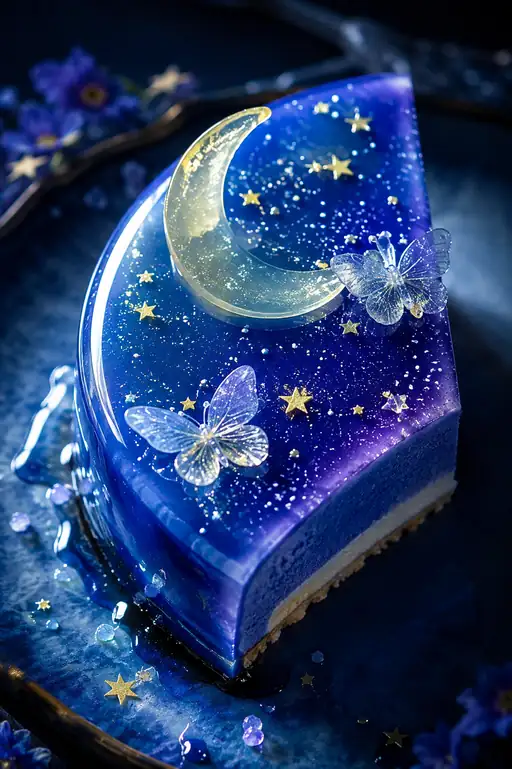 The Moon Sleeps inside a Blue Slice
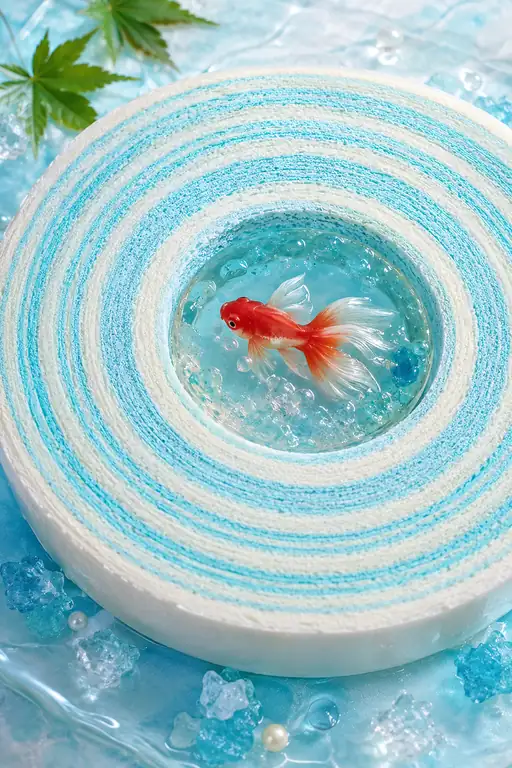 One Red Heart Inside the Ripples
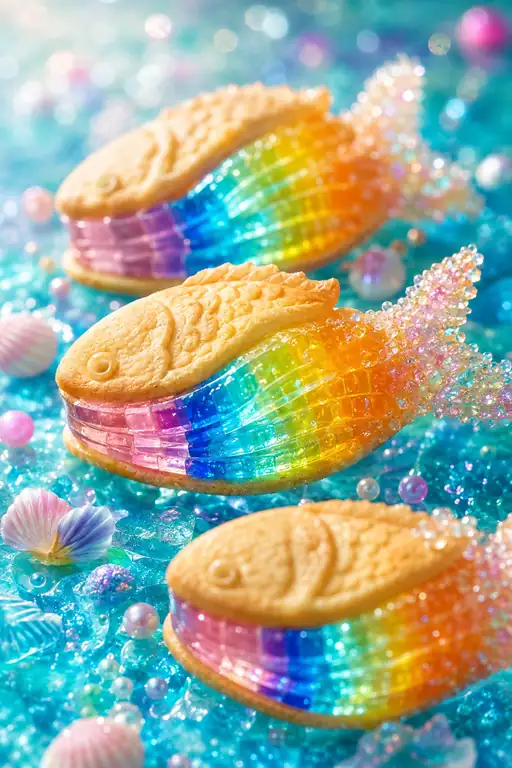 Rainbow Fish Carry the Festival Home
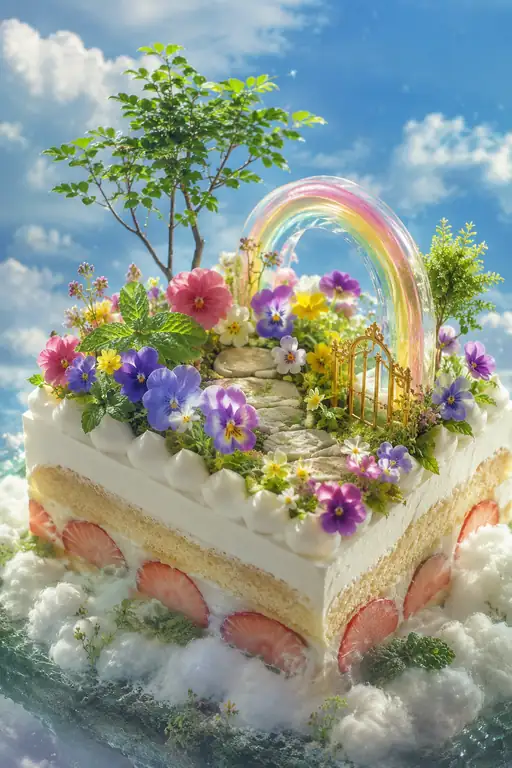 A Rainbow Garden Rises from the Cake
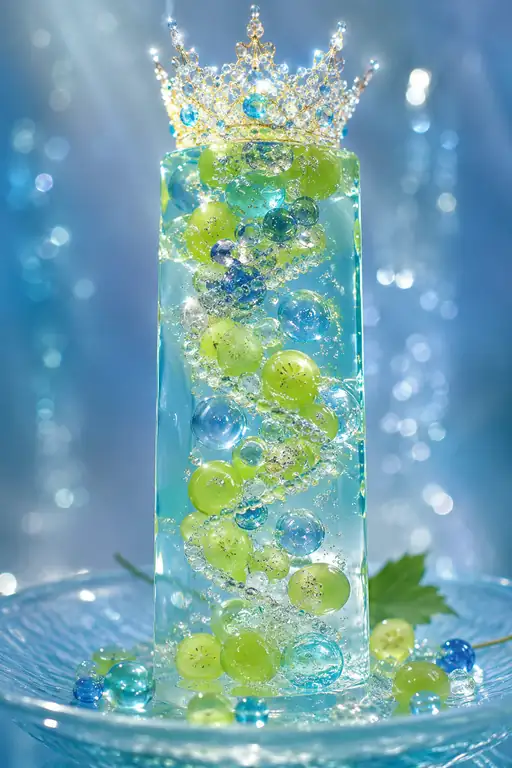 Crowned by the First Drop of Summer
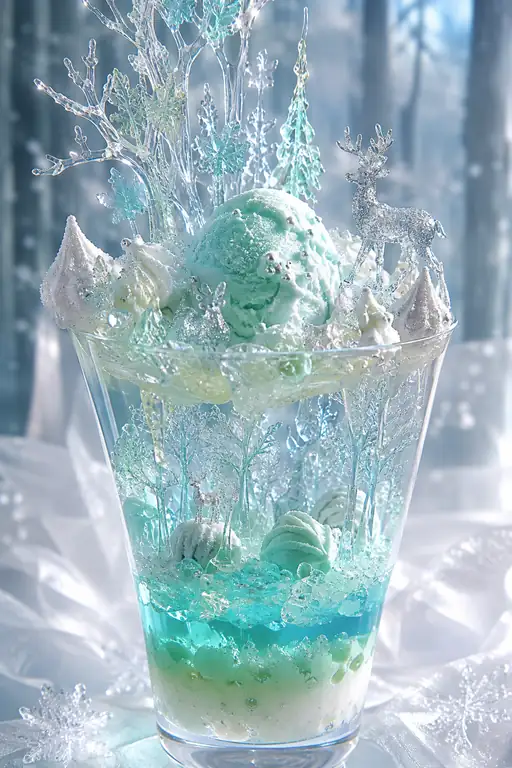 Winter Grows Beyond the Glass
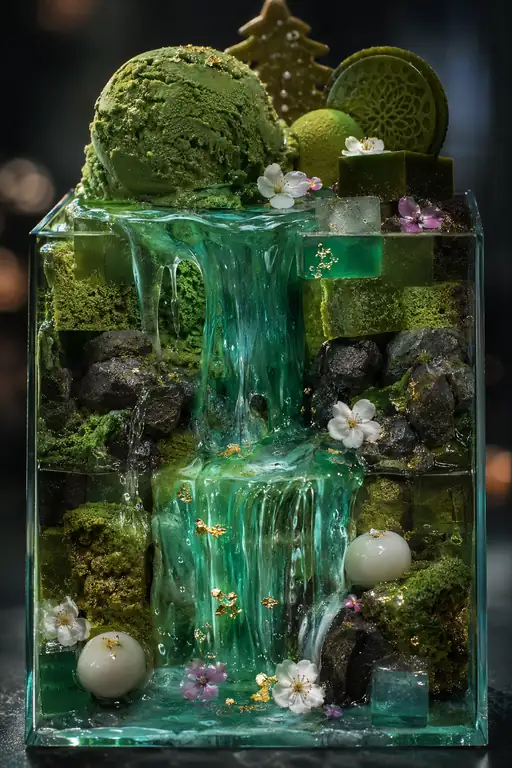 A Green Waterfall Hidden in Dessert