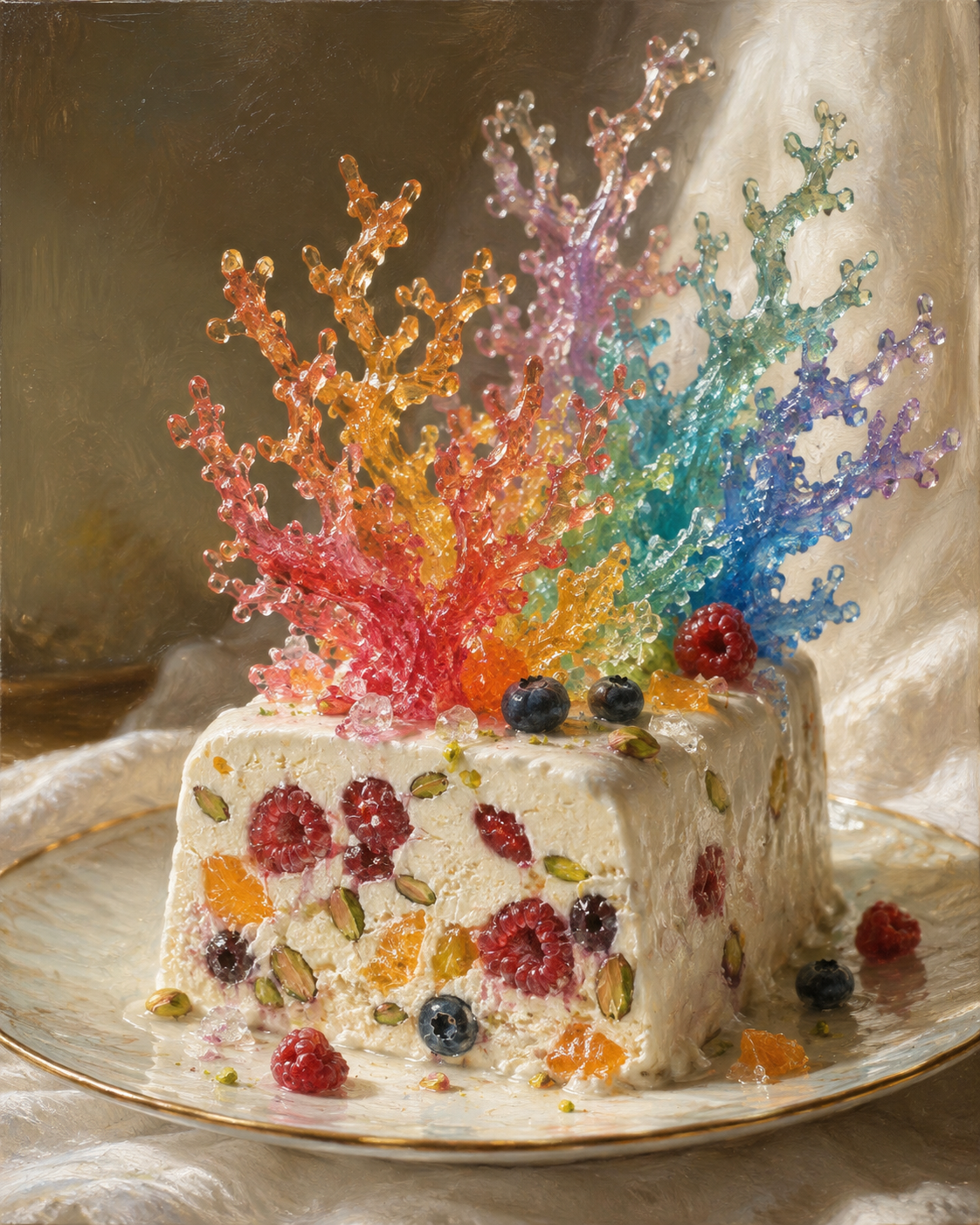
When Hidden Joy Became Light
Critique
Introduction Rainbow coral crowns a square fruit cake. Embedded fruit and nuts link edible abundance to reef growth, while light gives it celebratory gravity. Description The rectangular cake sits on a cream plate with a thin gold rim. Its rough white sides expose red berries, orange segments, dark fruit, and green nuts at varying depths. Above, branching glasslike forms rise in red, orange, yellow, pink, turquoise, blue, and violet. Berries and fragments rest along the top and plate. A golden-brown wall occupies the left background, while bright folded cloth descends at right. Analysis The compact cube provides a stable base for branching diagonals that spread upward and outward. Warm colors dominate the left coral and cool colors the right, creating a spectrum with a readable direction. Opaque cream, juicy fruit, dry nuts, brittle transparent branches, ceramic, and fabric are carefully differentiated. Side light passes through the coral and casts colored gleams while revealing the cake’s coarse surface. Small berries at the crown mediate between the solid base and fantastical growth. Interpretation and Evaluation The image treats celebration as a form of sudden flourishing. Fruit already dispersed within the cake appears to release color above it, as if hidden flavor had become visible architecture. Coral evokes a communal organism built from innumerable small units, an apt parallel for the embedded ingredients. The square base and organic crown create productive tension. Although visually lavish, the spectrum and repeated branches prevent incoherence. The transformation of flavor into reeflike light is distinctive and technically assured. Conclusion Decorative excess becomes a passage from nourishment to liberated color. The cake remains tactile beneath its crown. Structural contrast, luminous transparency, and the echo between fruit and coral make the work joyous without becoming weightless.
Same Subcategory
 Warmth Sleeping Beneath Blue Ice
 For the One I Have Yet to Meet
Similar Artworks
 Where a Rainbow Grows from Sweet Winter
 Before Sweetness Takes Wing
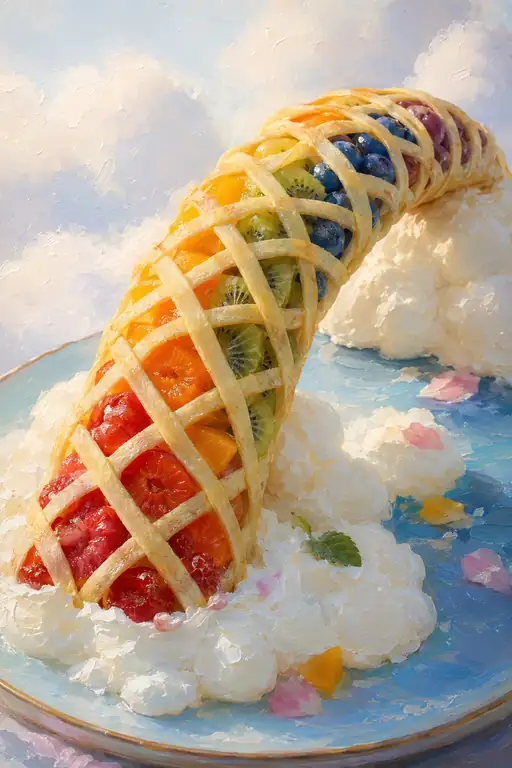 A Rainbow Baked across the Sky
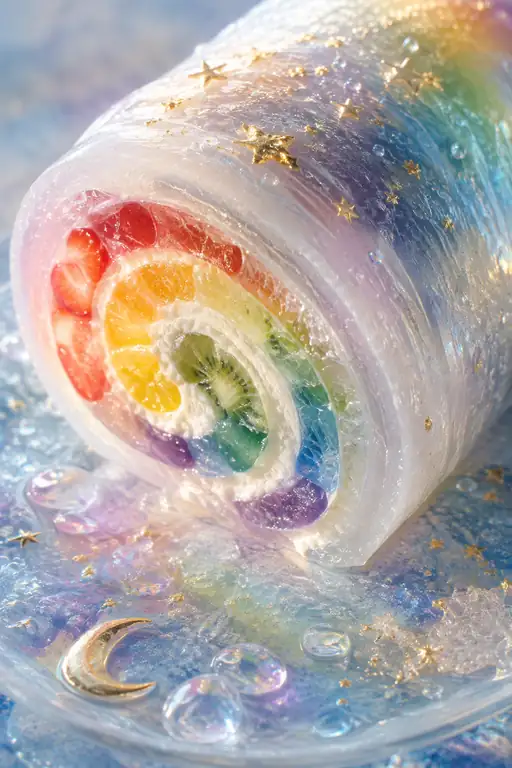 The Sky Rolled Itself Into Sweetness
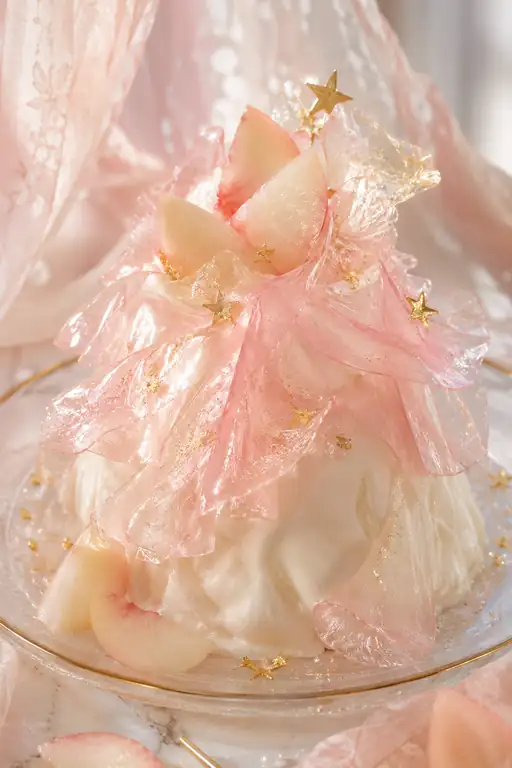 Softness Blooming Through Light
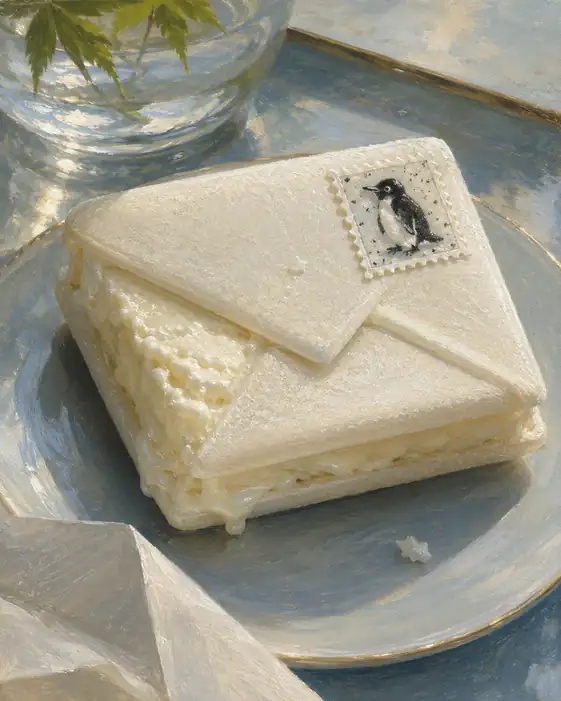 A Letter from the Edge of Winter
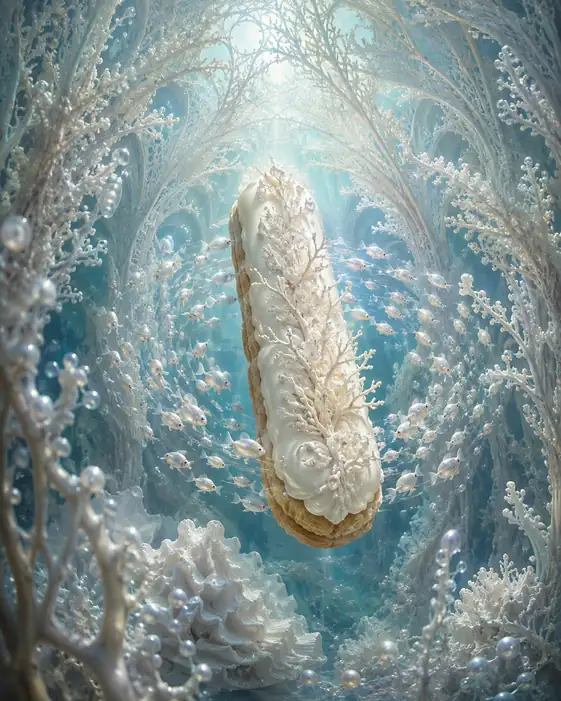 The Stillness All Lives Choose
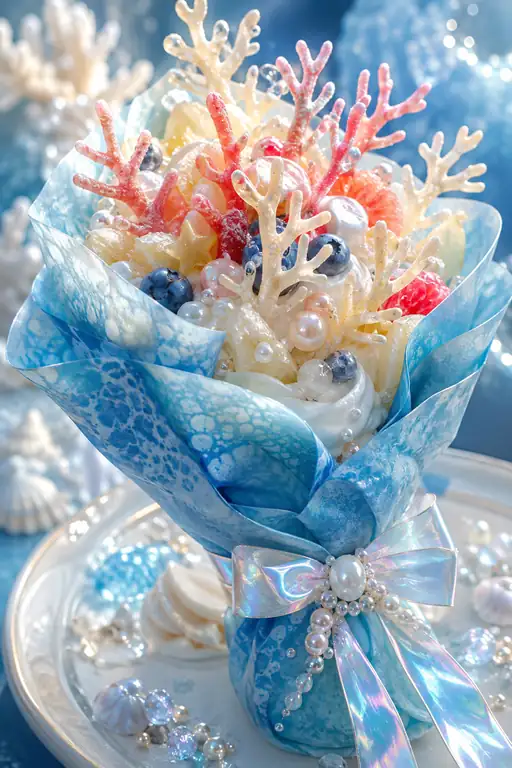 A Reef Gathered as a Gift
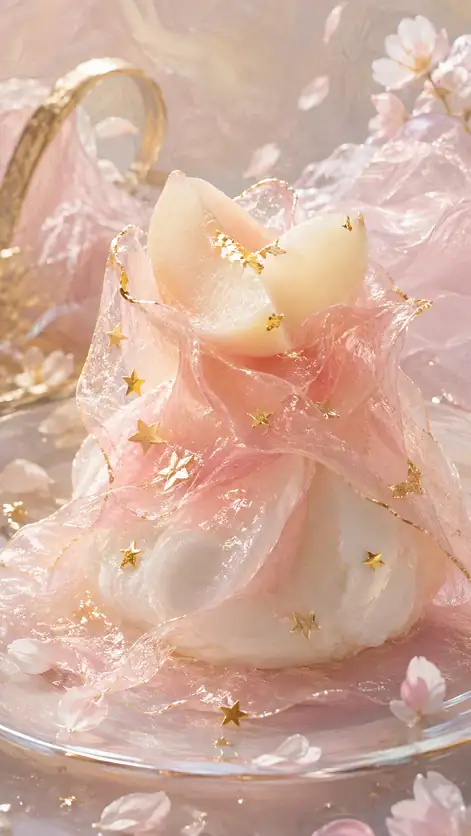 Spring Unwraps a Gift of Stars
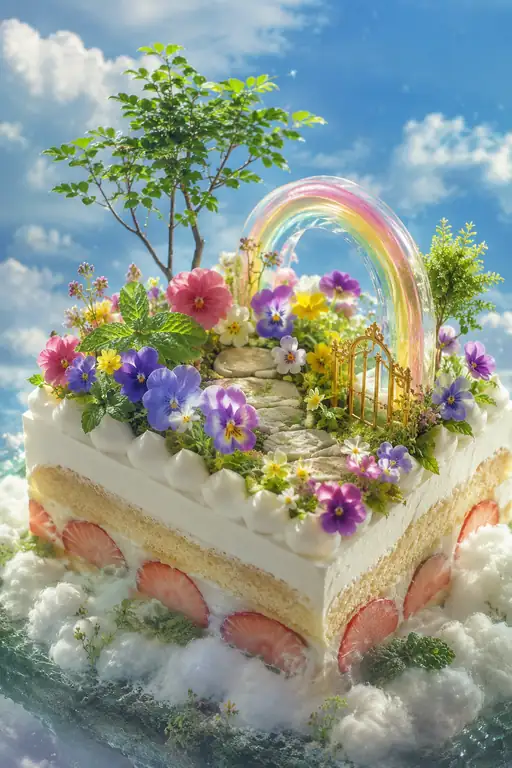 A Rainbow Garden Rises from the Cake